
























Live Chat
Estamos aquí para ayudar 24 horas al día, 7 días a la semana.
Envíenos un mensaje ahora para obtener una respuesta rápida.

Las categorías
Módulos SFP
Servicios
Soporte
Sobre Nosotros
Recursos



Ocúpese de sus negocios con una variedad de opciones de pago confiables.
Utilice el número de pedido o el número de seguimiento para verificar el estado del envío.
Obtenga su cotización rápidamente y le ofreceremos un servicio más profesional.
Ayude a administrar mejor su presupuesto y gastos.
Soporte de muestras gratuitas, obtenga los resultados de sus pruebas de manera eficiente.
Soporte y servicio de equipo profesional, para resolver sus problemas a tiempo.
Pregúntanos lo que necesites, te ayudaremos 24/7.
Obtenga su cotización rápidamente y ofrézcale un servicio más profesional.
Conócenos y conoce nuestra misión, creencia, servicio y más.
Encuentre nuestras ubicaciones y conéctese con nosotros de cerca.
Gestión de calidad, pruebas, compatibilidad y cumplimiento global.
Visita al laboratorio, banco de pruebas ópticas, herramienta de compatibilidad y solicitudes de pruebas.
Descubra las últimas noticias y eventos alrededor l-p.com
Profundice en guías técnicas, estándares de la industria y conocimientos de compatibilidad SFP.
Comparaciones detalladas de productos y puntos de referencia para ayudarlo a elegir el módulo adecuado.
Explore soluciones de conectividad del mundo real para centros de datos, empresas y redes de telecomunicaciones.
Consejos esenciales para elegir velocidades de datos, distancias de transmisión y tipos de conectores.
¿Eres cliente nuevo? Crea una cuenta.


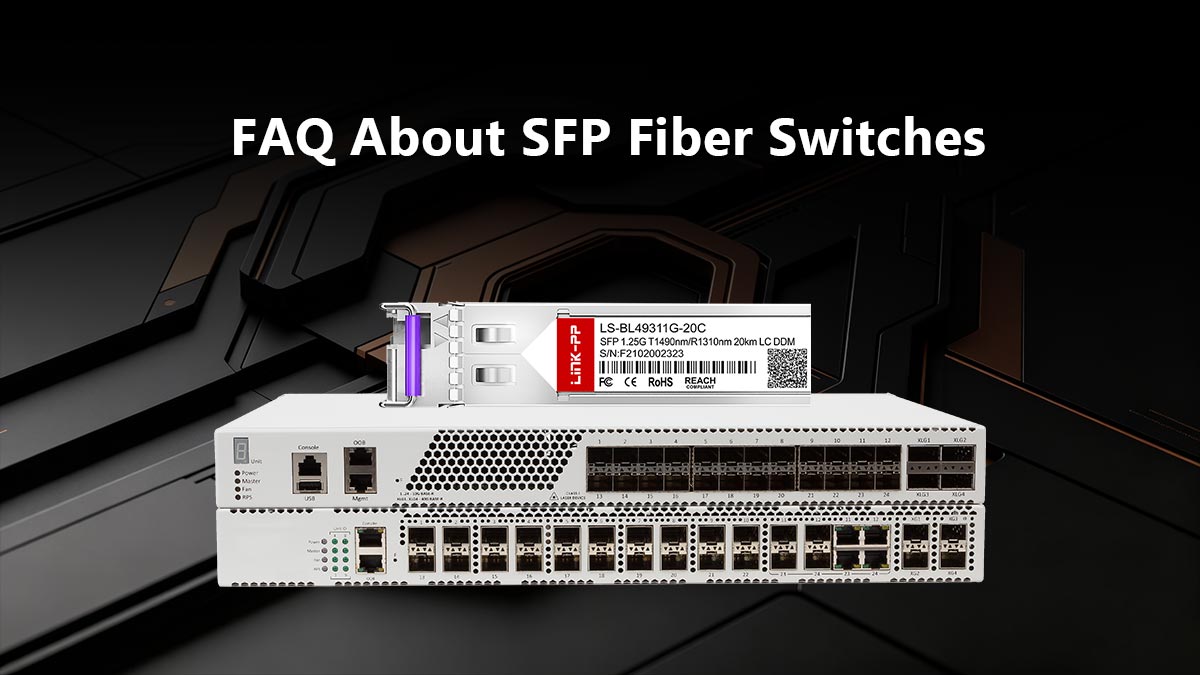
Un conmutador de fibra SFP es un dispositivo de red especializado equipado con puertos SFP (Small Form-factor Pluggable) en lugar de las interfaces de cobre RJ45 estándar. Mediante el uso de transceptores ópticos modulares que cumplen con los estándares MSA (Multi-Source Agreement), estos conmutadores permiten conexiones de fibra óptica de alto ancho de banda y baja latencia. Superan eficazmente la limitación de distancia de 100 metros de Ethernet tradicional, proporcionan un aislamiento eléctrico completo y ofrecen la escalabilidad necesaria para la conectividad de borde moderna tanto en entornos empresariales como domésticos.

A medida que las demandas de computación perimetral aumentan y Ethernet de 10 Gigabit (IEEE 802.3ae) pasa de ser un lujo empresarial a un requisito básico para aplicaciones con uso intensivo de datos, los arquitectos de red están replanteando fundamentalmente las implementaciones de la capa física. Depender exclusivamente de la infraestructura de cobre estándar introduce cuellos de botella de distancia estrictos, mayores latencias y graves vulnerabilidades a la interferencia electromagnética (EMI) en entornos perimetrales industriales o exteriores.
La transición a un conmutador de fibra SFP resuelve estas limitaciones físicas. A diferencia de los conmutadores de cobre de puerto fijo, las arquitecturas SFP ofrecen una modularidad absoluta. Los administradores de red pueden combinar sin problemas fibra multimodo (MMF) para enlaces ascendentes cortos dentro del rack, fibra monomodo (SMF) para conexiones de larga distancia entre edificios y cables de cobre de conexión directa (DAC) para conexiones de servidor rentables, todo dentro de un único chasis de conmutación.
Sin embargo, la migración a fibra óptica en el borde de la red introduce nuevas variables técnicas. Basándose en datos de implementación empresarial, estándares IEEE y la amplia retroalimentación de ingenieros de red, esta guía analiza los parámetros críticos de la conmutación SFP. Desde la compatibilidad de transceptores con restricciones de proveedor hasta la solución de los problemas de ruido acústico en implementaciones de 10G con diseños sin ventilador, proporcionamos un marco definitivo y basado en datos para integrar conmutadores de fibra SFP en su topología de red.
Un conmutador de fibra SFP es un dispositivo de enrutamiento y conmutación de red equipado con conectores SFP (Small Form-factor Pluggable) en lugar de puertos de cobre fijos. Al aceptar transceptores ópticos o de cobre intercambiables en caliente, permite a los administradores de red personalizar cada puerto para tipos de medios, longitudes de onda y distancias de transmisión específicas, lo que garantiza la máxima flexibilidad de hardware en el borde de la red.
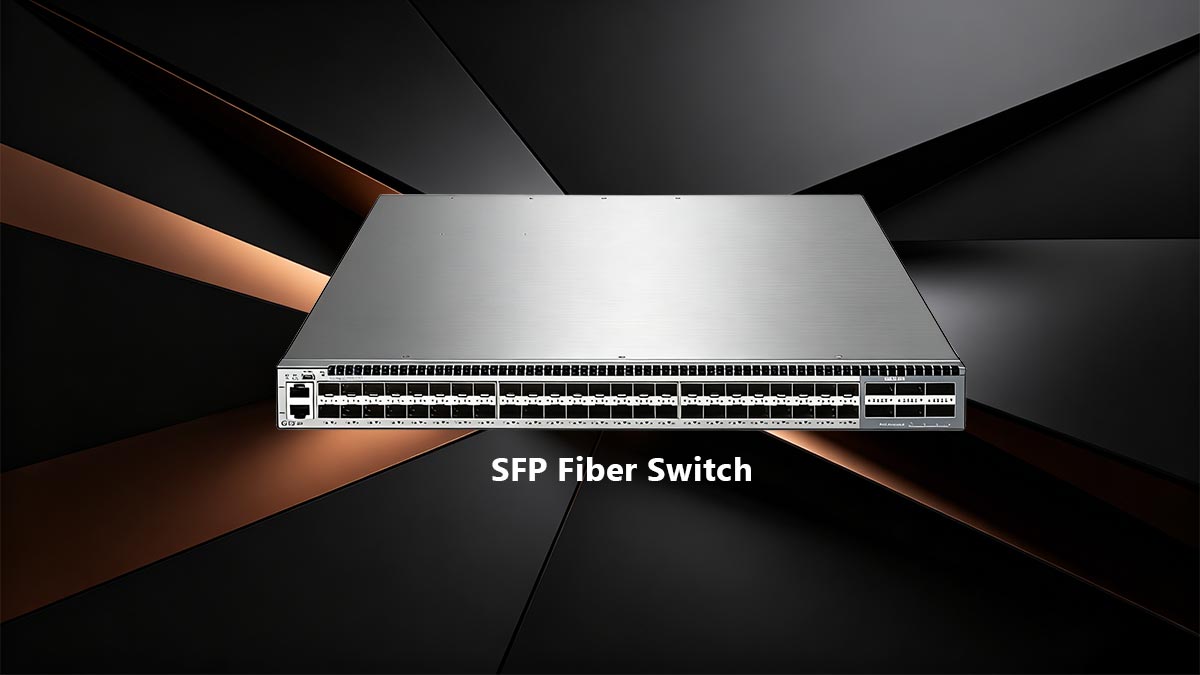
Para comprender la utilidad mecánica y funcional de un conmutador de fibra SFP, debemos analizar la estructura del hardware de red tradicional. Un conmutador Ethernet estándar cuenta con puertos RJ45 cableados integrados directamente en la placa base. Si un puerto falla o si una actualización de red requiere fibra óptica para cubrir una distancia superior a 100 metros, a menudo es necesario reemplazar todo el conmutador o complementarlo con convertidores de medios externos.
Un conmutador de fibra SFP elimina esta rigidez de hardware. Los puertos del conmutador actúan como ranuras vacías. El componente activo es el transceptor (también conocido como módulo óptico): un adaptador modular miniaturizado que convierte las señales eléctricas generadas por el conmutador en señales ópticas (pulsos de luz) para la transmisión por fibra, o viceversa.
Para garantizar la interoperabilidad global entre diferentes fabricantes de hardware, tanto los conectores SFP del conmutador como los transceptores se rigen estrictamente por el Acuerdo Multisuministrador (MSA). Este estándar industrial define las dimensiones físicas, las interfaces eléctricas y los protocolos de señalización exactos, lo que garantiza que un conmutador SFP compatible con MSA pueda, en teoría, aceptar y comunicarse con módulos ópticos compatibles de cualquier proveedor.
Al especificar un conmutador de fibra SFP para conectividad de borde, es fundamental identificar el factor de forma de puerto correcto, ya que el puerto físico determina el rendimiento máximo de datos por canal. Si bien físicamente son idénticos en tamaño, las interfaces eléctricas internas difieren significativamente entre generaciones.
| Factor de forma | Velocidad de datos máxima | Estándar IEEE | Aplicación de borde principal |
|---|---|---|---|
| SFP | 1 Gbps | IEEE802.3z | Enlaces ascendentes Gigabit básicos, redes de cámaras IP, implementaciones de IoT de borde heredadas. |
| SFP + | 10 Gbps | IEEE 802.3ae | Almacenamiento NAS de alta velocidad, redes troncales para laboratorios domésticos, conmutación central para pequeñas y medianas empresas (SMB). |
| SFP28 | 25 Gbps | IEEE 802.3 por | Computación perimetral empresarial, acceso fronthaul 5G, racks de servidores de alta densidad. |
Consenso técnico sobre retrocompatibilidad: Un problema frecuente en la implementación radica en determinar la interoperabilidad entre las distintas generaciones de SFP. El estándar de ingeniería verificado establece que los puertos SFP+ (10G) son retrocompatibles con los transceptores SFP de 1G, con negociación automática hasta la velocidad de 1 Gbps. Por el contrario, insertar un transceptor SFP+ de 10G en un puerto de conmutador SFP de 1G antiguo no funcionará; el bus interno del conmutador host carece de la capacidad de ancho de banda y el diseño eléctrico necesarios para procesar la señal de 10G.
La transición de la fibra óptica RJ45 a la basada en SFP en el borde de la red se basa en principios físicos. Mientras que RJ45 utiliza cable de cobre para transmitir señales eléctricas —lo que limita estrictamente los cables a 100 metros y expone la red a interferencias electromagnéticas (EMI)—, los conmutadores de fibra SFP transmiten datos mediante fotones a través de filamentos de vidrio. Esta transición elimina los cuellos de botella de distancia, proporciona un aislamiento eléctrico absoluto entre edificios y reduce drásticamente el consumo de energía por puerto a velocidades de 10 Gbps.
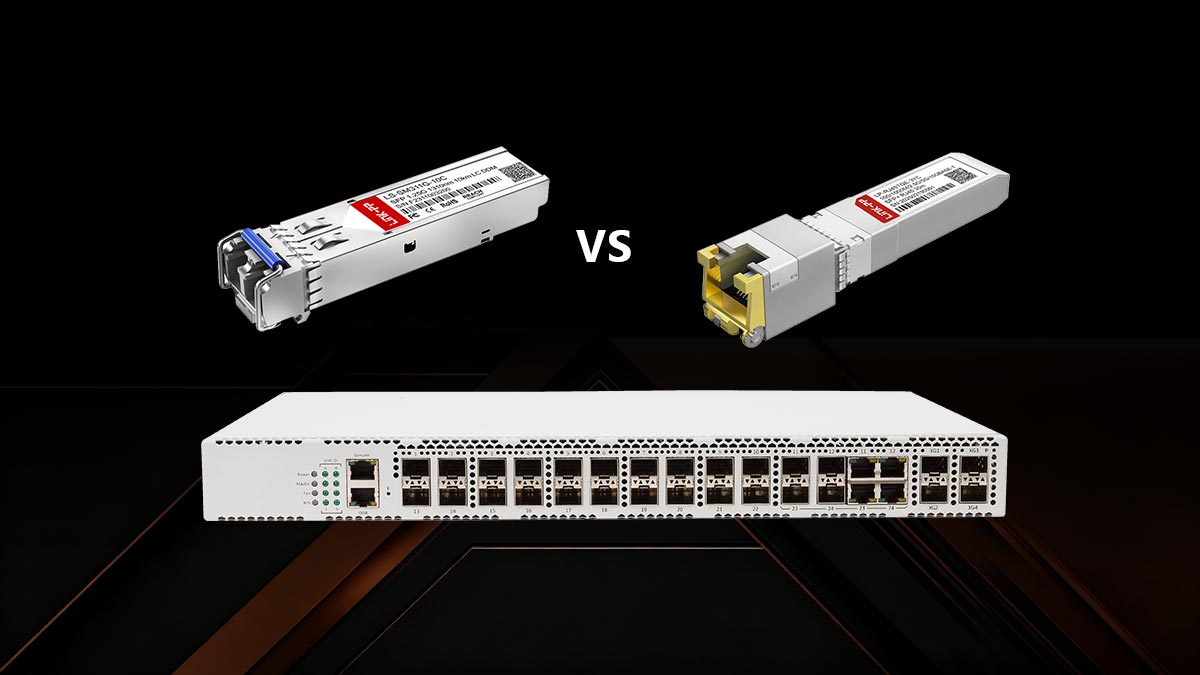
Durante décadas, el omnipresente conector RJ45 y el cableado de cobre de par trenzado (Cat5e/Cat6) han dominado las redes de área local (LAN). Sin embargo, a medida que los perímetros de red se expanden para incluir instalaciones aisladas, sensores de IoT industrial y nodos de computación perimetral de alto rendimiento, las limitaciones físicas del cobre se convierten en serios inconvenientes para su implementación.
Para comprender por qué los arquitectos empresariales y los aficionados avanzados a los laboratorios domésticos están migrando a los conmutadores de fibra SFP, debemos evaluar las diferencias físicas fundamentales entre el cobre y los medios de transmisión óptica en tres parámetros críticos: atenuación, resistencia ambiental y eficiencia térmica.
Según los estándares IEEE 802.3, el Ethernet de cobre Base-T estándar está estrictamente limitado a una longitud de canal de 100 metros (328 pies). Más allá de este límite, las señales eléctricas sufren una atenuación severa (pérdida de intensidad de señal) e interferencias, lo que provoca la pérdida de paquetes y una degradación del rendimiento.
Un conmutador de fibra SFP evita por completo esta limitación. Al utilizar diferentes transceptores ópticos, los administradores pueden escalar las conexiones de borde en función de los requisitos de distancia específicos:
Al conectar dispositivos periféricos en entornos industriales (como plantas de producción con maquinaria pesada) o al unir dos edificios subterráneos, el cableado de cobre actúa como una enorme antena. Absorbe la interferencia electromagnética (EMI) y la interferencia de radiofrecuencia (RFI), que corrompe los datos.
Más importante aún, conectar dos edificios mediante cables de cobre introduce el riesgo de bucles de tierra (diferencias en el potencial eléctrico de tierra entre las estructuras) y crea una vía conductora para los rayos, que pueden destruir instantáneamente costosos equipos de conmutación principales.
Dato relevante: Los cables de fibra óptica proporcionan un aislamiento galvánico absoluto, ya que los filamentos del núcleo de vidrio no conducen la electricidad. El uso de un conmutador de fibra SFP para conectar una ubicación de borde aislada garantiza una degradación nula de la interferencia electromagnética (EMI) y neutraliza por completo el riesgo de sobretensiones eléctricas en la red troncal.
A medida que las redes se actualizan a velocidades de 10 Gigabit (10GBASE-T), el consumo energético del cobre se vuelve muy ineficiente. Transmitir 10 Gbps de datos eléctricos a través de un cable Cat6a de 100 metros requiere un procesamiento digital de señales (DSP) complejo para eliminar la diafonía externa.
Este procesamiento requiere una potencia considerable. Un puerto RJ45 10GBASE-T estándar consume entre 2.5 y 5 vatios por puerto. En cambio, un transceptor óptico SFP+ de 10G que procesa el mismo ancho de banda consume menos de 1 vatio por puerto. En un conmutador de 24 puertos, la transición a la óptica SFP reduce drásticamente la generación de calor, disminuyendo así la necesidad de refrigeración en los armarios de cableado perimetral.
| Parámetro | Fibra óptica SFP+ | RJ45 (cobre 10GBASE-T) |
|---|---|---|
| Distancia máxima (10G) | Hasta 40 km o más (modo único) | 100 metros (Cat6a) |
| Inmunidad EMI/RFI | Inmunidad total (vidrio/plástico) | Susceptible (Requiere protección) |
| Aislamiento eléctrico | Sí (Aislamiento galvánico) | No (Trayectoria conductora para sobretensiones) |
| Consumo de energía (por puerto) | ~0.6 W a 1.0 W | ~2.5 W a 5.0 W |
Conclusión sobre la implementación: Para conexiones cortas dentro de un mismo rack de servidores (menos de 3 metros), los cables de cobre de conexión directa (DAC) conectados a puertos SFP siguen siendo la solución más rentable. Sin embargo, para cualquier conectividad de borde que se extienda más allá de una sola sala o que conecte hardware en distintas zonas eléctricas, la transición a la fibra óptica SFP es la opción arquitectónica técnicamente superior y más segura.
Implementar un conmutador de fibra SFP en el borde de la red optimiza estratégicamente la arquitectura de red. Proporciona enlaces ascendentes dedicados de alto ancho de banda a los servidores centrales, extiende los tendidos de cable a nodos remotos más allá del límite de 100 metros del cobre y simplifica el cableado dentro del rack. Fundamentalmente, la descarga del tráfico entre conmutadores a los puertos SFP preserva las valiosas interfaces RJ45 para los dispositivos finales, maximizando así la eficiencia general del hardware del conmutador.
En las topologías de red modernas, el "borde" es el punto crítico donde los dispositivos de usuario final (estaciones de trabajo, cámaras IP, puntos de acceso Wi-Fi 6) se conectan con la red troncal empresarial. Depender exclusivamente de conmutadores basados en RJ45 en esta capa suele generar cuellos de botella arquitectónicos. La integración de un conmutador de fibra SFP, o un conmutador con puertos de enlace ascendente SFP dedicados, resuelve estos desafíos de enrutamiento físico y lógico mediante cuatro aplicaciones prácticas principales.
En un diseño de red jerárquico estándar, los conmutadores de borde ubicados en un marco de distribución intermedio (IDF) deben enrutar el tráfico agregado de vuelta al marco de distribución principal (MDF) o enrutador central. Si un conmutador de borde cuenta con 24 puertos Gigabit RJ45, conectarlo al núcleo mediante un único cable RJ45 de 1G crea un enorme cuello de botella por sobreasignación (una relación de 24:1).
La solución: Los puertos SFP+ (10G) están diseñados específicamente para estos enlaces troncales. Mediante el uso de transceptores ópticos de 10G, los administradores pueden crear enlaces ascendentes de alta capacidad. Además, utilizando el Protocolo de Control de Agregación de Enlaces (LACP / IEEE 802.1AX), se pueden combinar varios puertos SFP+ para crear una canalización lógica de 20G o 40G, lo que garantiza la ausencia de pérdida de paquetes durante las transferencias de datos máximas entre el borde y el núcleo.
La conectividad perimetral suele extenderse más allá de la sala de servidores con temperatura controlada. El despliegue de cámaras de seguridad PTZ (panorámica, inclinación y zoom) de alta definición en el perímetro de una instalación, o la instalación de puntos de acceso inalámbricos exteriores en todo un campus, a menudo requiere tendidos de cable que superan los 300 metros.
La fibra monomodo OS2 es un tipo de cable óptico con un núcleo de vidrio estrecho (9 micras) que permite a los láseres transmitir datos a grandes distancias con una mínima degradación de la señal.
Mediante el uso de un conmutador de fibra SFP equipado con transceptores monomodo de 1310 nm, los ingenieros de red pueden sortear fácilmente el límite de 100 metros del cable de cobre, ofreciendo de forma fiable velocidades multigigabit a edificios anexos remotos, almacenes o nodos perimetrales sin necesidad de estaciones repetidoras intermedias.
La mayoría de los conmutadores de borde modernos proporcionan alimentación a través de Ethernet (PoE / IEEE 802.3at/bt) mediante sus puertos RJ45 para alimentar los dispositivos de los usuarios finales. Cuando los administradores de red utilizan estos puertos RJ45 para conectar conmutadores entre sí (conexión en cadena), desperdician interfaces PoE de alto valor en enlaces de infraestructura que no son PoE.
Ventaja estratégica: Al migrar todas las conexiones entre switches y los enlaces ascendentes principales a los puertos SFP, se liberan instantáneamente los puertos RJ45. Esto maximiza el retorno de la inversión (ROI) del hardware del switch, garantizando que cada puerto de cobre esté disponible para suministrar datos y energía a los dispositivos finales.
La gestión del cableado dentro de un rack de servidores influye directamente en el flujo de aire y la eficiencia térmica. El uso de cables de conexión de cobre Cat6a gruesos y pesados para conectar varios conmutadores apilados en el mismo rack genera un gran desorden de cables y restringe la refrigeración.
La solución: Los puertos SFP permiten el uso de cables de cobre de conexión directa (DAC). Un cable DAC es un cable de cobre Twinax especializado con transceptores SFP conectados permanentemente en cada extremo.
Para los usuarios avanzados y los entusiastas de los laboratorios domésticos, la integración de conectividad 10G SFP+ presenta importantes desafíos acústicos y térmicos. Los conmutadores empresariales en desuso ofrecen puertos de alta velocidad económicos, pero generan un ruido excesivo (que a menudo supera los 60 dB(A)) y un alto consumo de energía en reposo. La solución consiste en migrar a conmutadores SFP modernos, sin ventilador y con refrigeración pasiva, que utilizan disipadores de calor avanzados y ASIC eficientes para ofrecer conectividad de borde silenciosa y de bajo consumo, ideal para entornos residenciales o de oficina.
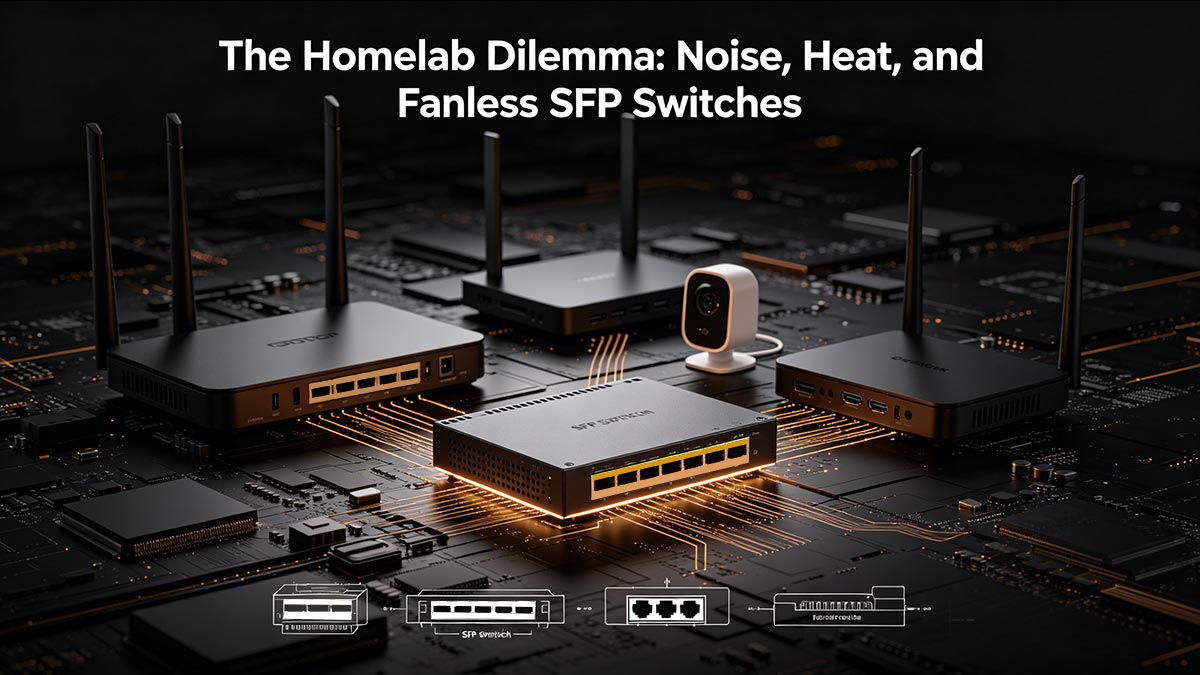
A medida que las plataformas de virtualización y el almacenamiento en red (NAS) con tecnología NVMe se convierten en estándar en los laboratorios domésticos, la demanda de Ethernet de 10 Gigabit (IEEE 802.3ae) se ha disparado. Para satisfacer este requisito de ancho de banda, muchos aficionados a los laboratorios domésticos recurren inicialmente al mercado secundario, adquiriendo conmutadores empresariales 10G SFP+ fuera de servicio. Si bien este hardware resulta rentable inicialmente, presenta un importante problema físico: un ruido acústico extremo y una generación de calor excesiva.
Los conmutadores de nivel empresarial están diseñados para salas de servidores con climatización controlada. Para refrigerar los chips de conmutación de alta densidad, estos dispositivos de montaje en rack de 1U utilizan conjuntos de ventiladores de 40 mm que giran en sentido contrario. Estos ventiladores priorizan un alto flujo de aire (en pies cúbicos por minuto, CFM) sobre el confort acústico.
La contaminación acústica (en redes) se refiere al ruido continuo de alta frecuencia generado por pequeños ventiladores de refrigeración de altas revoluciones por minuto que intentan disipar el calor de los circuitos integrados de aplicación específica (ASIC, por sus siglas en inglés) que consumen mucha energía.
Un switch SFP+ empresarial usado típico consume entre 50 y 80 vatios en reposo y produce un nivel de ruido base de entre 55 y 65 decibelios (dB(A)), equivalente al volumen de una conversación acalorada o al de una aspiradora en la habitación contigua. En una oficina doméstica, un garaje independiente o un estudio, este nivel de ruido resulta totalmente inaceptable.
Para solucionar este problema, los fabricantes de hardware de red han desarrollado una nueva gama de equipos de red para usuarios avanzados y pymes: el conmutador SFP sin ventilador . Gracias al uso de ASIC de conmutación más modernos y de alta eficiencia, estos dispositivos reducen drásticamente la generación de calor, lo que permite la refrigeración pasiva mediante chasis de aluminio extruido que actúan como disipadores de calor gigantes.
Los conmutadores modernos de 4 u 8 puertos 10G SFP+ sin ventilador suelen consumir menos de 15 vatios de potencia total bajo carga. Al carecer de piezas móviles, generan 0 dB(A) de ruido ambiental y eliminan los puntos de fallo mecánico asociados a los pequeños ventiladores de refrigeración.
Para los usuarios que diseñan una red perimetral en un entorno sensible al ruido, comprender las ventajas y desventajas de estas dos rutas de hardware es fundamental para lograr una implementación satisfactoria a largo plazo.
| Tipo de arquitectura | Ventajas | Desventajas |
|---|---|---|
| Switch Enterprise SFP+ usado (p. ej., Brocade, Cisco antiguo) |
|
|
| Conmutador SFP+ moderno sin ventilador (p. ej., MikroTik CRS305, agregación UniFi) |
|
|
Advertencia de implementación: Al utilizar un conmutador SFP sin ventilador, los administradores deben tener precaución al implementar transceptores RJ45 de cobre 10GBASE-T. A diferencia de los transceptores ópticos, que consumen aproximadamente 1 W, los módulos de cobre de 10G pueden consumir hasta 3 W cada uno y generar temperaturas extremadamente altas. Conectar transceptores de cobre a todos los puertos de un conmutador con refrigeración pasiva puede sobrecargar el disipador de calor, lo que puede provocar una limitación térmica o una falla del hardware. Siempre combine cables de fibra óptica o DAC al usar hardware sin ventilador para mantener el equilibrio térmico.
La compatibilidad de SFP viene determinada por el Acuerdo Multisuministrador (MSA), que estandariza las dimensiones físicas y las interfaces eléctricas de los transceptores. Sin embargo, muchos fabricantes de conmutadores empresariales imponen una dependencia del proveedor a nivel de software mediante la verificación de la memoria interna del transceptor. Para garantizar la compatibilidad, los administradores de red deben usar conmutadores con ecosistemas abiertos o adquirir transceptores de terceros programados específicamente para eludir las comprobaciones de firmware del conmutador principal.
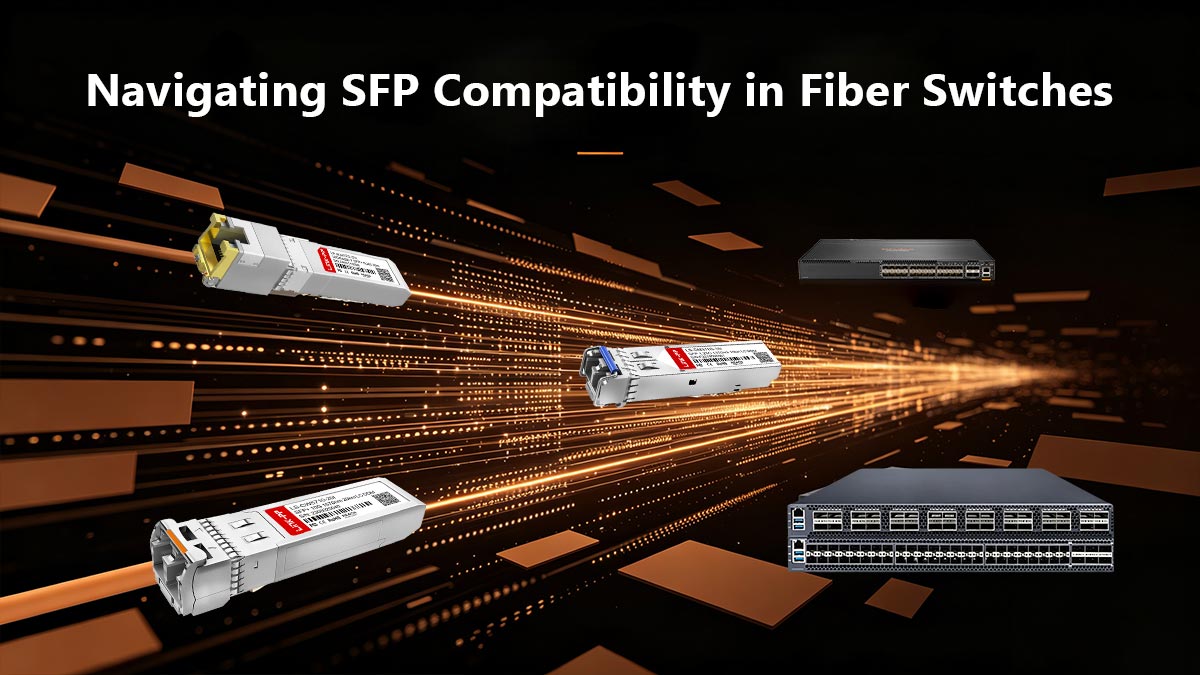
Uno de los principales obstáculos para los ingenieros de redes que implementan conectividad de borde es la compatibilidad de los transceptores. Si bien los puertos físicos de un conmutador de fibra SFP están estandarizados universalmente, el software que controla la activación del módulo insertado está muy fragmentado. No comprender esta dinámica puede provocar puertos deshabilitados, interrupciones en la red y un aumento considerable de los costos de implementación.
Para garantizar la interoperabilidad, la industria de redes ópticas se basa en el Acuerdo de Múltiples Proveedores (MSA). Si un transceptor y un conmutador cumplen con el MSA, en teoría deberían funcionar juntos sin problemas. Sin embargo, los principales fabricantes de equipos originales (OEM) suelen restringir esta interoperabilidad.
La EEPROM (Memoria de Solo Lectura Programable y Borrable Eléctricamente) es un pequeño chip de memoria integrado en cada transceptor SFP. Se comunica a través del bus I2C para proporcionar al conmutador host datos críticos, como la identificación del fabricante, el número de pieza y las longitudes de onda compatibles.
Al insertar un transceptor, el switch lee la memoria EEPROM. Si el sistema operativo del switch (como Cisco IOS o ArubaOS-CX) detecta un identificador de proveedor que no coincide con su firma propietaria, se produce una excepción. Normalmente, el puerto se desactiva, interrumpiendo toda la transmisión de datos y registrando un error de "transceptor no compatible".
Los fabricantes de equipos originales (OEM) imponen la dependencia del proveedor para garantizar el control de calidad, pero también para proteger los lucrativos márgenes de los accesorios. Un módulo SFP+ 10G de un importante proveedor empresarial puede costar entre 500 y 1,000 dólares. En cambio, un transceptor de terceros compatible con MSA, fabricado con los mismos componentes ópticos internos (láseres y fotodetectores), suele costar entre 20 y 40 dólares.
Para lograr este ahorro de costes sin sacrificar la fiabilidad, los administradores de red utilizan transceptores compatibles. Se trata de módulos de terceros cuya memoria EEPROM se ha programado específicamente con el identificador de proveedor propietario requerido por el conmutador de destino, engañando al hardware para que lo reconozca como un módulo propio.
Al seleccionar un conmutador de fibra SFP para su implementación de borde, la postura del proveedor sobre los componentes ópticos de terceros debería influir considerablemente en su decisión de compra. El hardware generalmente se clasifica en tres niveles de compatibilidad:
| Tipo de ecosistema | Proveedores típicos | Política de compatibilidad y soluciones alternativas |
|---|---|---|
| Estricto / Bloqueado por el proveedor | Cisco, HPE Aruba, Juniper | Bloquea activamente la óptica genérica. Requiere módulos de terceros codificados con precisión. (Nota: Algunos switches Cisco permiten el comando CLI oculto service unsupported-transceiver para evitar esto, aunque anula el soporte). |
| Híbrido / Basado en advertencias | Netgear, TP-Link Omada | Generalmente acepta transceptores genéricos compatibles con MSA, pero puede mostrar advertencias en la interfaz gráfica de administración. Las actualizaciones de firmware rara vez rompen la compatibilidad. |
| Abierto / Agnóstico | MikroTik, Ubiquiti, FS | Ignora por completo las restricciones de proveedor de la EEPROM. Se conecta y funciona con prácticamente cualquier módulo, DAC o AOC compatible con MSA. Muy recomendable para implementaciones de borde con presupuesto limitado. |
Conclusión sobre la implementación: Al diseñar una red perimetral, verifique la matriz de compatibilidad del conmutador de fibra SFP elegido antes de adquirir los componentes ópticos. Si implementa un ecosistema estricto, asóciese con un proveedor externo de componentes ópticos de buena reputación, capaz de programar la EEPROM a medida para que coincida con el firmware específico de su conmutador, lo que garantiza la funcionalidad plug-and-play y optimiza su presupuesto de hardware.
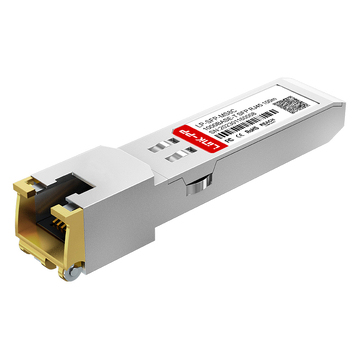
Sí, pero no directamente. Primero debe insertar un transceptor SFP RJ45 de cobre en el puerto del switch. Este adaptador modular convierte la interfaz eléctrica del switch en un conector RJ45 estándar. Nota técnica: Los transceptores de cobre 10GBASE-T consumen hasta 3 vatios por puerto y generan bastante calor, por lo que deben usarse con moderación en switches con refrigeración pasiva (sin ventilador).
La diferencia radica exclusivamente en la capacidad de ancho de banda, no en el tamaño físico. Los puertos SFP estándar admiten velocidades de datos de hasta 1 Gbps (IEEE 802.3z). Los puertos SFP+ utilizan circuitos internos mejorados para admitir velocidades de datos de hasta 10 Gbps (IEEE 802.3ae). Los puertos SFP+ son retrocompatibles y aceptan transceptores SFP de 1G, pero un puerto SFP de 1G no puede leer un transceptor SFP+ de 10G.
Si su proveedor de servicios de Internet (ISP) ofrece una conexión directa por fibra óptica sin una terminal de red óptica (ONT) independiente, necesitará un enrutador o conmutador con un puerto WAN SFP. Es fundamental que el transceptor óptico que instale cumpla con las especificaciones de entrega del ISP, generalmente utilizando óptica monomodo bidireccional (BiDi) que opera en longitudes de onda específicas (por ejemplo, 1310 nm/1490 nm).
Sí. Dado que los puertos SFP funcionan de forma totalmente independiente, un único conmutador de fibra SFP puede alojar simultáneamente módulos de fibra monomodo, módulos de fibra multimodo y transceptores RJ45 de cobre. El único requisito es que cada transceptor sea reconocido por el sistema operativo del conmutador.
Un cable de cobre de conexión directa (DAC) es un cable twinax especializado con módulos SFP preinstalados de fábrica en ambos extremos. Se recomienda usar cables DAC para conexiones ultracortas dentro de un mismo rack (normalmente de menos de 5 metros). Al evitar la conversión óptica, se consigue un menor consumo de energía (aproximadamente 0.1 W por extremo) y una menor latencia en comparación con los enlaces de fibra óptica estándar.
El conmutador de fibra SFP óptimo depende por completo de las limitaciones físicas y lógicas del entorno de implementación. Los usuarios avanzados y los aficionados a la informática doméstica requieren arquitecturas con refrigeración pasiva y sin ventilador que prioricen el silencio acústico y los ecosistemas abiertos de transceptores. Por otro lado, los administradores de red de las pymes demandan conmutadores de gestión activa, montables en rack, que ofrezcan un enrutamiento robusto de capa 2/capa 3, segregación de VLAN e integración perfecta con controladores gestionados en la nube.
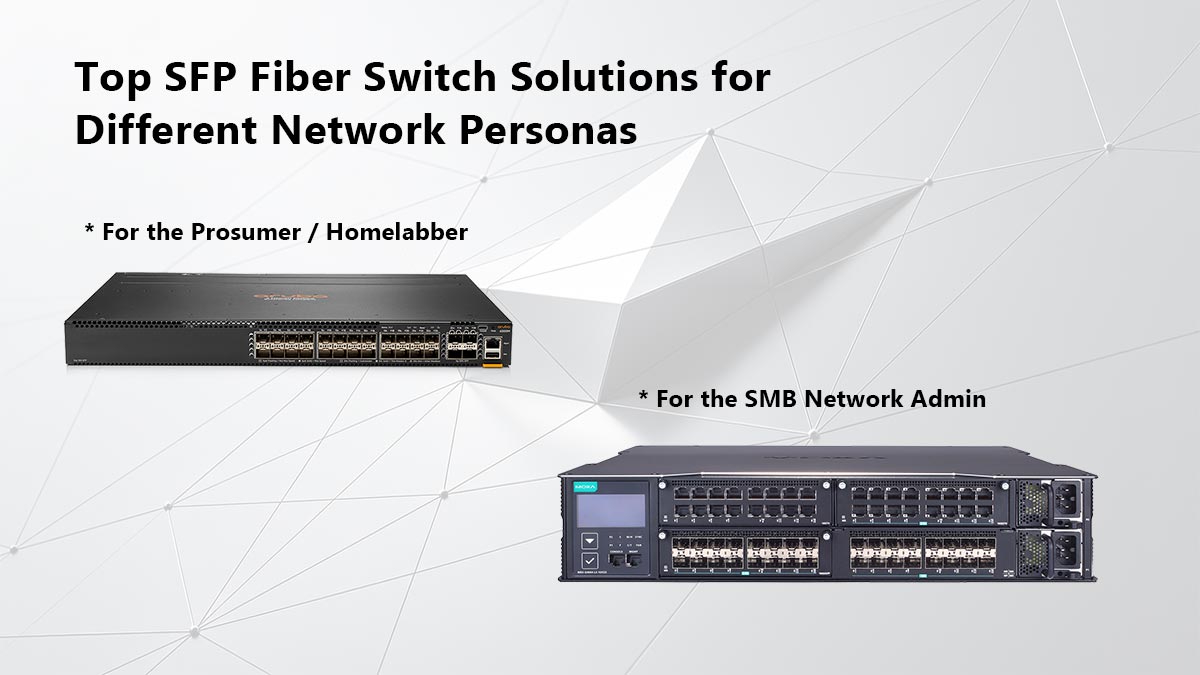
Debido a la gran variabilidad de los entornos de red —desde un armario de cableado corporativo con temperatura controlada hasta un escritorio silencioso en una oficina doméstica—, los fabricantes de hardware han segmentado sus catálogos de conmutadores SFP. Basándonos en la telemetría de implementación y el consenso de la comunidad de ingenieros de red, estas son las principales arquitecturas para los dos perfiles de red más comunes.
El perfil de usuario de un laboratorio doméstico se define por la necesidad de conectividad de alto ancho de banda (10G SFP+) para matrices NAS NVMe y servidores de virtualización, con la estricta limitación de una política de tolerancia cero al ruido acústico.
Los administradores de pequeñas y medianas empresas (pymes) priorizan la disponibilidad de la red, las capacidades de administración remota y la densidad de puertos. El ruido acústico no suele ser una preocupación, ya que estos dispositivos se implementan normalmente en bastidores de distribución intermedios (IDF) dedicados.
Optimiza tu presupuesto de implementación
Independientemente del ecosistema de hardware que elija para su arquitectura de borde, equipar un conmutador de fibra SFP con ópticas OEM de primera mano puede aumentar rápidamente sus costos de implementación. Para garantizar el estricto cumplimiento de MSA, la funcionalidad plug-and-play y evitar los bloqueos restrictivos del proveedor sin pagar el margen de beneficio empresarial, obtenga sus módulos ópticos directamente del LINK-PP Tienda oficial Para transceptores SFP compatibles. Su óptica con codificación de precisión ofrece la misma fiabilidad de capa física y el mismo rendimiento de baja latencia que requieren las exigentes redes de borde de 10G y 25G.

Inicie sesión o cree una cuenta para rastrear su solicitud en línea.