


































Modern enterprise networks are rapidly transitioning toward high-speed optical infrastructures, where 10Gbps connectivity is now a baseline requirement rather than an upgrade. As organizations scale across data centers, campus environments, and edge deployments, optical transceivers such as SFP+ modules play a critical role in maintaining stable and efficient fiber communication across switching systems.
In multi-vendor environments, network operators frequently face challenges related to compatibility and interoperability between different hardware ecosystems. This makes the evaluation of MikroTik SFP+ alternative solutions increasingly important, especially when consistent performance and cross-platform functionality are required. Understanding how these alternatives operate within global switch environments helps ensure smoother deployment and long-term network reliability.
This article provides a structured overview of MikroTik SFP+ alternatives and their role in global switch interoperability, focusing on practical and technical perspectives. It will cover the following key areas:
- The functional role of MikroTik SFP+ modules in 10G optical networks
- Key drivers behind the adoption of compatible optical alternatives
- Principles of global switch interoperability and underlying standards
- Technical compatibility and deployment considerations in mixed environments
- Common challenges and troubleshooting practices in real-world networks
These sections together provide a clear foundation for understanding how to evaluate and deploy interoperable SFP+ solutions effectively in complex network infrastructures.
🔱 Understanding MikroTik SFP+ Modules and Their Role in Network Infrastructure
MikroTik SFP+ modules are 10Gbps hot-swappable optical transceivers designed to enable high-speed fiber connectivity between MikroTik switches, routers, and other networking devices. In practical network deployments, they serve as the physical interface layer that converts electrical signals into optical signals, making long-distance and high-bandwidth transmission possible across fiber infrastructure.
To better understand their role, it is important to view SFP+ modules as a modular building block in modern network design. They allow network engineers to select different transmission types and distances without changing the core switching hardware. This flexibility is essential in environments where scalability and performance must be balanced with cost and infrastructure constraints.
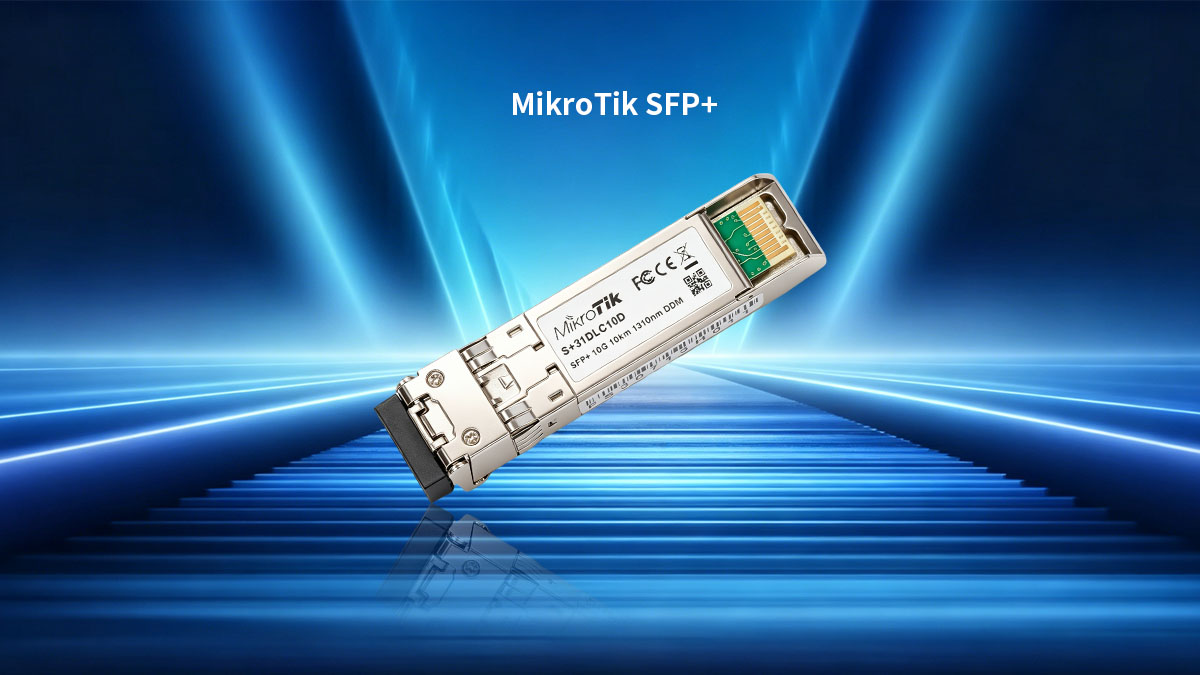
What Is a MikroTik SFP+ Module?
A MikroTik SFP+ module is a compact optical transceiver that supports 10Gbps Ethernet connectivity through a standardized SFP+ interface. It is widely used in aggregation layers, data centers, and high-performance enterprise networks where low-latency and high-throughput communication is required.
From a functional perspective, it is designed to:
- Enable 10Gbps data transmission over fiber or direct attach copper (DAC)
- Support standardized SFP+ ports on MikroTik devices
- Provide plug-and-play integration without requiring system downtime
These characteristics make it a practical component in scalable network architectures where modularity and flexibility are essential for growth and maintenance.
Key Features of MikroTik SFP+ Optics
MikroTik SFP+ modules are built to support operational flexibility across different network scenarios. Their design focuses on interoperability, efficiency, and ease of deployment in fiber-based systems.
To understand their practical advantages, consider the following key features that define their usage in real networks:
- Hot-swappable capability that allows replacement without interrupting network operations
- Compact form factor that supports high-density switch environments
- Support for multiple optical standards depending on distance and fiber type
- Compatibility with both multi-mode and single-mode fiber infrastructures
These features make SFP+ modules a critical component in environments where uptime and adaptability are key operational requirements.
Why SFP+ Remains Relevant in Modern Networks
Despite the emergence of higher-speed standards such as 25G and 100G, SFP+ remains widely deployed due to its balance of performance, cost efficiency, and infrastructure maturity. Many enterprise and campus networks continue to rely on 10Gbps links as the optimal point between bandwidth demand and deployment complexity.
The continued relevance of SFP+ is driven by several factors:
- Strong compatibility with existing fiber infrastructure
- Lower operational and upgrade costs compared to higher-speed optics
- Sufficient bandwidth for most enterprise aggregation and access layers
- Wide availability of compatible switching platforms and modules
As a result, MikroTik SFP+ modules remain an important and practical choice for organizations maintaining or expanding 10G optical networks.
🔱 Common MikroTik SFP+ Module Types
MikroTik SFP+ modules are available in multiple optical variants to support different transmission distances and fiber environments. In real network deployments, selecting the correct module type is essential because it directly impacts link stability, optical budget, and overall network performance.
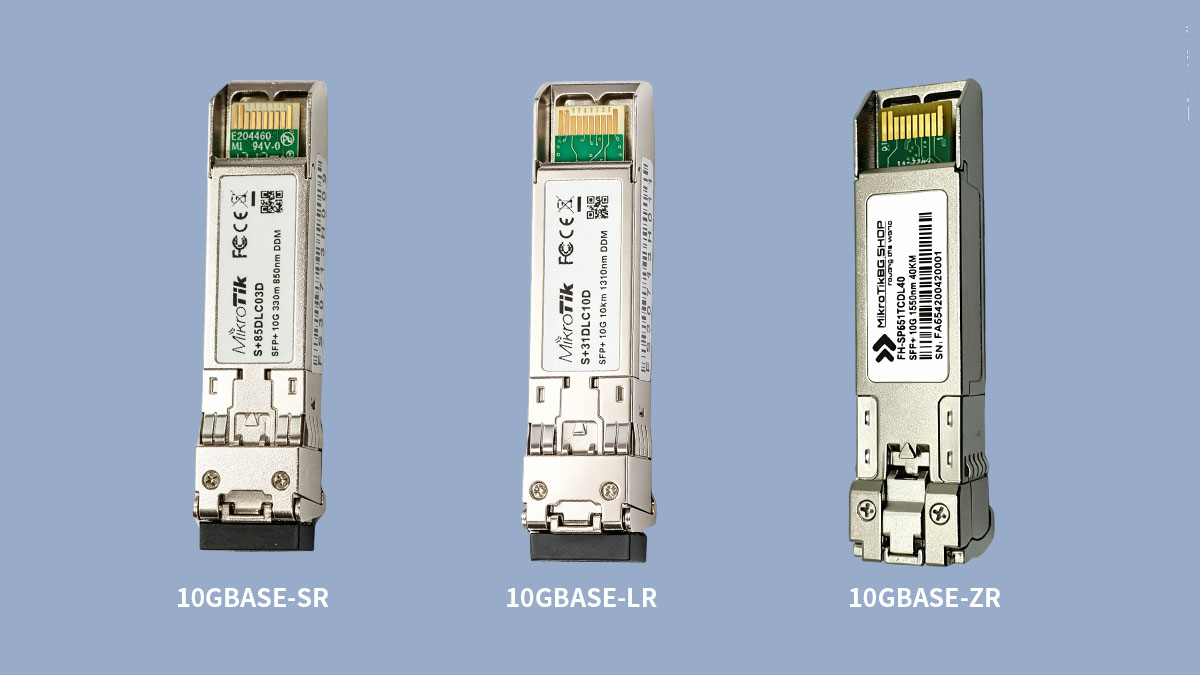
To understand their practical usage, it is helpful to categorize these modules based on standardized Ethernet optical specifications, each designed for a specific range and fiber type.
10GBASE-SR for Short-Reach Connectivity
10GBASE-SR modules are designed for short-distance transmission over multi-mode fiber and are commonly used in high-density environments such as data centers and enterprise racks.
From a deployment perspective, SR modules are typically selected when devices are located within the same room or adjacent racks, where long-distance transmission is not required.
Key characteristics include:
- Optimized for multi-mode fiber (MMF) environments
- Suitable for short-range interconnects within data centers
- Commonly used for switch-to-switch or switch-to-server connections
- High compatibility with structured cabling systems in enterprise environments
These attributes make SR modules a standard choice for intra-facility 10G connectivity where cost efficiency and simplicity are priorities.
10GBASE-LR for Long-Reach Fiber Links
10GBASE-LR modules are designed for longer-distance communication over single-mode fiber and are widely deployed in campus networks and inter-building connections.
In practical terms, LR modules are used when network endpoints are separated by significant physical distance but still require stable 10Gbps connectivity.
Key characteristics include:
- Support for single-mode fiber (SMF) transmission
- Designed for longer reach compared to SR modules
- Common in campus backbone and distribution layer networks
- Suitable for structured long-distance enterprise connectivity
These features make LR modules a reliable choice for organizations extending fiber links across buildings or network zones.
10GBASE-ER for Extended-Reach Networks
10GBASE-ER modules extend transmission capabilities beyond standard long-reach optics, enabling connectivity over significantly greater distances in fiber infrastructures.
From a network design perspective, ER modules are typically used in environments where infrastructure spans across large geographic or metropolitan areas.
Key characteristics include:
- Extended transmission distance over single-mode fiber
- Optimized for metro and regional network deployments
- Requires careful optical budget planning
- Often used in carrier-grade or large enterprise backbones
These modules provide the additional reach required for networks that exceed standard campus-scale distances.
10GBASE-ZR for Ultra-Long Distance Deployments
10GBASE-ZR modules are designed for ultra-long-distance transmission scenarios where maximum reach is required within the 10Gbps optical class.
In practical applications, ZR modules are used in specialized deployments where direct fiber connectivity spans very large distances without intermediate regeneration.
Key characteristics include:
- Ultra-long transmission capability over single-mode fiber
- Suitable for large-scale metropolitan or backbone networks
- Requires strict optical power and dispersion management
- Typically used in advanced carrier or intercity networks
Due to their extended reach, ZR modules are applied in highly specialized scenarios where standard LR and ER optics are insufficient for network design requirements.
🔱 Why Organizations Consider MikroTik SFP+ Alternatives
In modern network environments, MikroTik SFP+ modules are widely used, but many organizations still evaluate alternative optical transceivers to improve flexibility, simplify operations, and support multi-vendor infrastructure. This consideration is not driven by performance limitations alone, but by broader architectural and operational requirements in heterogeneous network ecosystems.

Multi-Vendor Network Environments
MikroTik SFP+ alternatives are often considered in environments where multiple switch vendors coexist within the same infrastructure. This is increasingly common in enterprise and service provider networks where different platforms are selected based on cost, performance, or functional specialization.
In such scenarios, optical compatibility becomes a critical design factor rather than a secondary concern.
Key reasons include:
- Networks often include mixed vendors such as MikroTik, Cisco, Juniper, and others
- Standardized optics help ensure consistent behavior across platforms
- Reduced dependency on vendor-specific transceivers improves operational flexibility
- Simplified spare parts management across different hardware ecosystems
This multi-vendor reality drives demand for transceivers that can operate consistently across global switch infrastructures.
Operational Flexibility and Scalability
Another key reason organizations evaluate MikroTik SFP+ alternatives is the need for greater operational flexibility as networks scale. As infrastructure grows, maintaining uniform optical components becomes increasingly important for efficient management and expansion.
Alternative SFP+ solutions can support this requirement by enabling more adaptable deployment strategies.
Key operational benefits include:
- Easier expansion across new network segments without redesigning optics strategy
- Simplified inventory management through standardized transceiver models
- Reduced complexity in procurement and maintenance processes
- Improved consistency in large-scale deployments
These advantages are particularly important in fast-growing environments where network expansion must remain predictable and manageable.
Cost Optimization Without Sacrificing Performance
Cost efficiency is another significant factor influencing the adoption of MikroTik SFP+ alternatives. While performance requirements remain unchanged, organizations often seek ways to optimize infrastructure spending without compromising reliability or stability.
In this context, alternative transceivers are evaluated based on their ability to meet technical standards while supporting more flexible budget allocation.
Key considerations include:
- Balancing optical performance with long-term operational costs
- Reducing vendor lock-in to enable competitive sourcing options
- Maintaining compliance with IEEE and MSA standards for reliability
- Ensuring consistent performance across different switching platforms
This approach allows organizations to maintain high-performance optical networks while optimizing overall infrastructure investment strategies.
🔱 Global Switch Interoperability Explained
Global switch interoperability refers to the ability of optical transceivers such as SFP+ modules to operate consistently across networking devices from different manufacturers. In modern multi-vendor networks, this capability is essential for ensuring stable connectivity, predictable performance, and simplified infrastructure management. Without interoperability, network design becomes fragmented and heavily dependent on single-vendor ecosystems.

What Is Optical Interoperability?
Optical interoperability describes the capability of a transceiver module to communicate correctly with a switch regardless of vendor differences. It is fundamentally based on adherence to industry standards rather than proprietary implementations.
This means that as long as a module follows defined optical and electrical specifications, it can typically operate across multiple platforms without performance degradation.
Key aspects include:
- Compliance with IEEE Ethernet optical standards
- Consistent optical wavelength and signal characteristics
- Standardized form factor and electrical interface (SFP+ MSA)
- Proper communication between module EEPROM and switch firmware
These elements together define whether an optical module can function in a global switch environment without compatibility issues.
Factors That Influence Interoperability
Although standards define the baseline for compatibility, real-world interoperability is influenced by several technical and firmware-level factors. These determine whether a MikroTik SFP+ alternative will be recognized and function correctly across different systems.
Key influencing factors include:
- EEPROM coding that identifies module compatibility to host devices
- Switch firmware policies that may restrict or validate third-party optics
- Consistency of optical wavelength and power levels across devices
- Support for Digital Optical Monitoring (DOM) functions for diagnostics
These factors explain why some modules operate seamlessly across platforms while others may require additional configuration or may not be recognized at all.
Benefits of Cross-Vendor Optical Compatibility
Cross-vendor compatibility provides significant advantages in modern network design, particularly in environments where infrastructure is not tied to a single manufacturer.
From an operational perspective, interoperability delivers several key benefits:
- Reduced vendor dependency, allowing more flexible procurement strategies
- Simplified network expansion across mixed hardware environments
- Improved fault tolerance through interchangeable optical components
- More efficient maintenance and inventory standardization
These advantages make global switch interoperability a foundational requirement for scalable and resilient network architectures, especially in enterprise and service provider deployments where flexibility and uptime are critical.
🔱 Technical Standards That Enable MikroTik SFP+ Compatibility
MikroTik SFP+ compatibility across different network environments is primarily enabled by widely adopted industry standards. These standards ensure that optical transceivers can operate consistently across different switch platforms while maintaining stable performance, signal integrity, and predictable behavior in 10Gbps networks. In practical deployments, adherence to these standards is the foundation of global interoperability.
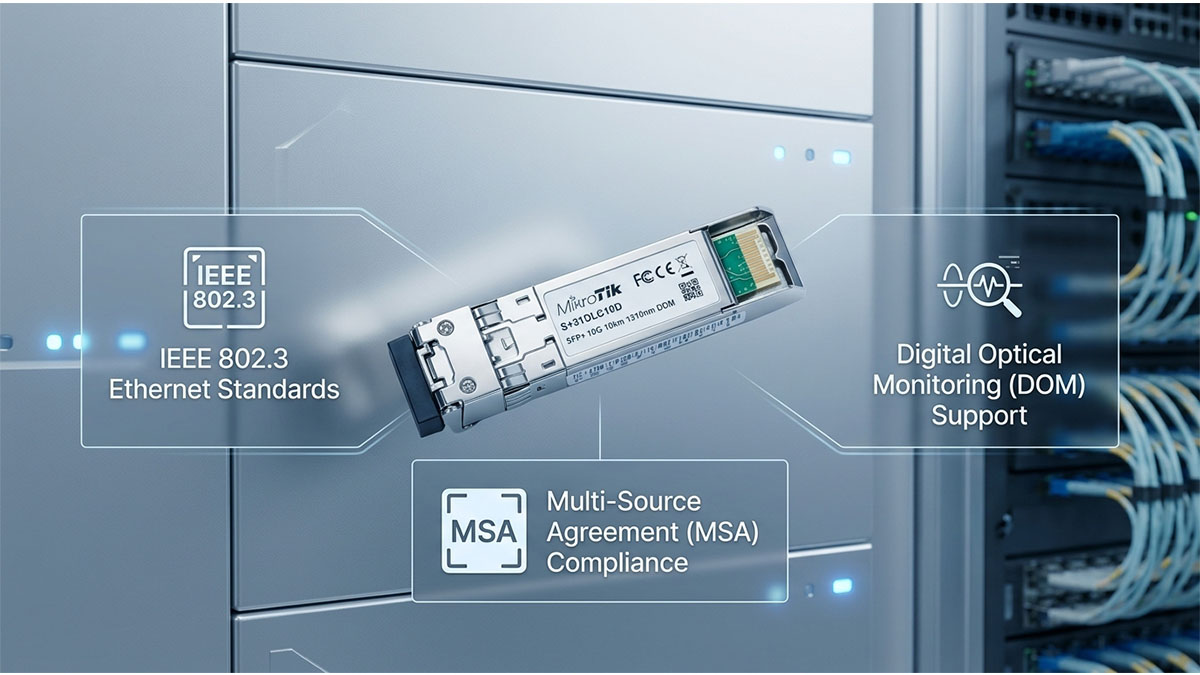
IEEE 802.3 Ethernet Standards
IEEE 802.3 Ethernet standards define the electrical and optical signaling requirements for 10Gbps Ethernet communication. These standards ensure that SFP+ modules transmit and receive data in a consistent format across different hardware vendors.
In real-world network design, IEEE compliance is essential because it guarantees baseline compatibility at the protocol and physical transmission level.
Key elements include:
- Standardized 10GbE signaling rules for optical transmission
- Defined parameters for wavelength, modulation, and data rate consistency
- Interoperability guidelines for network devices across vendors
- Reliable performance expectations for enterprise-grade deployments
These specifications form the technical foundation that allows MikroTik SFP+ and compatible modules to function in heterogeneous network environments.
Multi-Source Agreement (MSA) Compliance
The SFP+ Multi-Source Agreement (MSA) defines the mechanical, electrical, and communication interface standards for transceiver modules. It ensures that modules from different manufacturers maintain physical and logical compatibility with SFP+ ports.
In practice, MSA compliance is what allows a module to physically fit and electrically function in any standard SFP+ slot.
Key characteristics include:
- Standardized physical dimensions for transceiver housing
- Defined electrical interface between module and host device
- Uniform connector design for fiber and DAC compatibility
- Consistent pin assignments across compliant devices
These requirements ensure that MikroTik SFP+ alternatives can be deployed across a wide range of switch platforms without physical or electrical mismatch issues.
Digital Optical Monitoring (DOM) Support
Digital Optical Monitoring (DOM) provides real-time visibility into the operational status of optical transceivers. It enables network engineers to monitor critical performance metrics and proactively identify potential issues before they impact network stability.
In modern deployments, DOM support is a key factor in maintaining long-term reliability of MikroTik SFP+ and compatible modules.
Key monitored parameters include:
- Optical transmit and receive power levels
- Temperature of the transceiver module
- Laser bias current and operational health indicators
- Voltage stability and signal integrity metrics
These monitoring capabilities improve troubleshooting efficiency and help maintain consistent performance across multi-vendor optical networks.
🔱 Comparing MikroTik SFP+ Modules and Compatible Alternatives
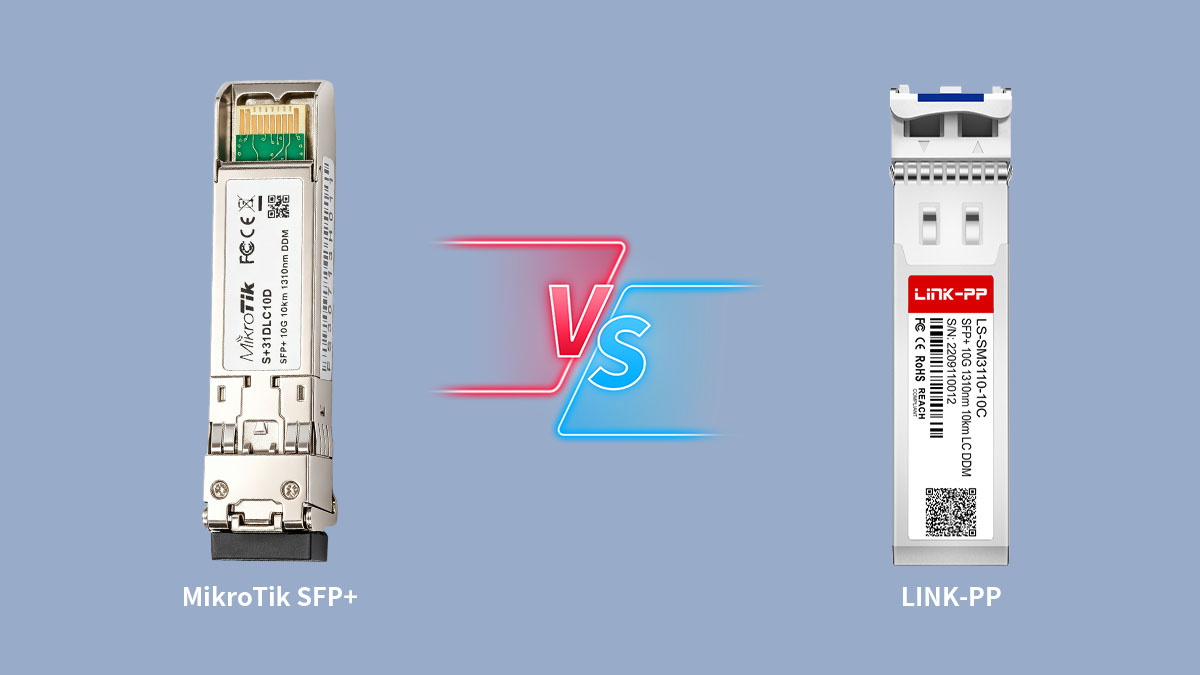
MikroTik SFP+ modules and compatible alternatives are often evaluated side by side in real-world network planning to determine which option better fits performance requirements, interoperability needs, and operational strategy. In practice, both categories can deliver 10Gbps connectivity, but differences appear in compatibility flexibility, deployment scope, and lifecycle management across multi-vendor environments.
Technical Specification Comparison
From a technical standpoint, MikroTik SFP+ modules and compatible alternatives are built around the same IEEE and MSA standards, which means their core transmission capabilities are fundamentally aligned. However, subtle differences may exist in coding, diagnostics support, and cross-platform recognition.
Before reviewing the comparison, it is important to understand that both options are designed to meet the same 10Gbps Ethernet requirements, so the focus is on interoperability and operational flexibility rather than raw speed differences.
| Feature | MikroTik SFP+ Modules | Compatible Alternatives |
|---|---|---|
| Data Rate | 10Gbps | 10Gbps |
| Form Factor | SFP+ | SFP+ |
| Fiber Types Supported | MMF / SMF (model dependent) | MMF / SMF (model dependent) |
| Wavelength Options | Standard IEEE-compliant wavelengths | Standard IEEE-compliant wavelengths |
| DOM Support | Available on selected models | Widely supported across models |
| Cross-Vendor Compatibility | Optimized for MikroTik systems | Designed for multi-vendor interoperability |
After reviewing the table, it becomes clear that the primary differentiation is not performance capability, but rather the scope of interoperability and deployment flexibility in mixed hardware environments.
Interoperability Across Major Switch Vendors
In real deployments, compatibility across different switch platforms is often more important than module origin. MikroTik SFP+ modules are primarily optimized for MikroTik devices, while compatible alternatives are typically designed and tested for broader cross-vendor usage.
This distinction becomes especially important in multi-brand infrastructures where consistency is required across different network layers.
Key interoperability considerations include:
- MikroTik modules generally perform best within MikroTik ecosystems
- Compatible alternatives are validated across platforms such as Cisco, Juniper, HPE, and others
- Firmware recognition behavior may differ between vendors
- Standard-compliant optics reduce configuration complexity in mixed environments
These factors highlight why many network architects prioritize interoperability testing when designing heterogeneous networks.
Reliability and Network Performance Evaluation
Both MikroTik SFP+ modules and compatible alternatives are capable of delivering stable 10Gbps performance when properly matched with fiber infrastructure. However, reliability in real-world conditions depends on more than just specification alignment.
Performance evaluation typically focuses on long-term stability under operational load rather than theoretical maximum throughput.
Key evaluation factors include:
- Signal stability under varying temperature conditions
- Error rate performance in high-traffic environments
- Consistency of optical power levels over time
- Compatibility with network monitoring and diagnostics systems
When properly selected and deployed, both options can maintain high reliability, but compatible alternatives often provide additional flexibility in heterogeneous network designs where multiple hardware vendors are involved.
🔱 Deployment Considerations for MikroTik SFP+ Alternatives
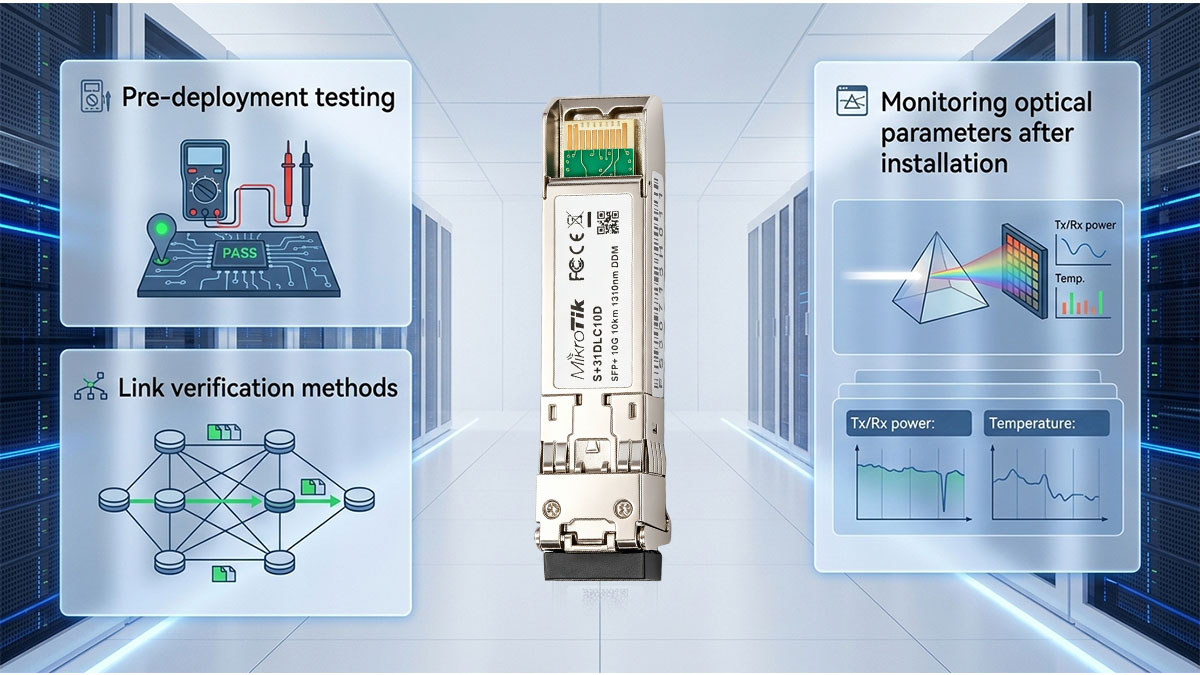
Deploying MikroTik SFP+ alternatives in real network environments requires careful planning to ensure stable performance, interoperability, and long-term operational reliability. Although these modules are designed to follow industry standards, their actual behavior can vary depending on switch firmware, fiber infrastructure, and configuration practices. Proper evaluation before deployment helps avoid compatibility issues and ensures consistent 10Gbps connectivity across the network.
Verifying Hardware Compatibility
Before deploying MikroTik SFP+ alternatives, verifying compatibility with the target switch hardware is a critical first step. Even when modules follow IEEE and MSA standards, vendor-specific firmware policies may influence recognition and functionality.
To reduce deployment risks, engineers typically validate compatibility through structured checks:
- Confirm SFP+ port support on MikroTik and other switch platforms
- Review vendor firmware limitations or transceiver whitelist policies
- Test module recognition behavior in staging environments before production use
- Ensure consistent DOM reporting across different devices
These validation steps help ensure that the selected transceivers operate reliably across intended platforms without unexpected restrictions.
Fiber Infrastructure Assessment
A stable SFP+ deployment depends heavily on the quality and structure of the underlying fiber infrastructure. Even fully compatible modules may underperform if fiber conditions are not properly aligned with technical requirements.
Before installation, it is important to evaluate the physical and optical environment:
- Determine whether single-mode or multi-mode fiber is required
- Verify connector types (LC duplex is most common in 10Gbps networks)
- Assess fiber cleanliness and attenuation levels
- Calculate optical power budget for end-to-end link stability
These factors ensure that MikroTik SFP+ alternatives operate within optimal transmission ranges and maintain signal integrity across the entire link.
Installation and Validation Best Practices
Once compatibility and infrastructure readiness are confirmed, proper installation and validation practices help ensure stable long-term operation. Even minor installation errors can lead to signal degradation or intermittent link failures in high-speed optical networks.
A structured deployment process typically includes:
- Installing modules only after switch ports are powered and stable
- Performing initial link tests to confirm 10Gbps synchronization
- Monitoring optical parameters such as power levels and temperature via DOM
- Conducting stress testing under real traffic conditions before full rollout
These practices ensure that the deployed solution not only functions at startup but also maintains consistent performance under production workloads, supporting reliable multi-vendor network operations.
🔱 Common Interoperability Challenges and Troubleshooting
Even when MikroTik SFP+ alternatives are designed based on IEEE and MSA standards, real-world deployments in multi-vendor environments can still encounter interoperability challenges. These issues are often not related to raw optical performance, but rather to firmware behavior, coding recognition, or environmental factors within the network.
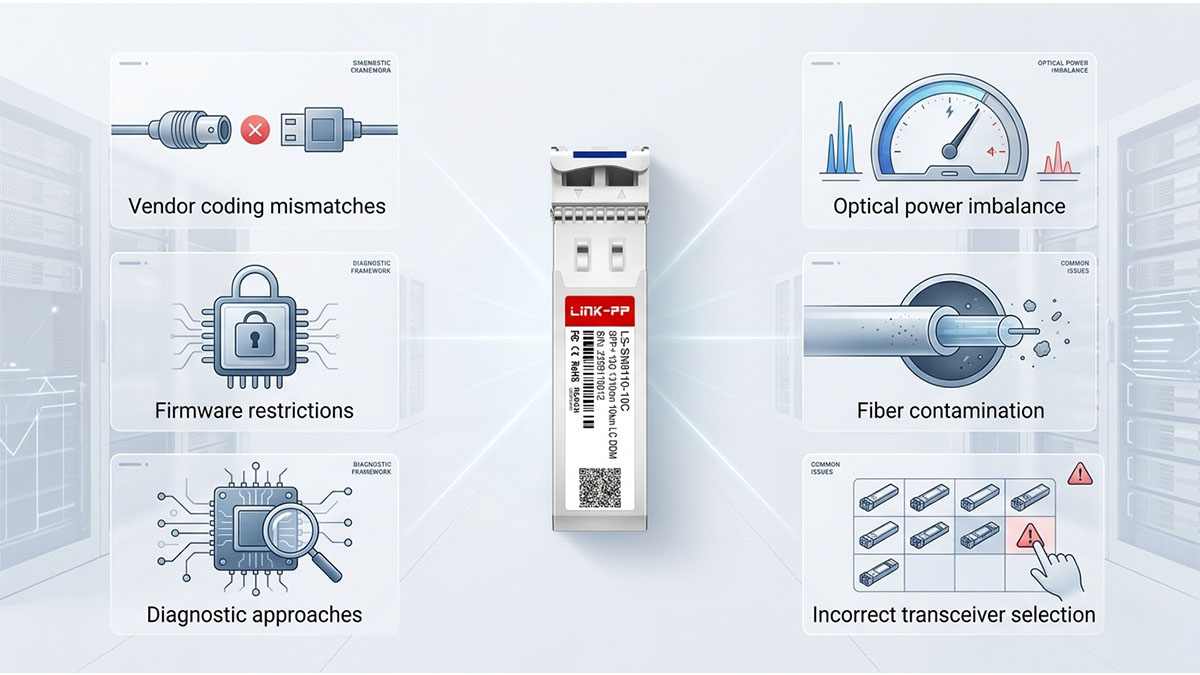
Understanding these challenges in advance allows network engineers to quickly isolate issues and maintain stable 10Gbps connectivity across heterogeneous infrastructure.
Module Recognition Issues
One of the most common interoperability problems is module recognition failure, where a switch does not properly detect or initialize the SFP+ transceiver. This issue is often linked to vendor-specific firmware policies rather than physical incompatibility.
Typical causes and troubleshooting approaches include:
- EEPROM coding mismatch between module and switch firmware expectations
- Vendor restrictions that block non-authorized transceiver identifiers
- Outdated switch firmware that lacks updated compatibility profiles
- Incorrect module insertion or port initialization state
To resolve these issues, engineers often validate firmware versions, check compatibility lists, and perform controlled testing across multiple ports or devices to isolate the behavior.
Link Stability Problems
Another frequent challenge is unstable or intermittent optical links, where connectivity may fluctuate despite successful initial recognition. These issues are typically related to optical signal quality rather than logical configuration.
Common root causes include:
- Optical power levels outside the acceptable receiver sensitivity range
- Dirty or improperly seated fiber connectors
- Mismatched transceiver types (e.g., mixing SR and LR optics)
- Excessive attenuation due to long or degraded fiber runs
Troubleshooting usually involves checking DOM statistics, cleaning fiber connectors, and verifying that the selected MikroTik SFP+ alternative matches the correct optical budget for the link distance.
Performance Monitoring and Maintenance
Long-term stability of SFP+ deployments depends on continuous monitoring and proactive maintenance. Without proper visibility, small degradation issues can evolve into significant network disruptions over time.
Effective monitoring practices include:
- Regular review of DOM parameters such as power, temperature, and bias current
- Tracking error rates and retransmissions under normal traffic loads
- Establishing baseline performance metrics for each link type
- Scheduling preventive maintenance for fiber cleaning and inspection
By maintaining consistent monitoring routines, organizations can detect early signs of degradation and ensure that MikroTik SFP+ alternatives continue to perform reliably within multi-vendor network environments.
🔱 Best Practices for Selecting a MikroTik SFP+ Alternative
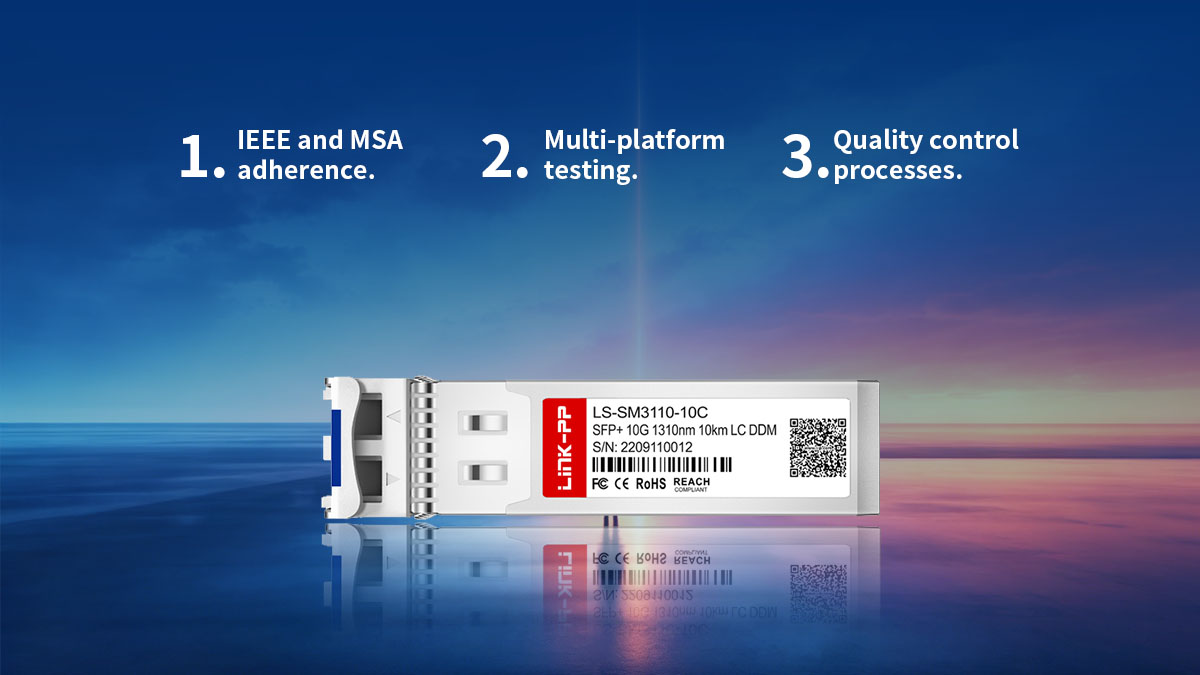
Selecting a MikroTik SFP+ alternative requires more than simply matching transmission speed or connector type. In modern multi-vendor networks, the ideal transceiver must also provide stable interoperability, long-term reliability, and compatibility with evolving infrastructure requirements. A structured evaluation process helps reduce deployment risks and ensures consistent optical performance across different switch environments.
Prioritize Standards Compliance
Standards compliance is the foundation of optical interoperability. A MikroTik SFP+ alternative that fully adheres to IEEE and MSA specifications is more likely to function consistently across diverse network platforms.
Before selecting a transceiver, it is important to verify several technical factors:
- Compliance with IEEE 802.3 10GbE optical standards
- Adherence to SFP+ Multi-Source Agreement (MSA) specifications
- Proper support for Digital Optical Monitoring (DOM) functions
- Alignment with required wavelength and transmission distance standards
These criteria help ensure that the selected module can maintain stable operation in both MikroTik and mixed-vendor environments.
Evaluate Vendor Testing Procedures
The quality of interoperability testing is another critical factor when choosing a MikroTik SFP+ alternative. Even modules with identical specifications may perform differently depending on manufacturing consistency and validation procedures.
Reliable suppliers typically implement extensive testing workflows that include:
- Cross-platform validation across major switch vendors
- Optical signal integrity and error-rate testing
- Environmental testing under varying temperature conditions
- DOM accuracy verification and firmware compatibility checks
Comprehensive testing reduces the likelihood of deployment issues and improves long-term operational stability within enterprise and data center networks.
Consider Future Network Expansion
A well-selected SFP+ solution should support not only current infrastructure requirements but also future scalability goals. As networks evolve, interoperability and deployment flexibility become increasingly important.
When planning for long-term infrastructure growth, organizations should consider:
- Compatibility with multiple switch platforms and future hardware upgrades
- Standardized transceiver strategies across network layers
- Simplified inventory management for expanding deployments
- Long-term availability of compatible optical modules
These considerations help create a more adaptable optical infrastructure capable of supporting future expansion without introducing unnecessary operational complexity.
🔱 Conclusion
MikroTik SFP+ alternatives have become an important part of modern optical networking, especially in environments where multi-vendor interoperability and operational flexibility are critical. As enterprise and data center infrastructures continue to evolve, organizations increasingly require transceiver solutions that can maintain stable 10Gbps connectivity across different switch platforms while supporting long-term scalability and simplified network management.
Throughout this article, several key factors have emerged as essential when evaluating compatible SFP+ solutions:
- Compliance with IEEE and MSA industry standards
- Reliable interoperability across global switch vendors
- Stable optical performance and DOM monitoring support
- Proper alignment with fiber infrastructure and deployment requirements
- Long-term scalability for growing network environments
These considerations help ensure that MikroTik SFP+ alternatives can deliver consistent performance in heterogeneous network architectures without introducing unnecessary operational complexity.
For organizations seeking interoperable optical transceivers that are extensively tested across multiple networking platforms, LINK-PP Official Store provides a broad range of compatible SFP+ solutions designed for enterprise, data center, and carrier-grade environments. With strong focus on standards compliance, cross-vendor compatibility, and network reliability, compatible optics can play a valuable role in building flexible and scalable 10Gbps infrastructures for modern networking demands.







