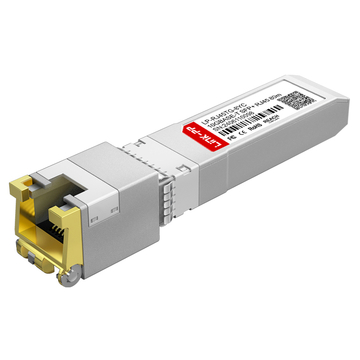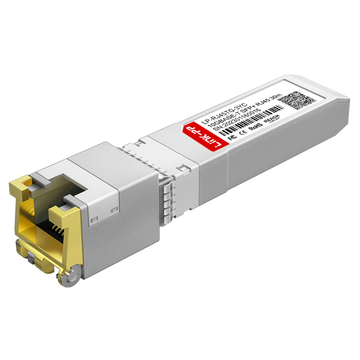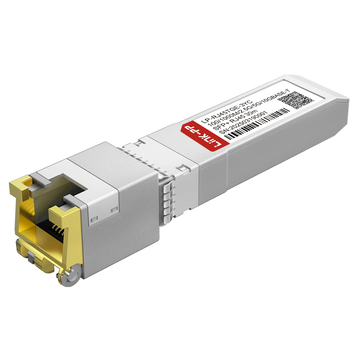


























As enterprise networks, data centers, and high-performance computing environments continue to demand higher bandwidth capacity, 10Gbps Ethernet connectivity has become a critical upgrade path for modern network infrastructures. Although optical transceiver solutions are widely adopted for long-distance transmission, copper-based Ethernet modules remain an important choice for short-range connections due to their ability to utilize existing RJ45 cabling systems and simplify network expansion. The increasing demand for high-speed copper connectivity has driven the adoption of reliable 10GBASE-T transceiver solutions across various networking environments.
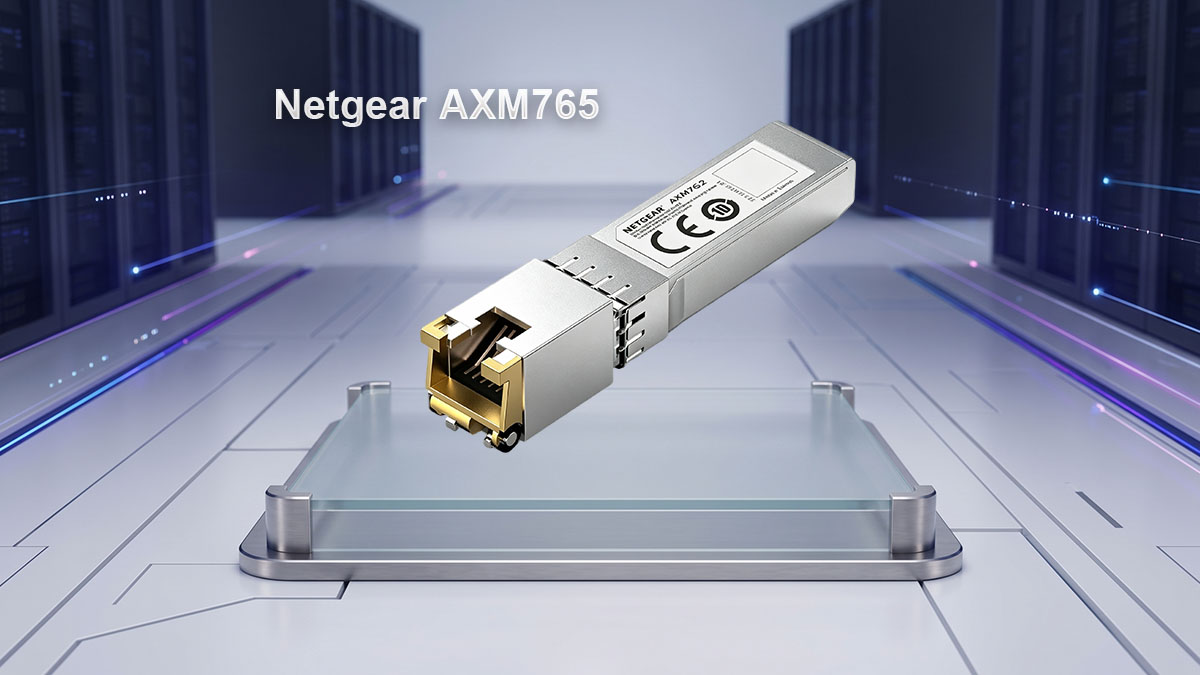
The Netgear AXM765 is a 10GBASE-T SFP+ copper transceiver designed to provide high-speed Ethernet connectivity through standard RJ45 copper interfaces. Supporting transmission distances of up to 80m, this module enables SFP+ equipped switches and networking devices to connect with existing copper-based Ethernet infrastructure. Understanding the Netgear AXM765 technical specifications, including its interface design, transmission capability, and compatibility characteristics, helps network professionals evaluate its suitability for different deployment scenarios.
This article provides a comprehensive overview of the Netgear AXM765 technical specifications, focusing on:
- 10GBASE-T performance, RJ45 interface design, and copper transmission capabilities.
- Electrical characteristics, power requirements, and hardware design considerations.
- Compatibility factors, deployment environments, and practical application scenarios.
By exploring these technical details, this guide helps readers gain a complete understanding of the AXM765’s capabilities and its role in modern 10GbE network connectivity solutions.
✅ Netgear AXM765 Overview and Product Positioning
The Netgear AXM765 is a 10GBASE-T SFP+ copper transceiver designed to extend high-speed Ethernet connectivity to network devices equipped with SFP+ ports. It bridges the gap between modern 10Gbps switching platforms and traditional copper-based Ethernet infrastructure by providing an RJ45 interface for direct connection with standard twisted-pair cables. Its positioning focuses on short-distance 10GbE deployments where organizations need higher bandwidth while maintaining existing copper cabling environments.
What Is the Netgear AXM765?
The Netgear AXM765 is a pluggable 10GBASE-T copper module that converts an SFP+ network port into a 10Gbps RJ45 Ethernet interface. Unlike optical SFP+ modules that require fiber cabling and optical components, the AXM765 is designed for copper Ethernet connectivity, allowing network administrators to connect switches, servers, and other Ethernet devices through commonly deployed twisted-pair cables.
The main characteristics of the Netgear AXM765 include:
- A 10GBASE-T Ethernet interface supporting data transmission speeds up to 10Gbps.
- An RJ45 connector interface for compatibility with standard copper Ethernet cabling.
- An SFP+ form factor designed for integration with compatible network equipment.
- Support for short-distance high-speed connections with a maximum transmission distance of 80m.
- A practical solution for upgrading existing copper-based networks without replacing the entire cabling infrastructure.
The AXM765 is primarily designed for environments where SFP+ switch ports need to connect with copper Ethernet devices. By combining the flexibility of an SFP+ module with the accessibility of RJ45 connectivity, it provides a convenient approach for deploying 10GbE links in enterprise and data center networks.
Key Features of Netgear AXM765
The Netgear AXM765 delivers several important features that make it suitable for short-range 10GbE copper networking applications. Its design focuses on maintaining compatibility with existing Ethernet infrastructure while providing higher bandwidth performance compared with traditional Gigabit Ethernet connections.
The key features of the AXM765 include:
- 10Gbps Ethernet performance:
The module supports 10GBASE-T connectivity, enabling high-speed data transmission for bandwidth-intensive network applications such as server connections, storage networks, and enterprise switching environments. - RJ45 copper interface:
The integrated RJ45 connector allows direct connection with standard Ethernet cables, reducing the need for additional fiber infrastructure and simplifying installation in existing copper networks. - 80m transmission capability:
The AXM765 supports copper transmission distances of up to 80m, making it suitable for rack-level connections, server rooms, and short-distance enterprise network deployments. - SFP+ hot-pluggable design:
The module follows the compact SFP+ form factor, allowing installation and replacement without powering down compatible network equipment. - Existing cabling utilization:
By supporting copper Ethernet connections, the AXM765 enables organizations to maximize the value of existing Cat6a or Cat7 cabling systems during network upgrades.
These features position the AXM765 as a practical connectivity option for organizations seeking 10GbE performance while maintaining compatibility with established copper Ethernet environments.
Netgear AXM765 Technical Specification Summary
The technical specifications of the Netgear AXM765 define its primary capabilities, including transmission performance, interface type, and deployment requirements. These parameters help network engineers understand where the module fits within a 10GbE connectivity architecture.
The following table summarizes the key specifications of the Netgear AXM765:
| Specification | Details |
|---|---|
| Module Type | 10GBASE-T SFP+ Copper Transceiver |
| Data Rate | 10Gbps Ethernet |
| Connector Type | RJ45 |
| Transmission Medium | Copper Twisted-Pair Cable |
| Maximum Distance | Up to 80m |
| Form Factor | SFP+ |
These specifications show that the AXM765 is optimized for short-distance copper Ethernet applications rather than long-range network links. Its combination of 10Gbps performance, RJ45 accessibility, and SFP+ compatibility makes it suitable for connecting modern switching platforms with existing copper-based network infrastructure.
✅ Netgear AXM765 10GBASE-T Interface and Data Transmission Performance
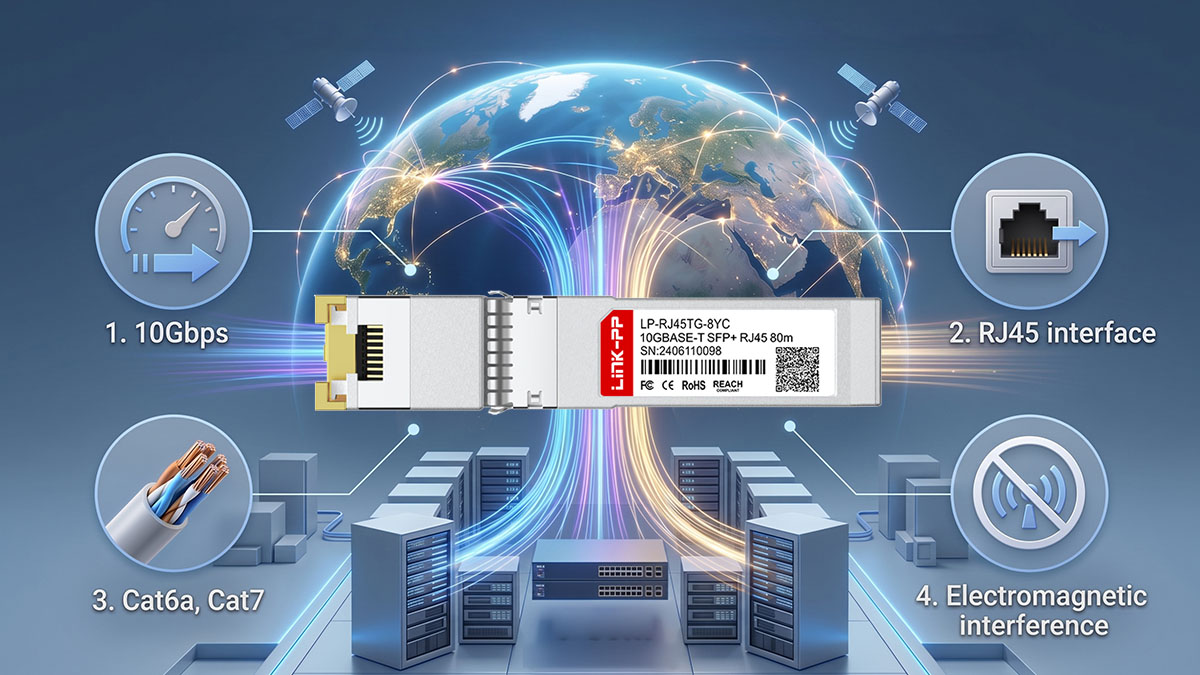
The Netgear AXM765 delivers 10Gbps Ethernet connectivity through 10GBASE-T copper technology, enabling high-speed data transmission over standard twisted-pair cabling. Its interface design allows SFP+ equipped networking devices to connect with RJ45-based Ethernet systems, making it suitable for short-distance applications where maintaining existing copper infrastructure is an important consideration. Understanding its 10GBASE-T technology, RJ45 interface characteristics, and transmission requirements helps clarify the module’s performance capabilities in modern network environments.
10GBASE-T Technology Support
The Netgear AXM765 supports 10GBASE-T Ethernet technology, which enables 10Gbps data transmission over copper cabling and provides a high-bandwidth alternative to traditional Gigabit Ethernet connections. This technology is designed to deliver enterprise-level network performance while allowing organizations to continue using existing structured copper cabling systems.
The key characteristics of 10GBASE-T support in the AXM765 include:
- 10Gbps Ethernet connectivity:
The module provides a maximum data rate of 10Gbps, supporting applications that require higher throughput than standard 1GbE connections. - Copper-based Ethernet transmission:
Unlike optical transceivers that transmit data through fiber, 10GBASE-T technology uses electrical signals over twisted-pair copper cables. - IEEE 802.3an compatibility:
The 10GBASE-T standard is based on IEEE 802.3an specifications, providing a standardized approach for 10Gbps Ethernet transmission over copper networks. - Backward compatibility support:
10GBASE-T technology can support lower Ethernet speeds depending on host device capabilities and network configurations, providing additional flexibility during network upgrades.
The adoption of 10GBASE-T allows the Netgear AXM765 to serve as a bridge between modern high-speed switching equipment and existing copper Ethernet environments. This makes it particularly valuable in deployments where fiber replacement is unnecessary or where short-distance connectivity is the primary requirement.
RJ45 Copper Interface Characteristics
The RJ45 interface is one of the defining features of the Netgear AXM765, providing direct compatibility with widely deployed copper Ethernet cabling. By integrating an RJ45 connector into the SFP+ module design, the AXM765 enables network devices with SFP+ ports to communicate with standard Ethernet equipment without additional media converters.
The main characteristics of the AXM765 RJ45 copper interface include:
- Standard Ethernet connectivity:
The RJ45 interface supports connection with commonly used twisted-pair Ethernet cables, simplifying installation in existing network environments. - Infrastructure compatibility:
The module can utilize established copper cabling systems, reducing the need for additional fiber deployment when upgrading network bandwidth. - Direct device connection:
Network switches, servers, storage systems, and other Ethernet-enabled devices can connect through standard copper patch cables. - Simplified network migration:
Organizations can upgrade SFP+ switch ports to 10GbE copper connectivity without redesigning the entire physical cabling layout.
Compared with fiber-based SFP+ modules, the RJ45 copper design of the AXM765 provides greater convenience for short-range deployments. However, copper transmission is generally more dependent on cable quality and environmental conditions, making proper cabling selection important for maintaining stable 10Gbps performance.
Transmission Distance and Cabling Requirements
The Netgear AXM765 supports copper transmission distances of up to 80m, making it suitable for short-range 10GbE connections within enterprise networks, server rooms, and data center rack environments. The achievable transmission performance depends not only on the module itself but also on the quality and category of the connected Ethernet cabling.
The primary transmission and cabling considerations include:
- Maximum transmission distance:
The AXM765 is designed for connections up to 80m over compatible copper Ethernet cabling, which is suitable for many rack-level and building-level network deployments. - Recommended cable categories:
Cat6a and Cat7 cables are commonly used for 10GBASE-T deployments because they provide improved signal quality and reduced interference compared with lower-category cables. - Signal integrity factors:
Cable length, installation quality, connector performance, and electromagnetic interference can affect actual network stability. - Deployment environment:
Proper cable management and installation practices help maintain reliable 10Gbps operation in dense networking environments.
The relationship between transmission distance and cabling requirements can be summarized as follows:
| Parameter | Netgear AXM765 Capability |
|---|---|
| Ethernet Standard | 10GBASE-T |
| Maximum Data Rate | 10Gbps |
| Maximum Transmission Distance | Up to 80m |
| Interface Type | RJ45 Copper |
| Recommended Cabling | Cat6a/Cat7 Twisted-Pair Cable |
These characteristics show that the Netgear AXM765 is optimized for short-distance, high-bandwidth copper Ethernet connections. By combining 10GBASE-T performance with an RJ45 interface, it provides a practical solution for organizations that need 10Gbps connectivity while continuing to leverage existing copper network infrastructure.
✅ Netgear AXM765 Electrical Specifications and Hardware Characteristics
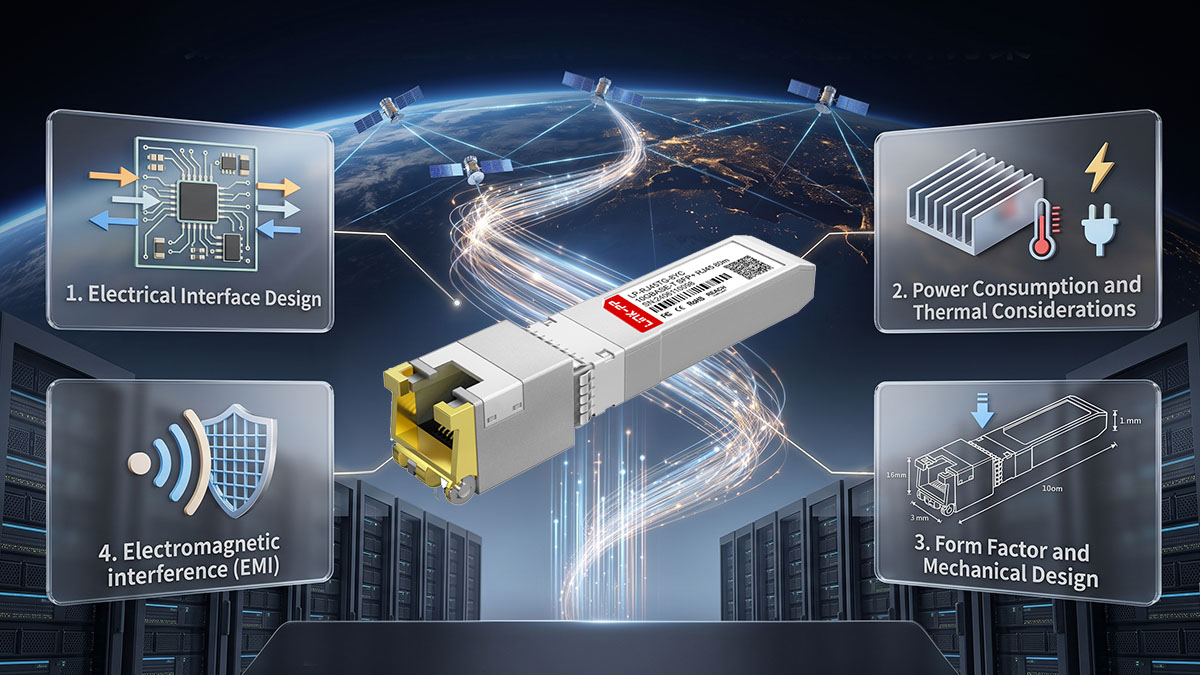
The electrical specifications and hardware design of the Netgear AXM765 determine how effectively the module delivers 10Gbps copper Ethernet connectivity through an SFP+ interface. As a 10GBASE-T copper transceiver, the AXM765 integrates electrical signal processing components, RJ45 connectivity, and compact SFP+ mechanical design to support reliable short-distance network connections. Understanding these characteristics helps evaluate its compatibility, power requirements, and operational performance in enterprise switching environments.
Electrical Interface Design
The Netgear AXM765 uses an SFP+ electrical interface to communicate with compatible network equipment while converting the host device’s high-speed serial connection into a copper-based 10GBASE-T Ethernet interface. This design allows SFP+ switch ports to connect directly with RJ45 Ethernet devices without requiring separate media conversion equipment.
The main electrical interface characteristics of the AXM765 include:
- SFP+ host-side interface:
The module follows the SFP+ form factor and is designed for installation into compatible SFP+ or SFP28 slots, allowing network switches to support copper-based 10GbE connections. - 10GBASE-T electrical signaling:
The module converts electrical signals between the host SFP+ interface and the RJ45 copper Ethernet interface to enable 10Gbps network transmission. - IEEE standard compatibility:
The AXM765 supports 10GBASE-T technology based on IEEE 802.3an specifications and is also associated with SFF interface standards for SFP+ module interoperability. - RJ45 Ethernet output:
The integrated RJ45 connector provides direct compatibility with copper Ethernet cabling, including Cat6a and Cat7 cabling required for higher-speed 10GBASE-T operation.
The electrical interface design of the AXM765 enables a seamless connection between fiber-oriented SFP+ switching platforms and copper Ethernet environments. This makes it suitable for network upgrades where existing RJ45 infrastructure remains an important part of the physical network architecture.
Power Consumption and Thermal Considerations
The Netgear AXM765 requires careful consideration of power consumption and thermal management because 10GBASE-T copper modules generally involve more complex signal processing than optical SFP+ modules. The internal electrical components responsible for high-speed copper transmission generate additional heat, making proper airflow and installation conditions important for stable operation.
The key power and thermal considerations include:
- Power requirement:
The AXM765 installation guide lists power consumption at approximately 2.5W, which reflects the electrical processing requirements of a 10GBASE-T copper transceiver. - Heat generation management:
Because copper modules perform electrical signal transmission and processing inside a compact SFP+ enclosure, heat dissipation should be considered when deploying multiple modules in high-density switch environments. - Operating temperature range:
The AXM765 is designed for operation within a temperature range of 0–70°C, supporting deployment in typical enterprise networking environments. - Installation environment:
Adequate rack airflow, proper switch ventilation, and avoiding excessive module concentration can help maintain consistent performance.
Compared with lower-power optical modules, copper-based 10GBASE-T transceivers typically require more attention to thermal conditions. Therefore, network designers should consider switch airflow design and module density when deploying AXM765 units in larger-scale environments.
Form Factor and Mechanical Design
The Netgear AXM765 adopts the compact SFP+ form factor, allowing it to be installed directly into compatible network switch ports. Its mechanical design focuses on maintaining the flexibility of pluggable modules while integrating the additional components required for 10GBASE-T copper transmission.
The primary mechanical characteristics of the AXM765 include:
| Parameter | Specification |
|---|---|
| Form Factor | SFP+ |
| Connector Type | RJ45 |
| Dimensions | 13.7mm × 13.4mm × 65.4mm |
| Weight | Approximately 14.17g |
| Installation Type | Hot-pluggable module |
The compact SFP+ design allows the AXM765 to be inserted or removed from compatible switch ports without shutting down the network device, improving maintenance flexibility.
Additional mechanical design considerations include:
- Hot-pluggable installation:
The module can be installed or removed during normal switch operation when supported by the host device, reducing network downtime during maintenance. - Compact enclosure design:
The SFP+ form factor enables integration into switches with limited port space while maintaining compatibility with standard module cages. - Cable connection flexibility:
The front-facing RJ45 interface allows connection with standard Ethernet patch cables, simplifying physical deployment.
The hardware characteristics of the Netgear AXM765 demonstrate how the module combines compact SFP+ architecture with copper Ethernet functionality. Its electrical design, thermal requirements, and mechanical structure together support reliable 10GbE connectivity for short-distance enterprise networking applications.
✅ Netgear AXM765 Compatibility and Network Deployment Considerations
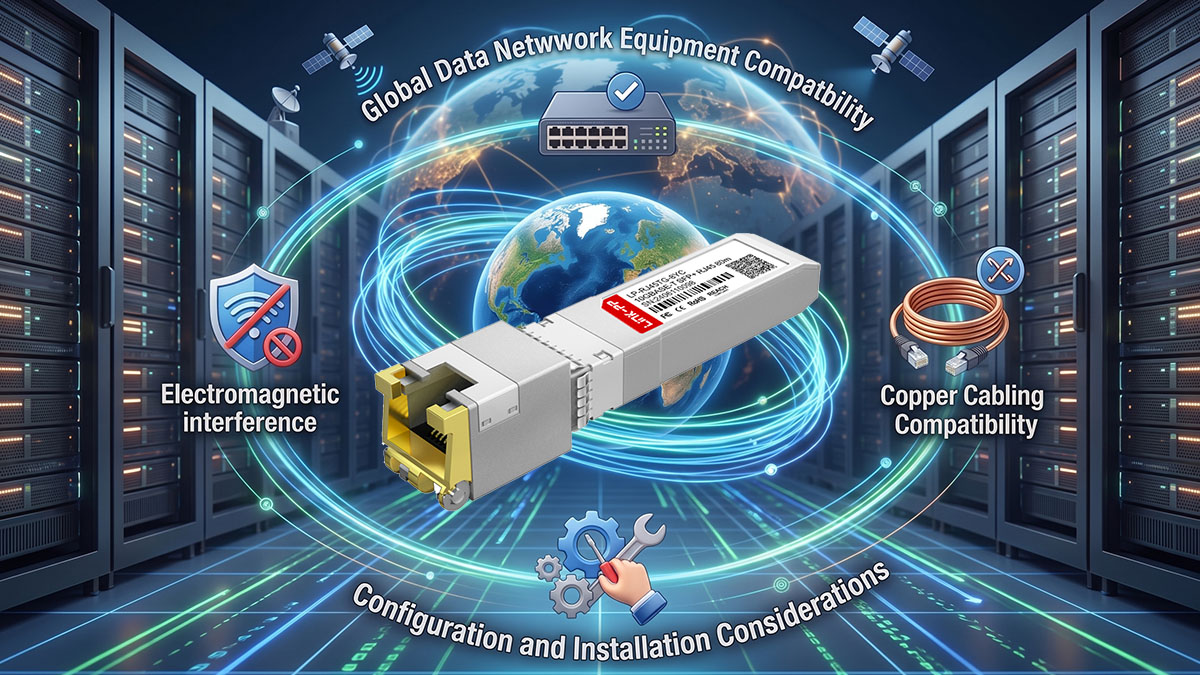
The Netgear AXM765 compatibility and deployment requirements determine whether the module can be successfully integrated into existing 10GbE network environments. As a 10GBASE-T SFP+ copper transceiver, the AXM765 requires compatible SFP+ host ports, appropriate Ethernet cabling, and proper network configuration to achieve reliable 10Gbps connectivity. Evaluating switch compatibility, cable requirements, and installation considerations before deployment helps ensure stable performance and efficient network integration.
Switch and Network Equipment Compatibility
The Netgear AXM765 is designed for network devices equipped with compatible SFP+ interfaces, allowing these ports to be converted into RJ45-based 10GBASE-T copper connections. Successful deployment depends on whether the host switch or networking platform supports the module type, interface standard, and required operating conditions.
The main compatibility considerations for AXM765 deployment include:
- SFP+ port compatibility:
The AXM765 requires a compatible SFP+ slot for installation. It is designed to operate in supported SFP+ interfaces and can provide copper-based 10GbE connectivity for switches that accept this type of transceiver. - Network equipment support:
The module is commonly used with compatible enterprise switching platforms, including supported NETGEAR managed switch families. The host device should be verified for transceiver support before installation. - Interface standard compliance:
The AXM765 follows relevant SFP+ and Ethernet standards, including IEEE 802.3an and SFF specifications, which help maintain interoperability within supported networking environments. - Firmware and system configuration:
Some network devices may require firmware support or specific port configuration settings to recognize and activate third-party or copper-based SFP+ modules.
Ensuring compatibility between the AXM765 and the host device is a critical step because physical insertion into an SFP+ cage does not always guarantee operational support. Network administrators should confirm device specifications and supported transceiver lists before large-scale deployment.
Copper Cabling Compatibility
The Netgear AXM765 relies on copper Ethernet cabling to deliver 10GBASE-T connectivity, making cable selection an important factor in achieving stable transmission performance. The module supports high-speed copper links through RJ45 connectivity, with recommended cabling requirements depending on the target transmission distance.
The primary cabling requirements for AXM765 deployment include:
- Cat6a and Cat7 cable support:
For 10Gbps transmission up to 80m, higher-category copper cables such as Cat6a or Cat7 are recommended to maintain signal quality and reduce transmission errors. - RJ45 connector compatibility:
The module uses a standard RJ45 interface, allowing direct connection with commonly deployed Ethernet patch cables. - Cable quality considerations:
Cable construction quality, connector termination, and installation practices can influence actual network performance. - Environmental factors:
Electromagnetic interference, cable bundling density, and physical installation conditions may affect copper signal integrity.
The relationship between cabling selection and deployment performance can be summarized as follows:
| Cabling Factor | Deployment Consideration |
|---|---|
| Cable Category | Cat6a or Cat7 recommended for 10GBASE-T up to 80m |
| Connector Type | RJ45 copper connection |
| Transmission Medium | Twisted-pair copper cable |
| Maximum Distance | Up to 80m with suitable cabling |
Using appropriate cabling ensures that the AXM765 can achieve its intended 10Gbps performance. Poor-quality cables or unsuitable installation environments may reduce link stability or limit achievable transmission distance.
Configuration and Installation Considerations
The Netgear AXM765 is designed for straightforward installation in compatible network equipment, but proper configuration and verification are still necessary to ensure successful deployment. Because the module converts an SFP+ port into a copper Ethernet interface, both physical installation and network settings influence final link performance.
Important installation and configuration considerations include:
- Verify host device compatibility:
Confirm that the network switch or device supports 10GBASE-T SFP+ copper modules before inserting the AXM765. - Install the module correctly:
Insert the AXM765 firmly into the compatible SFP+ slot and ensure that the module is properly recognized by the host device. - Connect suitable Ethernet cabling:
Use appropriate Cat6a or Cat7 cables when deploying 10Gbps links over longer copper distances. - Check port configuration settings:
Verify that the network port is configured for the required Ethernet speed and operating mode. - Perform link validation testing:
Confirm link status, transmission speed, and network stability after installation.
After installation, administrators should monitor link performance and verify that the AXM765 operates within expected parameters. Proper compatibility checks, cable selection, and configuration practices allow the module to provide reliable 10GbE connectivity while maximizing the value of existing copper network infrastructure.
✅ Netgear AXM765 Applications in Enterprise Networks
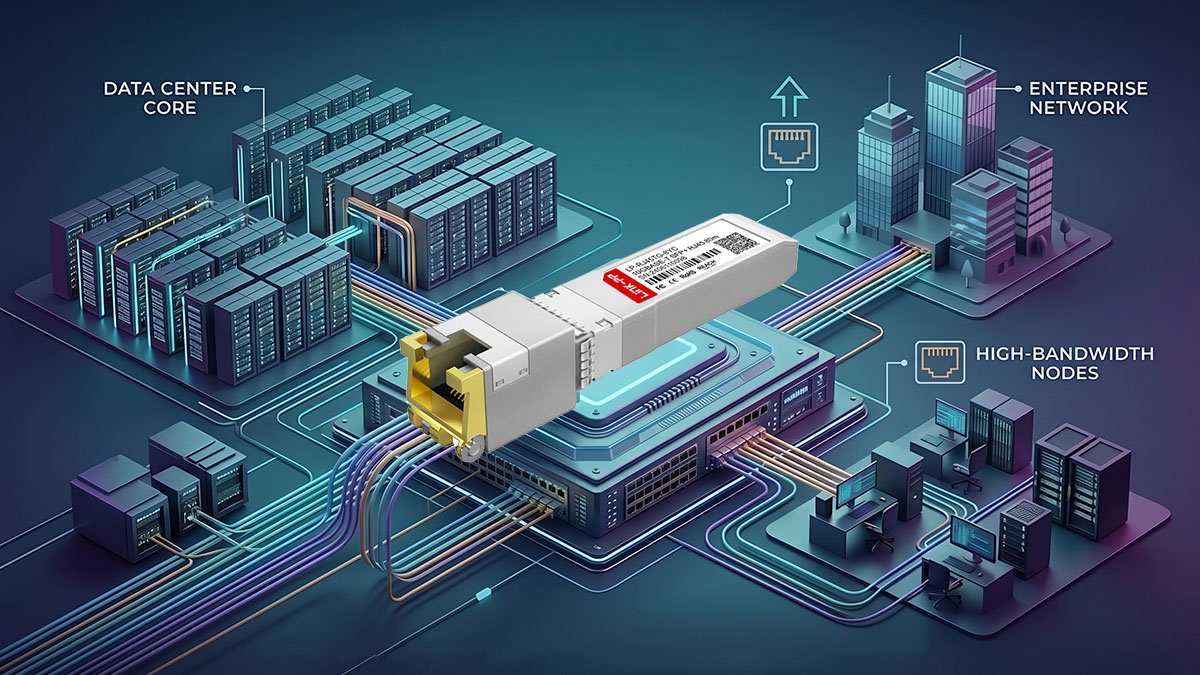
The Netgear AXM765 is primarily used in enterprise networks where high-speed short-distance Ethernet connectivity is required while maintaining existing copper infrastructure. With 10GBASE-T performance, an RJ45 interface, and an 80m transmission capability, the module provides a practical way to connect SFP+ equipped switches with servers, storage systems, and other Ethernet devices. Its application value is especially significant in environments that need 10Gbps bandwidth without completely replacing established copper cabling systems.
Data Center and Server Connectivity
The Netgear AXM765 is well suited for short-distance data center connections, particularly in rack-level environments where servers, switches, and storage devices are located within the same physical area. By converting SFP+ switch ports into RJ45-based 10GbE interfaces, the module enables flexible connectivity between modern switching platforms and copper Ethernet devices.
The main data center and server connectivity applications include:
- Top-of-rack switch connections:
The AXM765 can be deployed in top-of-rack switching environments where servers and network devices require high-bandwidth connections over short distances. - Server-to-switch connectivity:
The module enables 10Gbps links between servers equipped with Ethernet interfaces and switches featuring compatible SFP+ ports. - Storage network connections:
High-throughput storage systems can benefit from 10GbE copper connectivity when deployed within the supported transmission range. - Rack-level infrastructure upgrades:
Organizations can upgrade existing rack networks from Gigabit Ethernet to 10GbE without replacing all copper cabling infrastructure.
The compact SFP+ form factor makes the AXM765 suitable for high-density switching environments where port flexibility and efficient cable management are important. However, deployment planning should consider power consumption and airflow requirements when multiple copper modules are installed in the same network device.
Enterprise Network Upgrades
The Netgear AXM765 provides an effective solution for enterprise network upgrades by allowing organizations to transition from lower-speed Ethernet connections to 10Gbps connectivity while continuing to use existing copper cabling. This makes it valuable for businesses that need additional bandwidth but want to minimize physical infrastructure changes.
Common enterprise upgrade scenarios include:
- Switch uplink expansion:
The AXM765 can help connect SFP+ switch ports to copper-based network segments requiring higher bandwidth. - Legacy copper infrastructure modernization:
Organizations can extend the service life of existing Cat6a or Cat7 cabling systems by integrating 10GBASE-T connectivity. - Department-level network enhancement:
High-performance workgroups, engineering teams, and professional users can access faster network connections through upgraded Ethernet links. - Gradual migration toward 10GbE networks:
Enterprises can adopt higher-speed networking step by step rather than replacing the entire physical network architecture at once.
The ability to combine SFP+ switching equipment with RJ45 copper connections gives the AXM765 flexibility in mixed network environments. This is particularly useful in enterprises where fiber and copper infrastructures coexist and different connection methods are required across various locations.
High-Bandwidth Workgroup Connectivity
The Netgear AXM765 is also suitable for high-bandwidth workgroup environments where users need faster data access, large file transfers, or improved network responsiveness. Its 10GbE capability provides additional bandwidth for applications that exceed the limitations of traditional Gigabit Ethernet connections.
Typical high-performance workgroup applications include:
- Video production environments:
Video editing teams often require higher network throughput for transferring large media files and accessing shared storage systems. - Engineering and design workstations:
Computer-aided design, simulation, and development environments can benefit from faster connections between workstations and centralized resources. - High-performance computing systems:
Research and technical environments may use 10GbE copper links for short-distance data exchange between computing nodes and network equipment. - Professional content creation networks:
Creative teams working with large datasets can improve workflow efficiency through higher-speed Ethernet connectivity.
The following table summarizes common AXM765 enterprise deployment scenarios:
| Application Scenario | Typical Connectivity Requirement | AXM765 Value |
|---|---|---|
| Data Center Rack | Short-distance 10GbE server connections | Provides RJ45-based 10Gbps connectivity |
| Enterprise Network Upgrade | Existing copper infrastructure modernization | Extends the usability of copper cabling |
| Workgroup Environment | High-bandwidth user connections | Supports faster data transfer and access |
| Storage Networking | Low-latency local network links | Enables high-speed copper Ethernet connections |
These application scenarios demonstrate that the Netgear AXM765 is most effective in short-distance enterprise networking environments where 10Gbps performance, RJ45 compatibility, and existing copper infrastructure are key considerations. By providing a flexible connection option between SFP+ switching platforms and copper Ethernet devices, the AXM765 helps organizations build more adaptable and scalable 10GbE networks.
✅ How to Evaluate Netgear AXM765 Technical Parameters Before Deployment
Evaluating the technical parameters of the Netgear AXM765 before deployment helps ensure that the module matches the requirements of the target network environment. Because the AXM765 is a 10GBASE-T SFP+ copper transceiver designed for short-distance Ethernet connections, factors such as bandwidth requirements, transmission distance, cabling infrastructure, and host device compatibility directly influence deployment success. A careful technical assessment allows network administrators to determine whether the module can provide stable and efficient 10GbE connectivity within their existing infrastructure.
Performance Factors to Consider
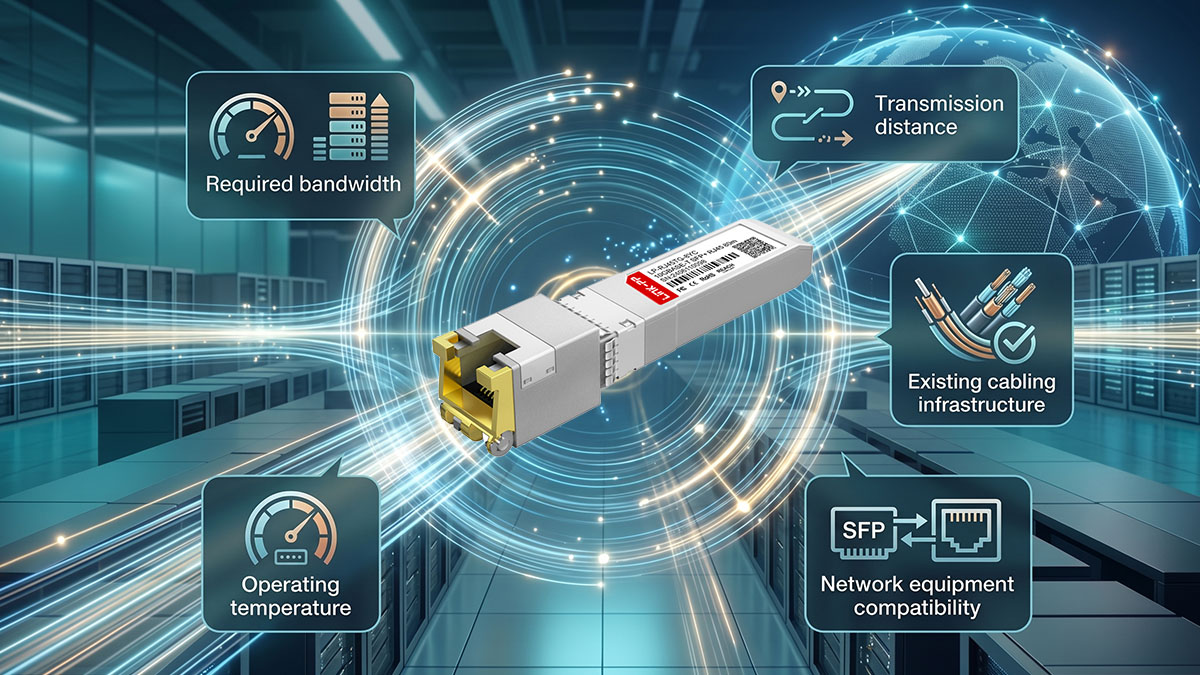
The performance evaluation of the Netgear AXM765 should begin with analyzing network requirements and comparing them with the module’s technical capabilities. The AXM765 is optimized for short-range 10GbE copper connections, making it important to verify that its transmission characteristics align with the intended application scenario.
The primary performance factors to consider include:
- Required bandwidth capacity:
Determine whether the network application requires 10Gbps Ethernet performance. The AXM765 is suitable for environments involving high-speed data transfers, server connectivity, storage access, and enterprise network upgrades. - Transmission distance requirements:
Verify that the connection distance remains within the module’s supported range of up to 80m. Longer-distance links may require alternative optical transceiver solutions. - Existing cabling infrastructure:
Evaluate whether the current network uses suitable copper cabling, such as Cat6a or Cat7, to support stable 10GBASE-T transmission. - Network topology design:
Consider the module’s role within the overall network architecture, including whether it will be used for switch-to-server links, switch uplinks, or device-level connections.
Before deployment, matching the AXM765 specifications with actual network requirements helps avoid performance limitations caused by unsuitable distances, cabling conditions, or application demands. The module provides strong value in environments where short-range 10GbE copper connectivity is required, but it should be selected based on realistic deployment conditions rather than speed requirements alone.
Reliability and Long-Term Operation
The long-term reliability of the Netgear AXM765 depends on more than basic link establishment. Factors such as operating temperature, installation environment, cable quality, and network device compatibility can influence the stability of continuous 10GbE operation.
Important reliability considerations include:
- Thermal management:
10GBASE-T copper modules typically generate more heat than many optical alternatives due to additional electrical signal processing components. Proper switch ventilation and airflow management help maintain stable operation. - Cable quality and installation standards:
High-quality Cat6a or Cat7 cables, proper termination, and organized cable routing reduce potential signal degradation and transmission errors. - Host device operating conditions:
The compatibility and performance of the connected switch or networking platform can directly affect module stability. - Environmental conditions:
Temperature, electromagnetic interference, and rack density should be considered when deploying AXM765 modules in enterprise environments.
The following table summarizes key factors that influence AXM765 operational reliability:
| Evaluation Factor | Impact on Deployment |
|---|---|
| Operating Temperature | Affects thermal stability and continuous operation |
| Cable Quality | Influences signal integrity and link reliability |
| Host Compatibility | Determines whether the module functions correctly |
| Installation Environment | Impacts heat dissipation and network stability |
Considering these factors during deployment planning helps maintain consistent 10GbE performance and reduces potential connectivity issues during long-term operation.
Replacement and Compatibility Planning
Replacement planning is an important part of managing network infrastructure lifecycles, especially when organizations need to maintain existing 10GbE connectivity while upgrading or expanding their systems. The Netgear AXM765 should be evaluated not only for immediate deployment needs but also for future compatibility with network expansion strategies.
Key replacement and lifecycle planning considerations include:
- Confirm interface requirements:
Ensure that the replacement module uses the same SFP+ interface type and provides the required RJ45 copper connectivity. - Verify network equipment support:
Check whether existing switches and networking devices recognize and support the AXM765 or compatible 10GBASE-T modules. - Maintain consistent performance levels:
Replacement modules should match the required data rate, transmission distance, and cabling specifications to avoid network performance differences. - Consider future expansion needs:
Evaluate whether the current deployment may require longer distances, higher bandwidth, or migration toward optical connectivity in the future.
Proper compatibility planning helps organizations maintain reliable network operations while extending the usability of existing infrastructure. By reviewing technical parameters, environmental conditions, and future requirements, administrators can ensure that the Netgear AXM765 remains a suitable choice for their 10GbE copper networking applications.
✅ Conclusion
The Netgear AXM765 is a 10GBASE-T SFP+ copper transceiver designed to provide reliable 10Gbps Ethernet connectivity through an RJ45 interface. With support for up to 80m copper transmission, compatibility with existing Cat6a/Cat7 cabling environments, and a compact SFP+ form factor, the AXM765 offers a practical solution for enterprise networks that require higher bandwidth while maintaining copper-based infrastructure. Understanding the Netgear AXM765 technical specifications, including interface design, electrical characteristics, deployment requirements, and application scenarios, helps network professionals make more informed decisions when planning 10GbE connectivity.
The key points covered in this guide can be summarized as follows:
- The AXM765 enables 10GBASE-T connectivity by converting SFP+ ports into RJ45-based copper Ethernet interfaces.
- Its 80m transmission capability makes it suitable for short-distance enterprise, data center rack, and high-performance workgroup applications.
- Proper evaluation of switch compatibility, cabling quality, thermal conditions, and deployment requirements is essential for achieving stable network performance.
For organizations and network engineers exploring compatible transceiver solutions, the LINK-PP Official Store provides a wide range of optical and networking connectivity products designed to support various Ethernet deployment requirements. By selecting suitable module solutions based on technical specifications and application scenarios, businesses can build flexible, reliable, and scalable network infrastructures that meet current and future connectivity demands.