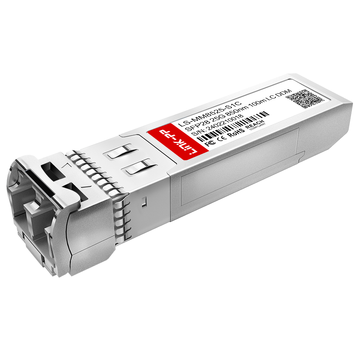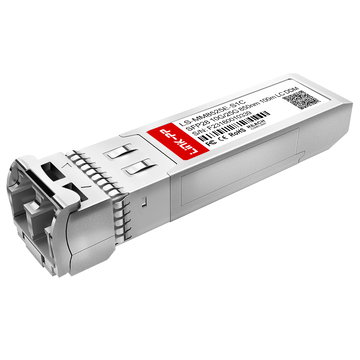
Die Einführung von 25-GbE-Netzwerken hat sich als wichtiger Meilenstein in der Entwicklung moderner Rechenzentren und Unternehmensinfrastrukturen erwiesen. Angesichts des stetigen Wachstums von Workloads wie Cloud Computing, Virtualisierung und Hochleistungsspeicher setzen Unternehmen zunehmend auf leistungsfähigere und effizientere Verbindungslösungen als 10-GbE. Optische Transceiver wie der Intel E25GSFP28SR spielen dabei eine entscheidende Rolle für die Realisierung von Hochgeschwindigkeitsverbindungen über Multimode-Glasfaserinfrastruktur.
Unter den verfügbaren 25GBASE-SR-Lösungen sticht das Intel E25GSFP28SR als vielfach zitiertes optisches SFP28-Modul hervor, das für zuverlässige 25-Gbit/s-Kurzstreckenübertragung entwickelt wurde. Die Auswahl und der Einsatz einer solchen Komponente sind jedoch nicht nur eine technische Entscheidung – sie hängen eng mit der Beschaffungsplanung, der Kompatibilitätsprüfung, der Lieferantenbewertung und dem langfristigen Lebenszyklusmanagement in komplexen Netzwerkumgebungen zusammen.
Dieser Artikel bietet eine strukturierte Aufschlüsselung des gesamten Beschaffungszyklus für den Intel E25GSFP28SR und hilft Lesern zu verstehen, wie jede Phase zu einer erfolgreichen Implementierung und Betriebseffizienz beiträgt. Er behandelt:
- Wichtigste technische Merkmale und Einsatzszenarien des Moduls
- Schrittweise Beschaffungsplanung und Bewertungsphasen
- Lieferantenauswahl und Beschaffungsaspekte
- Validierung der Bereitstellung und operative Managementpraktiken
Zusammengenommen vermitteln diese Abschnitte ein vollständiges Bild davon, wie Organisationen die Beschaffung von 25GBASE-SR-Transceivern kontrolliert und effizient angehen können, um sowohl die unmittelbaren Netzwerkanforderungen als auch die langfristige Infrastrukturstrategie zu unterstützen.
🔔 Den Intel E25GSFP28SR 25GBASE-SR Transceiver verstehen
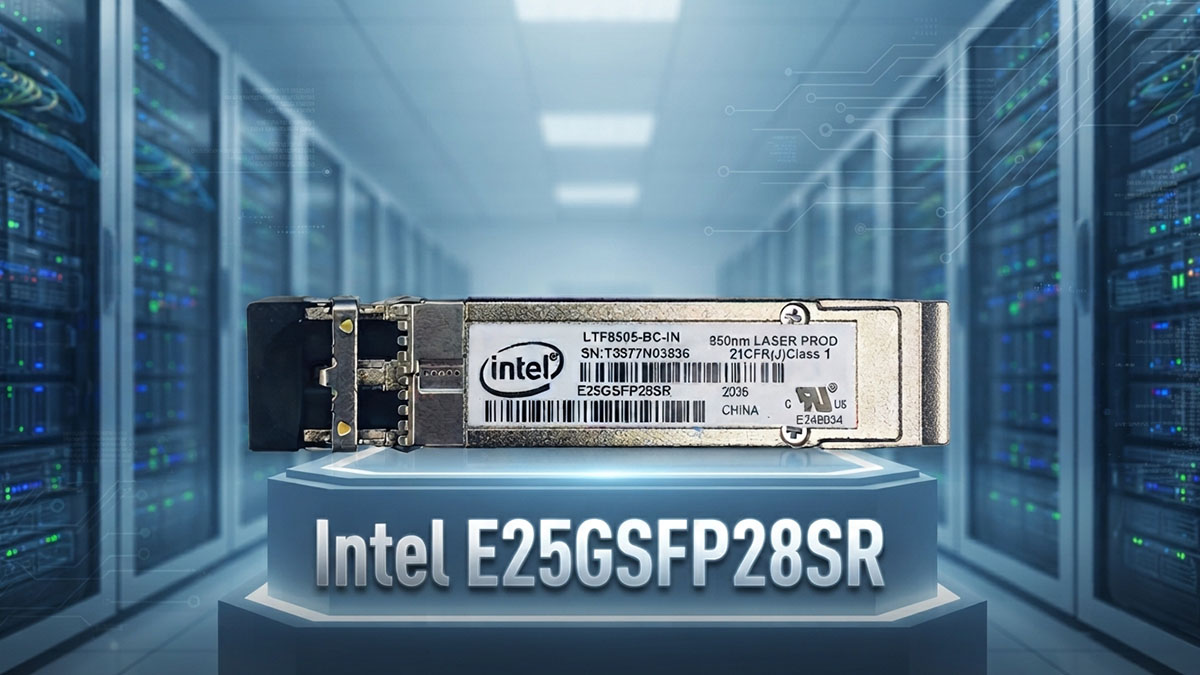
Der Intel E25GSFP28SR ist ein optischer 25-GbE-Transceiver mit kurzer Reichweite, der für hochdichte Rechenzentren und Unternehmensnetzwerke entwickelt wurde. Er wird primär zur Realisierung von 25-Gbit/s-Ethernet-Verbindungen über Multimode-Glasfaser eingesetzt und ist somit ein zentraler Baustein moderner Leaf-Spine-Architekturen und Server-Switch-Verbindungen, die geringe Latenz und hohe Bandbreite erfordern.
Was ist der Intel E25GSFP28SR?
Das Intel E25GSFP28SR ist ein optisches Modul im SFP28-Formfaktor, das 25GBASE-SR-Übertragung über Multimode-Fasern unterstützt. Es ist für Kurzstreckenverbindungen innerhalb von Racks oder zwischen benachbarten Racks in Rechenzentrumsumgebungen konzipiert.
Funktional gesehen besteht seine Aufgabe darin, elektrische Signale in optische Signale und umgekehrt umzuwandeln und so eine schnelle Datenübertragung zwischen Netzwerkgeräten zu ermöglichen. Zu den wichtigsten Merkmalen gehören:
- SFP28-Standardformfaktor für 25-GbE-Ports
- Optische Kurzstreckenübertragung mit einer Wellenlänge von 850 nm
- Konzipiert für Multimode-Glasfaserinfrastruktur (typischerweise OM3/OM4)
- Optimiert für Switch- und Serverumgebungen mit hoher Dichte
Aufgrund dieser Eigenschaften eignet es sich für Umgebungen, in denen Bandbreitenskalierbarkeit und Porteffizienz wichtiger sind als die Übertragung über große Entfernungen.
Wichtige technische Daten
Der Intel E25GSFP28SR wird durch eine Reihe optischer und elektrischer Parameter definiert, die seine Leistungsfähigkeit und Eignung für verschiedene Einsatzgebiete bestimmen. Diese Spezifikationen sind unerlässlich für die Validierung der Kompatibilität und die Netzwerkplanung.
Bevor wir auf die Parameter eingehen, ist es wichtig zu verstehen, dass 25GBASE-SR-Optiken eher für Kurzstreckenverbindungen mit hoher Dichte als für Langstreckenübertragungen optimiert sind.
Parameterspezifikation Datenrate 25 Gbit/s Wellenlänge 850 nm Fasertyp Multimode-Faser (OM3/OM4) Maximale Reichweite (OM3) Bis zu 70 m Maximale Reichweite (OM4) Bis zu 100 m Formfaktor SFP28 Optische Technologie VCSEL-basierter Sender
Diese Parameter unterstreichen seine Eignung für Verbindungen innerhalb von Rechenzentren, wo vorhersehbare Leistung und geringe Latenz entscheidend sind. Die Kombination aus 850-nm-VCSEL-Technologie und Multimode-Faserunterstützung gewährleistet eine effiziente optische Kurzstreckenübertragung.
Häufige Anwendungsfälle für E25GSFP28SR
Der E25GSFP28SR findet breite Anwendung in modernen Netzwerkumgebungen, in denen schnelle Verbindungen über kurze Distanzen erforderlich sind. Seine Einsatzszenarien konzentrieren sich typischerweise auf Rechenzentren und Unternehmensinfrastrukturen.
Bevor wir konkrete Anwendungsfälle auflisten, ist es wichtig zu betonen, dass dieses Modul primär für strukturierte Switching-Umgebungen mit hoher Dichte und weniger für Edge- oder Weitverkehrsnetze konzipiert ist.
Typische Anwendungen sind:
- Server-zu-Top-of-Rack-Switch-Konnektivität in Rechenzentren
- Die Architektur der Blattdornen verbindet
- Hochleistungsfähige Cloud-Infrastrukturnetzwerke
- Upgrades der Unternehmenskern- und Aggregationsschicht
- Virtualisierungs- und speicherintensive Rechenumgebungen
Diese Anwendungsfälle spiegeln die wachsende Nachfrage nach skalierbarer 25GbE-Infrastruktur wider, insbesondere in Umgebungen, in denen Bandbreitenkonsolidierung und Porteffizienz unerlässlich sind. Daher hat sich der E25GSFP28SR zu einem Standardreferenzpunkt in der Planung optischer 25G-Implementierungen entwickelt.
🔔 Bedarfsanalyse und Planung
Die Anforderungsanalyse und Planungsphase bildet die Grundlage für jede erfolgreiche Implementierung von Intel E25GSFP28SR. In dieser Phase übersetzen Unternehmen ihre Erwartungen an das Netzwerkwachstum in klare technische und beschaffungsrelevante Anforderungen. Ein gut durchdachter Plan hilft, Mehrausgaben, Kompatibilitätsprobleme und eine Unterdimensionierung der optischen 25GBASE-SR-Ressourcen zu vermeiden.
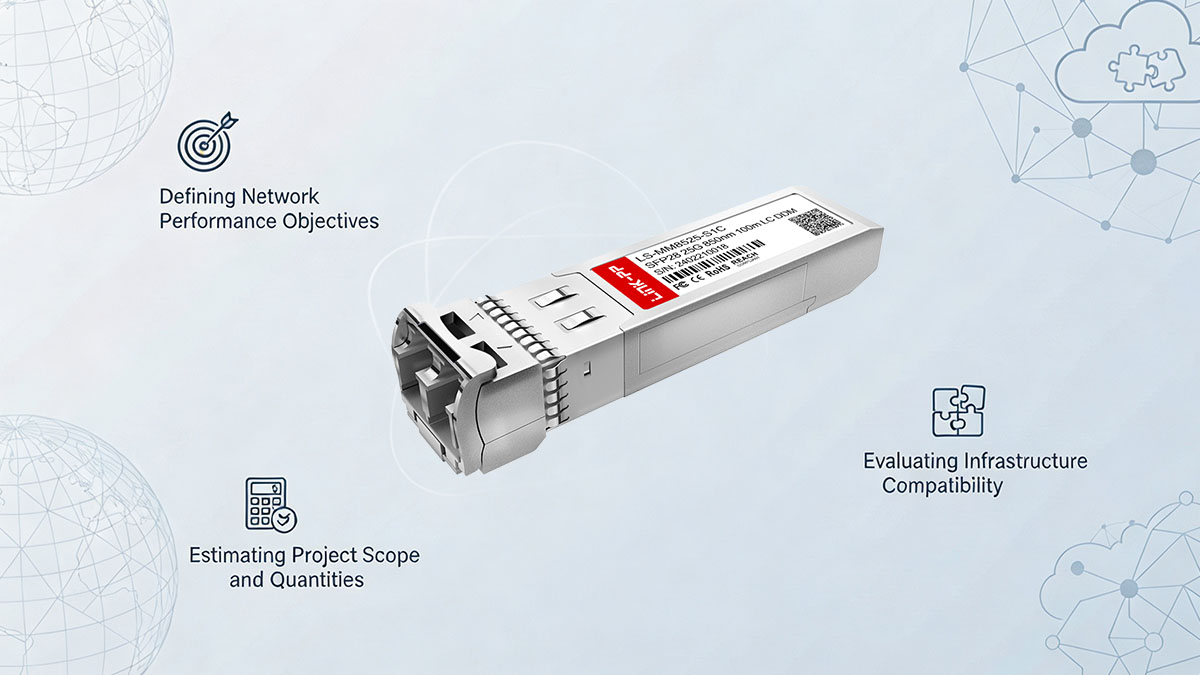
Definition von Netzwerk-Leistungszielen
Ein klares Verständnis der Netzwerk-Performanceziele ist unerlässlich, bevor eine optische 25GbE-Lösung ausgewählt wird. In dieser Phase wird sichergestellt, dass der Einsatz von E25GSFP28SR-Modulen sowohl den aktuellen Workloads als auch zukünftigen Erweiterungen gerecht wird.
Um präzise Leistungsziele festzulegen, bewerten Organisationen typischerweise Folgendes:
- Erforderliche Gesamtbandbreite pro Rack oder Cluster
- Latenzempfindlichkeit von Anwendungen wie Speicher oder Virtualisierung
- Erwartetes Verkehrswachstum über einen Zeitraum von 3–5 Jahren
- Anforderungen an die Portdichte in Blatt- und Dornenschichten
Diese Faktoren tragen dazu bei, zu entscheiden, ob 25GbE als Übergangslösung von 10GbE oder als langfristiger Standard für Umgebungen mit hoher Dichte eingesetzt wird. Sobald diese Ziele klar definiert sind, beeinflussen sie direkt die Anzahl der Transceiver und die Entscheidungen zum Architekturdesign.
Bewertung der Infrastrukturkompatibilität
Die Kompatibilitätsprüfung stellt sicher, dass der E25GSFP28SR effektiv in die bestehende Netzwerkarchitektur integriert werden kann. Dieser Schritt reduziert das Einsatzrisiko und vermeidet kostspielige Nachbesserungen nach der Beschaffung.
Bevor Organisationen die Kompatibilitätsannahmen endgültig festlegen, prüfen sie in der Regel Folgendes:
- Switch-Unterstützung für SFP28 25GBASE-SR-Optiken
- NIC- und Serverschnittstellenbereitschaft für 25GbE
- Vorhandene Multimode-Faserqualität und -typ (OM3 oder OM4)
- Patchpanel- und Steckerstandards in der gesamten Infrastruktur
Diese Faktoren entscheiden darüber, ob die bestehende Umgebung eine nahtlose Integration ermöglicht oder schrittweise Upgrades erfordert. In vielen Fällen ist die Bereitschaft der Glasfaserinfrastruktur der kritischste limitierende Faktor für die Einführung von 25GBASE-SR.
Schätzung des Projektumfangs und der Mengen
Eine präzise Bedarfsermittlung ist entscheidend für effiziente Beschaffung und optimale Lagerhaltung. Dieser Schritt stellt sicher, dass die Anzahl der E25GSFP28SR-Module den tatsächlichen Anforderungen der Netzwerktopologie entspricht und nicht auf groben Schätzungen beruht.
Ein strukturierter Schätzansatz umfasst typischerweise Folgendes:
- Gesamtzahl der Switch-Ports, die 25G-Uplinks oder -Downlinks benötigen
- Redundanzplanung für Ausfallsicherung und Verbindungsschutz
- Bereitstellung von Ersatzmodulen zur Gewährleistung der Betriebssicherheit
- Zukünftiger Erweiterungsspielraum für geplantes Infrastrukturwachstum
Vor der endgültigen Festlegung der Mengen prüfen Organisationen außerdem, ob die Einführung phasenweise oder als vollständige Implementierung erfolgen soll. Dies hat direkte Auswirkungen auf den Beschaffungszeitpunkt, die Lagerhaltung und die Logistikplanung.
Eine präzise Definition des Projektumfangs gewährleistet, dass Beschaffungsentscheidungen auf realistischen Anforderungen an die Netzwerkarchitektur basieren und somit sowohl Kosteneffizienz als auch langfristige Skalierbarkeit der 25GbE-Infrastruktur unterstützen.
🔔 Technische Bewertung und Qualifizierung vor der Beschaffung
Die technische Evaluierungs- und Qualifizierungsphase stellt sicher, dass der Intel E25GSFP28SR vor einem großflächigen Einsatz sowohl die Leistungserwartungen als auch die Infrastrukturbeschränkungen erfüllt. In dieser Phase gehen Unternehmen von Planungsannahmen zu einer evidenzbasierten Validierung über, die Spezifikationsprüfung, Kompatibilitätstests und Zuverlässigkeitsbewertung umfasst. Diese Phase ist entscheidend, da sie die Stabilität des Einsatzes und die langfristige Netzwerkleistung direkt bestimmt.
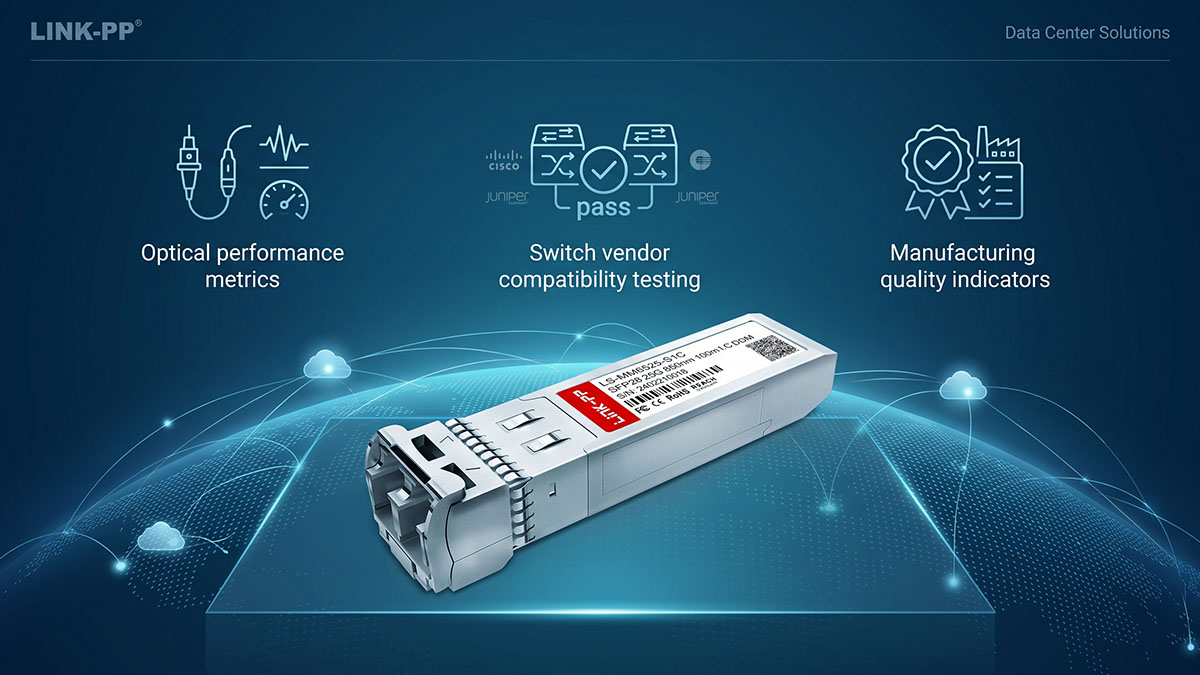
Überprüfung kritischer technischer Parameter
Eine strukturierte Überprüfung der optischen und elektrischen Eigenschaften ist erforderlich, um zu bestätigen, dass das E25GSFP28SR den beabsichtigten Netzwerkdesignanforderungen entspricht. Diese Evaluierung konzentriert sich auf die Überprüfung, ob das Betriebsverhalten des Moduls den realen Einsatzbedingungen entspricht.
Bevor wir uns mit der Validierung der Parameter befassen, ist es wichtig zu erkennen, dass die Optik von 25GBASE-SR sehr empfindlich auf die Faserqualität, die Verbindungsdistanz und die Stabilität der Umgebungsbedingungen reagiert.
Zu den wichtigsten technischen Aspekten, die üblicherweise geprüft werden, gehören:
- Optische Sendeleistung und Empfangsempfindlichkeitsbereich
- Leistungsstabilität von 850-nm-VCSELs unter Last
- Unterstützte Verbindungsdistanzen über OM3- und OM4-Fasertypen
- Stromverbrauch unter anhaltenden Verkehrsbedingungen
- Thermisches Verhalten in hochdichten Schaltumgebungen
Diese Parameter helfen dabei, festzustellen, ob das Modul unter Dauerbetrieb in dichten Rack-Architekturen eine stabile Leistung erbringen kann. Jede Abweichung von den erwarteten Schwellenwerten kann auf die Notwendigkeit einer Infrastrukturoptimierung oder Designanpassung hinweisen.
Verfahren zur Überprüfung der Kompatibilität
Die Kompatibilitätsprüfung gewährleistet die nahtlose Integration des E25GSFP28SR in bestehende Hardware- und Netzwerkumgebungen. Dieser Schritt reduziert das Risiko von Interoperabilitätsproblemen, die die Verbindungsstabilität oder die Systemerkennung beeinträchtigen könnten.
Bevor die Implementierungstests beginnen, bestätigen Organisationen in der Regel die Kompatibilität über mehrere Schichten des Netzwerk-Stacks hinweg.
Zu den wichtigsten Verifizierungsaktivitäten gehören:
- Switch-Plattformunterstützung für SFP28 25GBASE-SR-Module
- Firmware- und Softwareversionsabstimmung mit optischen Modulen
- Validierung der Interoperabilität zwischen Netzwerkkarte und Switch in Testumgebungen
- EEPROM-Erkennung und Modulidentifizierungsgenauigkeit
- Verhalten in Multi-Vendor-Umgebungen bei gemischten Bereitstellungen
Diese Prüfungen gewährleisten, dass sowohl die Hardware- als auch die Softwareebene den Transceiver korrekt erkennen und unterstützen. In Umgebungen mit Geräten verschiedener Hersteller ist die Kompatibilitätsprüfung besonders wichtig, um Verbindungsfehler oder Leistungsschwankungen zu vermeiden.
Zuverlässigkeits- und Qualitätsbewertung
Die Zuverlässigkeitsbewertung konzentriert sich auf die langfristige Betriebsstabilität und nicht auf die kurzfristige Funktionsfähigkeit. Bei E25GSFP28SR-Einsätzen wird in dieser Phase die Leistung des Moduls unter dauerhafter Belastung und wechselnden Umgebungsbedingungen bewertet.
Bevor Zuverlässigkeitskennzahlen betrachtet werden, ist zu berücksichtigen, dass optische Module häufig in Umgebungen mit hoher Dichte eingesetzt werden, wo sich thermische und Leistungsbeschränkungen schnell summieren können.
Zu den wichtigsten Faktoren für die Zuverlässigkeitsbewertung gehören:
- Fertigungskonsistenz und Komponentenqualitätskontrolle
- Erwartungen an die mittlere Betriebsdauer zwischen Ausfällen (MTBF).
- Thermische Toleranz in Switch-Gehäusen mit hoher Portdichte
- Beständigkeit gegenüber Signalverschlechterung im Dauerbetrieb
- Einhaltung der relevanten branchenüblichen Prüfstandards
Diese Faktoren entscheiden gemeinsam darüber, ob das Modul für unternehmenskritische Anwendungen geeignet ist. Eine hohe Zuverlässigkeit reduziert das Risiko ungeplanter Ausfallzeiten und gewährleistet einen stabilen Betrieb in großflächigen 25-GbE-Infrastrukturen.
🔔 Lieferantenbewertung und Beschaffungsstrategie
Die Phase der Lieferantenbewertung und Beschaffungsstrategie konzentriert sich auf die Identifizierung zuverlässiger Bezugsquellen für Intel E25GSFP28SR-Transceiver bei gleichzeitiger Minimierung von Betriebs- und Lieferkettenrisiken. Da die technische Eignung bereits bestätigt wurde, liegt der Fokus nun auf Verfügbarkeit, Konsistenz und langfristiger Versorgungssicherheit im Rahmen der Unternehmensbeschaffung.
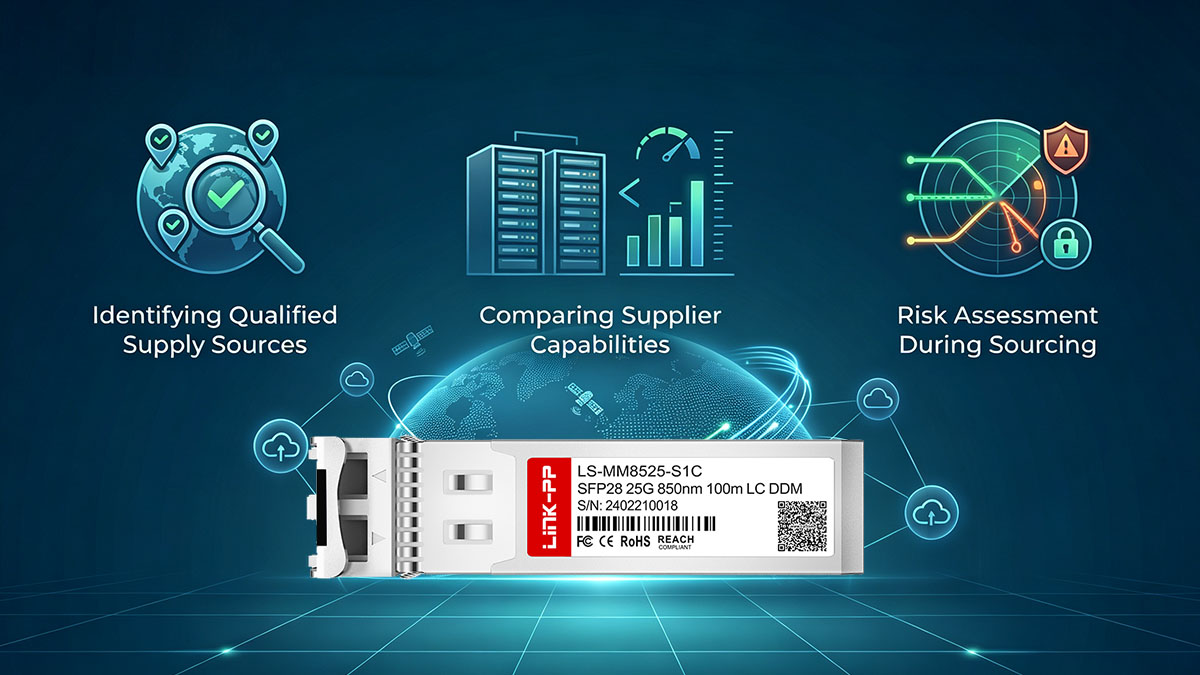
Identifizierung qualifizierter Lieferquellen
Ein strukturierter Beschaffungsansatz beginnt mit der Unterscheidung verschiedener Arten von Lieferkanälen. Dadurch wird sichergestellt, dass Beschaffungsentscheidungen mit den Unternehmensrichtlinien zu Authentizität, Rückverfolgbarkeit und Lebenszyklusunterstützung übereinstimmen.
Bevor Unternehmen sich für einen Beschaffungsweg entscheiden, bewerten sie in der Regel die Rolle jedes Kanals im Hinblick auf Risiko, Stabilität und technische Sicherheit.
Gängige Beschaffungskategorien sind:
- Autorisierte Vertriebskanäle, die den Intel-Ökosystemstandards entsprechen
- Unternehmensorientierte Distributoren optischer Komponenten mit konsistentem Lagerbestand
- Drittanbieterkompatible Lieferkanäle mit herstellerübergreifenden Supportfunktionen
- Regionale Beschaffungspartner für lokale Logistikeffizienz
Diese Kategorien helfen dabei, das Gleichgewicht zwischen Lieferflexibilität und Beschaffungskontrolle zu definieren. Bei groß angelegten Projekten wird häufig auf eine Diversifizierung der Bezugsquellen gesetzt, um die Abhängigkeit von einem einzigen Lieferweg zu verringern und gleichzeitig eine gleichbleibende Produktverfügbarkeit zu gewährleisten.
Vergleich der Fähigkeiten der Lieferanten
Sobald potenzielle Beschaffungskanäle identifiziert sind, wird im nächsten Schritt die Leistungsfähigkeit der Lieferanten über die reine Produktverfügbarkeit hinaus bewertet. Dadurch wird sichergestellt, dass die langfristigen betrieblichen Anforderungen während des gesamten Lebenszyklus des E25GSFP28SR-Einsatzes erfüllt werden.
Bevor man die Lieferanten vergleicht, ist es wichtig zu erkennen, dass die Beschaffung von optischen Transceivern nicht nur eine transaktionale Aktivität ist, sondern auch eine auf Unterstützung basierende Lieferbeziehung.
Zu den wichtigsten Bewertungsdimensionen gehören:
- Bestandsstabilität und Nachschubkonsistenz
- Reaktionsfähigkeit des technischen Supports bei Bereitstellungsproblemen
- Vorhersagbarkeit der Lieferzeiten unter schwankenden Nachfragebedingungen
- Qualitätssicherungsprozesse und Testdokumentation
- Fähigkeit zur Unterstützung von standortübergreifenden oder globalen Implementierungen
Diese Faktoren helfen dabei zu beurteilen, ob ein Lieferant sowohl die Erstimplementierung als auch die laufende Erweiterung zuverlässig unterstützen kann. In Unternehmensumgebungen hat die Zuverlässigkeit des Lieferanten oft einen größeren Einfluss auf den Betrieb als geringfügige Kostenunterschiede.
Risikobewertung während der Beschaffung
Die Risikobewertung stellt sicher, dass Beschaffungsentscheidungen keine versteckten betrieblichen Schwachstellen in die Lieferkette des Netzwerks einführen. Dieser Schritt ist besonders wichtig für den großflächigen Einsatz von E25GSFP28SR-Modulen in verteilten Infrastrukturen.
Bevor Organisationen konkrete Risiken bewerten, legen sie in der Regel Basiskriterien für Authentizität, Kontinuität und Supportfähigkeit fest.
Zu den wichtigsten Beschaffungsrisiken gehören:
- Lieferkettenunterbrechungen, die die Stabilität der Lieferzeiten beeinträchtigen
- Bedenken hinsichtlich Produktauthentizität und Rückverfolgbarkeit
- Uneinheitliche Unterstützung über den gesamten Lebenszyklus hinweg oder mangelnde Transparenz am Ende des Lebenszyklus
- Dokumentationslücken, die sich auf die Konfigurations- oder Compliance-Verfolgung auswirken
- Regionale logistische Einschränkungen, die sich auf die Einsatzzeiten auswirken
Risikominderungsstrategien umfassen häufig die Diversifizierung der Beschaffungskanäle, die Implementierung strenger Validierungsprüfungen und die Aufrechterhaltung von Pufferbeständen für kritische Netzwerksegmente. Durch die frühzeitige Bewältigung dieser Risiken stellen Unternehmen sicher, dass die Stabilität der Beschaffung eine ununterbrochene Netzwerkerweiterung und operative Kontinuität ermöglicht.
🔔 Rahmen für Beschaffungsentscheidungen
Der Beschaffungsentscheidungsrahmen definiert, wie Organisationen die technische Validierung und die Beschaffungsoptionen in einen strukturierten, nachvollziehbaren Auswahlprozess für den Intel E25GSFP28SR umsetzen. In dieser Phase verlagert sich der Fokus von der Frage „Was funktioniert technisch?“ hin zu „Was bietet den besten langfristigen Betriebsnutzen unter realen Netzwerkbedingungen?“.
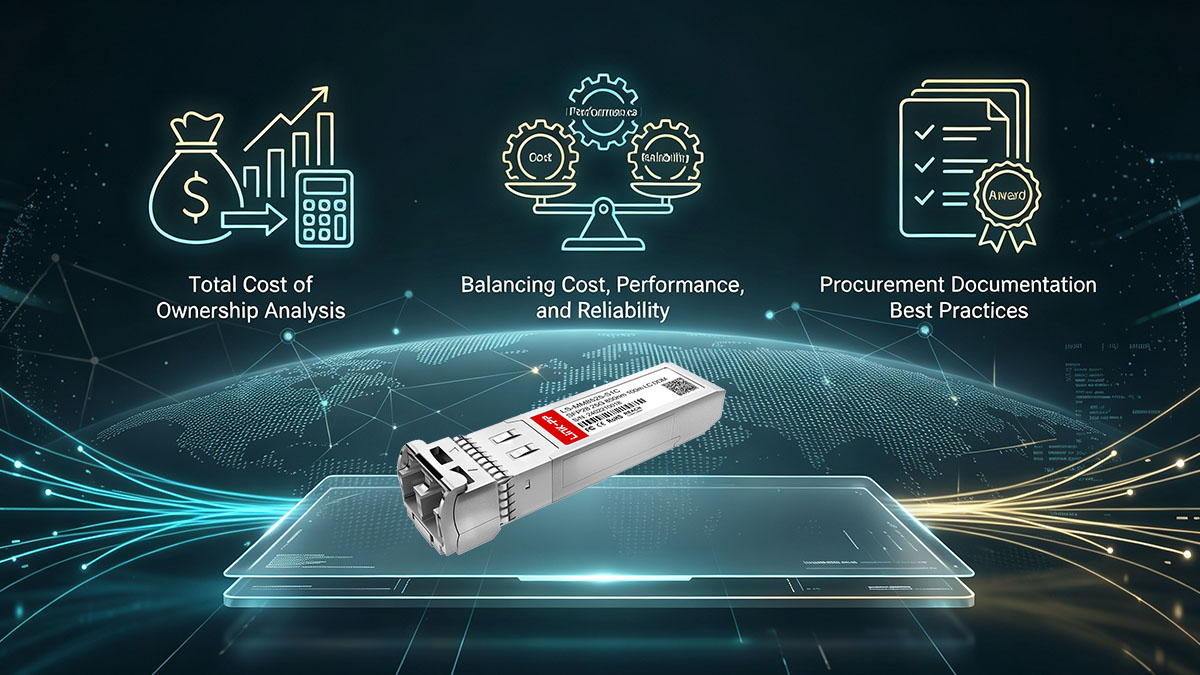
Analyse der Gesamtbetriebskosten
Die Analyse der Gesamtbetriebskosten (TCO) liefert einen umfassenden Überblick über die finanziellen Auswirkungen des Einsatzes von E25GSFP28SR-Modulen, der über die anfänglichen Anschaffungskosten hinausgeht. Dieser Schritt stellt sicher, dass Beschaffungsentscheidungen die Lebenszykluskosten und nicht nur isolierte Preisfaktoren berücksichtigen.
Bevor man einzelne Kostenkomponenten bewertet, ist es wichtig zu verstehen, dass optische Transceiver sowohl die Investitionsausgaben als auch die betriebliche Effizienz im gesamten Netzwerk beeinflussen.
Zu den wichtigsten TCO-Komponenten gehören typischerweise:
- Anfängliche Bereitstellungskosten pro optischem Modul
- Arbeitsaufwand für Installation und Konfiguration
- Auswirkungen des Stromverbrauchs im großen Maßstab bei hochdichten Schaltern
- Wartungsaufwand und Austauschhäufigkeit
- Lagerhaltungs- und Ersatzteilverwaltungskosten
Diese Elemente bestimmen gemeinsam die tatsächliche Kostenstruktur von 25GBASE-SR-Implementierungen. In großen Rechenzentrumsumgebungen haben betriebliche Effizienz und Zuverlässigkeit im Laufe der Zeit oft einen größeren finanziellen Einfluss als anfängliche Kostenunterschiede auf Einzelkomponentenebene.
Kosten, Leistung und Zuverlässigkeit in Einklang bringen
Bei Beschaffungsentscheidungen für das E25GSFP28SR müssen drei miteinander verbundene Faktoren berücksichtigt werden: Kosteneffizienz, Netzwerkleistung und langfristige Zuverlässigkeit. Eine zu starke Gewichtung eines Faktors kann Risiken hinsichtlich Skalierbarkeit oder Betriebsstabilität mit sich bringen.
Bevor man Kompromisse abwägt, ist es wichtig zu erkennen, dass 25GbE-Infrastruktur typischerweise in Umgebungen eingesetzt wird, in denen Leistungskonstanz ebenso wichtig ist wie Budgeteffizienz.
Eine ausgewogene Bewertung berücksichtigt typischerweise Folgendes:
- Leistungsanpassung an die Workload-Anforderungen (Latenz, Durchsatz, Dichte)
- Zuverlässigkeitserwartungen in unternehmenskritischen Netzwerkpfaden
- Kostenoptimierung bei großflächigen Hafenausbauten
- Skalierbarkeit der Infrastruktur für zukünftige 50G/100G-Entwicklungspfade
- Risikotoleranz gegenüber Ausfallzeiten und Komponentenaustauschzyklen
Diese Überlegungen gewährleisten, dass Beschaffungsentscheidungen sowohl den unmittelbaren Leistungsbedarf des Netzwerks als auch die langfristige Weiterentwicklung der Infrastruktur berücksichtigen. Die optimale Wahl ist oft nicht die kostengünstigste Option, sondern diejenige, die Betriebsunterbrechungen im Laufe der Zeit minimiert.
Bewährte Verfahren für die Beschaffungsdokumentation
Eine solide Dokumentation ist unerlässlich, um Transparenz, Reproduzierbarkeit und Compliance während des gesamten Beschaffungszyklus zu gewährleisten. Bei E25GSFP28SR-Implementierungen unterstützt die Dokumentation zudem die Fehlersuche, die Lebenszyklusverfolgung und die Planung zukünftiger Upgrades.
Bevor die Dokumentationselemente aufgelistet werden, ist es wichtig zu beachten, dass strukturierte Aufzeichnungen die operative Unklarheit bei der Skalierung oder der Behebung von Störungen verringern.
Zu den wichtigsten Bestandteilen der Beschaffungsdokumentation gehören:
- Standardisierte Checklisten für technische Spezifikationen zur Sicherstellung der Validierungskonsistenz
- Lieferantenvergleichsmatrizen, die Leistungs- und Supportkriterien abdecken
- Kompatibilitätsprüfungsprotokolle über verschiedene Netzwerkplattformen hinweg
- Interne Genehmigungsprozesse und Beschaffungsgenehmigungsprotokolle
- Bereitstellungsbereichsdefinitionen verknüpft mit Netzwerktopologiekarten
Diese Dokumentationspraktiken schaffen eine lückenlose Nachverfolgbarkeit von der Evaluierung bis zur Implementierung. Sie ermöglichen es Unternehmen außerdem, Beschaffungsentscheidungen bei der Skalierung der Infrastruktur oder der Integration optischer Technologien der nächsten Generation zu überprüfen und so Kontinuität und Governance über den gesamten Lebenszyklus des E25GSFP28SR hinweg sicherzustellen.
🔔 Bereitstellungs- und Abnahmetests
Die Bereitstellungs- und Abnahmetestphase stellt sicher, dass der Intel E25GSFP28SR korrekt installiert, vollständig integriert ist und in einer Live- oder Vorproduktionsumgebung innerhalb der erwarteten Leistungsparameter arbeitet. An diesem Punkt fließen die Beschaffungsentscheidungen in die Praxis ein, wo die Genauigkeit der Installation und die Validierungstests direkt über die Netzwerkstabilität und die Servicezuverlässigkeit entscheiden.
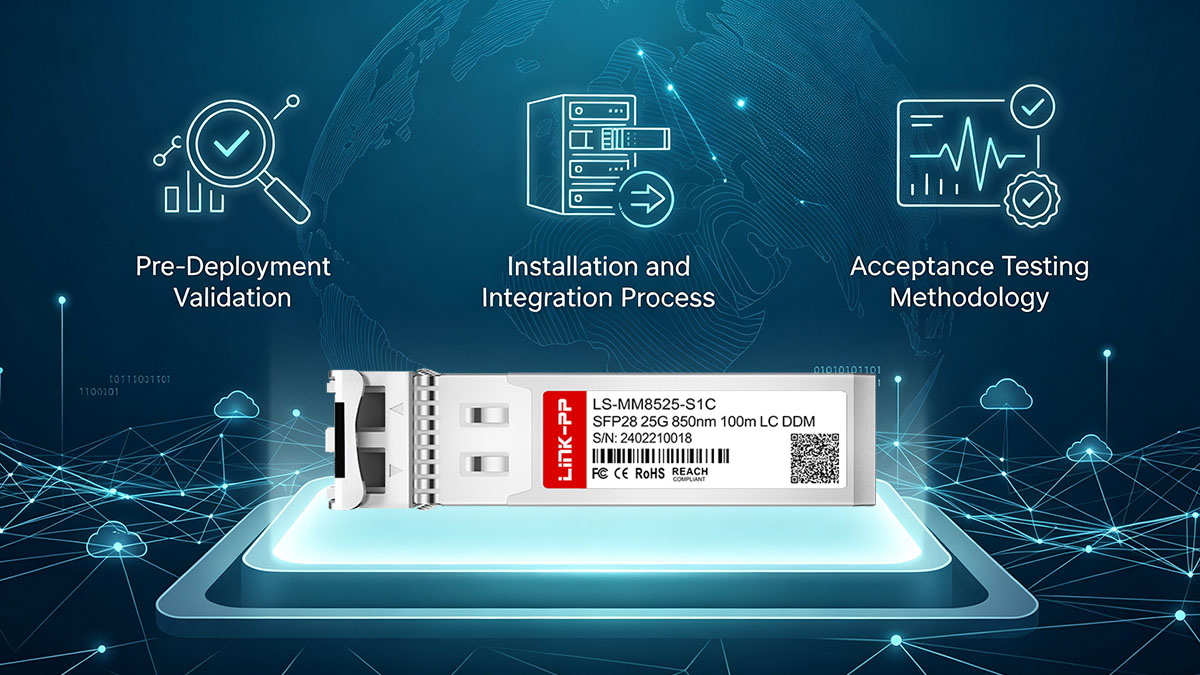
Validierung vor der Bereitstellung
Die Validierung vor der Bereitstellung dient der Bestätigung, dass alle physischen, Konfigurations- und Bestandsbedingungen erfüllt sind, bevor die E25GSFP28SR-Module installiert werden. Dieser Schritt reduziert das Risiko von Fehlkonfigurationen, Inkompatibilitäten oder vermeidbaren Ausfallzeiten während der Einführung.
Vor Beginn der Installation führen Organisationen in der Regel eine strukturierte Bereitschaftsprüfung durch, um die Konsistenz der Hardware- und optischen Infrastruktur sicherzustellen.
Zu den wichtigsten Validierungsaktivitäten vor der Bereitstellung gehören:
- Physische Prüfung optischer Module auf Kennzeichnung, Verpackungsintegrität und Serienverfolgung
- Überprüfung der Firmware-Versionen von Switch und Netzwerkkarte auf Kompatibilität
- Bestätigung des Multimode-Fasertyps (OM3/OM4) und der Sauberkeit des Steckers
- Bestandsabgleich mit geplanten Einsatzmengen und Ersatzteilzuweisung
- Validierung der Portzuordnung zur Sicherstellung korrekter Verbindungszuordnungen im Topologiedesign
Diese Schritte gewährleisten, dass sowohl die Hardwarebereitschaft als auch die Netzwerkkonfiguration den Einsatzerwartungen entsprechen. Eine ordnungsgemäße Validierung in dieser Phase reduziert den Aufwand für die Fehlersuche nach der Installation erheblich.
Installations- und Integrationsprozess
Der Installations- und Integrationsprozess konzentriert sich auf die physische Installation der E25GSFP28SR-Module und die Einrichtung stabiler optischer Verbindungen innerhalb der Netzwerkumgebung. Diese Phase erfordert präzises Vorgehen und die Einhaltung strukturierter Installationsverfahren.
Bevor die einzelnen Prozessschritte beschrieben werden, ist es wichtig hervorzuheben, dass optische Transceiver empfindlich auf mechanische Handhabung und Umwelteinflüsse reagieren, weshalb eine sorgfältige Installation unerlässlich ist.
Typische Installations- und Integrationsschritte umfassen:
- Einsetzen von SFP28-Modulen in die dafür vorgesehenen Switch- oder NIC-Ports mit korrekter Ausrichtung
- Verbindung von LC-Duplex-Glasfaser-Patchkabeln mit kontrolliertem Biegeradiusmanagement
- Sicherstellung der Sauberkeit der Faserendflächen zur Vermeidung von Signalbeeinträchtigungen
- Konfigurieren der Portgeschwindigkeitseinstellungen und Aktivieren des 25GbE-Betriebsmodus
- Validierung der Verbindungsherstellung zwischen Server- und Switch-Endpunkten
Diese Verfahren gewährleisten die korrekte Herstellung der physischen Verbindung und die fehlerfreie Erkennung der Transceiver durch das Netzwerk. Eine ordnungsgemäße Installation verringert zudem die Wahrscheinlichkeit von zeitweiligen Verbindungsabbrüchen in Umgebungen mit hoher Dichte.
Abnahmeprüfungsmethodik
Die Abnahmeprüfung stellt sicher, dass die eingesetzten E25GSFP28SR-Module die erwarteten Leistungsstandards unter Betriebsbedingungen erfüllen. Dieser Schritt ist unerlässlich, um sowohl die Verbindungsstabilität als auch die Konsistenz der optischen Leistung vor der Inbetriebnahme des vollen Produktionsdatenverkehrs zu bestätigen.
Bevor wir die Testmethoden erläutern, ist es wichtig zu verstehen, dass Akzeptanztests sowohl das Leistungsverhalten auf physikalischer Ebene als auch auf Protokollebene bewerten.
Zu den wichtigsten Aktivitäten im Rahmen der Abnahmeprüfung gehören:
- Überprüfung der Verbindungsintegrität zur Bestätigung einer stabilen 25-Gbit/s-Verbindung
- Optische Leistungspegelmessung zur Sicherstellung des Sender-/Empfängergleichgewichts
- End-to-End-Durchsatztests unter kontrollierten Verkehrsbedingungen
- Überwachung der Bitfehlerrate (BER) zur Beurteilung der Signalzuverlässigkeit
- Latenzkonsistenzprüfungen in Multi-Hop- oder Leaf-Spine-Umgebungen
Diese Tests liefern messbare Gewissheit, dass die optische Infrastruktur innerhalb der erwarteten Toleranzen funktioniert. Jede in dieser Phase festgestellte Abweichung wird typischerweise durch Faserinspektion, Port-Rekonfiguration oder Anpassungen der Umgebungsbedingungen behoben.
Nach erfolgreichem Abschluss der Abnahmetests gilt die E25GSFP28SR-Implementierung als voll betriebsbereit und ermöglicht einen stabilen Übergang in die Phasen der kontinuierlichen Überwachung und des Lebenszyklusmanagements.
🔔 Bewährte Verfahren zur Maximierung des Beschaffungserfolgs von E25GSFP28SR
Um den Beschaffungserfolg für den Intel E25GSFP28SR zu maximieren, ist ein strukturierter Ansatz erforderlich, der technische Validierung, Lieferstrategie und langfristige Betriebsplanung miteinander verknüpft. In dieser Phase optimieren Unternehmen ihre Prozesse, um Konsistenz zu gewährleisten, Risiken zu minimieren und die Gesamteffizienz von 25-GbE-Infrastruktur-Implementierungen zu verbessern.
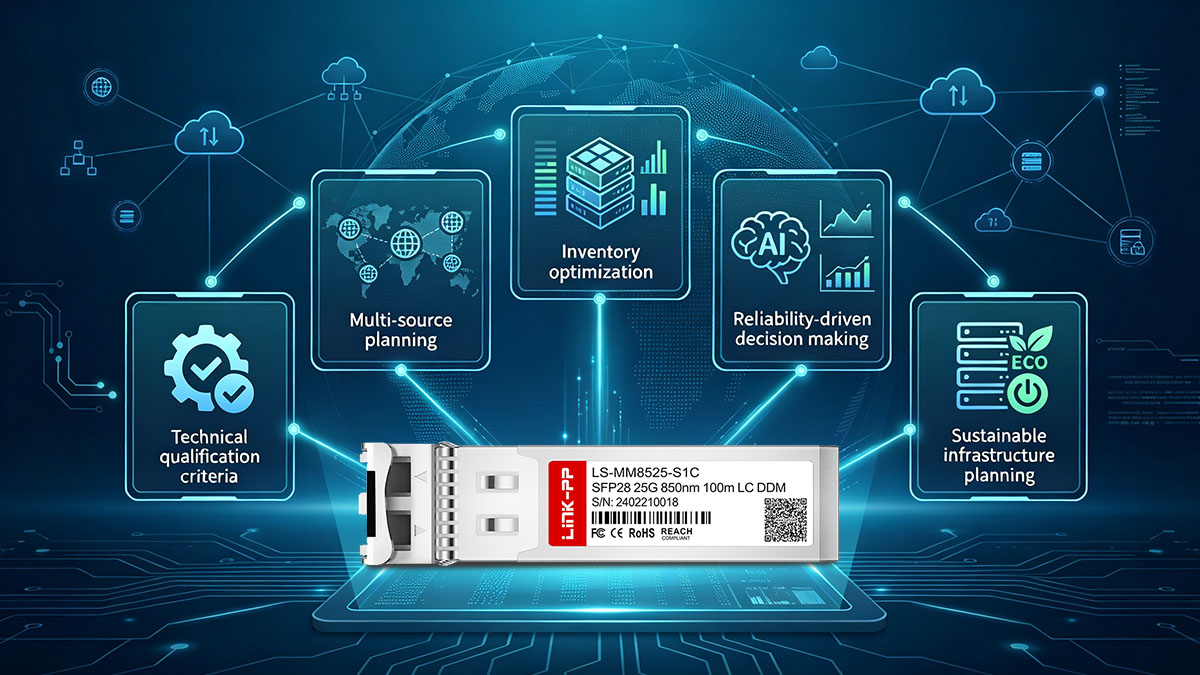
Einen standardisierten Bewertungsrahmen einführen
Ein standardisierter Bewertungsrahmen gewährleistet, dass jede Beschaffungsentscheidung für E25GSFP28SR einheitlichen technischen und betrieblichen Kriterien folgt. Dies reduziert die Variabilität der Auswahlergebnisse und verbessert die Reproduzierbarkeit über mehrere Einsatzprojekte hinweg.
Bevor Evaluierungsschritte definiert werden, ist es wichtig zu verstehen, dass uneinheitliche Bewertungsmethoden oft zu Kompatibilitätsproblemen und ungleichmäßiger Netzwerkleistung führen.
Zu den Schlüsselelementen eines standardisierten Rahmens gehören:
- Einheitliche technische Qualifizierungs-Checkliste für 25GBASE-SR-Optiken
- Strukturierte Kompatibilitätsprüfung über alle Switching-Plattformen hinweg
- Lieferantenbewertungsmodelle basierend auf Leistung, Support und Stabilität
- Definierte Akzeptanzschwellenwerte für optische Leistung und Zuverlässigkeit
- Teamübergreifende Prüfprozesse unter Einbeziehung von Netzwerk- und Beschaffungsakteuren
Diese Elemente gewährleisten, dass Entscheidungen auf Basis messbarer Kriterien und nicht auf Grundlage von Ad-hoc-Bewertungen getroffen werden. Langfristig verbessert dieser Ansatz die Genauigkeit der Beschaffung und reduziert die Bereitstellungsrisiken in wachsenden Infrastrukturumgebungen.
Aufbau einer resilienten Lieferstrategie
Eine robuste Lieferstrategie gewährleistet die durchgängige Verfügbarkeit der E25GSFP28SR-Module während des gesamten Lebenszyklus der Infrastruktur. Dies ist insbesondere bei großflächigen Implementierungen wichtig, da Nachfrageschwankungen oder Lieferengpässe die Zeitpläne für den Netzausbau direkt beeinflussen können.
Bevor wir konkrete Strategien erläutern, ist es wichtig zu beachten, dass die Lieferkontinuität bei der Beschaffung optischer Transceiver ebenso entscheidend ist wie die technische Kompatibilität.
Zu den wichtigsten Maßnahmen zur Stärkung der Lieferketten gehören:
- Diversifizierte Beschaffung über mehrere qualifizierte Lieferkanäle
- Strategischer Pufferbestand für kritische Netzwerksegmente
- Prognosebasierte Beschaffung im Einklang mit Infrastrukturwachstumsplänen
- Regionale Vertriebsplanung zur Reduzierung logistischer Verzögerungen
- Kontinuierliche Überwachung und Neubewertung der Lieferantenleistung
Diese Vorgehensweisen verringern die Abhängigkeit von einem einzelnen Lieferanten und tragen zur Einhaltung stabiler Bereitstellungspläne bei. Eine widerstandsfähige Lieferkette verbessert zudem die Reaktionsfähigkeit bei der Skalierung der 25-GbE-Infrastruktur über mehrere Standorte oder Rechenzentrumsregionen hinweg.
Fokus auf den Lebenszykluswert statt auf die Anschaffungskosten
Der Beschaffungserfolg hängt nicht allein von den anfänglichen Stückkosten ab, sondern vom gesamten Lebenszykluswert, den der E25GSFP28SR im Netzwerkumfeld generiert. Ein lebenszyklusorientierter Ansatz stellt sicher, dass langfristige Betriebseffizienz Vorrang vor kurzfristigen Einsparungen hat.
Bevor man Aspekte des Lebenszyklus betrachtet, ist es wichtig zu erkennen, dass optische Module sowohl die Leistungsstabilität als auch den Wartungsaufwand während ihrer gesamten Betriebsdauer beeinflussen.
Zu den wichtigsten Aspekten der Wertschöpfung über den gesamten Lebenszyklus gehören:
- Langzeitzuverlässigkeit und Konsistenz der Ausfallrate unter Dauerlast
- Verbesserungen der betrieblichen Effizienz durch reduzierte Wartungshäufigkeit
- Reduzierung der Auswirkungen von Ausfallzeiten in unternehmenskritischen Netzwerkumgebungen
- Kompatibilitätsstabilität bei zukünftigen Infrastruktur-Upgrades
- Gesamtkosteneffizienz bei Skalierung über große Implementierungen
Diese Faktoren verdeutlichen, dass Beschaffungsentscheidungen im Kontext der mehrjährigen Infrastrukturleistung und nicht als isolierte Kaufvorgänge bewertet werden sollten. Durch die Priorisierung des Lebenszykluswerts erzielen Organisationen besser planbare Leistungsergebnisse und eine höhere Rendite ihrer Infrastrukturinvestitionen.
🔔 Fazit
Der Intel E25GSFP28SR 25GBASE-SR-Transceiver spielt eine zentrale Rolle in modernen, hochdichten 25GbE-Netzwerken, in denen Leistung, Kompatibilität und Stabilität über den gesamten Lebenszyklus hinweg sorgfältig aufeinander abgestimmt werden müssen. Ein strukturierter Beschaffungslebenszyklus für den Intel E25GSFP28SR stellt sicher, dass jede Phase – von der Bedarfsplanung und technischen Qualifizierung über die Beschaffung und Bereitstellung bis hin zum Betriebsmanagement – zu einer vorhersehbaren Netzwerkleistung und einem reduzierten Infrastrukturrisiko beiträgt. Werden 25GBASE-SR-Optiken als lebenszyklusorientiertes Asset und nicht als eigenständige Komponente betrachtet, werden sie zu einem strategischen Wegbereiter für die skalierbare Weiterentwicklung von Rechenzentren und die langfristige Effizienz von Netzwerken.
Ein klarer Überblick über den Beschaffungslebenszyklus trägt dazu bei, komplexe Entscheidungsprozesse auf technischer und operativer Ebene zu vereinfachen. Die wichtigsten Punkte lassen sich wie folgt zusammenfassen:
- Die Anforderungsplanung definiert Bandbreite, Topologie und Skalierbarkeitsziele.
- Die technische Bewertung gewährleistet die Validierung von Kompatibilität, Leistung und Zuverlässigkeit.
- Die Lieferantenstrategie reduziert das Lieferkettenrisiko und verbessert die Verfügbarkeitskonstanz.
- Bei Beschaffungsentscheidungen müssen Kosten, Leistung und langfristiger betrieblicher Wert in Einklang gebracht werden.
- Einsatz und Tests bestätigen Stabilität und optische Integrität im realen Einsatz.
- Das Lebenszyklusmanagement gewährleistet kontinuierliche Überwachung, Bestandskontrolle und Upgrade-Bereitschaft.
Zusammen bilden diese Elemente einen kontrollierten und wiederholbaren Rahmen für die Verwaltung von 25GBASE-SR-optischer Infrastruktur in großem Umfang.
Eine gut umgesetzte Beschaffungsstrategie für den E25GSFP28SR hängt letztlich von der Abstimmung technischer Anforderungen mit zuverlässiger Beschaffung und langfristiger Betriebsplanung ab. Unternehmen, die einen lebenszyklusorientierten Ansatz verfolgen, sind besser aufgestellt, um 25-GbE-Netzwerke effizient zu skalieren und gleichzeitig Ausfallzeiten und Kompatibilitätsrisiken zu minimieren.
Für Teams, die strukturierte optische Transceiver-Lösungen, technische Beratung und Ressourcen zur Infrastrukturplanung erkunden möchten, LINK-PP Offizieller Shop bietet einen zentralen Bezugspunkt für weiterführende Unterstützung und Einblicke in das Produkt-Ökosystem und hilft so, die Lücke zwischen Planung und realer Implementierung zu schließen.