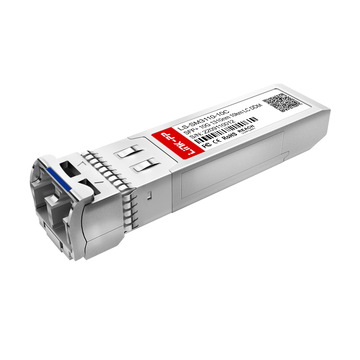
Are your enterprise core switches struggling with physical distance limits or optical attenuation across campus fiber runs? While standard optics handle short-run rack interconnects, spanning distant distribution frames and remote storage clusters quickly exceeds multimode reach capabilities. Deploying the MA-SFP-10GB-LR optical transceiver bridges these extended backbone links over single-mode fiber without excessive signal degradation.
How do network administrators maintain stable physical layer integrity when linking geographically dispersed buildings to the core network? Selecting a dedicated long-range SFP transceiver module like the Meraki MA-SFP-10GB-LR ensures compatibility with standard optical power budgets, while integrated DOM telemetry detects signal degradation before bit errors trigger link drops. Integrating this 1310nm SFP+ module into key core switching scenarios provides the stable physical foundation needed for a long-distance enterprise backbone.
📝 What Is the Meraki MA-SFP-10GB-LR Optical Module
The MA-SFP-10GB-LR is a purpose-built 10-Gigabit Ethernet optical transceiver designed to establish long-distance physical uplinks for enterprise switching hardware. Operating over single-mode optical fiber, it converts electrical data streams into high-precision light pulses to span campus-wide distributions. Integrating this transceiver ensures resilient, low-latency interconnection across mission-critical network aggregation tiers.
Core Optical Specs and Transmission Capabilities
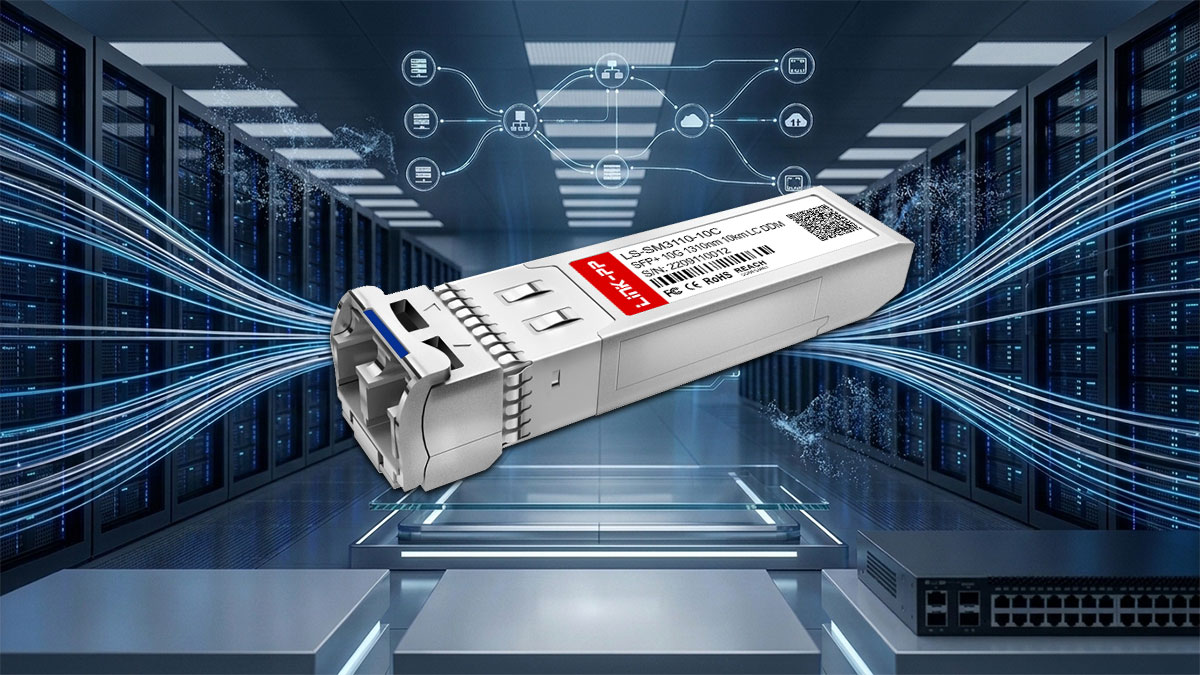
The Meraki MA-SFP-10GB-LR operates at a nominal central wavelength of 1310nm utilizing a solid-state distributed feedback (DFB) laser transmitter. This optical design delivers up to 10.7Gbps serial data throughput over standard single-mode runs reaching up to 10km (6.2 miles) without requiring inline signal repeaters.
Its integrated PIN receiver maintains high signal fidelity and sharp optical threshold detection even across multi-kilometer campus spans. This ensures clear packet boundary distinction, minimal bit degradation, and continuous bit-level synchronization across complex distribution routes with multiple patch transitions, provided the total link loss remains within the optical power budget.
The Role of Single-Mode Fiber in Core Switch Design
Single-mode fiber (OS1/OS2) features a narrow core diameter of roughly 9µm that permits light to propagate along a single spatial path. Pairing the MA-SFP-10GB-LR with single-mode infrastructure eliminates modal dispersion, which is the primary physical phenomenon that limits multi-gigabit speeds over multimode fiber.
This optical pairing is vital when architecting backbone connections between centralized core switches and distant IDF wiring closets. By minimizing pulse spreading and signal distortion, single-mode routing maintains pristine waveform eye diagrams and deterministic transmission latencies across expansive physical enterprise environments.
SFP+ Form Factor Architecture and 10GBASE-LR Standards Compliance
Engineered in a compact, hot-pluggable SFP+ mechanical package, the MA-SFP-10GB-LR fully complies with IEEE 802.3ae 10GBASE-LR and SFF-8431 electrical interface specifications. Its standard duplex LC optical receptacle enables seamless integration with high-density patch fields without occupying excess line card space.
The transceiver is governed by strict power dissipation thresholds (typically less than 1.0W), mitigating thermal loading within dense switch chassis fabrics. Furthermore, standard Multi-Source Agreement (MSA) EEPROM mapping ensures immediate recognition and operational parameter negotiation upon insertion into compatible Meraki core switch ports.
📝 Core-to-Distribution Layer Uplinks with MA-SFP-10GB-LR
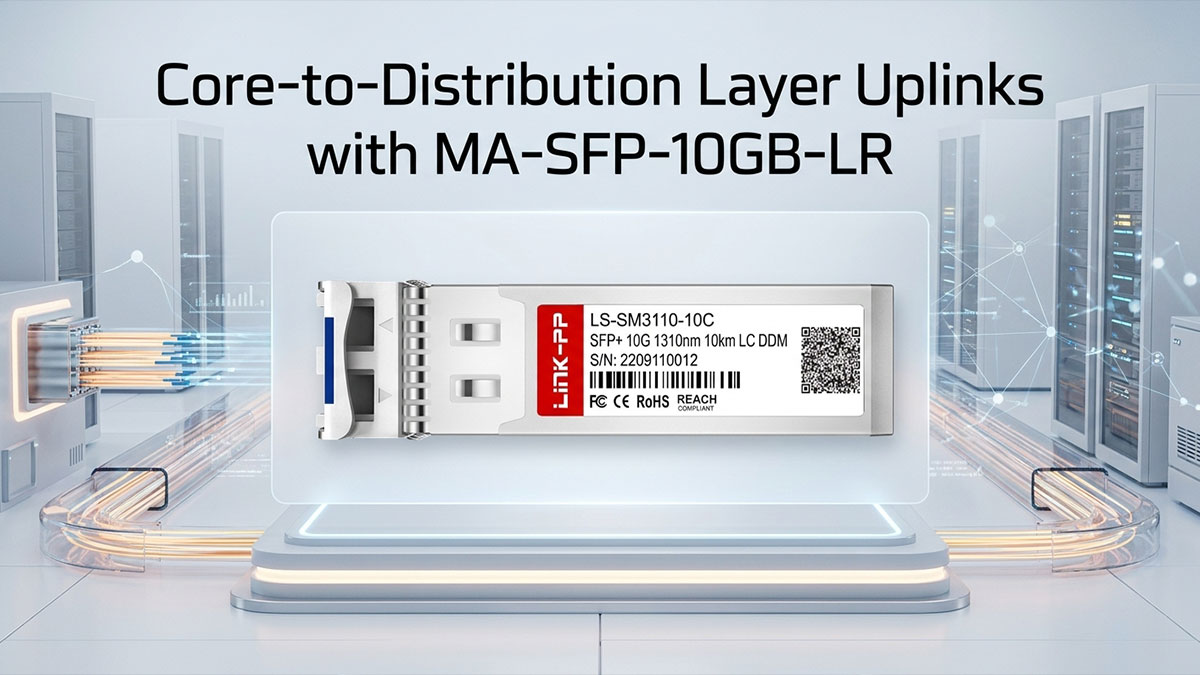
Establishing resilient links between core switches and distribution layers is essential for maintaining enterprise-wide network stability. Deploying the MA-SFP-10GB-LR transceiver provides dedicated 10G optical conduits that effortlessly bridge structural wiring gaps across different floors or localized distribution closets. This robust optical backbone ensures continuous data flow without signal degradation across heavily loaded switching tiers.
Building High-Speed 10G Backbone Links Across Network Tiers
Connecting hierarchical distribution blocks back to centralized core chassis demands predictable physical transmission lines. The MA-SFP-10GB-LR module utilizes 1310nm single-mode optical paths to overcome the severe distance and attenuation limits typical of copper or legacy multimode lines.
This deterministic physical connectivity ensures consistent packet forwarding rates between access aggregation points and enterprise core switches. Eliminating physical-layer signal distortion at this critical tier guarantees steady throughput for delay-sensitive voice, video, and corporate data transfers.
Using Link Aggregation (LACP) for 40G Aggregated Core Capacity
To expand backbone capacity without overhauling core hardware, network architects bundle multiple physical SFP+ links into a single logical channel. Combining four MA-SFP-10GB-LR transceivers via IEEE 802.3ad Link Aggregation Control Protocol (LACP) delivers an aggregated 40G trunk across critical switching tiers.
Deploying LACP with 10GBASE-LR optics yields several key operational benefits:
- High-Bandwidth Trunking: Multiplies total throughput to 40G across four synchronized 10G links.
- Dynamic Load Distribution: Balances bidirectional traffic streams using hardware hash algorithms.
- Sub-Second Failover: Reroutes traffic immediately if an individual fiber path experiences failure.
- Non-Disruptive Scaling: Allows incremental bandwidth upgrades without interrupting active core operations.
Preventing Network Bottlenecks During Peak Core Traffic Periods
During morning login surges or large scheduled data syncs, distribution uplinks experience intense bursts that can overwhelm standard uplinks. Deploying MA-SFP-10GB-LR optical modules ensures sufficient physical bandwidth headroom to ingest concentrated traffic without dropping packets.
Equally important is the optical stability that single-mode optics maintain under high utilization, avoiding the link flapping often caused by thermal stress or packet retransmissions. By keeping line-rate transmission consistent, enterprise core switches can sustain full wire-speed routing during the most demanding traffic peaks.
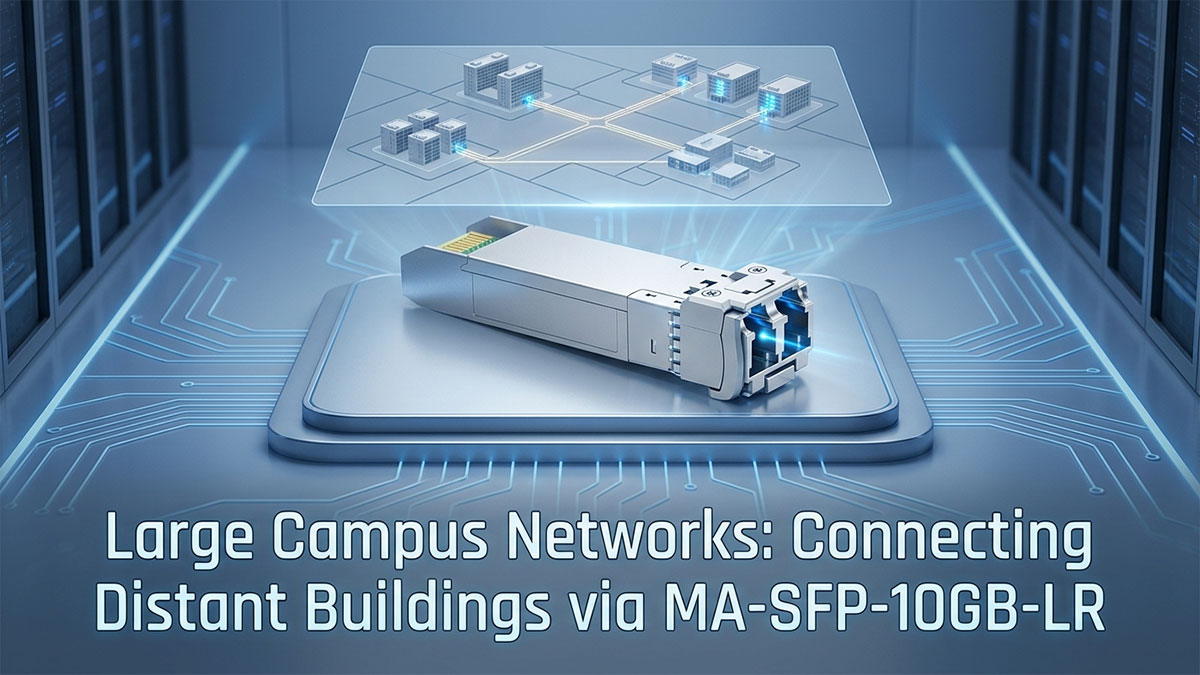
📝 Large Campus Networks: Connecting Distant Buildings via MA-SFP-10GB-LR
Enterprise campus environments require continuous, high-speed data exchange between geographically separated facilities and the main equipment room. Deploying the MA-SFP-10GB-LR transceiver allows network engineers to link remote facility switches directly back to the centralized core over single-mode fiber. This long-reach optical backbone eliminates physical distance constraints, establishing a unified, low-latency switching fabric across the entire campus footprint.
Overcoming Multimode Distance Limits Across Multi-Building Sites
Standard multimode fiber installations (OM3/OM4) experience severe modal dispersion and optical attenuation when runs exceed 300m to 400m at 10G speeds. The MA-SFP-10GB-LR overcomes these physical layer boundaries by leveraging a 1310nm single-mode optical interface rated for up to 10km.
Transitioning multi-building campus links to 10GBASE-LR single-mode optics delivers distinct physical-layer advantages:
- Extended Reach: Traverses inter-building distances up to 10km without mid-span signal repeaters.
- Modal Dispersion Immunity: Prevents light pulse spreading over extended single-mode fiber cores.
- Low Fiber Attenuation: Minimizes signal loss over underground conduits and outdoor duct runs.
- Consistent 10G Line Rate: Sustains full wire-speed forwarding across campus boundaries.
Designing Redundant Dual-Homed Fiber Runs for High Availability
Mission-critical campus switching requires fault-tolerant physical topologies to avoid total isolation during accidental cable strikes or hardware faults. Engineers pair MA-SFP-10GB-LR transceivers with diverse physical fiber paths to create dual-homed uplinks connecting remote buildings to redundant core switches.
By coupling these dual-routed transceivers with Rapid Spanning Tree Protocol (RSTP) or Multi-Chassis Link Aggregation, the core architecture ensures automatic failover within sub-second or even millisecond ranges when paired with modern MLAG deployments. This architectural separation guarantees that an optical signal loss on one conduit will not interrupt backbone switching services for connected buildings.
Ensuring Stable Core Interconnects Under Variable Operating Conditions
Outdoor campus fiber conduits frequently experience significant environmental shifts, ranging from seasonal temperature fluctuations to physical conduit stress. The MA-SFP-10GB-LR incorporates a stabilized laser transmitter and robust optical sub-assemblies engineered to operate reliably across variable thermal environments.
These stable physical layer characteristics preserve optical signal clarity and wavelength stability over lengthy outside-plant fiber runs. As a result, campus core switches maintain continuous bit-level synchronization without experiencing thermal-induced link flaps or elevated bit error rates.
📝 Dispersed Storage and SAN Replication via MA-SFP-10GB-LR
Enterprise storage infrastructures increasingly rely on geographically separated secondary data centers and backup server rooms to safeguard business continuity. Deploying the MA-SFP-10GB-LR provides the necessary single-mode optical layer to bridge primary core switches directly to off-site storage targets. This dedicated long-reach interconnect ensures high-capacity data transport for enterprise SAN replication without introducing unacceptable physical transport error rates.

Extending Storage Fabric Links Beyond Multimode Limits
Traditional storage area network fabrics running on short-reach multimode optical transceivers fail when replication targets sit outside the immediate data center perimeter. Deploying the MA-SFP-10GB-LR allows storage traffic to traverse single-mode fiber runs reaching up to 10km across distributed enterprise sites. This expanded reach eliminates the requirement for specialized external fiber extenders or protocol converters between storage nodes.
Operating over single-mode OS2 fiber provides a clean optical path free from the differential mode delay common in legacy multi-building runs. By maintaining signal purity over extended distances, core switches seamlessly forward high-density iSCSI and NAS traffic directly to remote storage nodes. This physical layer consistency ensures uninterrupted block-level synchronization across off-premise recovery targets.
Low-Latency SAN Replication and Backup Across Dispersed Facilities
Synchronous and asynchronous SAN data replication demands deterministic, ultra-low propagation delay to prevent transactional I/O wait states in database clusters. The MA-SFP-10GB-LR module utilizes direct 1310nm uncompressed optical transmission, minimizing added buffering and queuing latency at the switch interface. Maintaining this streamlined physical pathway is crucial for hyper-converged storage nodes and stretched virtualization clusters that require rapid heartbeat acknowledgment.
High-speed physical transmission directly reduces transaction completion times during continuous volume snapshot mirroring. Sustained optical stability virtually eliminates physical-layer retransmissions, ensuring that TCP window scaling and congestion control algorithms can fully utilize the 10G pipe without unnecessary fallback during intense replication jobs. As a result, enterprise core switches can process continuous backup streams without degrading production application response times.
Maintaining High-Throughput 10G Links to Core Storage Aggregation
Storage aggregation points in the enterprise core must ingest multi-gigabit data streams originating from simultaneous backup jobs and active virtual machine migrations. Installing the MA-SFP-10GB-LR in core switch ports dedicated to storage fabric uplinks guarantees dedicated line-rate 10G transport per physical interface. This consistent wire-speed forwarding ensures that storage traffic does not suffer from buffer exhaustion or localized packet queuing.
Reliable 10G transport prevents packet loss during high-concurrency storage reads and writes across distributed clusters. Sustained optical throughput ensures predictable Recovery Point Objectives (RPO) and Recovery Time Objectives (RTO) during scheduled enterprise backup windows. Ultimately, these robust physical uplinks keep storage aggregation tiers stable under continuous multi-terabyte data transfers.
📝 MA-SFP-10GB-LR vs. MA-SFP-10GB-SR in Core Switching Scenarios
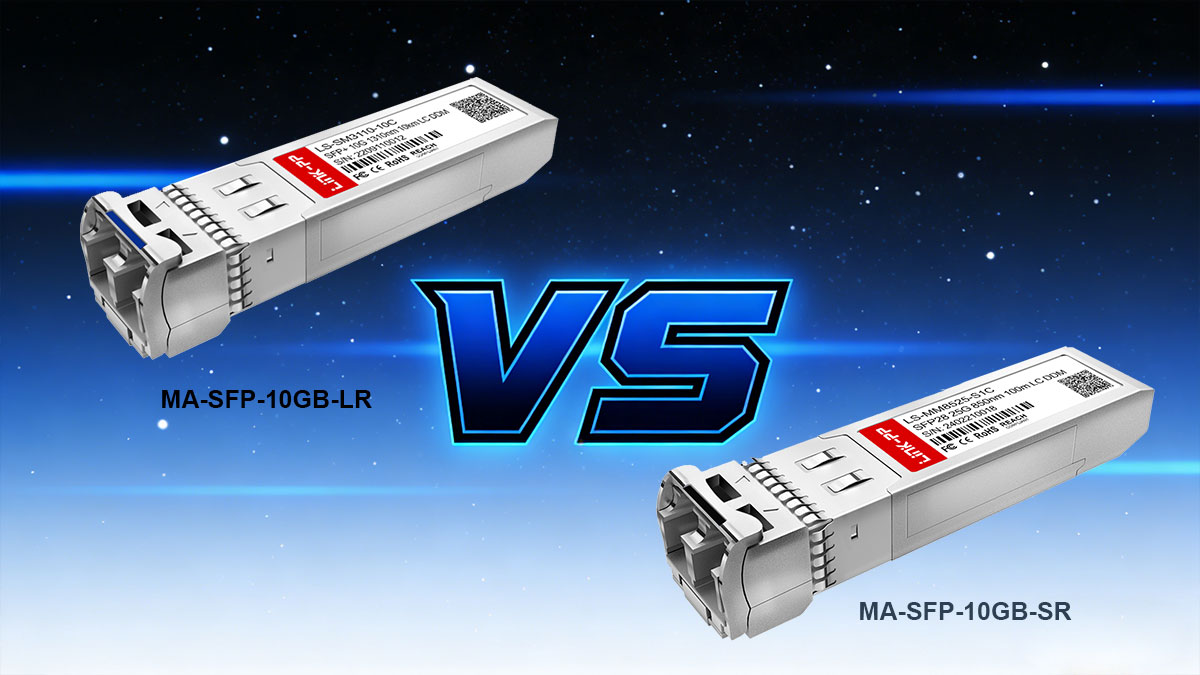
Selecting the appropriate optical transceiver for enterprise core switching requires balancing transmission reach, physical cabling media, and physical-layer dispersion limits. While both the MA-SFP-10GB-LR and the MA-SFP-10GB-SR deliver dedicated 10Gbps line-rate throughput, their underlying laser physics dictate entirely different deployment boundaries across campus distribution tiers.
Evaluating the core architectural differences between these two optical transceivers clarifies which physical media aligns with specific enterprise routing requirements:
| Technical Parameter | MA-SFP-10GB-LR | MA-SFP-10GB-SR |
| Optical Standard | IEEE 802.3ae 10GBASE-LR | IEEE 802.3ae 10GBASE-SR |
| Laser Transmitter | 1310nm Distributed Feedback (DFB) Laser | 850nm Vertical-Cavity Surface-Emitting (VCSEL) Laser |
| Fiber Media Type | Single-Mode Fiber | Multimode Fiber |
| Max Reach | Up to 10km | 300m (OM3) / 400m (OM4) |
| Primary Physical Limit | Optical Attenuation (dB loss) | Modal Dispersion & Differential Mode Delay |
| Target Core Application | Cross-Campus Runs, Inter-Building Spans, DCI | Intra-Rack Uplinks, Short-Run Local MDF Patching |
Understanding these fundamental hardware specifications prevents costly optical mismatches and ensures that core switch backbones maintain sufficient signal fidelity under heavy traffic loads. While short-reach optics excel in high-density rack patching, long-reach modules provide the deterministic optical link budget required for distributed, multi-facility routing environments.
Transmission Distance: 10km Single-Mode vs. 300m Multimode
The core differentiator between these optics lies in their transmission distance and underlying light propagation characteristics. The MA-SFP-10GB-LR module utilizes a 1310nm DFB laser over single-mode fiber to achieve reliable links up to 10km, completely surpassing the 300m ceiling of the MA-SFP-10GB-SR. This expansive reach is essential for linking geographically separated distribution frames across multi-building enterprise campuses without intermediate optical repeaters.
Conversely, the 850nm VCSEL transmitter in the SR module encounters severe pulse degradation beyond 300m on OM3 or 400m on OM4 fiber due to modal dispersion. Attempting to push multimode transceivers past these thresholds results in optical inter-symbol interference and elevated frame drop rates. Deploying 10GBASE-LR optics guarantees consistent physical-layer integrity across multi-kilometer campus backbones where multimode optics cannot operate.
Cable Infrastructure: Evaluating Existing OM3/OM4 vs. OS2 Single-Mode
Auditing the physical cable plant is a mandatory engineering step before provisioning core switch uplinks. Legacy enterprise networks often feature substantial OM3/OM4 multimode fiber runs optimized for short-distance server patching and localized IDF-to-MDF uplinks. However, upgrading core-to-distribution backbones over extended physical paths necessitates transitioning to OS2 single-mode fiber to fully support the MA-SFP-10GB-LR.
OS2 single-mode cabling features a tight 9µm core diameter that eliminates the differential mode delay (DMD) inherent to multimode fiber. Although terminating single-mode infrastructure requires precise fusion splicing and clean LC duplex connectivity, it offers virtually unlimited modal bandwidth. This physical infrastructure transition ensures that newly installed single-mode fiber runs can seamlessly scale to 25G, 40G, or 100G in future core upgrade cycles.
Core Migration Strategy: When Long Range SFP Modules Make Technical Sense
Migrating to long-reach optics makes technical sense when enterprise core switches must aggregate traffic from remote buildings, dispersed storage clusters, or external carrier handover points. Deploying the MA-SFP-10GB-LR is required whenever link distance exceeds 300m or when existing multimode conduits suffer from excessive bend loss and connector attenuation. Furthermore, unifying campus-wide distribution uplinks onto single-mode OS2 media simplifies spare parts management by standardizing on a single optical transceiver model.
Retaining short-reach SR optics remains practical strictly for high-density, intra-row switch stacking and short-run patch panel connections within the primary data hall. However, using 10GBASE-LR modules across critical backbone paths ensures ample optical power budgets to compensate for insertion losses and connector aging over extended fiber plants, while virtually eliminating the modal dispersion penalties that plague multimode links over long distances. This strategic deployment approach ensures enterprise core switching fabrics maintain stable, wire-speed packet forwarding across both short and extended campus spans.
📝 Optical Power Budget and Fiber Design for MA-SFP-10GB-LR Core Links
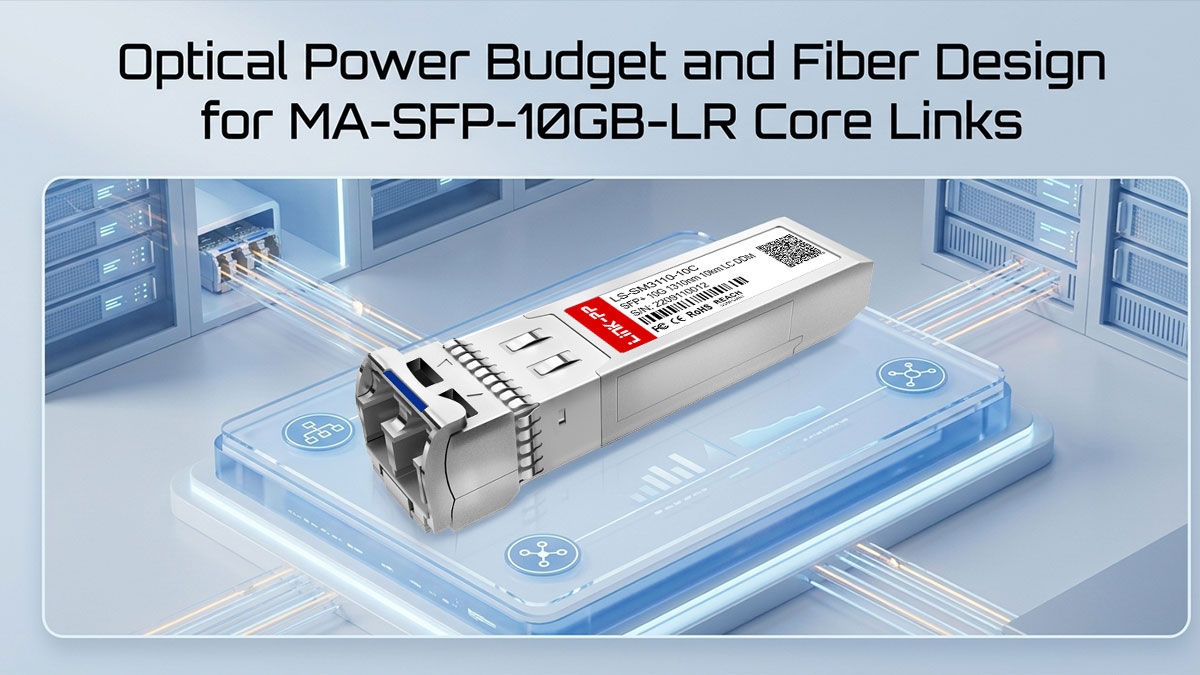
Designing long-reach optical paths for enterprise core switches demands a rigorous mathematical verification of signal loss across the entire cable plant. Accurately modeling the optical link budget ensures that every MA-SFP-10GB-LR transceiver receives sufficient optical power while maintaining clean signal integrity across critical backbone spans.
Calculating Insertion Loss Across Campus Core Fiber Runs
Calculating the total channel insertion loss involves summing the baseline fiber attenuation with losses from mating connectors and fusion splices along the run. Standard OS2 single-mode fiber typically exhibits approximately 0.4dB/km attenuation at the 1310nm window, while each LC connector pair and fusion splice introduces roughly 0.2dB to 0.5dB and 0.1dB of loss respectively. Network architects must ensure that the cumulative loss remains well within the minimum available power budget of the MA-SFP-10GB-LR module.
Engineers must also account for cumulative optical penalties across complex patch distributions between core switch chassis and remote distribution closets. Subtracting total link attenuation from the transmitter's minimum launch power confirms whether the incoming light level meets operational thresholds. Performing these end-to-end calculations prior to deployment prevents unexplained bit errors and intermittent link dropping across extended campus backbones.
Evaluating Minimum Receiver Sensitivity and Link Safety Margins
The operational dynamic range of the MA-SFP-10GB-LR module spans from a minimum launch power of -6.5dBm (with a maximum of -0.5dBm) down to a receiver sensitivity threshold of approximately -14.4dBm. Because the maximum transmit power remains strictly below the receiver's overload damage ceiling, network engineers can directly interconnect transceivers over short patch cables without requiring external optical attenuators. This balanced optical dynamic range simplifies bench staging, lab validation, and short-run MDF uplinks without risking photodiode saturation.
To ensure long-term stability across live core links, engineers must maintain an operating power margin of at least 2 dB to 3 dB above the –14.4dBm sensitivity floor. For a typical 5km campus run with approximately 5.0dB of total channel loss, the raw available budget of 7.9dB (from –6.5dBm launch to –14.4dBm sensitivity) leaves a remaining margin of 2.9dB — safely within the recommended guideline. Allocating this dedicated margin protects the optical interface against inevitable real-world degradation, such as connector contamination, cable plant aging, and temperature-induced optical power drift.
Best Practices for LC Duplex Patch Panels in Core Switch Racks
High-density core switch racks rely on structured LC duplex patching systems to organize hundreds of live single-mode fiber strands cleanly. Implementing standardized patching workflows ensures optimal physical alignment and minimizes cumulative insertion losses across mission-critical MA-SFP-10GB-LR switch ports.
Adhering to structured physical-layer cabling standards protects optical performance across dense core switching racks:
- End-Face Inspection: Inspect and clean all LC duplex connectors using fiber video scopes before mating.
- Bend Radius Management: Maintain a minimum bend radius of 30mm on single-mode patch cords to prevent macro-bending loss.
- High-Grade Adapters: Utilize premium ceramic-sleeve LC couplers to guarantee sub-micron core alignment.
- Staggered Patch Routing: Route patch leads through dedicated vertical managers to eliminate downward mechanical tension.
📝 Troubleshooting Core Link Issues with MA-SFP-10GB-LR in Meraki Dashboard
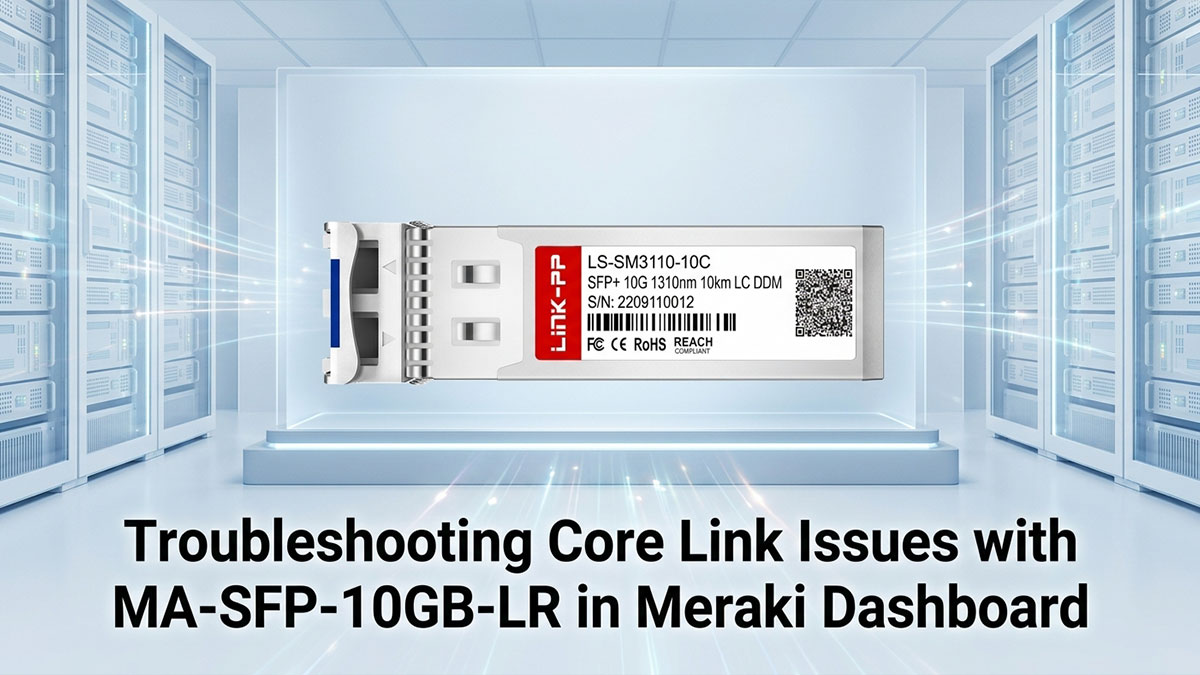
Maintaining uninterrupted backbone connectivity requires proactive physical layer monitoring and structured diagnostic workflows directly from the cloud management interface. The Meraki Dashboard simplifies troubleshooting by reading real-time telemetry from installed MA-SFP-10GB-LR transceivers, allowing network administrators to isolate physical fiber anomalies before they degrade enterprise core switching operations.
Reading DDM Metrics: Tx/Rx Power, Bias Current, Voltage, and Temperature
The Meraki Dashboard extracts real-time Digital Diagnostic Monitoring (DDM) data from the SFF-8472 compliant microchip inside each MA-SFP-10GB-LR module. Monitoring these physical telemetry parameters provides immediate visibility into the health of critical core switch ports:
- Tx Optical Power: Verifies that the internal 1310nm DFB laser launches sufficient optical energy.
- Rx Optical Power: Measures received light levels to detect dirty connectors or excessive span loss.
- Laser Bias Current: Flags semiconductor transmitter degradation when current draw rises to maintain output power.
- Supply Voltage: Confirms that the host core switch line card delivers stable DC power.
- Module Temperature: Detects chassis airflow blockages and localized thermal buildup in dense switch racks.
Monitoring these baseline DDM parameters establishes a clear reference point for rapid fault isolation. If any value exceeds expected thresholds, further diagnosis can pinpoint whether the issue stems from cable plant degradation, connector contamination, or failing hardware.
Diagnosing Link Flapping and High Bit Error Rates (BER) at the Core
Intermittent link flapping and elevated bit error rates across core uplinks typically indicate marginal optical power or localized single-mode fiber physical damage. When received power dips close to the sensitivity floor, the MA-SFP-10GB-LR receiver experiences frame synchronization loss, triggering repetitive port state transitions in the core switch event log.
Network administrators can cross-reference error counter increments — such as Cyclic Redundancy Check (CRC) errors and frame alignment drops — with fluctuating Rx levels to identify the fault location. If high error rates correlate with sudden drops in optical signal power, inspecting patch panels for contaminated LC connector end-faces or excessive cable bend radius usually resolves the root cause.
Using Meraki Remote Diagnostics to Resolve Core Connectivity Alerts
The Meraki Dashboard provides integrated remote diagnostic tools that allow administrators to evaluate MA-SFP-10GB-LR optical links without deploying on-site field technicians. Cloud-generated event logs and automated alert notifications instantly pinpoint optical signal anomalies, port-level carrier losses, or abnormal temperature excursions across core-to-distribution runs.
Engineers can initiate remote cable and port tests, review historical optical power graphs, and verify LACP aggregation health from a single centralized console. Correlating these automated cloud alerts with physical link performance metrics enables rapid root-cause isolation and significantly shortens mean time to resolution (MTTR) across mission-critical enterprise core switching fabrics.
📝 Final Thoughts: Choosing the MA-SFP-10GB-LR for Enterprise Core Switching
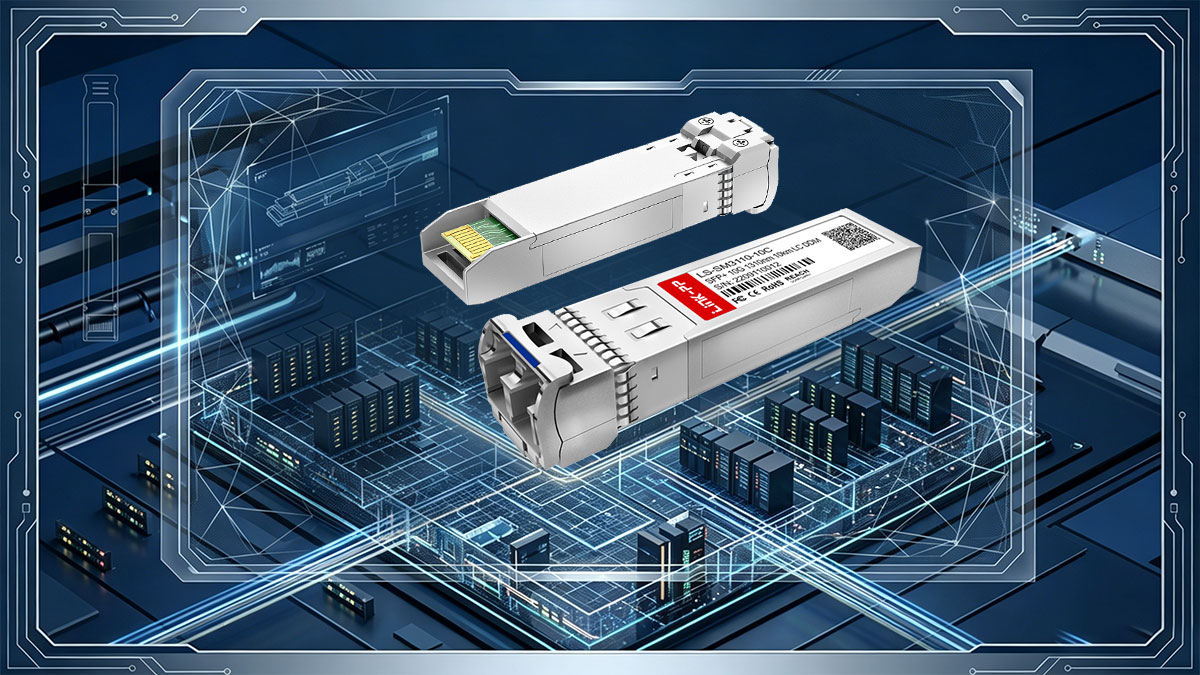
Deploying the MA-SFP-10GB-LR optical transceiver establishes a dependable, high-capacity physical backbone across demanding enterprise switching environments. From bridging multi-building campus networks and aggregating distribution tiers to supporting distributed SAN replication, this 1310nm single-mode optic eliminates physical distance limits and modal dispersion bottlenecks. Integrating these long-reach modules with proactive Meraki Dashboard diagnostics ensures maximum network uptime, deterministic latencies, and long-term scalability for mission-critical core architectures.
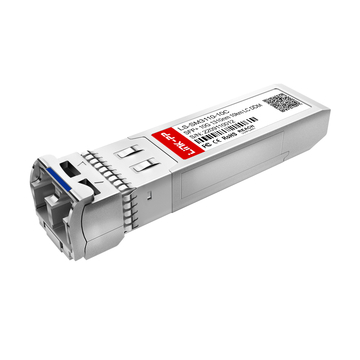
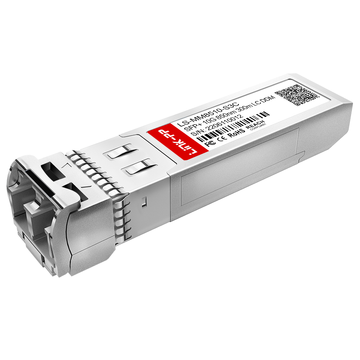
For network engineers seeking cost-effective procurement without sacrificing physical-layer performance or hardware reliability, fully compliant third-party optics offer an ideal alternative. Sourced directly from the LINK-PP Official Store, the LS-SM3110-10C 10GBASE-LR transceiver module delivers seamless, drop-in compatibility with Meraki core switching platforms while adhering strictly to international MSA and IEEE 802.3ae specifications.
This high-performance MA-SFP-10GB-LR compatible alternative delivers several practical advantages:
- Seamless Plug-and-Play Integration: Pre-coded EEPROM guarantees instant switch-port recognition with native DDM/DOM telemetry in Meraki Dashboard.
- 100% Real-Switch Verified: Rigorously tested on physical Meraki platforms to ensure zero link flaps, low latency, and wire-speed 10km transmission.
- Significant CapEx Optimization: Delivers enterprise-grade 10GBASE-LR performance at a fraction of OEM cost, maximizing your campus expansion budget.
- Enterprise-Class Reliability & Warranty: Featuring a high-performance 1310nm DFB laser transmitter with rigorous performance verification, plus comprehensive technical support and warranty coverage.
Balancing precise optical budget planning with reliable hardware procurement enables enterprise networks to maintain flawless wire-speed transmission across all distribution tiers. Whether standardizing on original transceivers or integrating high-grade compatible alternatives like the LINK-PP LS-SM3110-10C, selecting the right MA-SFP-10GB-LR optics guarantees a future-proof, resilient enterprise core switching infrastructure.