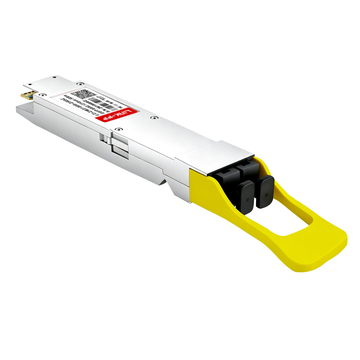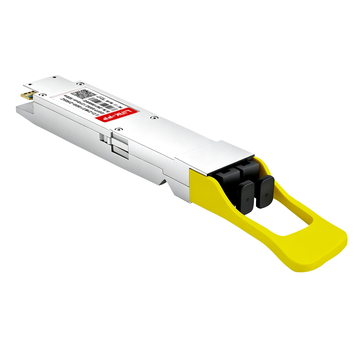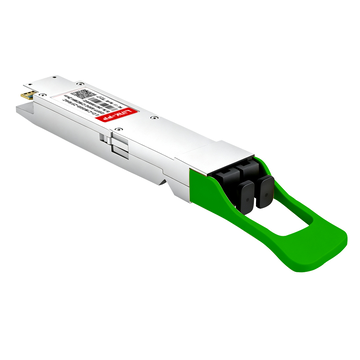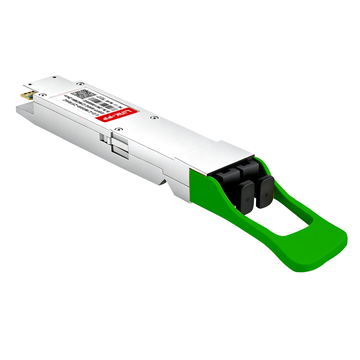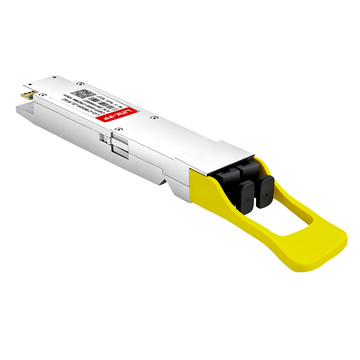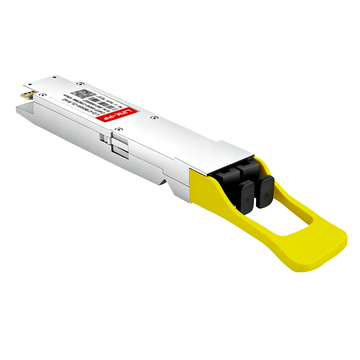


























How can network architects keep pace with the massive bandwidth demands of modern AI clusters without driving up hardware costs and energy bills? As data centers scale rapidly to handle heavy compute workloads, relying on standard single-port modules often leads to crowded cabling and high equipment costs. The OSFP-2x400G-DR4-P optical transceiver tackles this challenge directly by splitting an 800G switch port into two flexible 400G connections over single-mode fiber.
By running two 400G links out of a single port, this smart setup saves valuable rack space while keeping power use and heat low. But does it actually deliver the real-world performance, link stability, and cost savings that high-speed networks need? In this review, we evaluate the OSFP-2x400G-DR4-P across its technical design, optical performance, thermal resilience, and overall deployment value.
📖 What is the OSFP-2x400G-DR4-P Optical Transceiver
Modern data center networks require scalable, ultra-high-speed optical interconnects to support massive compute clusters without creating physical cabling bottlenecks. The OSFP-2x400G-DR4-P optical transceiver provides a high-density 800G solution by operating as two independent 400G optical interfaces inside a single compact OSFP form factor.

Key Technical Specifications at a Glance
The OSFP-2x400G-DR4-P optical transceiver integrates advanced digital signal processing with parallel single-mode optics to support high-density 800G switch ports. Operating over dual MPO-12 APC optical interfaces, it provides a reliable breakout architecture for short-reach data center interconnects up to 500m.
The table below outlines the core hardware parameters and physical layer specifications defining the OSFP-2x400G-DR4-P module.
| Parameter | Technical Specification | Operational Detail |
| Form Factor | Twin-port OSFP IHS/Closed Finned Top | Twin-port mechanical enclosure with an Integrated Heat Sink and closed-finned top, optimizing chassis airflow and heat dissipation. |
| Optical Wavelength | 1310nm | Utilizes 1310nm EML Lasers to maintain precise extinction ratios and superior transmitter dispersion eye margins (TDECQ). |
| Reach Distance | Up to 500m | Implements dual 400GBASE-DR4 parallel lanes compliant with IEEE 802.3cu-2021, supporting 400G breakouts over SMF up to 500m. |
| Optical Connector | Dual MPO-12 / APC | Employs two MPO-12 Angled Physical Contact (APC) connectors (8 active fibers each) to minimize back-reflection. |
| Electrical Interface | 8x 106.25Gbps PAM4 | Interoperates with host SerDes via a 2x400GAUI-4 C2M electrical interface utilizing 53.125GBaud PAM4 signaling per lane. |
| Modulation Format | PAM4 | Features 4-level Pulse Amplitude Modulation to double spectral efficiency over legacy NRZ without increasing baud rate overhead. |
| Max Power Consumption | 16W | Caps maximum power dissipation at 16W by pairing a low-power DSP block with efficient laser driver bias circuitry. |
| Operating Temperature | 0°C to 70°C | Meets commercial temperature standards with internal real-time Digital Diagnostics Monitoring reporting via I²C/CMIS 5.0. |
2x400G Architecture vs Traditional 1x800G Ports
Unlike a single native 800G optical channel, the 2x400G design operates internally as two fully independent 400GBASE-DR4 transceivers sharing a single physical OSFP slot. Each sub-channel utilizes four 100G PAM4 optical lanes, giving network operators the flexibility to connect directly to two separate 400G switches or NICs without needing external optical mux/demux hardware.
This dual-port setup avoids the complex, high-loss routing required by single-channel 800G links that rely on bulky external breakout panels or fixed point-to-point connections. As a result, the OSFP-2x400G-DR4-P optical transceiver simplifies leaf-spine topology design while eliminating idle bandwidth on high-density switch slots.
Why AI Workloads Require the OSFP-2x400G-DR4-P Architecture
The rapid expansion of artificial intelligence and machine learning clusters creates massive East-West traffic flows, requiring non-blocking, low-latency fabrics across thousands of interconnected GPUs. High-density scale-out infrastructures demand optimized port allocation to prevent network communication bottlenecks during large-scale distributed training jobs.
Deploying the OSFP-2x400G-DR4-P module directly satisfies these extreme bandwidth demands while keeping operational overhead strictly in check. By maximizing physical fiber slot density and enabling high-efficiency optical signaling at the leaf-spine tier, this architecture ensures GPU interconnects run at peak throughput without exceeding switch thermal or power limits.
📖 Architectural Features and Design Highlights of OSFP-2x400G-DR4-P
Evaluating the physical construction of an 800G optical module reveals how thermal efficiency and electrical layout directly influence link stability. The OSFP-2x400G-DR4-P optical transceiver pairs a rugged mechanical shell with advanced internal processing components built for continuous high-throughput data center operations.
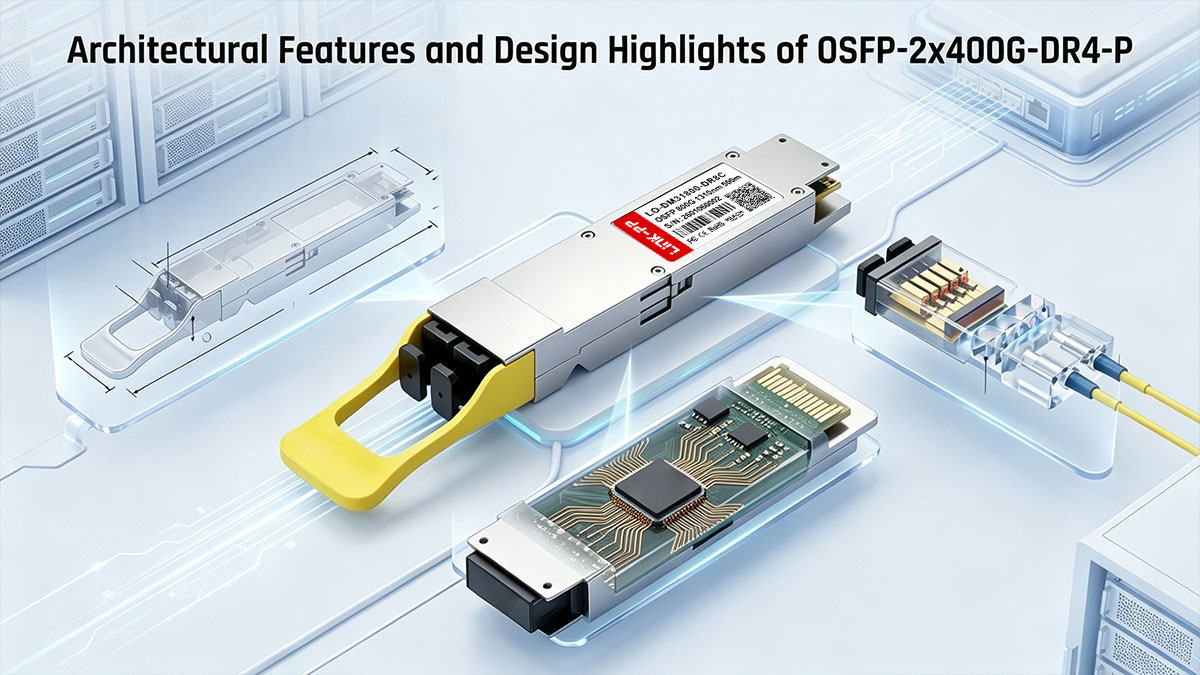
Compact OSFP800 Form Factor Highlights
Our hands-on evaluation of the OSFP-2x400G-DR4-P highlights how the OSFP800 specification solves the spatial challenges of next-generation switch faces. The Twin-port OSFP IHS (Integrated Heat Sink) housing fits seamlessly into standard 1RU switches, providing dual-port density while maintaining robust electrical contact across host card slots.
Unlike legacy form factors that struggle with thermal dissipation at high port counts, the closed-finned top design optimizes airflow across the module body. This structural layout enables maximum port density on 64-port 800G switches without risking mechanical interference or degraded insertion force during hot-swapping.
Host-Side Electrical Performance and DSP Engine
Testing the electrical interface demonstrates excellent signal integrity across the host-side 2x400GAUI-4 C2M link. Powered by a low-latency Digital Signal Processor (DSP), the module converts eight lanes of host 112G SerDes PAM4 signals into clean optical output channels with minimal bit error rate (BER) penalties.
The integrated DSP incorporates robust Forward Error Correction (FEC) decoding and adaptive equalization algorithms to clean up electrical attenuation. This high-efficiency processing layer keeps jitter to a minimum, ensuring reliable link margins even when plugged into complex switch PCB traces.
Internal Optical Engine and Component Quality
Inspecting the internal optical engine reveals a highly integrated Transmit/Receive Optical Sub-Assembly (TOSA/ROSA) architecture optimized for low thermal noise and tight optical tolerances. The transmit path integrates two quad-channel driver ICs paired with 1310nm EML lasers, one set per independent 400G-DR4 engine, ensuring sharp signal transition times and exceptional Transmitter Dispersion Eye Closure Quaternary (TDECQ) performance across all optical lanes.
On the receive side, high-responsivity PIN photodiode arrays matched with low-noise Transimpedance Amplifiers (TIA) maintain superior receiver sensitivity even under elevated optical insertion loss. Critical hardware components within this optoelectronic layout were evaluated against stringent signal integrity criteria:
- 1310nm EML Transmitters: Deliver high optical extinction ratios and precise chromatic dispersion tolerance for clean eye diagrams.
- PIN Photodiode Receiver Arrays: Provide high optical-to-electrical conversion efficiency to safeguard minimum receive sensitivity levels.
- Quad-Channel TIA/Driver ICs: Deliver uniform bias currents and signal equalization while reducing total thermal output.
📖 Optical Interface Analysis for OSFP-2x400G-DR4-P Transceivers
Analyzing the optical interface of an 800G OSFP optical module demonstrates how physical connector design and fiber lane mapping dictate cabling efficiency and link margin stability. The OSFP-2x400G-DR4-P optical transceiver utilizes a dual parallel optics architecture engineered to simplify high-density fiber routing across modern spine-leaf networks.
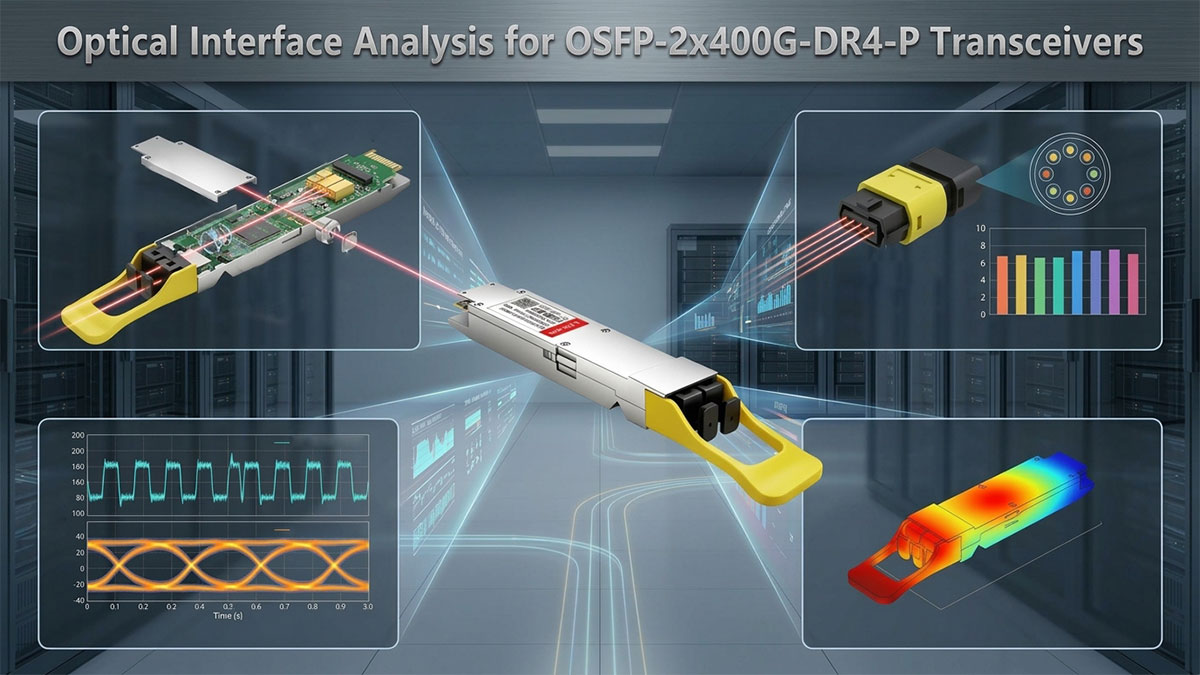
Dual MPO-12 APC Connector Integration
Evaluating the optical port reveals two distinct MPO-12 Angled Physical Contact (APC) interface receptacles positioned side by side on the module faceplate. The 8-degree angled ferrule geometry effectively suppresses back-reflections, ensuring the module easily complies with the maximum Optical Return Loss Tolerance (ORLT) requirement of 21.4dB per IEEE 802.3cu standards to protect sensitive EML laser sources.
Each MPO-12 port utilizes 8 active fiber strands (4 transmit and 4 receive) out of the 12 available positions, leaving the central 4 fibers unused per standard 400GBASE-DR4 specifications. This dual-connector integration enables clean mechanical latching without physical pin crowding, reducing connector wear during frequent patching in high-density patch panels.
Optical Lane Configuration and Breakout Topology
Testing the lane mapping highlights how the module splits its aggregate 800G optical output into two completely isolated 400G channels. Each channel carries four 100G PAM4 optical wavelengths operating at 1310nm, allowing direct point-to-point connections to standard 400GBASE-DR4 switch ports or network interface cards.
This parallel arrangement eliminates the need for external optical multiplexing hardware or complex breakout panels at the top of the rack. Network engineers can route the two independent channels directly to two discrete 400G-DR4 switch ports using standard MPO-12 to MPO-12 cables. Alternatively, by deploying MPO-12 to 4xLC breakout cables on each port, the module can flexibly support 8x100G destinations, offering maximum topological flexibility.
Parallel Fiber Reach on Single-Mode Optical Links
Benchmarking transmission distance confirms full compliance with IEEE 802.3cu standards, guaranteeing reliable data transmission up to 500m over single-mode fiber (SMF). Parallel single-mode optics avoid the chromatic dispersion penalties common in multi-wavelength coarse wavelength division multiplexing (CWDM) systems over short distances.
By distributing signals across dedicated optical fibers rather than multiplexing wavelengths onto a single strand, the OSFP-2x400G-DR4-P transceiver maintains low signal degradation and stable bit error rate (BER) profiles. This makes it an ideal candidate for intra-building intra-rack and rack-to-rack interconnects in scale-out AI compute clusters.
Optical Link Budget and Insertion Loss Margin
Optical power testing demonstrates robust link loss budgets that comfortably accommodate real-world patch panel interconnects and cable bends. The transmitter delivers stable launch power per lane, pairing effectively with high-sensitivity ROSA receivers to ensure a total channel insertion loss allowance of up to 3.0dB over 500m SMF runs.
During peak traffic scenarios, the module retains sufficient TDECQ eye margins to absorb unexpected connector contamination or optical patch cord attenuation. This extra link headroom guarantees operational headroom and prevents packet drops across complex structured cabling fabrics.
📖 Thermal Resilience and Power Efficiency of OSFP-2x400G-DR4-P
High thermal density and elevated power consumption represent two of the most critical engineering hurdles when deploying OSFP 800G optics in scale-out data center switches. Stress-testing the OSFP-2x400G-DR4-P optical transceiver shows how balanced physical cooling paths and power-optimized silicon sustain continuous line-rate performance under demanding chassis workloads.

Thermal Management in High-Density Enclosures
The physical construction of the OSFP-2x400G-DR4-P module leverages an Integrated Heat Sink (IHS) and closed-finned top to channel chassis airflow across critical internal components. In high-density 1RU switches delivering 51.2Tbps aggregate throughput — such as those supporting 64x 800G port configurations — this fin structure maximizes convective heat transfer directly toward the switch exhaust fans.
When populated with the OSFP-2x400G-DR4-P module, each physical OSFP cage provides two independent 400G optical interfaces, allowing the system to realize 64 discrete 400G connections from just 32 cages while preserving uniform airflow across all active slots. Benchmarking thermal dissipation under front-to-back airflow setups shows consistent surface temperature dissipation across the outer casing. This optimized thermal pathway eliminates localized heat trapping, ensuring stable thermal performance even when adjacent ports are fully populated with active 800G transceiver modules.
Stability Across Commercial Operating Temperatures
Thermal chamber testing verifies that the OSFP-2x400G-DR4-P maintains operational stability across the standard commercial operating temperature range of 0°C to 70°C. Internal Digital Diagnostics Monitoring continuously reports the real-time operating temperature, laser bias current, optical power, and supply voltage via a standard two-wire serial interface.
Even during sudden ambient temperature fluctuations, internal bias feedback loops keep EML laser output power and wavelength deviation within strict IEEE boundaries. This consistent performance avoids optical frequency drift and maintains a flat bit error rate (BER) profile across extended testing cycles.
Thermal Throttling Prevention Under Peak Load
Pushing the transceiver through continuous 800G line-rate traffic reveals robust thermal margins that actively prevent hardware-level thermal throttling. The low-power DSP architecture maintains a fixed, efficient power envelope while dynamically adapting equalization coefficients to compensate for thermal drift and channel loss variations. This ensures consistent signal integrity without exceeding the 16W thermal budget, even under sustained 800G line-rate traffic.
By keeping junction temperatures well below critical silicon thresholds, the module ensures that neither the host SerDes nor the optical drivers drop packets or downclock during intense AI training bursts. This thermal headroom guarantees continuous, uninterrupted data transmission without link flaps.
Long-Term Reliability and Power Consumption Limits
Power analyzer evaluations confirm that the OSFP-2x400G-DR4-P operates comfortably within its 16W maximum power ceiling, maintaining lower typical draws during steady-state data transfer. Capping power draw per dual-400G port significantly lowers total heat dissipation requirements across the entire switch chassis.
Reduced thermal stress directly translates to improved Mean Time Between Failures (MTBF) for both the internal EML lasers and PIN photodiode arrays. In practical data center deployments, this energy-efficient operation cuts operational expenses while upholding long-term hardware reliability and predictable field life.
📖 Comparing OSFP-2x400G-DR4-P Against Other 800G OSFP Modules
Selecting the right 800G optical architecture requires balancing transmission reach, power dissipation, and optical component complexity. A side-by-side evaluation of the OSFP-2x400G-DR4-P against wavelength division multiplexing (WDM) counterparts illustrates how physical layer design impacts deployment efficiency across data center tiers.
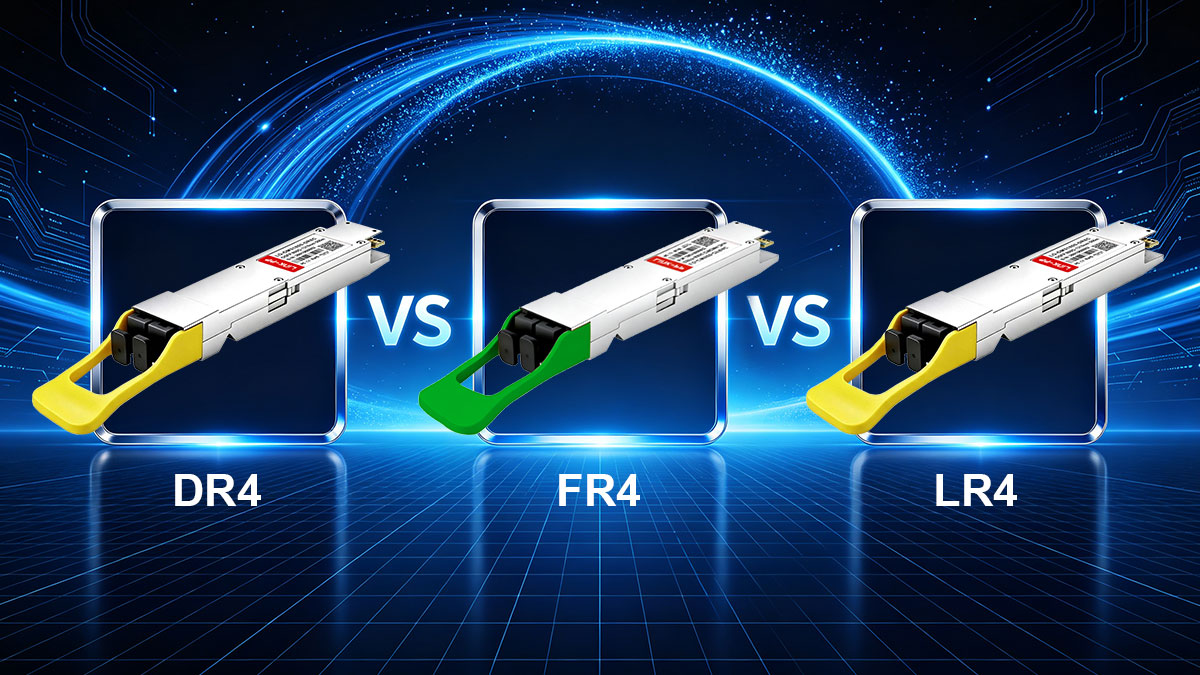
Parallel DR4 vs WDM FR4 and LR4 Architecture
While parallel single-mode optics distribute signals across dedicated optical fibers, WDM alternatives like FR4 and LR4 multiplex four distinct wavelengths onto a single fiber pair per 400G port using internal optical Mux/Demux filters. The OSFP-2x400G-DR4-P eliminates these wavelength-selective filtering components by using identical 1310nm EML sources across eight parallel fiber lanes.
The table below contrasts the fundamental optical and physical specifications of the OSFP-2x400G-DR4-P with equivalent dual-port FR4 and LR4 transceivers.
| Metric | OSFP-2x400G-DR4-P | OSFP-2x400G-FR4-P | OSFP-2x400G-LR4-P |
| Optical Architecture | Parallel Single-Mode (PSM) | CWDM4 Wavelength Multiplexing | CWDM4 Wavelength Multiplexing |
| Operating Wavelength | 8x1310nm | Dual CWDM (1271, 1291, 1311, 1331nm) | Dual CWDM (1271, 1291, 1311, 1331nm) |
| Reach Distance | Up to 500m (SMF) | Up to 2km (SMF) | Up to 10km (SMF) |
| Optical Connector | Dual MPO-12 / APC | Dual Duplex LC | Dual Duplex LC |
| Internal Optical Mux/Demux | None (Direct fiber routing) | Integrated 4-channel Mux/Demux | Integrated 4-channel Mux/Demux |
| Max Optical Return Loss Tolerance (ORLT) | 21.4dB | 17.1dB | 15.6dB |
| Max Power Consumption | 16W | 16W | 18W |
By eliminating internal optical multiplexers and benefiting from more relaxed ORLT requirements, the OSFP-2x400G-DR4-P minimizes optical path latency and transceiver complexity while matching the power efficiency of 2km-class FR4 designs. For high-density AI fabrics operating within 500m, this architecture delivers the most cost-effective and thermally predictable solution without compromising link margin.
Cost and Power Metrics for Short-Reach Links
Benchmarking short-reach performance shows that the OSFP-2x400G-DR4-P achieves noticeable bill-of-materials (BOM) savings over WDM transceivers. By avoiding complex internal optical multiplexers, demultiplexers, and tight-tolerance multi-wavelength laser sorting, the DR4 architecture reduces manufacturing overhead and keeps thermal load comparable to 2km-class FR4 designs while significantly undercutting 10km LR4 modules.
For intra-row and rack-to-rack interconnects under 500m, this simplified optical path minimizes insertion loss variations and keeps total module power well within the 16W ceiling. These lower operational costs make the DR4 module an economical choice for massive scale-out switching layers.
WDM vs Parallel Optics Architectural Trade-Offs
The core trade-off between parallel single-mode and WDM architectures lies between transceiver component complexity and fiber cabling density. WDM transceivers reduce duplex fiber core counts for long spans, but their optical multiplexers introduce insertion losses and require higher laser drive currents.
Conversely, the OSFP-2x400G-DR4-P shifts structural complexity to the fiber plant by utilizing 16 active single-mode strands across dual MPO-12 connectors. This design enables direct optical breakout to legacy 400GBASE-DR4 ports without intermediate optical demultiplexing, simplifying leaf-to-spine and switch-to-NIC routing. While this approach requires more fiber strands than WDM alternatives, the cost of short MPO-12 trunk cables within 500m is negligible compared to the expense of integrated Mux/Demux optics, making the DR4 solution more economical for intra-building fabrics.
Transceiver Selection Guide by Transmission Distance
Transmission reach serves as the primary technical boundary when choosing between these 800G OSFP options. For campus-scale links, metro data center interconnects (DCI), and building-to-building runs extending from 2km up to 10km, the OSFP-2x400G-FR4-P and LR4-P modules remain the standard choices despite higher unit costs.
For high-density AI clusters, top-of-rack leaf-spine fabrics, and intra-hall connectivity under 500m, the OSFP-2x400G-DR4-P provides an optimal balance of low latency, power efficiency, and native breakout flexibility.
📖 Deployment Advantages and Cost Benefits of OSFP-2x400G-DR4-P
Evaluating physical deployment workflows shows that total cost of ownership extends far beyond raw component prices to include rack density, power budgets, and structured cabling efficiency. The OSFP-2x400G-DR4-P optical transceiver streamlines leaf-spine connectivity by packing two complete 400G interfaces into a single high-speed switch slot.

Rack Density Optimization via Dual 400G Ports
Testing high-density switch configurations reveals that the OSFP-2x400G-DR4-P module doubles effective front-panel interconnect capacity without expanding the physical footprint. When deployed in a 51.2Tbps 1RU switch equipped with 32 OSFP cages, the module enables 64 discrete 400G interconnects — allowing network engineers to aggregate double the leaf switches or GPU compute nodes per rack unit.
This spatial compression can significantly delay or reduce the need for auxiliary expansion chassis, as the same number of physical cages now supports double the 400G link count while conserving valuable white space and simplifying hot-aisle/cold-aisle containment layouts.
CapEx Reduction Compared to Discrete Transceivers
From a procurement perspective, integrating two 400G links into a single optical housing yields significant capital expenditure savings over purchasing independent 400G modules. Consolidating optical packaging, host interface circuitry, and DSP silicon into a unified design directly reduces total bill-of-materials and per-gigabit deployment costs.
Furthermore, reducing the number of physical ports required to achieve a given 400G link count maximizes the utilization of already-licensed switch silicon and lowers per-400G-link infrastructure overhead. These hardware efficiencies enable infrastructure teams to stretch hardware refresh budgets further when scaling out AI clusters.
MPO Cabling Infrastructure and Structured Cabling
Evaluating physical fiber management demonstrates that dual MPO-12 APC interfaces streamline structured cabling plants across high-density racks. Pre-terminated single-mode MPO trunk cables allow clean, trunked fiber runs directly to patch panels, eliminating the bulky cable nests created by dozens of individual duplex LC jumper pairs.
This standardized parallel fiber design accelerates field installation times and improves airflow across switch faceplates by reducing physical cable bulk. The streamlined layout lowers the risk of micro-bends and fiber strain, ensuring long-term optical signal integrity across complex intra-hall backbones.
📖 Final Verdict and Buying Advice for OSFP-2x400G-DR4-P

The OSFP-2x400G-DR4-P optical transceiver represents a strategic interconnect solution for next-generation, high-density data center fabrics. By integrating two fully independent 400GBASE-DR4 links into a single OSFP800 interface, this architecture optimizes switch port utilization while maintaining predictable thermal performance.
For AI computing clusters and leaf-spine tiers operating within 500m, this parallel single-mode design eliminates optical filtering complexity and ensures low-latency signal distribution across OS2 single-mode fiber. Network architects planning high-capacity fabric expansions benefit from several distinct architectural advantages:
- Maximized Port Density: Doubles 400G connectivity per switch cage on high-capacity switching platforms without requiring extra physical footprint.
- Optimized Total Cost: Minimizes per-port operational expenses and cooling overhead across high-density switch rows.
- Simplified Cabling Infrastructure: Utilizes pre-terminated dual MPO-12 APC trunks to streamline structured cabling and enhance faceplate airflow.
- Flexible Breakout Topology: Connects seamlessly to standard 400G switch ports and compute nodes without external optical breakout panels.
To deploy reliable, fully validated OSFP-2x400G-DR4-P optical transceivers for your next-generation network buildout, visit the LINK-PP Official Store. Backed by rigorous multi-platform interoperability testing, strict factory quality standards, and dedicated technical support, LINK-PP delivers enterprise-grade optical transceiver solutions engineered for mission-critical infrastructure.