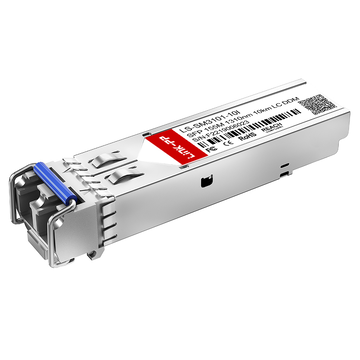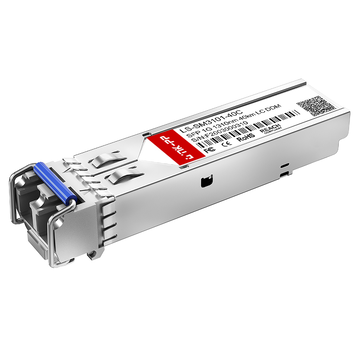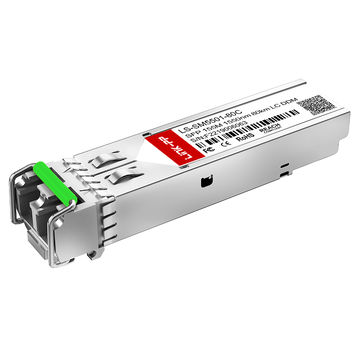




















Cisco GLC-FE-100EX is a widely used Fast Ethernet SFP optical transceiver designed for long-distance single-mode fiber connections in enterprise and service provider networks. It has been deployed in many legacy infrastructures where stable 100BASE-FX or 100BASE-EX connectivity is required, especially in environments that still rely on Fast Ethernet for specific access or aggregation layers. As network architectures evolve, many of these modules are now facing lifecycle limitations and procurement challenges.
Against this background, the demand for Cisco GLC-FE-100EX alternatives has increased significantly. Organizations are actively looking for compatible optical modules that can maintain existing Fast Ethernet links while improving availability, cost efficiency, and deployment flexibility. This has made compatibility and performance matching key considerations when selecting replacement solutions for legacy Cisco environments.
This article provides a structured overview of Cisco GLC-FE-100EX alternatives and their practical applications. It helps readers understand how to evaluate suitable replacement options by focusing on real deployment requirements and technical compatibility. The key aspects covered include:
- Core technical specifications and functional role of the original module
- Reasons driving the need for alternative solutions in modern networks
- Classification of available alternative types and compatibility considerations
- Practical guidance for selection, deployment, and troubleshooting scenarios
By exploring these areas in detail, this guide supports better decision-making for maintaining and evolving Fast Ethernet optical infrastructures while ensuring long-term network stability.
⏰ What Is Cisco GLC-FE-100EX?
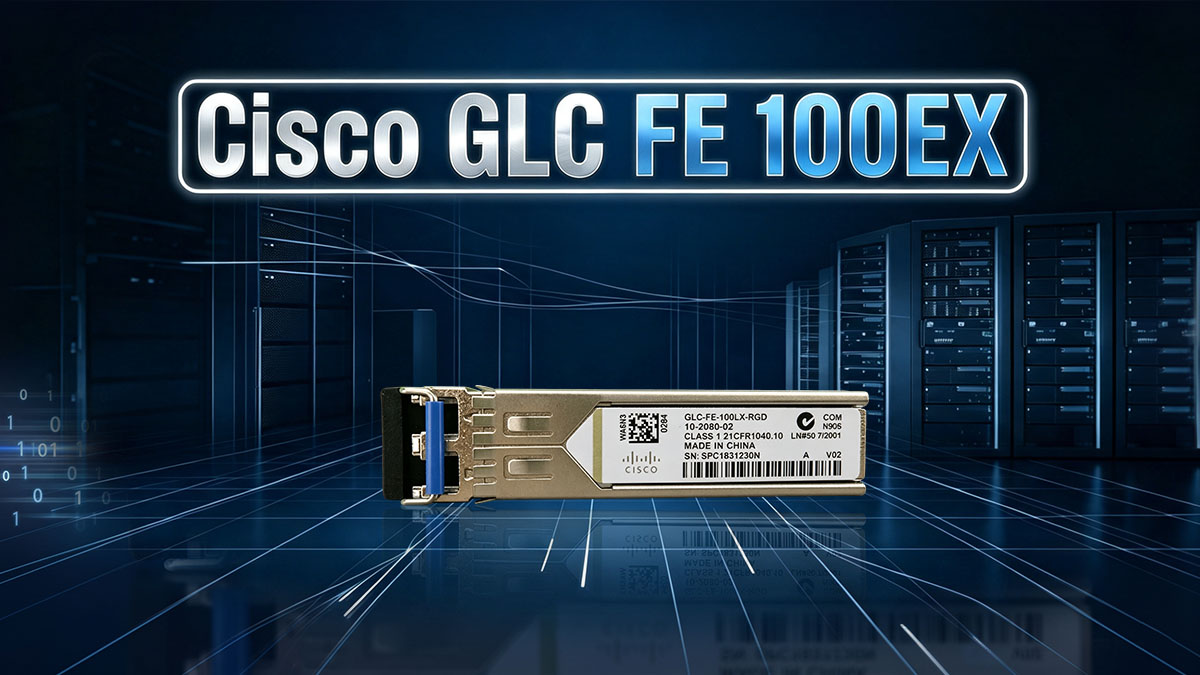
Cisco GLC-FE-100EX is a Fast Ethernet SFP optical transceiver designed to provide reliable 100BASE-EX connectivity over single-mode fiber. It is commonly used in enterprise and service provider networks where stable long-distance Fast Ethernet links are still required. In practical terms, this module enables Ethernet data transmission over extended fiber distances while maintaining compatibility with Cisco switching platforms.
Key Technical Specifications
Cisco GLC-FE-100EX is defined by a set of fixed optical and electrical characteristics that determine its compatibility and performance. Understanding these specifications is essential for identifying equivalent Cisco GLC-FE-100EX alternatives in real deployments.
Before selecting any replacement, it is important to understand its core technical parameters, which are typically associated with long-reach Fast Ethernet optical modules:
- Data rate: 100Mbps (Fast Ethernet, 100BASE-EX standard)
- Wavelength: 1310nm single-mode operation
- Transmission distance: up to approximately 40km (depending on fiber quality and link budget)
- Connector type: Duplex LC interface
- Fiber type: Single-mode fiber (SMF)
These parameters define the module’s role in long-distance optical connectivity and serve as the baseline for evaluating compatible alternatives.
| Parameter | Specification |
|---|---|
| Data Rate | 100Mbps |
| Wavelength | 1310nm |
| Fiber Type | Single-mode fiber |
| Typical Distance | Up to 40km |
| Connector | LC Duplex |
The table above summarizes the essential optical and transmission characteristics, which are critical when comparing replacement modules for Cisco environments. A mismatch in any of these parameters can directly impact link stability and transmission quality.
Typical Use Cases in Legacy Networks
Cisco GLC-FE-100EX is primarily deployed in environments where Fast Ethernet is still maintained as part of legacy or segmented network architectures. It is not designed for modern high-speed aggregation, but rather for stable point-to-point connections in existing infrastructure.
Common deployment scenarios include:
- Interconnecting enterprise campus buildings over long fiber spans
- Supporting metro edge or access-layer Fast Ethernet links
- Maintaining compatibility with legacy Cisco switches and routers
- Providing dedicated connectivity for low-bandwidth industrial or utility systems
These use cases highlight its role as a continuity component rather than a high-performance upgrade solution. It is often found in environments where replacing the entire infrastructure is not immediately feasible.
Extended Temperature Feature Explained
One of the notable characteristics of Cisco GLC-FE-100EX is its extended operating temperature range, which supports deployment in more demanding physical environments. This makes it suitable for both indoor telecom closets and certain outdoor or industrial enclosures.
This extended range is important because it ensures stable operation under variable environmental conditions:
- Supports operation in non-climate-controlled cabinets
- Enhances reliability in outdoor access nodes
- Reduces risk of thermal-related link instability
- Improves long-term durability in industrial settings
As a result, the module is often selected for scenarios where environmental control is limited but network continuity is critical.
⏰ Why Look for Cisco GLC-FE-100EX Alternatives?
The main reason to consider Cisco GLC-FE-100EX alternatives is the combination of lifecycle limitations, cost pressure, and evolving network requirements. As Fast Ethernet infrastructure becomes less common in modern deployments, organizations increasingly need replacement options that preserve compatibility while improving availability and long-term flexibility.
Product Lifecycle and Availability Challenges
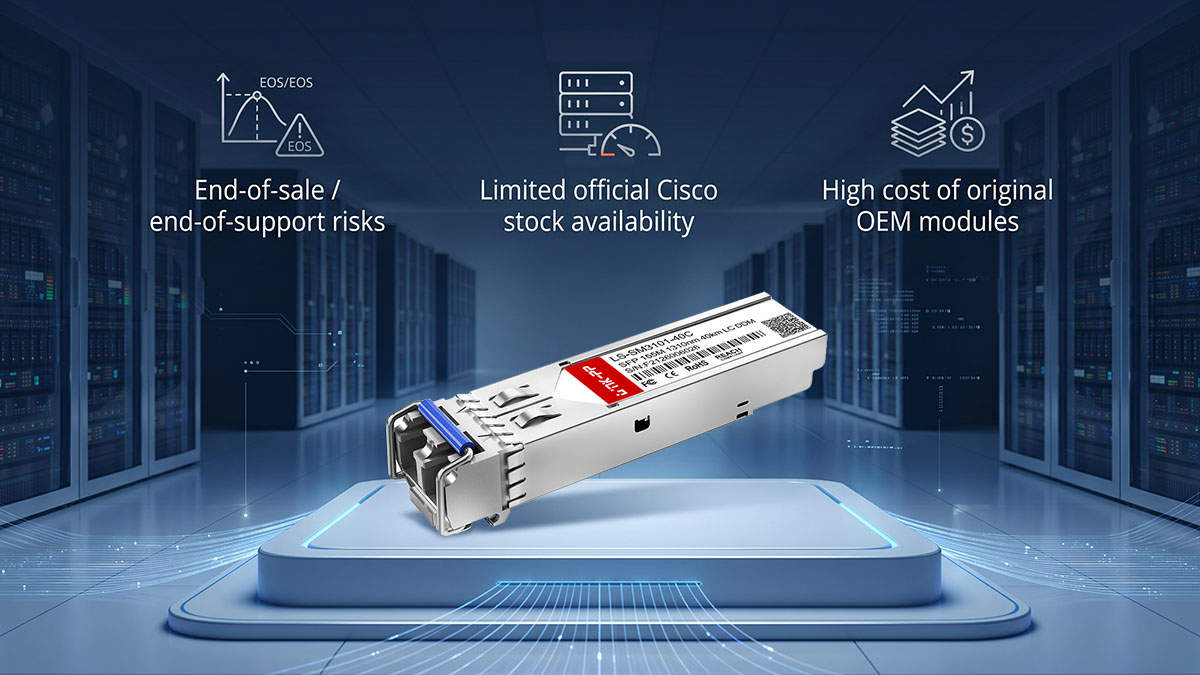
The primary driver behind alternative selection is the gradual phase-out of legacy optical modules like Cisco GLC-FE-100EX. As networks modernize, these modules become harder to source through standard supply channels, creating operational risks for maintenance teams.
In real-world environments, availability issues typically appear in the following ways:
- Limited stock in official Cisco distribution channels
- Longer procurement lead times for legacy optics
- Dependency on remaining inventory in secondary markets
- Increased risk of inconsistent sourcing for replacement units
These constraints make it difficult to maintain stable inventory planning for long-lived Fast Ethernet infrastructures. As a result, organizations begin evaluating compatible alternatives to ensure continuity of service.
Cost and Procurement Optimization
Another important factor is the cost difference between original OEM modules and compatible alternatives. While Cisco-branded optics are often associated with high reliability, they can also introduce higher lifecycle costs, especially in large-scale deployments.
Before selecting replacement options, it is common to evaluate cost-related factors such as:
- Per-unit cost differences between OEM and compatible modules
- Total cost impact in multi-site or high-density deployments
- Budget allocation efficiency for legacy network maintenance
- Cost of maintaining spare inventory for redundancy
These considerations often lead organizations to explore alternative modules that match the required technical specifications while offering more flexible procurement options. In many cases, cost optimization is not about reducing quality, but about aligning spending with the actual performance needs of Fast Ethernet links.
Network Evolution Requirements
Beyond availability and cost, network evolution is a major reason for adopting Cisco GLC-FE-100EX alternatives. Many infrastructures are transitioning toward higher-speed architectures while still retaining portions of Fast Ethernet for specific legacy applications.
This transition creates a hybrid environment where compatibility becomes critical:
- Coexistence of Fast Ethernet and Gigabit Ethernet segments
- Gradual migration from legacy access layers to modern aggregation
- Need for backward compatibility in mixed hardware environments
- Requirement to extend the life of existing fiber infrastructure
In such scenarios, alternatives to GLC FE 100EX are used to bridge the gap between old and new technologies, ensuring that legacy links remain operational while broader network upgrades are carried out in phases.
⏰ Types of Cisco GLC-FE-100EX Alternatives
Cisco GLC-FE-100EX alternatives can be grouped into several categories based on compatibility level, environmental design, and vendor strategy. In practical deployments, these alternatives are selected to match the same 100BASE-EX Fast Ethernet requirements while addressing differences in cost, availability, and operational flexibility.
Before comparing specific types, it is important to understand that all alternatives aim to maintain the same fundamental role: stable long-distance single-mode Fast Ethernet connectivity in Cisco or multi-vendor networks.
Cisco OEM-Compatible Transceivers
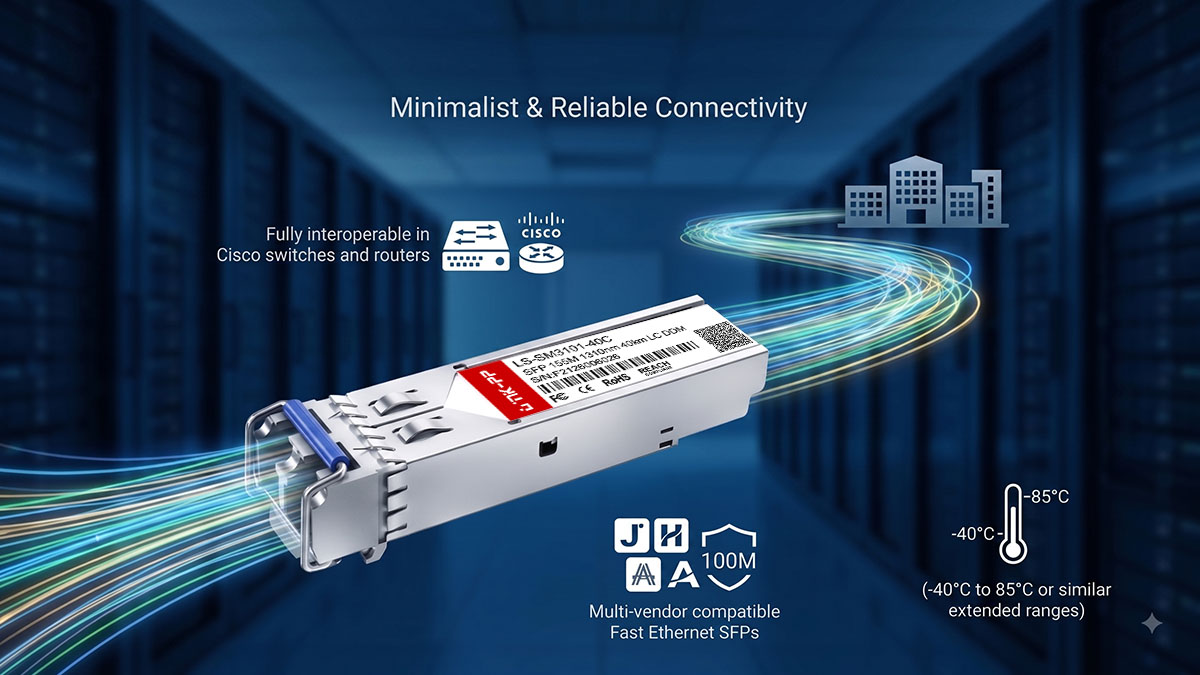
Cisco OEM-compatible transceivers are designed to replicate the original Cisco GLC-FE-100EX behavior as closely as possible. They are often used in environments where strict platform compatibility and operational stability are required.
Typical characteristics of OEM-compatible alternatives include:
- Fully aligned with Cisco SFP electrical and optical standards
- Recognized by Cisco devices without functional limitations
- Consistent performance in enterprise switching environments
- Reduced risk of compatibility-related link issues
These modules are generally preferred in mission-critical networks where stability is prioritized over cost optimization. They are especially relevant in legacy enterprise environments where minimizing operational risk is a key requirement.
Third-Party Compatible SFP Modules
Third-party compatible modules (like LINK-PP module) represent one of the most widely used Cisco GLC-FE-100EX alternative categories. They are designed to match the 100BASE-EX specification while offering broader vendor flexibility and cost efficiency.
Before selecting this type, it is important to evaluate their general characteristics:
- Multi-vendor compatibility across Cisco and non-Cisco platforms
- Compliance with 100BASE-EX Fast Ethernet standards
- Availability from multiple optical module manufacturers
- Flexible sourcing options for large-scale deployments
These modules are often deployed in networks where cost control and procurement flexibility are important. While performance can be comparable to OEM modules, quality may vary depending on manufacturing standards and testing processes.
Industrial-Grade Extended Temperature Alternatives
Industrial-grade alternatives are designed for environments where standard optical modules may not operate reliably. These Cisco GLC-FE-100EX replacement options focus on environmental resilience rather than cost or standard enterprise use cases.
Key features commonly associated with industrial-grade modules include:
- Extended operating temperature ranges for harsh environments
- Enhanced resistance to thermal fluctuations and vibration
- Improved durability for outdoor or industrial installations
- Stable performance in non-air-conditioned network cabinets
These modules are typically used in telecom access nodes, transportation systems, and industrial automation networks where environmental conditions are unpredictable.
Summary Comparison of Alternative Types
To better understand how these Cisco GLC-FE-100EX alternatives differ, the following table summarizes their key positioning in real-world deployments.
| Alternative Type | Primary Focus | Cost Level | Use Case Scenario |
|---|---|---|---|
| OEM-Compatible | Maximum compatibility | High | Enterprise-critical networks |
| Third-Party Compatible | Cost efficiency | Medium to Low | General enterprise & ISP networks |
| Industrial-Grade | Environmental durability | Medium to High | Outdoor & harsh environments |
This comparison highlights how each category serves a different operational priority, allowing network planners to select the most appropriate option based on deployment conditions rather than a one-size-fits-all approach.
⏰ Compatibility Considerations Before Choosing an Alternative
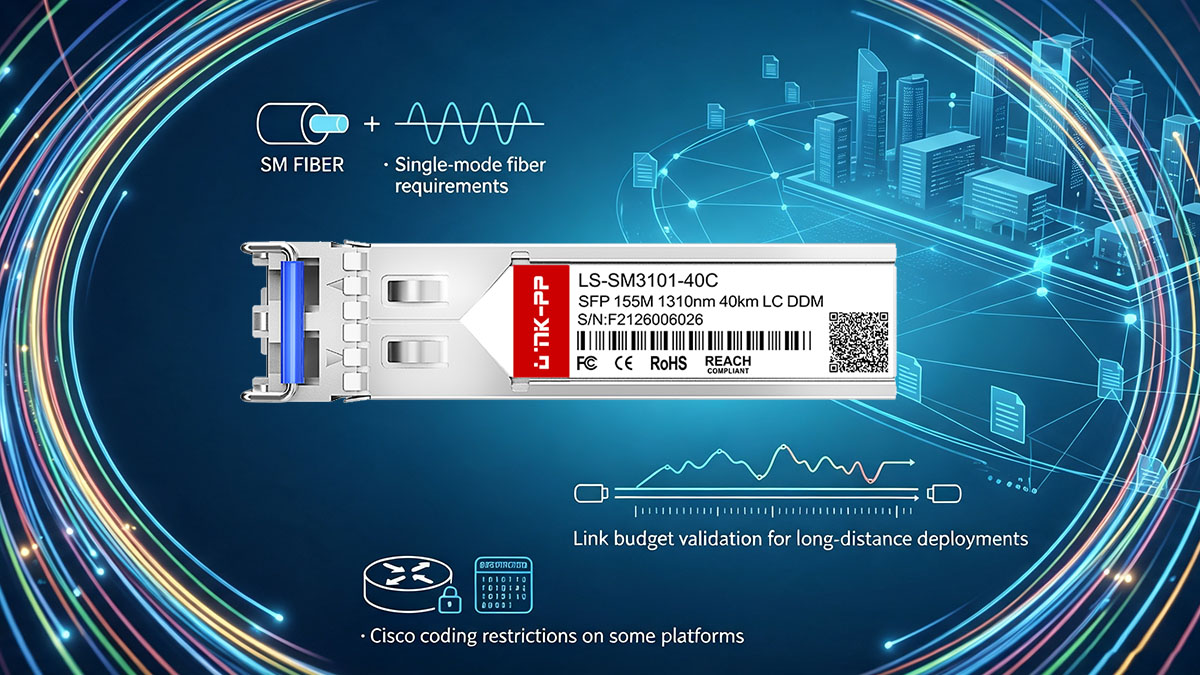
Selecting a Cisco GLC-FE-100EX alternative requires careful validation of compatibility across hardware, fiber infrastructure, and platform restrictions. Even if two modules share the same 100BASE-EX specification, real-world performance can vary depending on how well they align with the host device and optical link conditions. Compatibility is therefore the most critical factor in ensuring stable deployment.
Switch and Router Compatibility
Cisco platforms may behave differently when detecting third-party or non-original optical modules. This makes device compatibility the first checkpoint before deployment.
To reduce operational risks, it is important to evaluate:
- Whether the switch or router officially supports third-party SFP modules
- Port-level restrictions that may block unknown transceiver types
- Compatibility differences across Cisco IOS or IOS-XE versions
- Availability of Digital Optical Monitoring (DOM) support
These factors directly influence whether a Cisco GLC-FE-100EX alternative will be recognized correctly and operate without link negotiation issues. In many legacy environments, compatibility is less about physical fit and more about firmware-level acceptance.
Fiber Type and Distance Matching
Even when a module is fully compatible with the host device, incorrect fiber matching can lead to degraded performance or unstable links. Cisco GLC-FE-100EX is designed specifically for single-mode fiber over long distances, and alternatives must match this optical profile precisely.
Before deployment, key fiber-related factors must be verified:
- Use of single-mode fiber (SMF) instead of multimode fiber
- Maximum supported transmission distance based on link budget
- Connector alignment with LC duplex interfaces
- Optical attenuation levels across the full link path
To illustrate how fiber parameters affect performance, the table below summarizes typical matching requirements for 100BASE-EX links.
| Factor | Required Specification | Impact if Mismatched |
|---|---|---|
| Fiber Type | Single-mode (SMF) | High signal loss or no link |
| Wavelength | 1310nm | Reduced transmission efficiency |
| Distance | Up to 40km | Link instability or failure |
| Connector | LC Duplex | Physical incompatibility |
These parameters must align across the entire transmission path to ensure that the alternative module performs reliably under real deployment conditions.
Firmware and Vendor Locking Factors
Cisco networking devices may include mechanisms that restrict or identify optical modules based on vendor coding. This behavior can directly affect whether a Cisco GLC-FE-100EX alternative functions as expected.
In practical deployments, common considerations include:
- Presence of Cisco vendor ID validation on specific platforms
- Differences in behavior between enterprise and service provider-grade switches
- Firmware updates that may tighten or relax transceiver restrictions
- Workarounds used in environments that require third-party module support
These factors make it essential to evaluate not only the hardware specifications of an alternative module but also how it interacts with Cisco system software. In some cases, identical optical specifications may still result in different operational outcomes due to firmware-level policies.
⏰ Performance Comparison: Original vs Alternatives
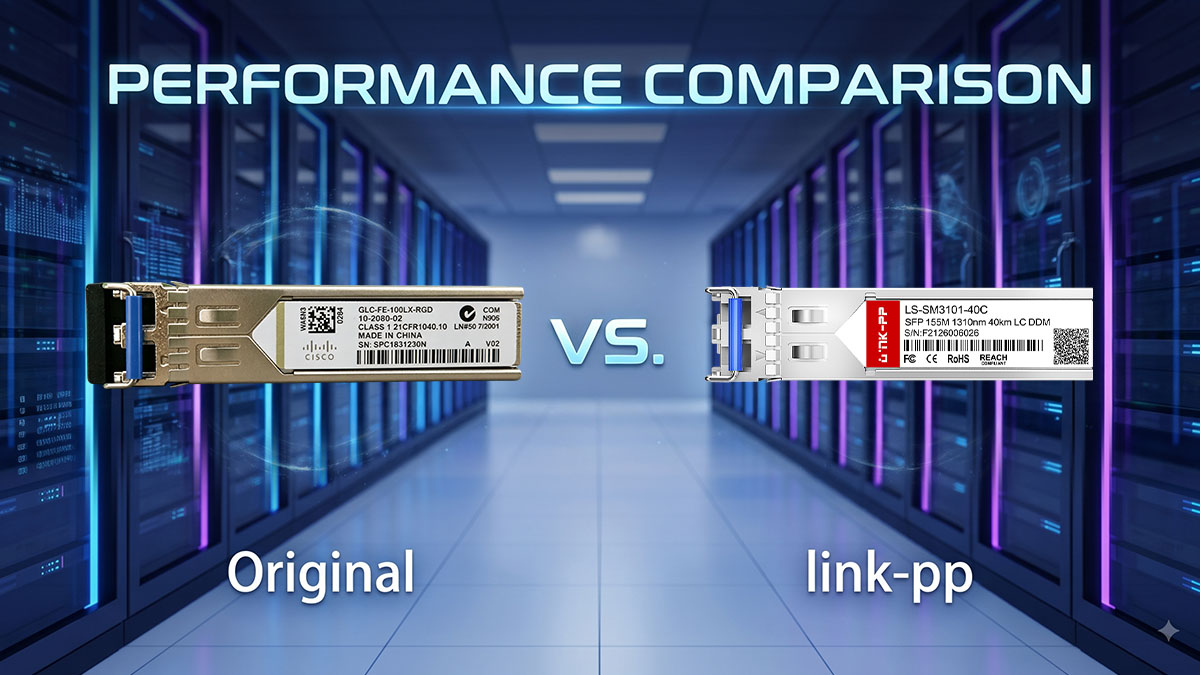
The performance difference between Cisco GLC-FE-100EX and its alternatives is generally subtle in ideal conditions, but it becomes more noticeable in large-scale deployments, mixed vendor environments, and temperature-sensitive scenarios. In most cases, both original and compatible modules can support standard 100BASE-EX Fast Ethernet links effectively, but their long-term stability, power behavior, and environmental tolerance may differ.
From an operational standpoint, performance comparison is usually evaluated across three main dimensions: signal quality, power efficiency, and environmental resilience. These factors directly influence link stability and maintenance frequency in real network deployments.
Signal Integrity and Stability
In real-world usage, signal integrity determines whether long-distance links remain stable under varying conditions. Cisco original modules are typically optimized for strict platform alignment, while alternatives may vary depending on manufacturing quality.
Key stability-related factors include:
- Consistency of optical output power across production batches
- Sensitivity alignment between transmitter and receiver
- Error rate performance under long-distance fiber conditions
- Interoperability behavior in mixed vendor environments
Both original and high-quality alternatives can perform reliably when properly matched to fiber specifications, but lower-grade alternatives may show higher variability in edge conditions.
Power Consumption Differences
Power efficiency plays a role in high-density switch environments where multiple SFP modules operate simultaneously. Even small differences in power usage can accumulate across large deployments.
| Category | Cisco GLC-FE-100EX | Alternatives (Typical Range) |
|---|---|---|
| Power Consumption | Stable, platform-optimized | Slight variation by vendor |
| Heat Output | Predictable thermal profile | May vary under load |
| Density Impact | Consistent in Cisco systems | Depends on module design |
This comparison shows that while both module types operate within acceptable ranges, Cisco original modules tend to provide more predictable thermal behavior, especially in tightly packed switch environments.
Environmental Reliability
Environmental performance is another key differentiator, especially in outdoor or industrial deployments where temperature fluctuations are common. Original Cisco modules and industrial-grade alternatives often perform similarly when extended temperature ratings are matched correctly.
In practical deployments, reliability factors include:
- Resistance to temperature fluctuations in outdoor cabinets
- Long-term optical stability under continuous load
- Mechanical durability in vibration-prone environments
- Consistency of performance over extended operational cycles
These factors determine whether a module can maintain stable connectivity over time without frequent replacement or recalibration.
⏰ Best Deployment Scenarios for Alternatives
Cisco GLC-FE-100EX alternatives are most effective in environments where maintaining legacy Fast Ethernet connectivity is still necessary, but where cost control, availability, or environmental adaptability has become a priority. In practical deployments, these alternatives are not simply replacements—they are continuity tools that extend the lifecycle of existing fiber infrastructure without requiring a full network redesign.

Understanding where these modules perform best helps network planners avoid overengineering while ensuring stable long-term operation.
Legacy Network Maintenance Projects
In many enterprise and service provider networks, Fast Ethernet links still exist as part of older but functional infrastructure. In these cases, Cisco GLC-FE-100EX alternatives are commonly used to keep systems operational without introducing unnecessary upgrade complexity.
Typical scenarios include:
- Maintaining inter-building connectivity in legacy campus networks
- Supporting aging access-layer switches that still operate at 100Mbps
- Extending service life of fiber links in stable, low-traffic environments
- Replacing discontinued original modules during maintenance cycles
These deployments prioritize continuity over performance upgrades. Alternatives allow operators to stabilize existing systems while planning gradual modernization paths.
Hybrid Network Environments
Many modern networks operate in hybrid states where Fast Ethernet and Gigabit Ethernet coexist. In these environments, Cisco GLC-FE-100EX alternatives help bridge compatibility gaps while maintaining consistent connectivity across mixed-speed architectures.
Before deployment, operators typically consider how Fast Ethernet segments integrate with newer infrastructure:
- Connecting legacy Fast Ethernet edge devices to modern aggregation switches
- Supporting transitional network phases during partial upgrades
- Ensuring interoperability between old and new optical layers
- Maintaining service continuity during phased migration strategies
These scenarios highlight the importance of flexibility, where alternatives serve as functional connectors between different generations of networking technology.
Industrial and Outdoor Networking
Industrial and outdoor environments represent one of the most demanding use cases for Cisco GLC-FE-100EX alternatives. These deployments often involve temperature fluctuations, vibration, and limited environmental control, making module durability a key requirement.
In such conditions, alternatives are commonly used in:
- Transportation and railway communication systems
- Utility and energy infrastructure monitoring networks
- Outdoor telecom access cabinets and remote nodes
- Industrial automation and control systems
In these environments, extended temperature support and physical resilience become more important than raw performance. The ability to maintain stable optical links under harsh conditions is the primary selection criterion.
⏰ How to Select the Right Cisco GLC-FE-100EX Alternative
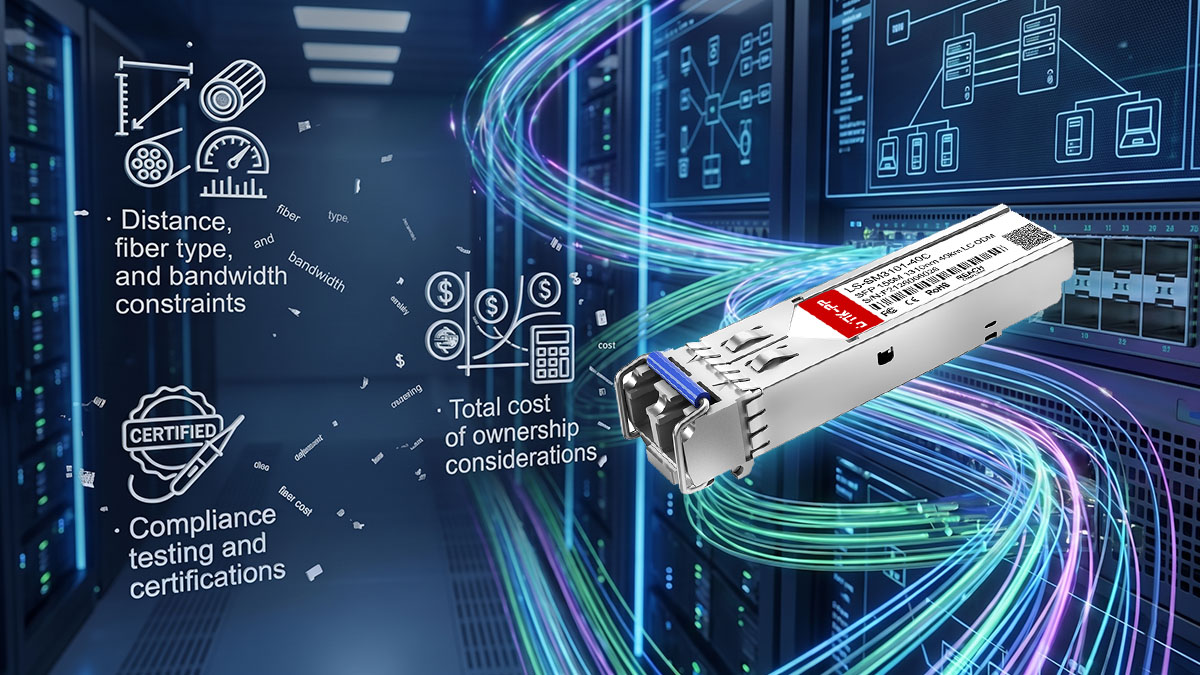
Choosing the right Cisco GLC-FE-100EX alternative is not only about matching a 100BASE-EX specification. In real deployments, selection must balance network requirements, optical conditions, and long-term operational stability. A well-chosen module ensures consistent link performance while minimizing maintenance risks in legacy Fast Ethernet environments.
Define Network Requirements First
The first step in selecting an alternative is clearly defining the network’s technical constraints. Without this baseline, even technically compatible modules may perform inconsistently in practice.
Key requirements to define include:
- Required transmission distance across the fiber link
- Fiber infrastructure type (single-mode vs multimode)
- Expected traffic load and Fast Ethernet utilization level
- Physical deployment environment (indoor, outdoor, industrial)
These parameters determine whether a standard commercial-grade module is sufficient or whether a more specialized alternative is needed. In most cases, Cisco GLC-FE-100EX alternatives must be selected based on link budget accuracy rather than generic compatibility claims.
Evaluate Vendor Reliability
After defining technical requirements, the next step is assessing the reliability of the module provider. Even when specifications appear identical, manufacturing quality and testing standards can significantly influence real-world performance.
Important evaluation factors include:
- Consistency of optical power calibration across batches
- Quality assurance and compliance testing procedures
- Historical performance in similar network deployments
- Availability of technical documentation and traceability
Reliable vendors typically provide more predictable performance under long-distance and high-temperature conditions. This is especially important in legacy networks where troubleshooting resources may be limited.
Balance Cost vs Long-Term Stability
Cost is an important factor, but it should not be evaluated in isolation. In Fast Ethernet environments where modules are expected to operate continuously over long periods, stability often has a greater impact on total lifecycle cost than initial procurement price.
Before making a selection, consider:
- Frequency of expected module replacement cycles
- Maintenance effort required for unstable or inconsistent links
- Risk of downtime in mission-critical legacy segments
- Inventory strategy for spare module management
A lower-cost alternative may be suitable for non-critical links, while more stable options are often preferred for backbone or inter-building connections. The goal is not minimizing cost alone, but optimizing total operational efficiency.
Ensure Platform and Firmware Compatibility
Even when optical specifications are identical, platform-level compatibility can determine whether a Cisco GLC-FE-100EX alternative functions correctly. Cisco devices may enforce different levels of transceiver validation depending on model and firmware version.
Key compatibility considerations include:
- Whether the switch supports third-party SFP recognition
- Firmware behavior regarding vendor-coded modules
- Availability of DOM (Digital Optical Monitoring) functions
- Historical compatibility with similar Fast Ethernet optics
In many deployments, verifying compatibility on actual hardware before large-scale rollout is essential to avoid unexpected link failures or recognition issues.
Consider Environmental Conditions
Finally, environmental conditions often determine long-term module reliability, especially in non-standard deployment locations. Even well-matched optical specifications may fail under thermal or mechanical stress if environmental requirements are not considered.
Selection factors include:
- Operating temperature range (standard vs extended temperature modules)
- Exposure to vibration or outdoor conditions
- Cabinet ventilation and heat dissipation capability
- Long-term stability under continuous operation
In harsh environments, industrial-grade Cisco GLC-FE-100EX alternatives are often more suitable than standard commercial versions, even if both meet the same optical specifications.
⏰ Common Issues and Troubleshooting When Use Alternative
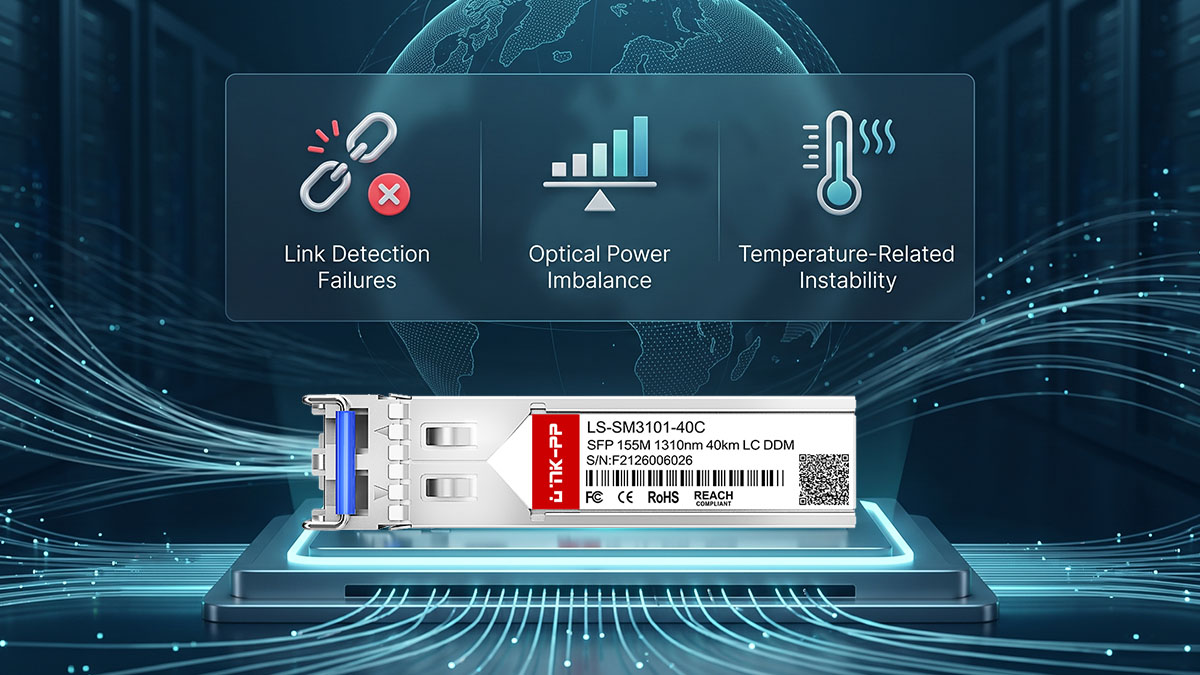
Cisco GLC-FE-100EX alternatives generally operate reliably when properly matched to network and fiber conditions, but in real deployments, compatibility gaps, optical mismatches, and environmental factors can still lead to performance issues. Understanding common failure patterns helps reduce downtime and speeds up fault isolation in legacy Fast Ethernet networks.
Most issues fall into three categories: link establishment failures, optical performance degradation, and environmental instability.
Link Detection Failures
One of the most frequently encountered issues is the failure of the switch or router to recognize the transceiver or establish an active link. This is often related to compatibility rather than physical defects.
Typical symptoms include:
- SFP port showing “not supported” or “unknown transceiver”
- No link light despite correct fiber connection
- Interface remains administratively up but operationally down
- Intermittent link flapping during initialization
Before replacing hardware, it is important to check configuration and compatibility factors:
- Verify whether the Cisco device allows third-party SFP modules
- Confirm firmware version and platform support behavior
- Ensure the module is fully seated in the SFP cage
- Cross-check that port speed is manually or automatically set to 100Mbps
In many cases, link detection issues are resolved by addressing platform-level restrictions rather than replacing the module itself.
Optical Power Imbalance
Even when a link is established, unstable performance or packet loss may indicate optical power imbalance between transmitter and receiver. This is particularly common in long-distance single-mode fiber deployments.
Before analyzing hardware failure, common causes include:
- Excessive fiber attenuation due to aging or poor-quality cabling
- Dirty or contaminated LC connectors
- Mismatch between transmitter output and receiver sensitivity
- Incorrect link budget calculation for long-reach connections
| Issue Type | Possible Cause | Impact on Link |
|---|---|---|
| Low Optical Power | Dirty connectors or aging fiber | Intermittent or no connectivity |
| High Optical Power | Short distance mismatch | Receiver saturation |
| Unstable Power Levels | Poor-quality module | Packet loss or jitter |
Regular inspection and cleaning of fiber connectors often resolves many instability issues without replacing hardware. In long-reach deployments, verifying link budget alignment is critical to maintaining stable performance.
Temperature-Related Instability
Environmental conditions can significantly affect the stability of Cisco GLC-FE-100EX alternatives, especially in outdoor or industrial deployments. Modules operating outside their recommended temperature range may exhibit unpredictable behavior.
Common symptoms include:
- Link dropping during peak temperature periods
- Reduced optical performance in enclosed cabinets
- Intermittent connectivity in outdoor access nodes
- Gradual degradation of signal stability over time
To mitigate these issues, it is important to evaluate:
- Whether the module supports extended operating temperature ranges
- Adequacy of ventilation and heat dissipation in the installation site
- Exposure to direct sunlight or heat sources in outdoor enclosures
- Long-term thermal cycling effects on optical components
In environments with fluctuating or extreme temperatures, industrial-grade alternatives often provide significantly more stable long-term operation compared to standard commercial modules.
⏰ Conclusion
Cisco GLC-FE-100EX remains an important Fast Ethernet SFP module in legacy optical networks, and selecting the right Cisco GLC-FE-100EX alternative is primarily about ensuring compatibility, optical alignment, and long-term deployment stability. In many real-world environments, well-matched alternatives can effectively replace the original module while maintaining consistent 100BASE-EX performance across single-mode fiber links.
To summarize the most important takeaways:
- Cisco GLC-FE-100EX is a 100BASE-EX Fast Ethernet SFP designed for long-distance single-mode fiber connectivity
- Alternatives are mainly chosen due to availability constraints, cost optimization needs, and legacy network maintenance requirements
- The best replacement options depend on compatibility with Cisco platforms, fiber link budget accuracy, and environmental conditions
- Industrial-grade and third-party compatible modules expand deployment flexibility in both enterprise and harsh environments
- Proper selection and troubleshooting practices ensure stable and long-term Fast Ethernet operation
For organizations managing legacy optical infrastructures, maintaining reliable connectivity is not only about replacing modules but also about ensuring the entire transmission environment remains aligned with technical requirements. Choosing verified and well-matched optical solutions helps extend network lifecycle while reducing operational risk.
For further exploration of compatible optical transceivers and structured replacement solutions, you can visit the LINK-PP Official Store, where a wide range of network-compatible modules are available to support diverse Fast Ethernet and fiber deployment scenarios.