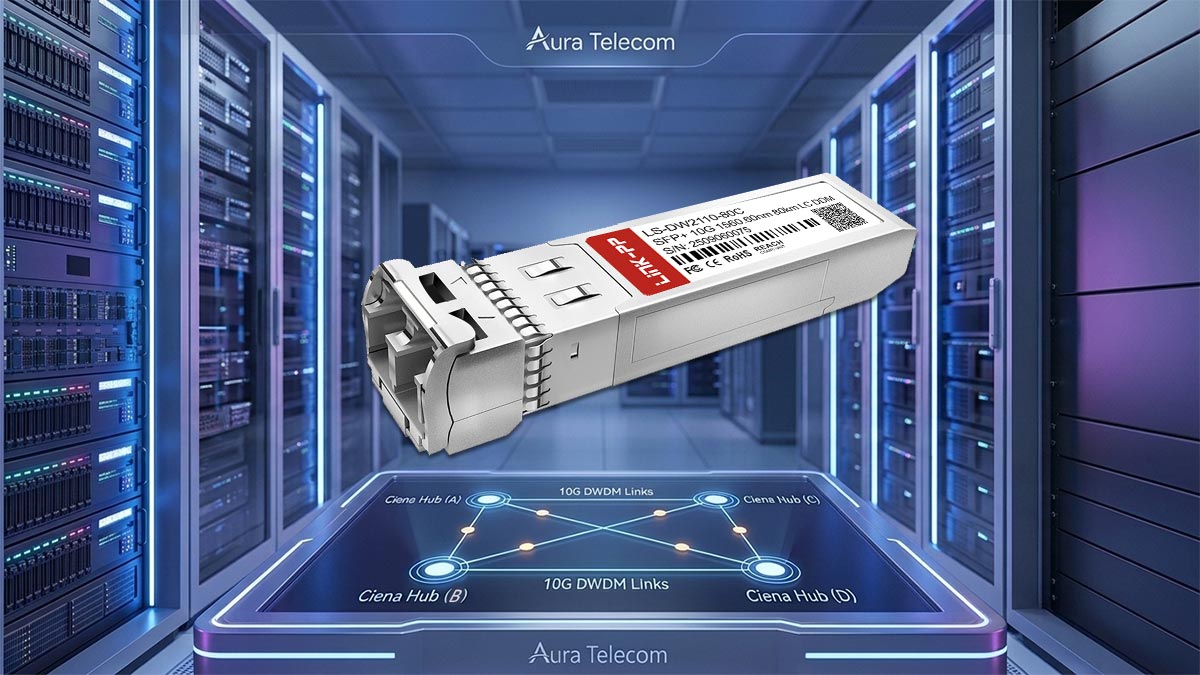
Η Aura Telecom παρέχει internet υψηλής ταχύτητας και εξειδικευμένες υπηρεσίες μεταφοράς για επιχειρήσεις σε μια ταχέως αναπτυσσόμενη μητροπολιτική περιοχή. Καθώς οι απαιτήσεις εύρους ζώνης των πελατών αυξήθηκαν κατακόρυφα στο δίκτυό της που εκτείνεται σε πολλαπλές τοποθεσίες, οι υπάρχουσες συνδέσεις σκοτεινής οπτικής ίνας μήκους 40 χιλιομέτρων μεταξύ κεντρικών κόμβων και σημείων πρόσβασης στο άκρο έφτασαν στο μέγιστο της χωρητικότητάς τους. Ο πάροχος υπηρεσιών χρειαζόταν μια γρήγορη και οικονομικά αποδοτική αναβάθμιση για να πολλαπλασιάσει την απόδοση του δικτύου χωρίς το τεράστιο κόστος μίσθωσης νέων οπτικών ινών.
Για να ξεπεραστεί αυτό το εμπόδιο, η ομάδα μηχανικών ανέπτυξε μια παθητική αρχιτεκτονική 8 καναλιών 10G DWDM σε όλες τις κύριες διαδρομές διανομής της. Το έργο απαιτούσε οπτικό υλικό που ενσωματώνονταν άψογα με τις υπάρχουσες πλατφόρμες φιλοξενίας Ciena της Aura Telecom, για την αποφυγή διακοπών υπηρεσιών και σφαλμάτων διαμόρφωσης. Πολυπλεξία πολλαπλών μηκών κύματος σε μεμονωμένα ζεύγη οπτικών ινών, ο πάροχος δημιούργησε μια ανθεκτική, υψηλής χωρητικότητας βάση έτοιμη για συνεχή αύξηση της κίνησης.
Προφίλ Πελατών και Προκλήσεις Συνδεσιμότητας Επιχειρήσεων
Η ραγδαία αστικοποίηση και η ψηφιοποίηση των επιχειρήσεων έχουν οδηγήσει σε πρωτοφανείς αυξήσεις στην κυκλοφορία σε όλες τις μητροπολιτικές περιοχές παροχής υπηρεσιών. Η τήρηση αυστηρών συμφωνιών επιπέδου υπηρεσιών, με παράλληλη διαχείριση του κόστους των μισθωμένων υποδομών, αποτελεί μια συνεχή επιχειρησιακή πρόκληση για τους ανταγωνιστικούς παρόχους τηλεπικοινωνιών. Η Aura Telecom έφτασε σε ένα κρίσιμο στάδιο ανάπτυξης όπου η επέκταση του δικτύου απαιτούσε μια στρατηγική ισορροπία μεταξύ των φυσικών οπτικών ινών και της αποδοτικότητας της οπτικής μεταφοράς.

Ιστορικό της Aura Telecom και του Μητροπολιτικού Αποτυπώματος
Η Aura Telecom λειτουργεί ως περιφερειακός πάροχος υπηρεσιών διαδικτύου και δικτύου, εξυπηρετώντας εταιρικούς πελάτες και κέντρα δεδομένων πολλαπλών μισθωτών. Το δίκτυο φορέων της εκτείνεται σε βασικούς επιχειρηματικούς κόμβους, διασυνδέοντας πολλαπλές απομακρυσμένες τοποθεσίες συγκέντρωσης σε μια ενοποιημένη κεντρική εγκατάσταση επεξεργασίας. Ο πάροχος βασίζεται σε αποκλειστικές εκτάσεις σκοτεινής οπτικής ίνας από σημείο σε σημείο για την παροχή ιδιωτικών γραμμών και ευρυζωνικών υπηρεσιών για επιχειρήσεις με εγγυήσεις εξαιρετικά χαμηλής καθυστέρησης.
Για να διατηρήσει αυστηρές απαιτήσεις χρόνου λειτουργίας, ο πάροχος τυποποιεί την βασική υποδομή μεταγωγής του σε πλατφόρμες επιπέδου παρόχου. Κάθε περιφερειακός κόμβος λειτουργεί ως κρίσιμος κόμβος για τη συγκέντρωση κίνησης, τις διακλαδώσεις cloud και τις τοπικές εταιρικές ανοδικές ζεύξεις. Καθώς ο αριθμός των πελατών πολλαπλασιαζόταν σε επιχειρηματικά πάρκα στα προάστια, ο όγκος κίνησης άσκησε τεράστια πίεση στις καθιερωμένες γραμμές του μετρό του παρόχου.
Εξάντληση εύρους ζώνης σε εκτάσεις σκοτεινών οπτικών ινών 40 χιλιομέτρων
Οι κύριες διαδρομές δικτύου που συνδέουν τον κεντρικό κόμβο της Aura Telecom με τα απομακρυσμένα σημεία συγκέντρωσης βασίζονται σε μισθωμένα ζεύγη μονοτροπικών οπτικών ινών μήκους 40 χλμ. Παραδοσιακά, αυτές οι συνδέσεις μεγάλης εμβέλειας χρησιμοποιούσαν τυπικούς οπτικούς πομποδέκτες 10GBASE-ER SFP+ που λειτουργούσαν σε ένα μόνο μήκος κύματος ανά πυρήνα οπτικής ίνας. Αυτή η προσέγγιση από σημείο σε σημείο κατανάλωσε γρήγορα όλες τις διαθέσιμες ίνες καθώς η κίνηση δεδομένων της εταιρείας πολλαπλασιάστηκε.
Η μίσθωση πρόσθετων σκοτεινών οπτικών ινών σε μητροπολιτικές αποστάσεις απαιτεί σημαντικές κεφαλαιουχικές επενδύσεις και συνεχείς μηνιαίες επαναλαμβανόμενες χρεώσεις. Τα δημοτικά δικαιώματα διέλευσης και οι χρονοβόρες άδειες κατασκευής καθιστούν την τοποθέτηση νέων φυσικών καλωδίων οπτικών ινών ανέφικτη για άμεσες απαιτήσεις κλιμάκωσης. Η ομάδα μηχανικών χρειαζόταν μια αποτελεσματική λύση για να πολλαπλασιάσει δραματικά την χωρητικότητα μετάδοσης σε υπάρχοντες αγωγούς οπτικών ινών μήκους 40 χιλιομέτρων χωρίς να επιβαρυνθεί με επαναλαμβανόμενο κόστος μίσθωσης.
Απαιτήσεις Συμβατότητας Υλικού για Πλατφόρμες Φιλοξενίας Ciena
Το δίκτυο κορμού της Aura Telecom βασίζεται σε μεγάλο βαθμό στις πλατφόρμες οπτικής μεταγωγής και μεταφοράς πακέτων Ciena για την παροχή ντετερμινιστικών υπηρεσιών επιπέδου φορέα. Αυτές οι συσκευές υποδοχής επιβάλλουν αυστηρές λειτουργικές παραμέτρους και εσωτερικούς ελέγχους μικροκώδικα σε όλες τις εγκατεστημένες οπτικές μονάδες. Η χρήση οπτικού υλικού τρίτων φέρει τον λειτουργικό κίνδυνο μη αναγνωρισμένων πομποδεκτών, ελλειπουσών δεδομένων τηλεμετρίας ή αποτυχιών αρχικοποίησης θύρας.
Η ομάδα μηχανικών χρειαζόταν οπτικές μονάδες υψηλής ποιότητας, ικανές για πλήρη συμβατότητα σε επίπεδο καταχωρητή με τον εγγενή εξοπλισμό Ciena. Τα οπτικά εξαρτήματα έπρεπε να αναφέρουν ακριβή δεδομένα ψηφιακής διαγνωστικής παρακολούθησης σε πραγματικό χρόνο απευθείας μέσω της κονσόλας διαχείρισης Ciena, χωρίς συναγερμούς λογισμικού. Η επίτευξη άψογης διαλειτουργικότητας υλικού παρέμεινε αδιαπραγμάτευτη προϋπόθεση για την προστασία της σταθερότητας του δικτύου και την εξάλειψη των καθυστερήσεων στη διαμόρφωση των υπηρεσιών.
Παθητική λύση DWDM και τοπολογία πολλαπλών τοποθεσιών
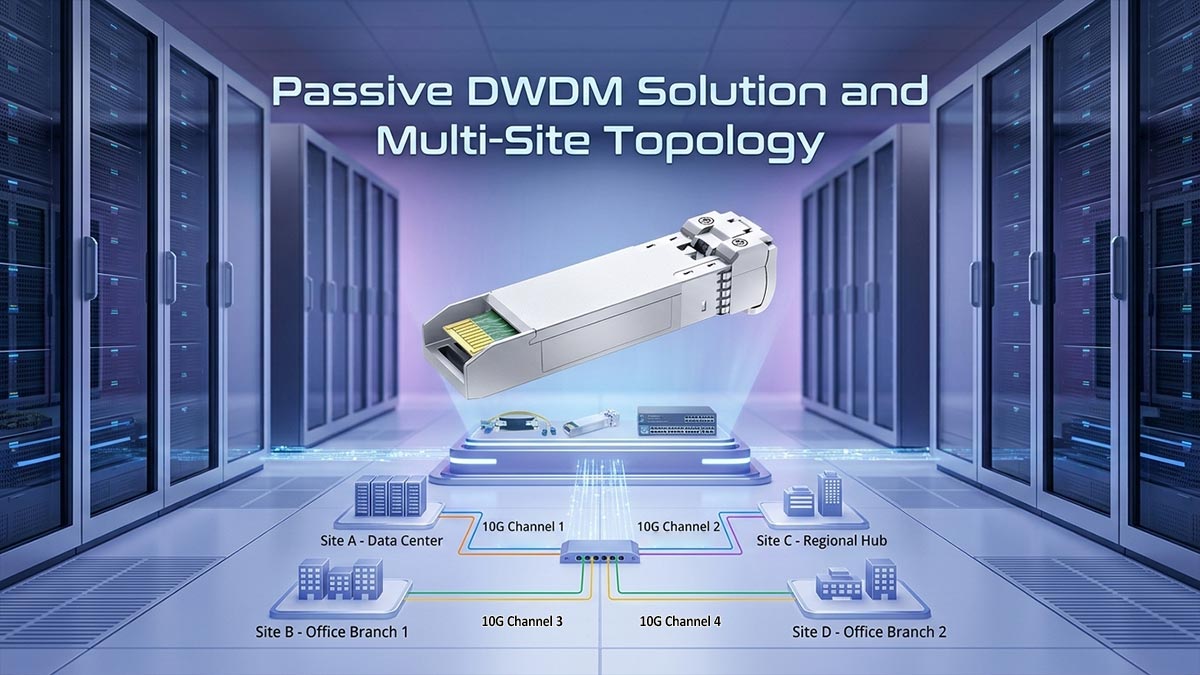
Η ανάπτυξη τεχνολογίας παθητικής οπτικής πολυπλεξίας προσέφερε μια άμεση και οικονομικά αποδοτική οδό για την επίλυση του προβλήματος εξάντλησης των φυσικών οπτικών ινών. Αναβαθμίζοντας σε πυκνή πολυπλεξία διαίρεσης μήκους κύματος, η Aura Telecom παρέκαμψε το τεράστιο κεφαλαιουχικό κόστος μίσθωσης νέων σκοτεινών διαδρομών οπτικών ινών. Η επιλεγμένη τοπολογία δικτύου συνδυάζει παθητικά οπτικά φίλτρα χαμηλών απωλειών με πομποδέκτες υψηλής απόδοσης για να δημιουργήσει μια μη ενισχυμένη, πολυτοπική αρχιτεκτονική.
Αρχιτεκτονική κόμβου από σημείο σε πολλαπλά σημεία μέσω DWDM 8 καναλιών
Η υλοποίηση δικτύου δημιουργεί μια ισχυρή τοπολογία διανομής hub-and-spoke που συνδέει την κεντρική εγκατάσταση δρομολόγησης με τα απομακρυσμένα σημεία συγκέντρωσης. Στον κεντρικό κόμβο, ένα παθητικό DWDM MUX/DEMUX 8 καναλιών ενοποιεί οκτώ διακριτά οπτικά κανάλια σε ένα μόνο ζεύγος σκοτεινών οπτικών ινών. Αυτή η διαμόρφωση προσφέρει άμεση συνολική απόδοση 80Gbps, διατηρώντας παράλληλα αυστηρή απομόνωση φυσικού επιπέδου σε όλες τις ροές κίνησης της επιχείρησης.
Κάθε απομακρυσμένη εγκατάσταση συνδέεται με τον κόμβο μέσω καθορισμένων οπτικών καναλιών, παρέχοντας αποκλειστικούς αγωγούς αμφίδρομης σύνδεσης 10Gbps για υπηρεσίες μεταφοράς επιχειρήσεων. Οι μεμονωμένες τροφοδοσίες κίνησης λειτουργούν ανεξάρτητα, αποτρέποντας τις συγκρούσεις δεδομένων και απλοποιώντας την παροχή συνδρομητών. Οι μηχανικοί δικτύου μπορούν πλέον να ενεργοποιούν, να αναβαθμίζουν ή να εξυπηρετούν μεμονωμένες συνδέσεις χωρίς να προκαλούν διακοπές μετάδοσης σε γειτονικά ενεργά μήκη κύματος.
Σχεδιασμός Προϋπολογισμού Οπτικής Ισχύος για Μη Ενισχυμένη Εμβέλεια 40 χλμ.
Η λειτουργία σε 40 χιλιόμετρα μονοτροπικών σκοτεινών οπτικών ινών απαιτεί ακριβείς υπολογισμούς οπτικού προϋπολογισμού για την αποφυγή της ενεργητικής οπτικής ενίσχυσης (EDFA). Η οπτική διαδρομή από άκρο σε άκρο ενσωματώνει την τυπική απώλεια μονοτροπικών οπτικών ινών παράλληλα με τις παθητικές ποινές εισαγωγής πολυπλέκτη και στα δύο τερματικά. Επαληθεύοντας εκ των προτέρων την πλήρη εξασθένηση της οπτικής σύνδεσης, οι ομάδες μηχανικών εξαλείφουν τους κινδύνους υποβάθμισης του σήματος και διατηρούν σαφή μοτίβα όρασης στον δέκτη.
- Εξασθένηση οπτικών ινών: 40km × 0.25dB/km = 10.0dB
- Απώλεια εισαγωγής πολυπλέκτη: 2.8dB (MUX κόμβου) + 2.8dB (Απομακρυσμένη απομειωτική λειτουργία) = 5.6dB
- Καλώδια Patch & Ποινές Σύνδεσης: Συνδυασμένη απώλεια σύνδεσης = 1.5dB
- Συνολική απώλεια σύνδεσης έναντι οπτικού προϋπολογισμού: Η συνολική απώλεια 17.1dB έναντι ενός προϋπολογισμού πομποδέκτη 22.0dB αποδίδει ένα ασφαλές περιθώριο ισχύος 4.9dB.
Για να διασφαλιστεί καθαρή οπτική λήψη σε αυτήν την παθητική διαδρομή, αναπτύχθηκαν σε όλες τις θύρες μονάδες 10G DWDM SFP+ με διαβάθμιση 80 km και ενσωματωμένους δέκτες APD. Ο ισχυρός προϋπολογισμός ισχύος 22dB παρέχει σημαντικό λειτουργικό περιθώριο έναντι της υποβάθμισης του καλωδίου patch, των παλαιών συνδέσεων και της περιβαλλοντικής μακροκάμψης. Αυτός ο παθητικός σχεδιασμός αποφεύγει πλήρως το υψηλό κόστος απόκτησης και λειτουργίας που σχετίζεται με τους ενεργούς οπτικούς ενισχυτές.
Απρόσκοπτη Οπτική Ενσωμάτωση με Πλατφόρμες Ciena Host
Οι οπτικοί πομποδέκτες 10G DWDM ενσωματώνουν προσαρμοσμένο μικροκώδικα EEPROM που έχει σχεδιαστεί ειδικά για τα πρότυπα επικοινωνίας κεντρικού υπολογιστή Ciena. Κατά την εισαγωγή στις θύρες μεταγωγής Ciena, η πλατφόρμα αναγνωρίζει άμεσα τους κωδικούς εξαρτημάτων της συσκευής, τα σειριακά δεδομένα και τα μήκη κύματος λειτουργίας. Αυτή η εγγενής αντιστοίχιση σε επίπεδο καταχωρητή παρακάμπτει τους περιορισμούς της διαχειριστικής θύρας και εξαλείφει την ανάγκη για χειροκίνητες παρακάμψεις λογισμικού πλατφόρμας.
- Ντετερμινιστική αναγνώριση υλικού: Άμεσος φωτισμός θύρας χωρίς προειδοποιήσεις συμβατότητας CLI ή συναγερμούς σφαλμάτων θύρας.
- Μήκη κύματος ITU συμβατά με τα πρότυπα: Ακριβής κατανομή ζώνης C 100GHz μεταξύ των καναλιών C21 (1560.60nm) έως C28 (1554.94nm).
- Ολοκληρωμένη Τηλεμετρία Εντός Ζώνης: Συνεχής μετάδοση οπτικών μετρήσεων στο κεντρικό σύστημα διαχείρισης δικτύου Ciena.
Το προσωπικό λειτουργίας δικτύου αποκτά ολοκληρωμένη εικόνα των παραμέτρων της ενεργής ζεύξης σε ολόκληρο το αποτύπωμα των μητροπολιτικών μεταφορών. Η αναφορά τηλεμετρίας σε πραγματικό χρόνο παρακολουθεί την ισχύ εκτόξευσης του πομπού, τα λαμβανόμενα οπτικά επίπεδα, την τάση τροφοδοσίας, το ρεύμα πόλωσης λέιζερ και τις θερμοκρασίες λειτουργίας. Αυτή η πλήρης διαφάνεια διαχείρισης επιταχύνει την έναρξη λειτουργίας της ζεύξης, βελτιστοποιεί τη συντήρηση πεδίου και διασφαλίζει προβλέψιμη μακροπρόθεσμη οπτική απόδοση σε όλες τις συνδεδεμένες τοποθεσίες.
Επιλογή οπτικού πομποδέκτη και προδιαγραφές συστήματος
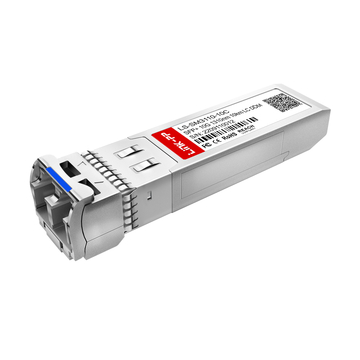
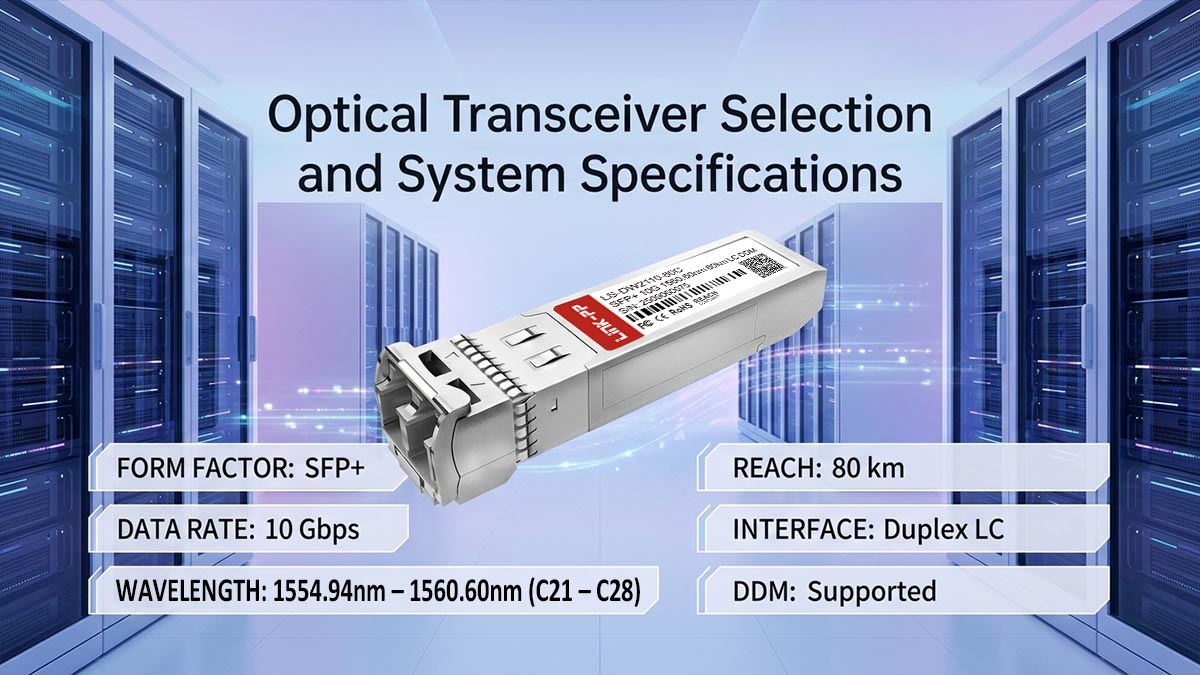
Η επιλογή οπτικού υλικού υψηλής απόδοσης είναι κρίσιμη για την εγγύηση της σταθερότητας μετάδοσης σε μη ενισχυμένες μητροπολιτικές περιοχές. Η Aura Telecom τυποποίησε την ανάπτυξη του δικτύου της στις LINK-PP Οπτικοί πομποδέκτες C21-C28 80km 10G DWDM SFP+ για υποστήριξη συσσωμάτωσης υψηλής πυκνότητας. Αυτές οι οπτικές μονάδες συνδυάζουν υψηλή φασματική ακρίβεια, ανώτερη ευαισθησία δέκτη και ανθεκτικότητα επιπέδου φορέα σε απαιτητικά περιβάλλοντα πολλαπλών τοποθεσιών.
Κατανομή καναλιών σε όλο το δίκτυο C-Band της ITU 100GHz
Η ανάπτυξη υλοποιεί οκτώ τυποποιημένα κανάλια πλέγματος ITU-T 100GHz που βρίσκονται εντός του φάσματος οπτικής ζώνης C χαμηλής εξασθένησης. Λειτουργώντας από το Κανάλι C21 έως το Κανάλι C28, το σύστημα διατηρεί μια στενή απόσταση οπτικών καναλιών 0.8nm για την αποτροπή παρεμβολών σε γειτονικά κανάλια. LINK-PP Η μονάδα 10G DWDM SFP+ διαθέτει έναν πομπό EML υψηλής σταθερότητας με ψύξη για να εξασφαλίζει ακριβή φασματική ευθυγράμμιση κατά τη διάρκεια παρατεταμένης λειτουργίας σε πολλαπλές τοποθεσίες.
- Κανάλι C21: 1560.60nm / 192.10THz — Πρωτεύων κορμός συσσωμάτωσης 1
- Κανάλι C22: 1559.79nm / 192.20THz — Πρωτεύων κορμός συσσωμάτωσης 2
- Κανάλι C23: 1558.98nm / 192.30THz — Core Business Park Feed 1
- Κανάλι C24: 1558.17nm / 192.40THz — Core Business Park Feed 2
- Κανάλι C25: 1557.36nm / 192.50THz — Σύνδεσμος 1 για Συνεγκατάσταση Πολλαπλών Ενοικιαστών
- Κανάλι C26: 1556.55nm / 192.60THz — Σύνδεσμος 2 για Συνεγκατάσταση Πολλαπλών Ενοικιαστών
- Κανάλι C27: 1555.74nm / 192.70THz — Enterprise Disaster Recovery Trunk
- Κανάλι C28: 1554.94nm / 192.80THz — Ανοδική ζεύξη πύλης cloud υψηλής προτεραιότητας
Αυτό το τυποποιημένο σχέδιο καναλιών επιτρέπει την ακριβή πολυπλεξία μέσω παθητικών οπτικών φίλτρων χωρίς φασματική επικάλυψη ή μετατόπιση συχνότητας. Το στενό φασματικό πλάτος των ψυχόμενων πομπών EML μετριάζει τη χρωματική διασπορά σε όλη την υποδομή μονοτροπικών οπτικών ινών μήκους 40 χιλιομέτρων. Καθώς η κίνηση αυξάνεται, η ομάδα μηχανικών μπορεί να εισαγάγει επιπλέον γειτονικά κανάλια ITU χωρίς να αναδιαμορφώσει τις υπάρχουσες λειτουργικές διαδρομές μήκους κύματος.
Οπτικές προδιαγραφές πομποδέκτη και παράμετροι προϋπολογισμού σύνδεσης
The LINK-PP Η σειρά 80km 10G DWDM SFP+ ενσωματώνει ένα ψυχόμενο λέιζερ διαμορφωμένης ηλεκτροαπορρόφησης (EML) με δέκτη φωτοδιόδου χιονοστιβάδας (APD) υψηλής ευαισθησίας. Αυτός ο ηλεκτροοπτικός σχεδιασμός επιτυγχάνει εξαιρετικό προϋπολογισμό ισχύος για να ξεπεράσει εύκολα την εξασθένηση οπτικών ινών 40km και τις απώλειες εισαγωγής πολυπλέκτη. Λειτουργώντας υπό τυπικούς φακέλους ισχύος SFP+ MSA, το υλικό παρέχει ενεργειακά αποδοτική μετάδοση ποιότητας φορέα σε πλατφόρμες κεντρικών υπολογιστών Ciena υψηλής πυκνότητας.
Οι βασικές οπτικές παράμετροι και οι λειτουργικές προδιαγραφές του αναπτυγμένου LINK-PP Οι πομποδέκτες 10G DWDM 80km SFP περιγράφονται λεπτομερώς παρακάτω.
| Παράμετρος | Χαρακτηριστικά | Επιχειρησιακή Αξία / Αντίκτυπος |
| Συντελεστής μορφής και ρυθμός δεδομένων | SFP+ / 10Gbps | Τυπική οπτική μεταφορά Ethernet 10G |
| Πλέγμα μήκους κύματος | Ζώνη C ITU 100GHz (C21–C28) | 8 αποκλειστικά κανάλια DWDM μέσω ενός ζεύγους SMF |
| Οπτική ισχύς πομπού | -1dBm στο + 5dBm | Υψηλή ισχύς εκτόξευσης για μη ενισχυμένη εμβέλεια 40 χλμ. |
| Ευαισθησία δέκτη | -23dBm | Υψηλή ευαισθησία που εξασφαλίζει καθαρή λήψη σήματος |
| Οπτική ισχύς δέκτη | -23dBm έως -6dBm | Ευρύ δυναμικό εύρος που αποτρέπει τον οπτικό κορεσμό |
| Power Budget | 22dB | Διατηρεί την πλήρη απώλεια σύνδεσης με ασφαλές λειτουργικό περιθώριο |
| Απόσταση μετάδοσης | 80km | Ισχυρή δυνατότητα εμβέλειας μέσω μονότροπης σκοτεινής ίνας |
Αυτή η προδιαγραφή υλικού εγγυάται σταθερή οπτική μεταφορά σε ολόκληρη τη διαδρομή σκοτεινής οπτικής ίνας μήκους 40 χιλιομέτρων χωρίς εξωτερική οπτική ενίσχυση. Η υψηλή ευαισθησία του δέκτη διασφαλίζει ότι ακόμη και μετά τη διέλευση από τα παθητικά στάδια MUX/DEMUX, το οπτικό σήμα παραμένει εξαιρετικά καθαρό. Το προκύπτον περιθώριο ισχύος προστατεύει τη σύνδεση από την οπτική υποβάθμιση που προκαλείται από τη γήρανση της οπτικής ίνας, τα πάνελ field patch και τις διακυμάνσεις της θερμοκρασίας.
Ψηφιακή οπτική παρακολούθηση σε πραγματικό χρόνο και παρακολούθηση απόδοσης
Η μεταφορά επιπέδου φορέα απαιτεί συνεχή ορατότητα στην οπτική υγεία του φυσικού επιπέδου σε όλα τα απομακρυσμένα εύρη συνδρομητών. LINK-PP Οι μονάδες 10G DWDM SFP+ περιλαμβάνουν ενσωματωμένη Ψηφιακή Οπτική Παρακολούθηση (DOM) συμβατή με την προδιαγραφή SFF-8472 του βιομηχανικού προτύπου. Τα εσωτερικά διαγνωστικά κυκλώματα δειγματοληπτούν συνεχώς λειτουργικές μετρήσεις και μετατρέπουν αναλογικές παραμέτρους πραγματικού χρόνου σε τυποποιημένα ψηφιακά μητρώα δεδομένων.
- Τηλεμετρία οπτικής ισχύος: Παρακολούθηση σε πραγματικό χρόνο της ισχύος εκτόξευσης και της λαμβανόμενης οπτικής ισχύος για την έγκαιρη ανίχνευση ανωμαλιών εξασθένησης.
- Παρακολούθηση Περιβάλλοντος & Ηλεκτρικής Ενέργειας: Συνεχής αναφορά της θερμοκρασίας λειτουργίας της μονάδας, της τάσης τροφοδοσίας και του ρεύματος πόλωσης λέιζερ.
- Προληπτικοί συναγερμοί κατωφλίου: Διαμορφώσιμα υψηλά και χαμηλά όρια προειδοποίησης για την ειδοποίηση των ομάδων λειτουργίας πριν τα σφάλματα bit υποβαθμίσουν την υπηρεσία.
Οι πλατφόρμες φιλοξενίας Ciena πραγματοποιούν συνεχώς δειγματοληψία σε αυτά τα διαγνωστικά μητρώα για να εμφανίζουν ζωντανά οπτικά τηλεμετρικά δεδομένα απευθείας στον κεντρικό πίνακα ελέγχου διαχείρισης. Οι διαχειριστές δικτύου μπορούν να ανιχνεύσουν μικροκάμψεις, μόλυνση των συνδέσμων ή σταδιακή γήρανση των οπτικών ινών πριν από οποιαδήποτε υποβάθμιση της φυσικής μετάδοσης. Αυτή η αυτοματοποιημένη παρακολούθηση τηλεμετρίας ελαχιστοποιεί τις ροές των φορτηγών και επιτρέπει την προληπτική συντήρηση σε όλες τις διαδρομές διανομής DWDM πολλαπλών τοποθεσιών.
Επαλήθευση Ανάπτυξης και Επιχειρησιακά Αποτελέσματα
Η επικύρωση πεδίου επιβεβαίωσε ότι η παθητική πολυπλεξία πυκνής διαίρεσης μήκους κύματος παρέχει σταθερότητα επιπέδου φορέα σε συνδέσεις συσσωμάτωσης πολλαπλών τοποθεσιών. Η ομάδα μηχανικών εκτέλεσε μια σταδιακή μετάβαση σε όλα τα σκοτεινά διαστήματα οπτικών ινών μήκους 40 χιλιομέτρων χωρίς να διαταράξει τις ενεργές εταιρικές υπηρεσίες. Οι δοκιμές τηλεμετρίας σε πραγματικό χρόνο και απόδοσης επιβεβαίωσαν ότι το ενημερωμένο επίπεδο μεταφοράς υπερέβη όλα τα σημεία αναφοράς απόδοσης και οπτικού περιθωρίου.

Ταχεία ανάπτυξη σε πολλαπλές τοποθεσίες με διαλειτουργικότητα Ciena
Η εγκατάσταση πεδίου προχώρησε γρήγορα λόγω της πλήρους συμβατότητας σε επίπεδο καταχωρητή του LINK-PP Οπτικές μονάδες C21–C28 80km 10G DWDM SFP+. Κατά την άμεση σύνδεση στους διακόπτες Ciena, κάθε πομποδέκτης αρχικοποιήθηκε αμέσως χωρίς να απαιτούνται χειροκίνητες παρακάμψεις CLI ή προσαρμοσμένα σενάρια διαμόρφωσης. Τα συστήματα κεντρικού υπολογιστή αναγνώρισαν με ακρίβεια τους αριθμούς εξαρτημάτων, τα σειριακά δεδομένα και τα λειτουργικά μήκη κύματος ITU σε όλα τα οκτώ κανάλια.
Οι ομάδες θέσης σε λειτουργία διεξήγαγαν ολοκληρωμένες δοκιμές ρυθμού σφάλματος bit (BER) σε κάθε νέο μήκος κύματος που φωτίστηκε. Κάθε κανάλι διατήρησε πλήρη κίνηση γραμμής 10Gbps για 24 συνεχόμενες ώρες με μηδενική απώλεια καρέ και μηδενικά σφάλματα bit. Αυτή η άψογη συμπεριφορά plug-and-play επέτρεψε στην Aura Telecom να ολοκληρώσει την ανάπτυξη και την παροχή υπηρεσιών σε πολλαπλές τοποθεσίες νωρίτερα από το χρονοδιάγραμμα.
Μεγιστοποίηση της απόδοσης οπτικών ινών 40 χλμ. με συνολική απόδοση 80 Gbps
Η μετάβαση στην παθητική αρχιτεκτονική DWDM 8 καναλιών απελευθέρωσε σημαντική πυκνότητα εύρους ζώνης σε όλα τα υπάρχοντα single-mode dark fiber spans του παρόχου. Ένα μόνο ζεύγος οπτικών ινών που προηγουμένως μετέφερε μόνο τροφοδοσία από σημείο σε σημείο 10Gbps, τώρα μεταφέρει αξιόπιστα 80Gbps συνολικής απόδοσης. Αυτή η 8x ενίσχυση χωρητικότητας έλυσε τα προβλήματα συμφόρησης στη μητροπολιτική περιοχή, διατηρώντας παράλληλα τα πλεονεκτήματα χαμηλής καθυστέρησης των άμεσων μη ενισχυμένων συνδέσεων.
Κάθε οπτικό κανάλι λειτουργεί ως ανεξάρτητο φυσικό κύκλωμα σε όλη τη διαδρομή των 40 χιλιομέτρων, εξασφαλίζοντας πλήρη απομόνωση της κυκλοφορίας μεταξύ των εταιρικών ενοικιαστών. Οι μετρήσεις οπτικής ισχύος σε απομακρυσμένα τελικά σημεία δέκτη έδειξαν σταθερά επίπεδα ισχύος μεταξύ -11dBm και -13dBm, εντός του ασφαλούς εύρους λειτουργίας των δεκτών APD. Αυτό το υγιές περιθώριο αποτρέπει την οπτική αποκοπή, παρέχοντας παράλληλα επαρκή προστασία από μελλοντική γήρανση της διαδρομής οπτικών ινών ή προσθήκες πάνελ patch.
Μειωμένο κόστος μίσθωσης σκοτεινών οπτικών ινών και ευέλικτη κλιμάκωση χωρητικότητας
Η πολυπλεξία οκτώ διακριτών μηκών κύματος μέσω υπαρχουσών γραμμών σκοτεινής οπτικής ίνας εξάλειψε την άμεση ανάγκη μίσθωσης πρόσθετων ζευγών οπτικών ινών από τους δημοτικούς παρόχους υποδομών. Αυτή η στρατηγική αρχιτεκτονική εξοικονόμησε στην Aura Telecom σημαντικά επαναλαμβανόμενα λειτουργικά έξοδα, αποφεύγοντας παράλληλα τις μακροχρόνιες καθυστερήσεις στις αδειοδοτήσεις και τις φυσικές καθυστερήσεις στην κατασκευή. Ο πάροχος βελτιστοποίησε τις αρχικές κεφαλαιουχικές του δαπάνες αναπτύσσοντας μια κλιμακούμενη βάση παθητικής μεταφοράς.
Ο αρθρωτός σχεδιασμός 8 καναλιών επιτρέπει ένα ευέλικτο μοντέλο υπηρεσιών pay-as-you-grow (πληρωμή κατά την ανάπτυξη) για μελλοντικές απαιτήσεις επιχειρήσεων. Οι διαχειριστές δικτύου μπορούν να ενεργοποιήσουν αδρανή μήκη κύματος ή να ανακατανείμουν συγκεκριμένα κανάλια σε νέα επιχειρηματικά πάρκα μέσα σε λίγα λεπτά, απλώς εισάγοντας τα αντίστοιχα δεδομένα. LINK-PP πομποδέκτες. Αυτό το ευέλικτο μοντέλο κλιμάκωσης διασφαλίζει ότι η Aura Telecom μπορεί να διπλασιάσει ή να τριπλασιάσει την τοπική χωρητικότητα συνδρομητών χωρίς σημαντικές αναβαθμίσεις στην υποδομή.
Δημιουργία μιας υποδομής 10G DWDM έτοιμης για το μέλλον για τους κόμβους της Ciena
Η αναβάθμιση δικτύου της Aura Telecom καταδεικνύει πώς οι περιφερειακοί πάροχοι τηλεπικοινωνιών μπορούν να εξαλείψουν τα σημεία συμφόρησης εύρους ζώνης σε πολυκεντρικούς κόμβους Ciena χωρίς να μισθώσουν ακριβές νέες οπτικές ίνες. Συνδυάζοντας την παθητική πολυπλεξία με πλήρως συμβατές μονάδες 10G DWDM SFP, ο πάροχος δημιούργησε μια μη ενισχυμένη μητροπολιτική υποδομή υψηλής χωρητικότητας σε εκτάσεις σκοτεινής οπτικής ίνας 40 χιλιομέτρων. Αυτή η ανάπτυξη παρέχει ένα αξιόπιστο σχέδιο για τη μεγιστοποίηση των υφιστάμενων φυσικών πόρων, διατηρώντας παράλληλα την αξιοπιστία επιπέδου παρόχου.
- 8x χωρητικότητα στους βασικούς κόμβους Ciena: Επέκταση ενός μόνο ζεύγους οπτικών ινών που συνδέει κεντρικούς και απομακρυσμένους κόμβους Ciena από μια σύνδεση 10Gbps σε μια συνολική απόδοση 80Gbps σε οκτώ αποκλειστικά κανάλια ITU.
- Άψογη ενσωμάτωση κεντρικού υπολογιστή: Επιτεύχθηκε εγγενής συμβατότητα και τηλεμετρία DOM σε πραγματικό χρόνο σε πλατφόρμες μεταγωγής Ciena χωρίς συναγερμούς CLI ή λύσεις.
- Μηδενική Ενεργή Ενίσχυση: Αξιοποίησε έναν οπτικό προϋπολογισμό 80 χλμ. για την εξάλειψη του υψηλού κόστους κεφαλαίου και ισχύος του ενεργού εξοπλισμού EDFA σε όλες τις διαδρομές hub-and-spoke.
- Ευέλικτη επέκταση Pay-As-You-Grow: Βελτιστοποιημένη κλιμάκωση χωρητικότητας σε όλους τους απομακρυσμένους κόμβους της Ciena μέσω απλής παροχής πομποδέκτη ανά κανάλι, καθώς νέες τοποθεσίες πελατών συνδέονται στο διαδίκτυο.
Κοιτώντας μπροστά, αυτή η παθητική τοπολογία DWDM δημιουργεί μια βιώσιμη βάση μεταφορών με επίκεντρο τους κύριους κόμβους Ciena της Aura Telecom. Η τυποποιημένη αρχιτεκτονική δικτύου ITU 100GHz επιτρέπει στους μηχανικούς δικτύου να ενεργοποιούν πρόσθετα κανάλια μήκους κύματος ζώνης C ή να επεκτείνουν νέες συνδέσεις υποκαταστημάτων απευθείας σε υπάρχοντα racks κόμβων χωρίς διακοπές υπηρεσιών. Αυτός ο αρθρωτός σχεδιασμός διασφαλίζει ότι ο πάροχος μπορεί να κλιμακώσει γρήγορα το εύρος ζώνης της επιχείρησης μεταξύ περιφερειακών κόμβων, διατηρώντας παράλληλα το λειτουργικό κόστος σε προβλέψιμα χαμηλά επίπεδα.
Για να εξερευνήσετε οπτικές λύσεις DWDM SFP εταιρικού επιπέδου ή να προσαρμόσετε συμβατούς πομποδέκτες για τις πλατφόρμες μεταφοράς πολλαπλών τοποθεσιών σας, επισκεφθείτε τη διεύθυνση LINK-PP Επίσημο κατάστημα και επικοινωνήστε με την ομάδα υποστήριξής μας σήμερα.