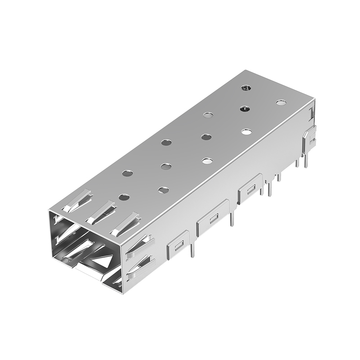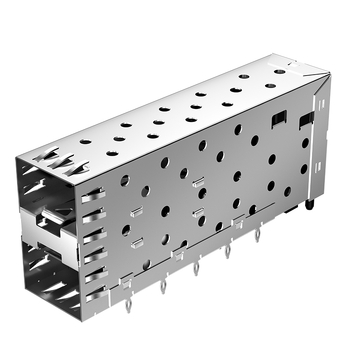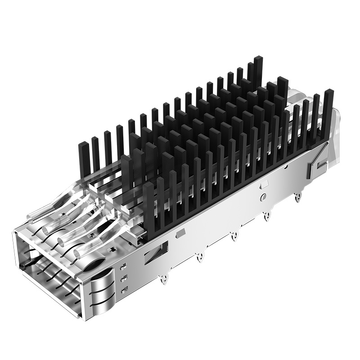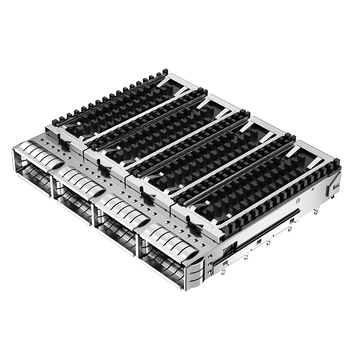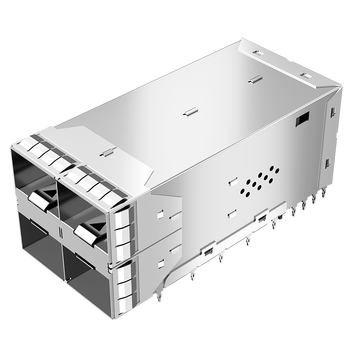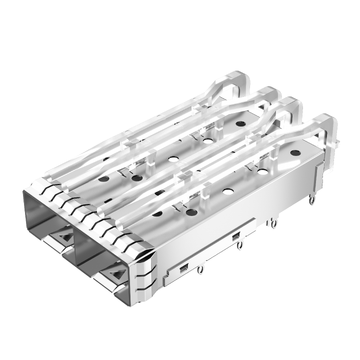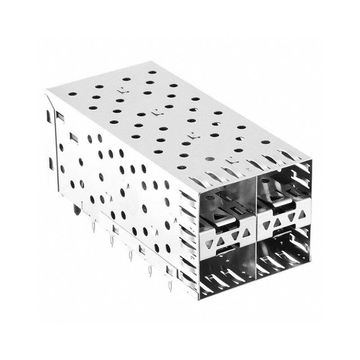
Τα οπτικά κλουβιά είναι μικρά μηχανικά εξαρτήματα, αλλά η αντοχή τους μπορεί να έχει μετρήσιμη επίδραση στο μακροπρόθεσμο κόστος λειτουργίας των κέντρων δεδομένων. Στα σύγχρονα δίκτυα, τα SFP, SFP+, SFP28 και άλλοι οπτικοί πομποδέκτες μπορούν να εισαχθούν και να αφαιρεθούν επανειλημμένα κατά τη διάρκεια συντήρησης, αντιμετώπισης προβλημάτων, αναβαθμίσεων και ανανεώσεων υλικού. Καθώς η πυκνότητα των θυρών και η συχνότητα σέρβις αυξάνονται, η μηχανική αντοχή κάθε οπτικού κλωβού αποκτά ολοένα και μεγαλύτερη σημασία για την αξιοπιστία και τον προγραμματισμό του κύκλου ζωής.
Ένας κύκλος ζωής εισαγωγής άνω των 500 υποδεικνύει ότι ένας οπτικός κλωβός έχει σχεδιαστεί για να αντέχει στην επαναλαμβανόμενη εισαγωγή και αφαίρεση πομποδέκτη χωρίς πρόωρη μηχανική υποβάθμιση υπό καθορισμένες συνθήκες δοκιμής. Ενώ αυτή η αξιολόγηση δεν καθορίζει άμεσα τη διαθεσιμότητα του δικτύου ή τη διάρκεια ζωής, μπορεί να επηρεάσει τη συχνότητα συντήρησης, το φόρτο εργασίας του τεχνικού, την έκθεση σε αντικατάσταση και τον πιθανό χρόνο διακοπής λειτουργίας. Η κατανόηση αυτής της σχέσης βοηθά τους χειριστές κέντρων δεδομένων να αξιολογούν την ανθεκτικότητα του οπτικού κλωβού από την οπτική γωνία του Συνολικού Κόστους Ιδιοκτησίας (TCO) και του OPEX αντί να επικεντρώνονται μόνο στο αρχικό κόστος των εξαρτημάτων.
Αυτό το άρθρο εξετάζει πώς η διάρκεια ζωής του κύκλου εισαγωγής ενός κλωβού μπορεί να επηρεάσει τα μακροπρόθεσμα οικονομικά ενός κέντρου δεδομένων, με έμφαση σε πρακτικές παραμέτρους ανάπτυξης. Καλύπτει:
- Τι σημαίνει η βαθμολογία 500+ κύκλων για την ανθεκτικότητα του οπτικού κλωβού
- Πώς ο επαναλαμβανόμενος χειρισμός του πομποδέκτη μπορεί να επηρεάσει τη συντήρηση και την αξιοπιστία
- Πώς μπορεί να ενσωματωθεί ο κύκλος ζωής στους υπολογισμούς του Συνολικού Κόστους ... (TCO) και των Λειτουργικών Εξόδων (OPEX)
- Ποια περιβάλλοντα κέντρων δεδομένων επωφελούνται περισσότερο από την υψηλότερη μηχανική αντοχή
- Πώς να αξιολογήσετε την ανθεκτικότητα ενός κλωβού κατά τον σχεδιασμό μακροπρόθεσμων υποδομών
Συνδέοντας τη μηχανική αντοχή με τη συχνότητα λειτουργίας, την εργασία, την έκθεση σε αντικατάσταση και τον προγραμματισμό του κύκλου ζωής, η συζήτηση παρέχει ένα πρακτικό πλαίσιο για τον προσδιορισμό του πότε ένας οπτικός κλωβός 500+ κύκλων μπορεί να προσφέρει σημαντική μακροπρόθεσμη λειτουργική αξία.
📝 Τι σημαίνει η ονομαστική διάρκεια ζωής 500+ κύκλων για έναν οπτικό κλωβό;
Μια βαθμολογία διάρκειας ζωής 500+ κύκλου εισαγωγής σημαίνει ότι ένας οπτικός κλωβός έχει σχεδιαστεί για να αντέχει τουλάχιστον 500 καθορισμένους κύκλους εισαγωγής και αφαίρεσης πομποδέκτη, διατηρώντας παράλληλα την απαιτούμενη μηχανική του απόδοση υπό τις ισχύουσες συνθήκες δοκιμής. Για εφαρμογές κέντρων δεδομένων, αυτή η βαθμολογία γίνεται καλύτερα κατανοητή ως δείκτης μηχανικής ανθεκτικότητας: δείχνει πόσο καλά αναμένεται ο κλωβός να ανέχεται τον επαναλαμβανόμενο χειρισμό μονάδων, αλλά δεν καθορίζει άμεσα τη διάρκεια ζωής του δικτύου, την οπτική απόδοση ή τον χρόνο λειτουργίας.
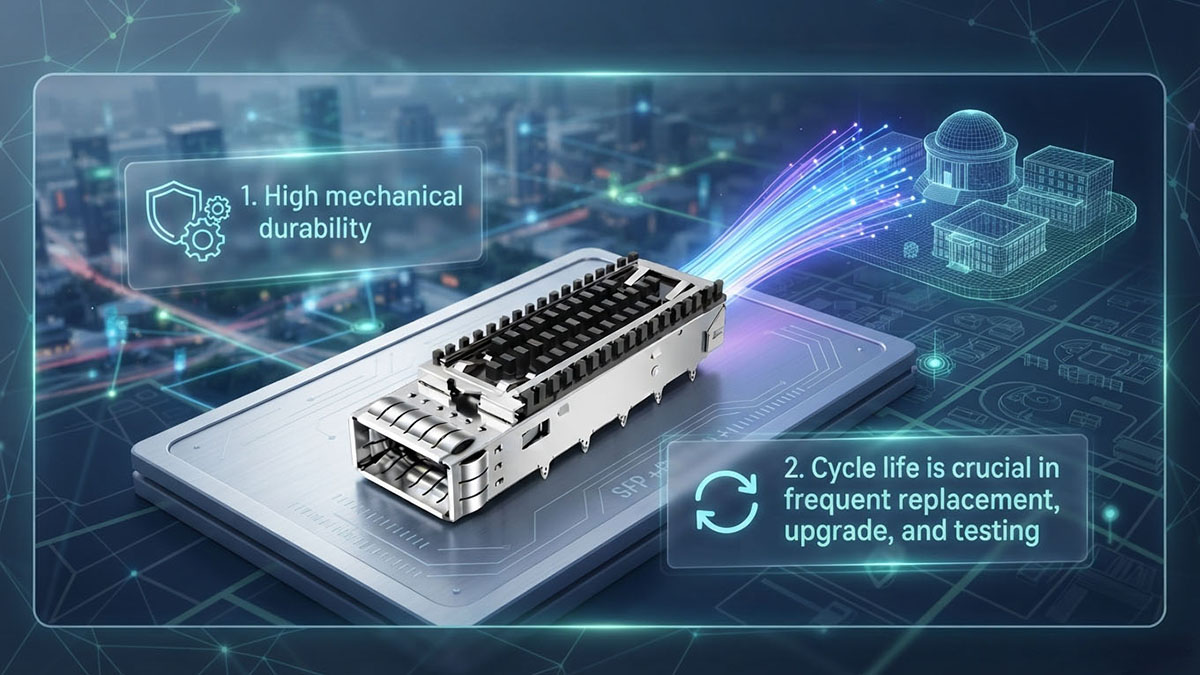
Κατανόηση του κύκλου ζωής της εισαγωγής οπτικού κλωβού
Ένας κύκλος εισαγωγής αναφέρεται στην επαναλαμβανόμενη σύνδεση και αποσύνδεση ενός οπτικού πομποδέκτη με τη διεπαφή του. Στις πρακτικές λειτουργίες κέντρων δεδομένων, αυτοί οι κύκλοι συμβαίνουν κάθε φορά που οι τεχνικοί εγκαθιστούν, αφαιρούν, αντικαθιστούν, αντιμετωπίζουν προβλήματα ή μετακινούν συμβατές οπτικές μονάδες.
Ο αριθμός των κύκλων που συσσωρεύονται από ένα κλουβί εξαρτάται σε μεγάλο βαθμό από τον τρόπο χρήσης της θύρας. Ένας μόνιμα αναπτυγμένος πομποδέκτης μπορεί να παρουσιάσει πολύ λίγους κύκλους, ενώ μια θύρα δικτύου υψηλής αλλαγής ή μια πλατφόρμα δοκιμών μπορεί να συσσωρεύσει κύκλους πολύ πιο γρήγορα.
Τυπικές δραστηριότητες που συμβάλλουν στη χρήση του κύκλου εισαγωγής περιλαμβάνουν:
- Εγκατάσταση νέου οπτικού πομποδέκτη κατά την αρχική ανάπτυξη.
- Αφαίρεση μιας μονάδας για αντιμετώπιση προβλημάτων ή διαγνωστικά.
- Αντικατάσταση ενός ελαττωματικού ή φθαρμένου πομποδέκτη.
- Αναβάθμιση μιας θύρας σε διαφορετική γενιά οπτικών μονάδων.
- Προσωρινή μετακίνηση μονάδων μεταξύ θυρών κατά τη διάρκεια δοκιμών δικτύου.
- Εκτέλεση επαναλαμβανόμενης επικύρωσης σε εργαστηριακά ή αναπτυξιακά περιβάλλοντα.
Συνεπώς, οι 500+ κύκλοι δεν θα πρέπει να ερμηνεύονται ως 500 χρόνια ή ως εγγυημένη διάρκεια ζωής ημερολογίου. Αντιπροσωπεύουν επαναλαμβανόμενη μηχανική λειτουργία. Η πρακτική διάρκεια ζωής εξαρτάται από τη συχνότητα εισαγωγής, τις διαδικασίες χειρισμού, τις περιβαλλοντικές συνθήκες και τον μηχανικό σχεδιασμό ολόκληρου του συγκροτήματος κλωβού.
Ποια εξαρτήματα υφίστανται μηχανική καταπόνηση κατά την επαναλαμβανόμενη εισαγωγή;
Η επαναλαμβανόμενη εισαγωγή και αφαίρεση του πομποδέκτη ασκεί μηχανική καταπόνηση σε διάφορα μέρη του οπτικού κλωβού και στη διεπαφή του με το σύστημα υποδοχής. Ο κλωβός πρέπει να διατηρεί τη διαστατική σταθερότητα, τη συγκράτηση της μονάδας, την ευθυγράμμιση και την ηλεκτρική γείωση καθώς αυτές οι λειτουργίες συσσωρεύονται.
Οι κύριοι τομείς ανησυχίας περιλαμβάνουν:
- Δομές οδηγών κλουβιών: Οι λειτουργίες οδηγού βοηθούν στη σωστή τοποθέτηση του πομποδέκτη κατά την εισαγωγή και την εξαγωγή. Η επαναλαμβανόμενη μηχανική επαφή μπορεί να συμβάλει σε φθορά ή παραμόρφωση.
- Δάχτυλα θωράκισης EMI: Αυτές οι δομές διατηρούν ηλεκτρική επαφή και ηλεκτρομαγνητική θωράκιση γύρω από τη μονάδα. Η επαναλαμβανόμενη σύζευξη μπορεί να προκαλέσει μηχανική καταπόνηση στα σημεία επαφής.
- Μηχανισμοί διατήρησης: Ο κλωβός πρέπει να συγκρατεί με ασφάλεια τον εγκατεστημένο πομποδέκτη, επιτρέποντας παράλληλα την ελεγχόμενη αφαίρεσή του κατά τη διάρκεια της συντήρησης.
- Σημεία σύνδεσης PCB: Οι μηχανικές δυνάμεις μπορούν να μεταφερθούν από το κλουβί στη διεπαφή σύνδεσής του με την πλακέτα τυπωμένου κυκλώματος (PCB).
- Χαρακτηριστικά ευθυγράμμισης: Η συνεπής τοποθέτηση βοηθά τον οπτικό πομποδέκτη να συνδεθεί σωστά με την αντίστοιχη διεπαφή συστήματος.
Αυτά τα στοιχεία συνεργάζονται, επομένως ο κύκλος ζωής δεν θα πρέπει να αξιολογείται αποκλειστικά εξετάζοντας ένα μηχανικό εξάρτημα. Ένας στιβαρός οπτικός κλωβός πρέπει να διατηρεί τη συνολική μηχανική του ακεραιότητα καθ' όλη τη διάρκεια των επαναλαμβανόμενων εργασιών σέρβις.
Τι δεν εγγυάται η επιλογή «500+ Κύκλοι»;
Μια βαθμολογία 500+ κύκλων δεν σημαίνει ότι κάθε κλωβός θα λειτουργεί με τον ίδιο τρόπο μετά από ακριβώς 500 εισαγωγές, ούτε εγγυάται ότι ολόκληρη η συσκευή δικτύου θα παραμείνει αξιόπιστη για αυτόν τον αριθμό λειτουργιών. Η βαθμολογία έχει νόημα μόνο εντός των συνθηκών και της μεθοδολογίας δοκιμών που ορίζονται από την αντίστοιχη προδιαγραφή ή τον κατασκευαστή.
Συνεπώς, θα πρέπει να ληφθούν υπόψη διάφοροι περιορισμοί:
- Δεν εγγυάται συγκεκριμένη διάρκεια ζωής ημερολογίου.
- Δεν εγγυάται ότι το κλουβί θα παραμείνει άθικτο μετά από ακατάλληλο χειρισμό.
- Δεν εξαλείφει τους κινδύνους από την υπερβολική δύναμη εισαγωγής ή εξαγωγής.
- Δεν εγγυάται την ανθεκτικότητα του συνδέσμου του πομποδέκτη.
- Δεν εγγυάται ανεξάρτητα την αξιοπιστία της πλακέτας τυπωμένου κυκλώματος (PCB), της συγκολλητικής σύνδεσης ή του συστήματος κεντρικού υπολογιστή.
- Αυτό δεν σημαίνει ότι η μηχανική απόδοση είναι ο μόνος παράγοντας που καθορίζει τις μακροπρόθεσμες λειτουργικές δαπάνες (OPEX).
Για αυτόν τον λόγο, οι μηχανικοί θα πρέπει να αντιμετωπίζουν τους 500+ κύκλους εισαγωγής ως μία μόνο είσοδο στην αξιολόγηση της ανθεκτικότητας και του συνολικού κόστους ιδιοκτησίας (TCO) ενός οπτικού κλωβού, αντί να τη χρησιμοποιούν ως αυτόνομη εγγύηση αξιοπιστίας. Η πιο ουσιαστική αξιολόγηση συνδυάζει τα δεδομένα κύκλου ζωής με την πραγματική συχνότητα λειτουργίας, τις πρακτικές χειρισμού, τις περιβαλλοντικές συνθήκες και τον αναμενόμενο κύκλο ζωής του υλικού του κέντρου δεδομένων.
📝 Γιατί η ανθεκτικότητα του κλωβού έχει σημασία για τα λειτουργικά έξοδα του κέντρου δεδομένων;
Η ανθεκτικότητα του οπτικού κλωβού έχει σημασία για τις λειτουργικές δαπάνες του κέντρου δεδομένων, επειδή ο επαναλαμβανόμενος χειρισμός του πομποδέκτη μπορεί να δημιουργήσει σωρευτικό κόστος συντήρησης, έκθεση σε αντικατάσταση και κόστος διακοπής λειτουργίας. Ένας ανθεκτικός κλωβός είναι λιγότερο πιθανό να απαιτήσει παρέμβαση που σχετίζεται με τον κλωβό κατά τη διάρκεια επαναλαμβανόμενων αλλαγών μονάδων, γεγονός που μπορεί να βοηθήσει να γίνουν τα μακροπρόθεσμα λειτουργικά έξοδα πιο προβλέψιμα, ιδιαίτερα σε περιβάλλοντα υψηλής πυκνότητας με συχνή συντήρηση δικτύου.
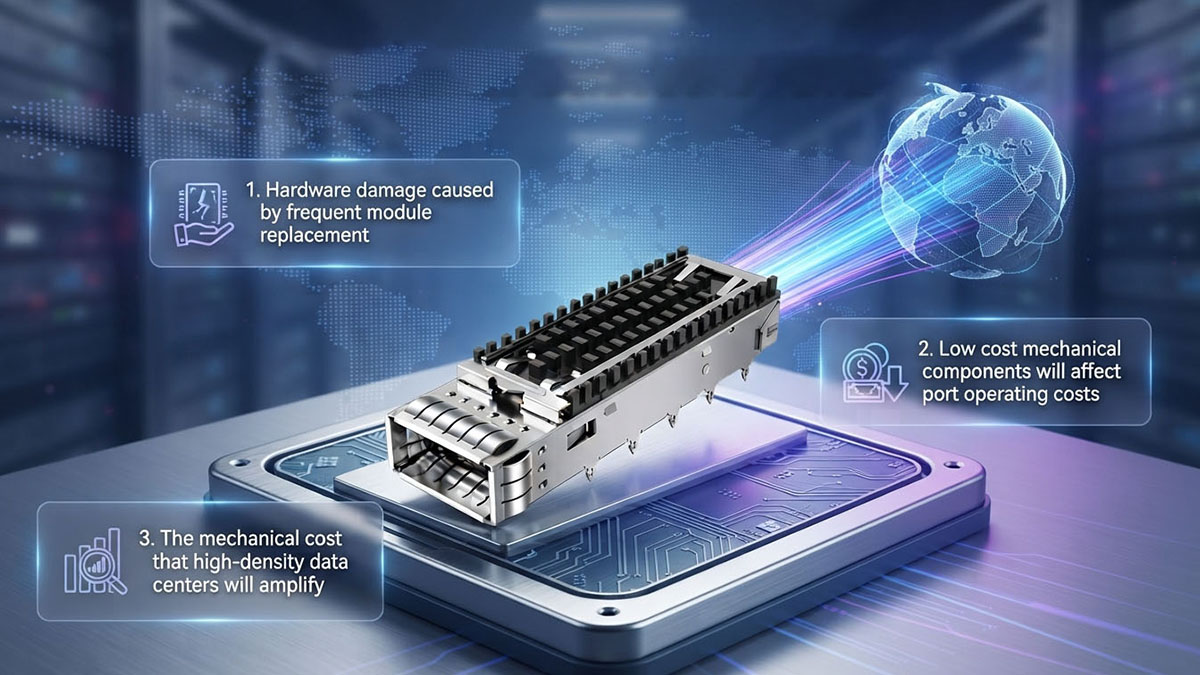
Πώς η αντικατάσταση πομποδέκτη δημιουργεί επαναλαμβανόμενα λειτουργικά κόστη
Η αντικατάσταση ενός οπτικού πομποδέκτη δεν περιορίζεται στο κόστος της ίδιας της μονάδας. Κάθε συμβάν σέρβις μπορεί να καταναλώσει χρόνο από τον τεχνικό και να προκαλέσει πρόσθετη λειτουργική εργασία, ειδικά όταν πολλές θύρες πρέπει να συντηρηθούν σε ένα μεγάλο κέντρο δεδομένων.
Τα επαναλαμβανόμενα κόστη που σχετίζονται με τον χειρισμό του πομποδέκτη μπορεί να περιλαμβάνουν:
- Εργασία τεχνικού: Το προσωπικό πρέπει να έχει πρόσβαση στο rack, να αφαιρέσει την υπάρχουσα μονάδα, να εγκαταστήσει την αντικατάσταση και να επαληθεύσει τη λειτουργία.
- Πρόσβαση σε ράφια και χρόνος σέρβις: Η φυσική πρόσβαση σε εξοπλισμό υψηλής πυκνότητας μπορεί να απαιτεί πρόσθετη προετοιμασία και συντονισμό.
- Δοκιμή και επικύρωση: Οι μονάδες αντικατάστασης ενδέχεται να απαιτούν ελέγχους σύνδεσης, επαλήθευση DOM ή επικύρωση σε επίπεδο δικτύου.
- Εφεδρικός χειρισμός: Οι ενότητες πρέπει να αποθηκεύονται, να μεταφέρονται, να παρακολουθούνται και να κατανέμονται σε δραστηριότητες συντήρησης.
- Πιθανή διακοπή παροχής υπηρεσιών: Μια εργασία συντήρησης μπορεί να δημιουργήσει προσωρινή διακοπή της κυκλοφορίας ή να απαιτήσει πρόσθετες διαδικασίες πλεονασμού.
Όταν τα οπτικά κλουβιά υφίστανται σημαντική μηχανική φθορά, τα προβλήματα που σχετίζονται με τα κλουβιά μπορούν να προσθέσουν ένα ακόμη επίπεδο εργασίας στην κατά τα άλλα συνηθισμένη αντικατάσταση πομποδεκτών. Με χιλιάδες θύρες και πολλαπλούς κύκλους ανανέωσης υλικού, αυτά τα μικρά λειτουργικά κόστη μπορούν να συσσωρευτούν σε μια σημαντική εκτίμηση λειτουργικών εξόδων.
Πώς η φθορά του κλωβού μπορεί να αυξήσει τις απαιτήσεις συντήρησης
Η φθορά του κλωβού μπορεί να αυξήσει τις απαιτήσεις συντήρησης όταν η επαναλαμβανόμενη εισαγωγή και αφαίρεση επηρεάζει σταδιακά τη μηχανική συγκράτηση, την ευθυγράμμιση, τη θωράκιση ή άλλα χαρακτηριστικά της διεπαφής. Ο πρακτικός αντίκτυπος εξαρτάται από τον σχεδιασμό του κλωβού, τη συχνότητα χρήσης, τις περιβαλλοντικές συνθήκες και τις πρακτικές χειρισμού.
Πιθανές συνέπειες συντήρησης περιλαμβάνουν:
- Μειωμένη συνέπεια στη συγκράτηση του πομποδέκτη.
- Αυξημένη δυσκολία κατά την εισαγωγή ή εξαγωγή της μονάδας.
- Μεγαλύτερη ανάγκη για φυσική επιθεώρηση των λιμένων που χρησιμοποιούνται έντονα.
- Πρόσθετη αντιμετώπιση προβλημάτων όταν η συμπεριφορά της μηχανικής διεπαφής γίνεται μη φυσιολογική.
- Πρώιμη αντικατάσταση ενός συγκροτήματος κλωβού ή ενός υλικού υποδοχής όταν η μηχανική βλάβη δεν μπορεί να διορθωθεί μέσω της τακτικής συντήρησης.
Το σημαντικό σημείο είναι ότι ο κύκλος ζωής επηρεάζει την έκθεση στη συντήρηση αντί να καθορίζει άμεσα το κόστος συντήρησης. Ένας οπτικός κλωβός 500+ κύκλων μπορεί να παρέχει μεγαλύτερη μηχανική αντοχή, αλλά το πλεονέκτημά του στις λειτουργικές δαπάνες αποκτά νόημα μόνο όταν η ανάπτυξη παράγει αρκετή δραστηριότητα εισαγωγής ώστε η ανθεκτικότητα να επηρεάσει τη συχνότητα συντήρησης.
Γιατί τα κέντρα δεδομένων υψηλής πυκνότητας μεγεθύνουν το μικρό μηχανικό κόστος
Τα κέντρα δεδομένων υψηλής πυκνότητας ενισχύουν την οικονομική σημασία των μικρών διαφορών στην μηχανική αξιοπιστία, επειδή το ίδιο συμβάν συντήρησης μπορεί να συμβεί σε εκατοντάδες ή χιλιάδες οπτικές θύρες. Καθώς ο αριθμός των θυρών αυξάνεται, ακόμη και μια μέτρια ποσότητα πρόσθετων εργασιών συντήρησης ανά θύρα μπορεί να γίνει σημαντική σε κλίμακα εγκατάστασης.
Αρκετά χαρακτηριστικά καθιστούν τα περιβάλλοντα υψηλής πυκνότητας ιδιαίτερα ευαίσθητα στην ανθεκτικότητα των κλωβών:
- Μεγάλος αριθμός θυρών SFP, SFP+, SFP28 και άλλων οπτικών πομποδεκτών.
- Συχνές αναβαθμίσεις δικτύου και ανανέωση τεχνολογίας.
- Μεγαλύτερος αριθμός συμβάντων αντικατάστασης μονάδων.
- Περιορισμένη φυσική πρόσβαση σε πυκνοκατοικημένα ράφια.
- Υψηλότερος φόρτος εργασίας τεχνικών σε μεγάλους πληθυσμούς εξοπλισμού.
- Πιο σύνθετος προγραμματισμός συντήρησης και συντονισμός σέρβις.
Για παράδειγμα, ένα πρόβλημα που σχετίζεται με το κλουβί και προσθέτει μόνο λίγα λεπτά σε ένα συμβάν συντήρησης μπορεί να φαίνεται ασήμαντο σε επίπεδο μεμονωμένης θύρας. Ωστόσο, σε μια μεγάλη ανάπτυξη, ο επαναλαμβανόμενος πρόσθετος χρόνος συντήρησης μπορεί να αυξήσει τις ετήσιες απαιτήσεις εργασίας και να περιπλέξει τον προγραμματισμό συντήρησης. Αυτός είναι ο λόγος για τον οποίο η ανθεκτικότητα του οπτικού κλωβού θα πρέπει να λαμβάνεται υπόψη ως μέρος της ανάλυσης OPEX και TCO του κύκλου ζωής, αντί να αξιολογείται μόνο ως μηχανική προδιαγραφή.
📝 Πώς επηρεάζει η διάρκεια ζωής 500+ κύκλων το συνολικό κόστος ιδιοκτησίας;
Ένας κύκλος ζωής άνω των 500 μπορεί να βελτιώσει το Συνολικό Κόστος Ιδιοκτησίας (TCO) ενός οπτικού κλωβού μειώνοντας τις πιθανότητες συντήρησης, αντικατάστασης και εργασίας που σχετίζεται με τον κλωβό κατά τη διάρκεια του κύκλου ζωής της υποδομής. Ωστόσο, το οικονομικό όφελος εξαρτάται από τη συχνότητα χειρισμού των πομποδεκτών, τον αριθμό των θυρών που αναπτύσσονται και το κόστος κάθε συμβάντος συντήρησης. Επομένως, ο κύκλος ζωής θα πρέπει να αντιμετωπίζεται ως μεταβλητή κόστους κύκλου ζωής και όχι ως άμεσο μέτρο εξοικονόμησης χρημάτων.

Ανθεκτικότητα κλουβιού ως μεταβλητή TCO
Η ανθεκτικότητα του οπτικού κλωβού γίνεται μια μεταβλητή TCO όταν η επαναλαμβανόμενη εισαγωγή και αφαίρεση μονάδων δημιουργεί μετρήσιμο κίνδυνο μηχανικής φθοράς ή επέμβασης σέρβις. Μια υψηλότερη βαθμολογία κύκλου μπορεί να προσφέρει πρόσθετη μηχανική αντοχή για περιβάλλοντα όπου οι οπτικές μονάδες συντηρούνται ή αντικαθίστανται συχνά.
Οι κύριες κατηγορίες κόστους κύκλου ζωής που επηρεάζονται από την ανθεκτικότητα του κλωβού περιλαμβάνουν:
- Αρχικό κόστος υλικού: Το αρχικό κόστος του οπτικού κλωβού ή της συναρμολόγησης του κλωβού.
- Κόστος συντήρησης: Έξοδα που σχετίζονται με την επιθεώρηση, την αντιμετώπιση προβλημάτων και το μηχανολογικό σέρβις.
- Κόστος εργασίας: Χρόνος που απαιτείται από τον τεχνικό για την αντιμετώπιση προβλημάτων που σχετίζονται με το κλουβί.
- Κόστος αντικατάστασης: Πιθανό κόστος αντικατάστασης κατεστραμμένων κλωβών, συγκροτημάτων ή υλικού υποδοχής.
- Έκθεση σε διακοπές λειτουργίας: Επιχειρησιακός αντίκτυπος που σχετίζεται με πρόσθετα συμβάντα παροχής υπηρεσιών.
- Κόστος αποθέματος: Ανταλλακτικά εξαρτήματα που ενδέχεται να απαιτούνται για την υποστήριξη της συντήρησης.
- Κόστος ανανέωσης υποδομής: Απαιτήσεις αντικατάστασης κλωβού όταν ο εξοπλισμός υφίσταται αναβαθμίσεις ή φτάνει στο τέλος της διάρκειας ζωής του.
Ένας κλωβός με 500+ κύκλους εισαγωγής μπορεί επομένως να συμβάλει στη μείωση του κινδύνου κύκλου ζωής όταν η μηχανική του αντοχή ευθυγραμμίζεται με το αναμενόμενο προφίλ λειτουργίας. Το κλειδί είναι να αξιολογηθεί εάν αυτή η πρόσθετη ανθεκτικότητα παράγει μια ουσιαστική μείωση της λειτουργικής έκθεσης.
Ένα απλό πλαίσιο για την εκτίμηση του κόστους κύκλου ζωής που σχετίζεται με το κλουβί
Μια πρακτική σύγκριση του Συνολικού Κόστους Κινδύνου (TCO) θα πρέπει να λαμβάνει υπόψη τόσο τον αναμενόμενο αριθμό συμβάντων εισαγωγής όσο και το κόστος που σχετίζεται με την εξυπηρέτηση αυτών των συμβάντων. Το ακόλουθο πλαίσιο διαχωρίζει τις κύριες μεταβλητές που μπορούν να επηρεάσουν τον οικονομικό αντίκτυπο της ανθεκτικότητας του κλωβού.
| Συντελεστής κόστους | Κλουβί χαμηλότερης αντοχής | Κλουβί υψηλότερου κύκλου ζωής |
|---|---|---|
| Συχνότητα αντικατάστασης | Δυνητικά υψηλότερα | Δυνητικά χαμηλότερα |
| Εργασία Συντήρησης | Υψηλότερη έκθεση | Χαμηλότερη έκθεση |
| Εκδηλώσεις εξυπηρέτησης | Περισσότερες δυνατότητες παρέμβασης που σχετίζονται με κλουβιά | Λιγότερα συμβάντα παρέμβασης που σχετίζονται με κλουβιά |
| Απαιτήσεις εφεδρικών | Δυνητικά υψηλότερα | Δυνητικά χαμηλότερα |
Αυτή η σύγκριση δεν σημαίνει ότι ένας κλωβός με μεγαλύτερο κύκλο ζωής θα μειώσει αυτόματα κάθε αναγραφόμενο κόστος. Αντίθετα, δείχνει πού η μηχανική αντοχή μπορεί να επηρεάσει τα οικονομικά του κύκλου ζωής όταν ο επαναλαμβανόμενος χειρισμός του πομποδέκτη είναι σημαντικός.
Για μια πιο ρεαλιστική εκτίμηση, οι μηχανικοί θα πρέπει να συνδυάσουν την ονομαστική διάρκεια ζωής του κλωβού με τον αριθμό των θυρών που έχουν αναπτυχθεί, την αναμενόμενη συχνότητα αντικατάστασης μονάδων, τους συντελεστές εργασίας των τεχνικών και την αναμενόμενη περίοδο σέρβις. Αυτό εμποδίζει την αντιμετώπιση της προδιαγραφής των 500+ κύκλων ως αυτόνομης πρόβλεψης του TCO.
Γιατί το κόστος κύκλου ζωής έχει μεγαλύτερη σημασία από το κόστος μονάδας
Η αρχική τιμή ενός οπτικού κλωβού αντιπροσωπεύει μόνο ένα μέρος του οικονομικού του αντίκτυπου. Σε ένα μεγάλο κέντρο δεδομένων, οι επαναλαμβανόμενες δραστηριότητες συντήρησης μπορούν να έχουν μεγαλύτερη επίδραση στις μακροπρόθεσμες λειτουργικές δαπάνες (OPEX) από μια μικρή διαφορά στο αρχικό κόστος των εξαρτημάτων.
Συνεπώς, μια αξιολόγηση κύκλου ζωής θα πρέπει να θέτει τα εξής ερωτήματα:
- Πόσα συμβάντα εισαγωγής και αφαίρεσης θα βιώσει κάθε θύρα;
- Πόσα οπτικά κλουβιά έχουν αναπτυχθεί σε όλη την εγκατάσταση;
- Πόσος χρόνος τεχνικού σχετίζεται με ένα συμβάν σέρβις που σχετίζεται με κλουβί;
- Ποια είναι η αναμενόμενη ανάγκη για αντικατάσταση ή συντήρηση;
- Πόσο συχνά θα ανανεώνεται το υλικό του δικτύου;
- Ποιες λειτουργικές επιπτώσεις θα μπορούσαν να δημιουργήσουν πρόσθετα συμβάντα παροχής υπηρεσιών;
Ένας κλωβός με μεγαλύτερο κύκλο ζωής μπορεί να δικαιολογηθεί οικονομικά όταν ο συχνός χειρισμός του πομποδέκτη καθιστά τη μηχανική αντοχή σχετική με το κόστος συντήρησης. Αντίθετα, ο καθορισμός σημαντικά υψηλότερης αντοχής για μια θύρα που σπάνια συντηρείται μπορεί να προσφέρει περιορισμένη πρόσθετη οικονομική αξία. Η πιο οικονομικά αποδοτική προσέγγιση είναι η αντιστοίχιση του κύκλου ζωής του οπτικού κλωβού με τις πραγματικές απαιτήσεις ανάπτυξης, αντί να επιλέγεται η αντοχή με βάση αποκλειστικά την υψηλότερη διαθέσιμη βαθμολογία.
📝 Πώς μπορεί η επαναλαμβανόμενη εισαγωγή πομποδέκτη να επηρεάσει τη μακροπρόθεσμη αξιοπιστία του κλωβού;
Η επαναλαμβανόμενη εισαγωγή και αφαίρεση του πομποδέκτη μπορεί να αυξήσει σταδιακά τη μηχανική φθορά στη διεπαφή του οπτικού κλωβού, ιδιαίτερα σε θύρες που συντηρούνται συχνά. Με την πάροδο του χρόνου, η επαναλαμβανόμενη επαφή μπορεί να επηρεάσει τις δομές οδηγών, τα χαρακτηριστικά συγκράτησης, την θωράκιση EMI και τις επιφάνειες ευθυγράμμισης. Ένας οπτικός κλωβός 500+ κύκλων έχει σχεδιαστεί για να παρέχει μεγαλύτερη ανοχή σε αυτήν την επαναλαμβανόμενη μηχανική δραστηριότητα, αλλά η πραγματική μακροπρόθεσμη αξιοπιστία εξακολουθεί να εξαρτάται από τον σωστό χειρισμό και τις συνθήκες λειτουργίας.

Μηχανική φθορά στη διεπαφή πομποδέκτη-κλωβού
Το οπτικό κλουβί παρέχει τη μηχανική δομή που καθοδηγεί, τοποθετεί και συγκρατεί τον πομποδέκτη μέσα στον κεντρικό εξοπλισμό. Κάθε εισαγωγή και εξαγωγή εισάγει μηχανική επαφή μεταξύ αυτών των εξαρτημάτων, επομένως η επαναλαμβανόμενη κυκλική λειτουργία μπορεί να αυξήσει σταδιακά τη φθορά σε κρίσιμα σημεία διεπαφής.
Οι κύριες παράμετροι που πρέπει να λαμβάνονται υπόψη για τη μηχανική αξιοπιστία περιλαμβάνουν:
- Φθορά δομής οδηγού: Η επαναλαμβανόμενη κίνηση των μονάδων μπορεί να δημιουργήσει τριβή στις επιφάνειες οδηγών του κλωβού και να επηρεάσει σταδιακά τη μηχανική τους κατάσταση.
- Απόδοση διατήρησης: Ο κλωβός πρέπει να συνεχίσει να συγκρατεί με ασφάλεια τον εγκατεστημένο πομποδέκτη μετά από επανειλημμένη εισαγωγή και αφαίρεση.
- Επαφή θωράκισης EMI: Τα δάχτυλα θωράκισης και οι διεπαφές γείωσης υφίστανται επαναλαμβανόμενη μηχανική επαφή και πρέπει να διατηρούν αποτελεσματική επαφή.
- Σταθερότητα ευθυγράμμισης: Ο κλωβός θα πρέπει να συνεχίσει να τοποθετεί τον πομποδέκτη με συνέπεια, έτσι ώστε η μονάδα να συνδέεται σωστά με τη διεπαφή του κεντρικού υπολογιστή.
- Δομική ακεραιότητα: Οι μηχανικές δυνάμεις μπορούν να μεταφερθούν στα σημεία σύνδεσης του κλωβού και στην περιβάλλουσα δομή του PCB κατά τη διάρκεια της συντήρησης.
Αυτοί οι παράγοντες εξηγούν γιατί η διάρκεια ζωής του κύκλου εισαγωγής είναι σημαντική για τη μακροπρόθεσμη ανθεκτικότητα του οπτικού κλωβού. Ένας κλωβός που διατηρεί τα μηχανικά του χαρακτηριστικά μέσω επαναλαμβανόμενων εργασιών σέρβις μπορεί να μειώσει την πιθανότητα η τακτική αντικατάσταση του πομποδέκτη να εξελιχθεί σε πρόβλημα συντήρησης που σχετίζεται με τον κλωβό.
Επιπτώσεις ακατάλληλης εισαγωγής και εξαγωγής
Ο ακατάλληλος χειρισμός του πομποδέκτη μπορεί να επιταχύνει τη φθορά του κλωβού και ενδεχομένως να προκαλέσει μηχανική ζημιά πολύ πριν επιτευχθεί η ονομαστική ονομαστική διάρκεια ζωής των 500+ κύκλων. Η ονομαστική διάρκεια ζωής του κύκλου γενικά προϋποθέτει καθορισμένες δοκιμές και κατάλληλες διαδικασίες λειτουργίας, επομένως οι πρακτικές χειρισμού στο πεδίο παραμένουν σημαντικό μέρος της αξιοπιστίας.
Συνήθεις πηγές περιττής μηχανικής καταπόνησης περιλαμβάνουν:
- Εισαγωγή του πομποδέκτη υπό γωνία και όχι κατά μήκος της προβλεπόμενης διαδρομής οδηγού.
- Εφαρμογή υπερβολικής δύναμης κατά την εισαγωγή ή την εξαγωγή.
- Λανθασμένο τράβηγμα της μονάδας αντί της χρήσης του καθορισμένου μηχανισμού εξαγωγής της.
- Εφαρμογή πλευρικής δύναμης στον πομποδέκτη ή στην γλωττίδα έλξης.
- Επαναλαμβανόμενος χειρισμός μονάδων που έχουν ήδη μηχανικά υποστεί ζημιά.
- Επιτρέποντας σε άπειρο προσωπικό να εκτελεί επαναλαμβανόμενες αλλαγές μονάδων χωρίς τυποποιημένες διαδικασίες.
Επομένως, ο σωστός χειρισμός συμπληρώνει μια υψηλή βαθμολογία κύκλου ζωής. Η προδιαγραφή κύκλων 500+ παρέχει ένα σημείο αναφοράς ανθεκτικότητας, ενώ οι ελεγχόμενες πρακτικές εισαγωγής και εξαγωγής βοηθούν να διασφαλιστεί ότι ο κλωβός λαμβάνει πραγματικά τις μηχανικές συνθήκες για τις οποίες σχεδιάστηκε.
Περιβαλλοντικοί παράγοντες που μπορούν να επιταχύνουν τη φθορά
Οι περιβαλλοντικές συνθήκες μπορούν επίσης να επηρεάσουν την απόδοση ενός οπτικού κλωβού σε επαναλαμβανόμενους κύκλους εισαγωγής. Ένας κλωβός που λειτουργεί σε ένα καθαρό, ελεγχόμενο περιβάλλον κέντρου δεδομένων μπορεί να αντιμετωπίσει διαφορετικούς μηχανισμούς φθοράς από έναν που εκτίθεται σε μόλυνση, κραδασμούς ή σημαντικούς θερμικούς κύκλους.
Σημαντικοί περιβαλλοντικοί παράγοντες περιλαμβάνουν:
- Σκόνη και μόλυνση: Τα σωματίδια μπορούν να επηρεάσουν τις μηχανικές επιφάνειες επαφής και να αυξήσουν την τριβή κατά τον χειρισμό των μονάδων.
- Δόνηση: Οι επίμονοι κραδασμοί μπορούν να ασκήσουν πρόσθετη μηχανική καταπόνηση στις δομές των κλωβών και στις διεπαφές συγκράτησης.
- Θερμικός κύκλος: Οι επαναλαμβανόμενες αλλαγές θερμοκρασίας μπορούν να προκαλέσουν διαστολή και συστολή υλικών και διεπιφανειών.
- Υγρασία και διάβρωση: Η υποβάθμιση που σχετίζεται με την υγρασία μπορεί να επηρεάσει τις μεταλλικές επιφάνειες επαφής και τις μηχανικές διεπαφές με την πάροδο του χρόνου.
- Πυκνότητα ραφιού: Η περιορισμένη πρόσβαση στην υπηρεσία μπορεί να δυσκολέψει τους τεχνικούς να εισάγουν ή να αφαιρέσουν μονάδες κατά μήκος της σωστής διαδρομής.
Συνεπώς, η μακροπρόθεσμη αξιοπιστία του κλωβού θα πρέπει να αξιολογείται χρησιμοποιώντας τόσο τη διάρκεια ζωής του κύκλου εισαγωγής όσο και το πραγματικό περιβάλλον ανάπτυξης. Μια βαθμολογία κύκλων 500+ παρέχει χρήσιμες πληροφορίες μηχανικής αντοχής, αλλά η διατήρηση αυτής της αξιοπιστίας στο πεδίο απαιτεί επίσης κατάλληλο χειρισμό, καθαρές διεπαφές και συνθήκες λειτουργίας που συνάδουν με τον σχεδιασμό του κλωβού.
📝 Πώς επηρεάζει ο κύκλος ζωής του κλωβού τον προγραμματισμό συντήρησης του κέντρου δεδομένων;
Η διάρκεια ζωής του κλωβού επηρεάζει τον προγραμματισμό συντήρησης του κέντρου δεδομένων, βοηθώντας τους μηχανικούς να εκτιμήσουν πόσο καλά μπορεί να ανεχθεί ένας οπτικός κλωβός την επαναλαμβανόμενη λειτουργία του πομποδέκτη καθ' όλη τη διάρκεια της αναμενόμενης περιόδου ανάπτυξής του. Μια βαθμολογία κύκλων 500+ παρέχει μια χρήσιμη αναφορά αντοχής για τον εντοπισμό θυρών που ενδέχεται να υποστούν εντατικό χειρισμό μονάδων, τον προγραμματισμό προληπτικών επιθεωρήσεων και τη μείωση της απροσδόκητης έκθεσης σε συντήρηση που σχετίζεται με τον κλωβό.
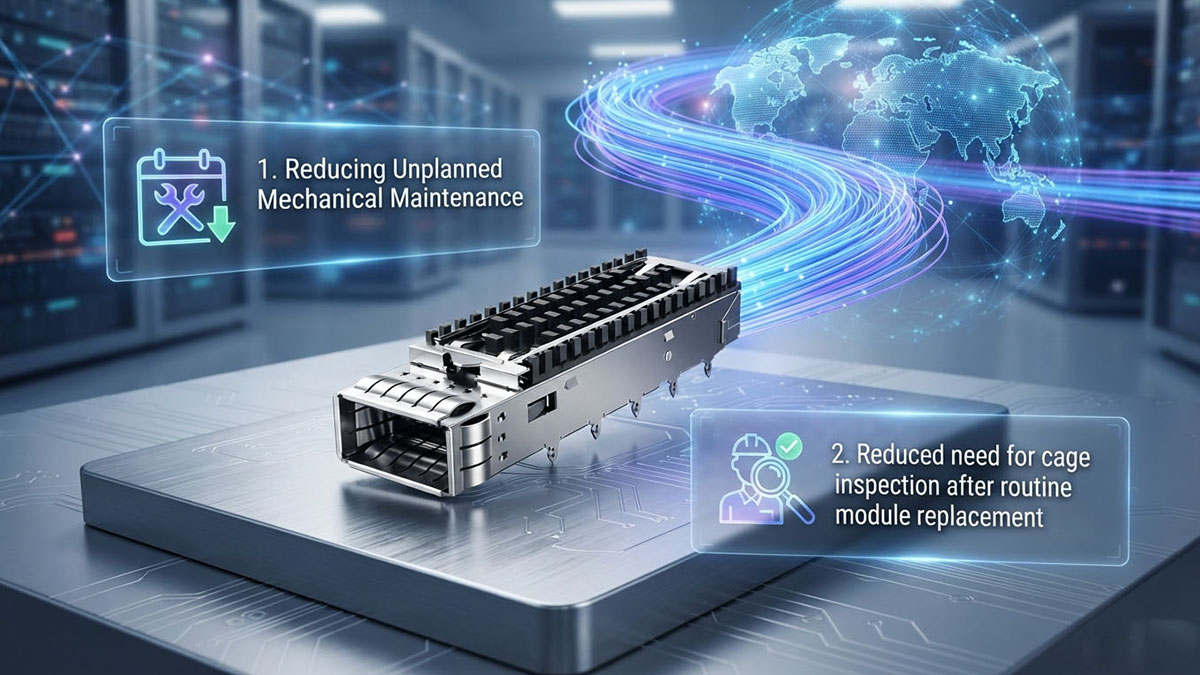
Μείωση της μη προγραμματισμένης μηχανικής συντήρησης
Μια υψηλότερη βαθμολογία κύκλου εισαγωγής μπορεί να προσφέρει μεγαλύτερη ανοχή για επαναλαμβανόμενες εργασίες σέρβις και ενδεχομένως να μειώσει τα μηχανικά προβλήματα που σχετίζονται με τις συχνές αλλαγές πομποδέκτη. Αυτό είναι ιδιαίτερα σημαντικό όταν η τακτική συντήρηση περιλαμβάνει επανειλημμένη πρόσβαση στις ίδιες οπτικές θύρες.
Για τον προγραμματισμό συντήρησης, τα κύρια οφέλη των ανθεκτικών οπτικών κλωβών περιλαμβάνουν:
- Χαμηλότερη έκθεση σε πρόωρη μηχανική φθορά.
- Πιο προβλέψιμη εισαγωγή και εξαγωγή πομποδέκτη.
- Μειωμένη πιθανότητα αντιμετώπισης προβλημάτων που σχετίζονται με το κλουβί κατά τη διάρκεια της τακτικής συντήρησης.
- Λιγότερες απροσδόκητες μηχανικές επιθεωρήσεις σε θύρες που χρησιμοποιούνται έντονα.
- Μεγαλύτερη αυτοπεποίθηση κατά τον προγραμματισμό επαναλαμβανόμενων δραστηριοτήτων αντικατάστασης μονάδων.
Ωστόσο, η ανθεκτικότητα του κλωβού δεν θα πρέπει να αντιμετωπίζεται ως αυτόνομη εγγύηση διαθεσιμότητας. Ο χρόνος λειτουργίας του δικτύου εξαρτάται επίσης από την αξιοπιστία του πομποδέκτη, τη συνδεσιμότητα οπτικών ινών, τον εξοπλισμό υποδοχής και τις διαδικασίες συντήρησης. Η πρακτική αξία 500+ κύκλων είναι ότι μπορούν να μειώσουν μια πιθανή πηγή έκθεσης σε μηχανική συντήρηση εντός της συνολικής υποδομής.
Υποστήριξη συχνών αναβαθμίσεων δικτύου
Οι συχνές αναβαθμίσεις δικτύου μπορούν να αυξήσουν σημαντικά τον αριθμό των κύκλων εισαγωγής και αφαίρεσης που βιώνουν τα οπτικά κλουβιά. Καθώς η υποδομή του κέντρου δεδομένων εξελίσσεται από τη μία γενιά υλικού δικτύωσης στην άλλη, οι τεχνικοί ενδέχεται να αντικαθιστούν επανειλημμένα μονάδες για να υποστηρίζουν διαφορετικές ταχύτητες, απαιτήσεις εμβέλειας ή οπτικές αρχιτεκτονικές.
Αυτό είναι ιδιαίτερα σημαντικό για περιβάλλοντα που χρησιμοποιούν πολλαπλές γενιές οπτικών πομποδεκτών, όπως:
- Ανάπτυξη 10G SFP+.
- Αναβαθμίσεις δικτύου 25G SFP28.
- Οπτική υποδομή 40G και 100G.
- Αναπτύξεις υψηλότερης ταχύτητας που απαιτούν νεότερους παράγοντες μορφής πομποδέκτη.
- Περιβάλλοντα δοκιμών και επικύρωσης όπου οι ενότητες ανταλλάσσονται επανειλημμένα.
Κάθε αναβάθμιση μπορεί να δημιουργήσει πρόσθετη μηχανική δραστηριότητα ακόμη και όταν ο ίδιος ο εξοπλισμός παραμένει λειτουργικός. Ένα ανθεκτικό κλουβί μπορεί επομένως να παρέχει χρήσιμο μηχανικό χώρο σε πολλαπλούς κύκλους συντήρησης και ανανέωσης, υπό την προϋπόθεση ότι ο πομποδέκτης και ο κλωβός είναι μηχανικά συμβατοί.
Απλοποίηση των ροών εργασίας των τεχνικών
Η συνεπής μηχανική συμπεριφορά μπορεί να διευκολύνει τη διαχείριση της τακτικής συντήρησης του πομποδέκτη, ειδικά σε racks υψηλής πυκνότητας όπου οι τεχνικοί μπορεί να χρειαστεί να αντικαταστήσουν πολλές μονάδες κατά τη διάρκεια ενός μόνο παραθύρου συντήρησης. Ένας ανθεκτικός οπτικός κλωβός θα πρέπει να διατηρεί προβλέψιμα χαρακτηριστικά συγκράτησης, ευθυγράμμισης και εισαγωγής σε όλες τις επαναλαμβανόμενες λειτουργίες συντήρησης.
Πρακτικά οφέλη ροής εργασίας μπορεί να περιλαμβάνουν:
- Πιο συνεπής εισαγωγή και εξαγωγή λειτουργικών μονάδων.
- Μειωμένη ανάγκη διερεύνησης της μη φυσιολογικής συμπεριφοράς του κλουβιού.
- Ευκολότερη αναγνώριση γνήσιων σφαλμάτων πομποδέκτη ή συνδεσιμότητας.
- Λιγότερες διακοπές που σχετίζονται με το κλουβί κατά τη διάρκεια της προγραμματισμένης συντήρησης.
- Πιο προβλέψιμος χρόνος σέρβις για επαναλαμβανόμενες αλλαγές μονάδων.
Για αυτόν τον λόγο, οι ομάδες συντήρησης θα πρέπει να λαμβάνουν υπόψη τη διάρκεια του κύκλου εισαγωγής κατά την ανάπτυξη μακροπρόθεσμων διαδικασιών σέρβις. Ένας οπτικός κλωβός 500+ κύκλων δεν εξαλείφει την ανάγκη για επιθεώρηση ή σωστό χειρισμό, αλλά μπορεί να παρέχει μια ισχυρότερη μηχανική βάση για κέντρα δεδομένων όπου η επαναλαμβανόμενη συντήρηση πομποδεκτών αποτελεί μέρος των κανονικών λειτουργιών.
📝 Πώς μεταφράζεται η διάρκεια ζωής άνω των 500 κύκλων σε μακροπρόθεσμη εξοικονόμηση λειτουργικών εξόδων;
Μια βαθμολογία κύκλου εισαγωγής 500+ μπορεί να συμβάλει σε μακροπρόθεσμη εξοικονόμηση λειτουργικών εξόδων (OPEX) όταν η υψηλότερη μηχανική αντοχή μειώνει το φόρτο εργασίας συντήρησης, αντικατάστασης και τεχνικού που σχετίζεται με το κλουβί κατά τη διάρκεια του κύκλου ζωής ανάπτυξης. Η πραγματική εξοικονόμηση εξαρτάται από τον αριθμό των θυρών, τη συχνότητα λειτουργίας του πομποδέκτη, το κόστος εργασίας και τις συνέπειες πρόσθετων συμβάντων συντήρησης, επομένως η διάρκεια ζωής του κύκλου θα πρέπει να μετατρέπεται σε λειτουργικό αντίκτυπο και όχι να αντιμετωπίζεται ως άμεση αξία σε δολάρια.
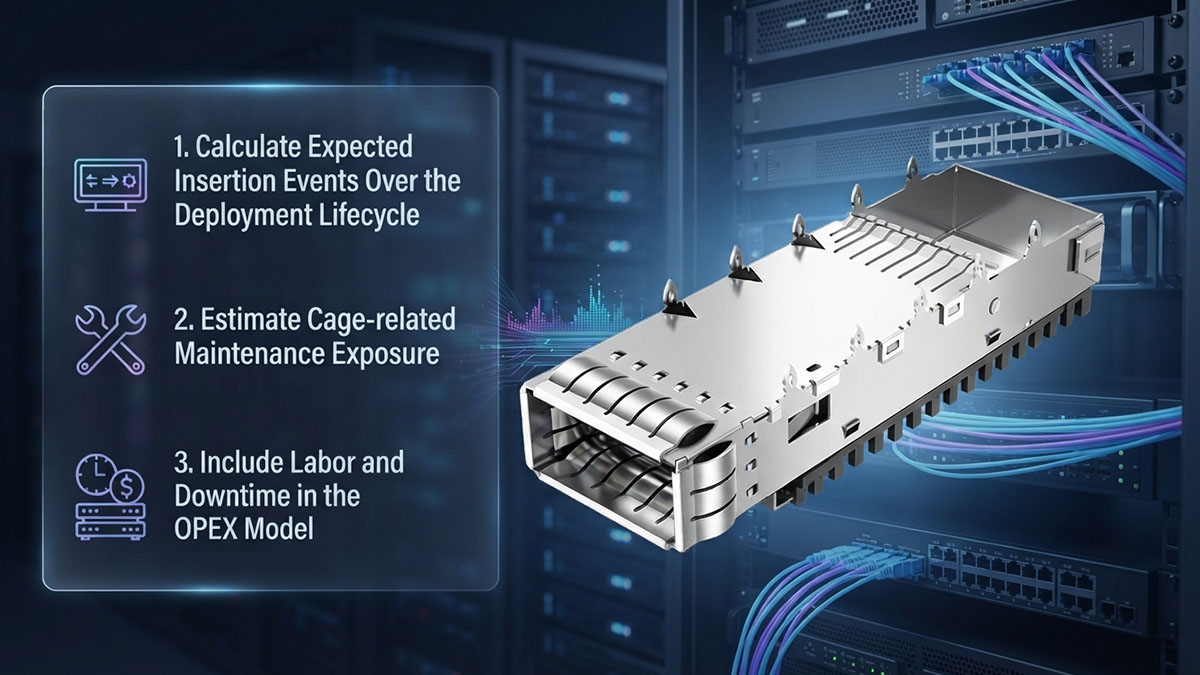
Υπολογισμός αναμενόμενων συμβάντων εισαγωγής κατά τη διάρκεια του κύκλου ζωής ανάπτυξης
Το πρώτο βήμα είναι να εκτιμηθεί πόσα συμβάντα εισαγωγής και αφαίρεσης είναι πιθανό να υποστεί κάθε οπτικός κλωβός. Αυτό καθορίζει εάν το αναμενόμενο φόρτο εργασίας είναι αρκετά χαμηλό ώστε ο κύκλος ζωής να έχει μικρή οικονομική σημασία ή αρκετά υψηλό ώστε η μηχανική αντοχή να γίνει ένας σημαντικός παράγοντας TCO.
Ένας πρακτικός υπολογισμός θα πρέπει να λάβει υπόψη:
- Αριθμός οπτικών κλωβών: Περισσότερες αναπτυγμένες θύρες δημιουργούν μεγαλύτερο συνολικό αριθμό πιθανών συμβάντων εισαγωγής.
- Συχνότητα αντικατάστασης μονάδας: Οι θύρες με συχνή αντικατάσταση πομποδέκτη καταναλώνουν μηχανικούς κύκλους πιο γρήγορα.
- Δραστηριότητα συντήρησης: Η αντιμετώπιση προβλημάτων, οι δοκιμές και οι αλλαγές στη διαμόρφωση μπορούν να προσθέσουν κύκλους πέρα από τις προγραμματισμένες αντικαταστάσεις.
- Αριθμός συμβάντων εισαγωγής/αφαίρεσης ανά υπηρεσία: Κάθε διαδικασία παροχής υπηρεσιών θα πρέπει να αξιολογείται σύμφωνα με το πραγματικό πρότυπο χειρισμού της.
- Κύκλος ζωής ανάπτυξης: Οι μεγαλύτεροι κύκλοι ζωής των υποδομών παρέχουν περισσότερες ευκαιρίες για σωρευτική μηχανική χρήση.
Μια χρήσιμη εκτίμηση είναι:
Συνολικά συμβάντα εισαγωγής = Αριθμός κλωβών × Συμβάντα σέρβις ανά κλωβό × Συμβάντα εισαγωγής/αφαίρεσης ανά σέρβις
Αυτός ο υπολογισμός βοηθά στον προσδιορισμό της ταχύτητας με την οποία μια ανάπτυξη θα μπορούσε να προσεγγίσει την αναμενόμενη μηχανική χρήση. Επίσης, εμποδίζει τους μηχανικούς να υποθέτουν ότι κάθε θύρα θα βιώσει τον ίδιο αριθμό κύκλων.
Εκτίμηση της έκθεσης σε συντήρηση που σχετίζεται με το κλουβί
Μόλις γίνει γνωστή η αναμενόμενη δραστηριότητα εισαγωγής, το επόμενο βήμα είναι να εκτιμηθεί πώς αυτή η δραστηριότητα θα μπορούσε να μεταφραστεί σε έκθεση σε συντήρηση. Ένας κλωβός με μεγαλύτερη διάρκεια ζωής δεν εξαλείφει αυτόματα το κόστος συντήρησης, αλλά μπορεί να προσφέρει πρόσθετη μηχανική αντοχή όπου οι επαναλαμβανόμενες εργασίες συντήρησης είναι συχνές.
Η αξιολόγηση μπορεί να περιλαμβάνει:
- Εντοπίστε θύρες υψηλού κύκλου λειτουργίας που υποβάλλονται σε συχνή αντικατάσταση ή αντιμετώπιση προβλημάτων μονάδων.
- Εκτιμήστε την ετήσια δραστηριότητα εισαγωγής για αυτές τις θύρες.
- Συγκρίνετε την αναμενόμενη χρήση με την βαθμολογία 500+ κύκλων.
- Εκτιμήστε πιθανά συμβάντα επιθεώρησης ή αντικατάστασης που σχετίζονται με το κλουβί.
- Υπολογίστε τον χρόνο του τεχνικού που σχετίζεται με κάθε πρόσθετο συμβάν σέρβις.
- Συγκρίνετε την προκύπτουσα έκθεση συντήρησης σε όλο τον αναμενόμενο κύκλο ζωής του εξοπλισμού.
Αυτή η προσέγγιση είναι πιο χρήσιμη από την απλή υπόθεση ότι ένας κλωβός 500+ κύκλων θα παράγει ένα σταθερό ποσοστό εξοικονόμησης λειτουργικών εξόδων. Το οικονομικό όφελος εξαρτάται από το πόσο έντονα χρησιμοποιείται στην πραγματικότητα ο κλωβός.
Συμπερίληψη Εργασίας και Χρόνου Διακοπής Λειτουργίας στο Μοντέλο OPEX
Η εργασία και ο χρόνος διακοπής λειτουργίας μπορούν να κάνουν την ανθεκτικότητα του κλωβού οικονομικά σημαντική, επειδή το άμεσο κόστος των εξαρτημάτων είναι μόνο ένα μέρος ενός συμβάντος συντήρησης. Όταν ένα πρόβλημα που σχετίζεται με τον κλωβό απαιτεί πρόσθετη φυσική παρέμβαση, το προκύπτον λειτουργικό κόστος μπορεί να περιλαμβάνει τόσο τους τεχνικούς πόρους όσο και την έκθεση σε διακοπές λειτουργίας.
Ένα μακροπρόθεσμο μοντέλο λειτουργικών εξόδων (OPEX) θα πρέπει επομένως να λαμβάνει υπόψη:
- Ωριαίες αμοιβές τεχνικού.
- Μέσος χρόνος που απαιτείται για κάθε παρέμβαση παροχής υπηρεσιών.
- Πρόσβαση σε ράφια και προετοιμασία συντήρησης.
- Διαγνωστική και επικύρωση μετά τη συντήρηση.
- Χειρισμός ανταλλακτικών εξαρτημάτων.
- Πιθανή διακοπή της υπηρεσίας ή επίπτωση στην κυκλοφορία.
- Κόστος κλιμάκωσης όταν ένα μηχανικό πρόβλημα επηρεάζει ένα μεγαλύτερο συγκρότημα υλικού.
Για παράδειγμα, εάν μια ανάπτυξη υψηλής πυκνότητας παράγει χιλιάδες συμβάντα σέρβις πομποδέκτη κατά τη διάρκεια του κύκλου ζωής της, ακόμη και μια μικρή μείωση στην παρέμβαση που σχετίζεται με το κλουβί μπορεί να μειώσει το σωρευτικό φόρτο εργασίας του τεχνικού. Επομένως, το ισχυρότερο οικονομικό επιχείρημα για την ανθεκτικότητα του οπτικού κλωβού 500+ κύκλων προκύπτει όταν συνυπάρχουν συχνός χειρισμός πομποδέκτη, μεγάλος αριθμός θυρών και σημαντικό κόστος συντήρησης.
📝 Πώς πρέπει οι μηχανικοί να αξιολογούν την ανθεκτικότητα του κλωβού για το συνολικό κόστος ιδιοκτησίας (TCO);
Οι μηχανικοί θα πρέπει να αξιολογούν την ανθεκτικότητα του οπτικού κλωβού για το TCO συγκρίνοντας την ονομαστική διάρκεια ζωής του κύκλου εισαγωγής του κλωβού με την πραγματική συχνότητα χειρισμού του πομποδέκτη, τον μηχανικό σχεδιασμό, τις συνθήκες λειτουργίας και το αναμενόμενο κόστος συντήρησης. Μια βαθμολογία κύκλων 500+ είναι πιο πολύτιμη όταν ταιριάζει με το φόρτο εργασίας της ανάπτυξης και δεν αντιπροσωπεύει απλώς την υψηλότερη διαθέσιμη προδιαγραφή ανθεκτικότητας.
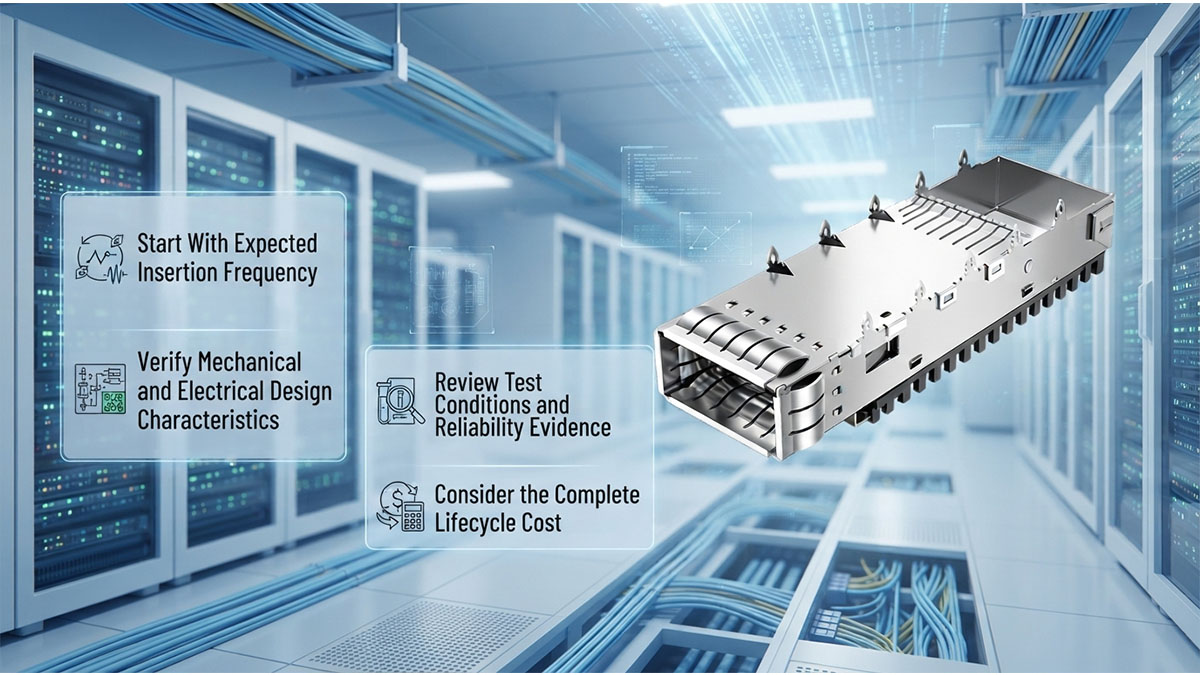
Ξεκινήστε με την αναμενόμενη συχνότητα εισαγωγής
Η αναμενόμενη συχνότητα εισαγωγής θα πρέπει να είναι το σημείο εκκίνησης, επειδή η οικονομική αξία του κύκλου ζωής εξαρτάται άμεσα από το πόσο συχνά ο οπτικός κλωβός υποβάλλεται σε μηχανικούς κύκλους. Μια θύρα που σπάνια αλλάζει μονάδες έχει πολύ διαφορετικές απαιτήσεις ανθεκτικότητας από μια θύρα που χρησιμοποιείται για συχνές αναβαθμίσεις ή δοκιμές.
Οι μηχανικοί θα πρέπει να εκτιμήσουν:
- Μέσος όρος αντικατάστασης πομποδέκτη ανά έτος.
- Δραστηριότητες αντιμετώπισης προβλημάτων και διάγνωσης.
- Προγραμματισμένη συχνότητα αναβάθμισης δικτύου.
- Διαστήματα ανανέωσης υλικού.
- Προσωρινές ανταλλαγές μονάδων κατά τη διάρκεια των δοκιμών.
- Αναμενόμενος αριθμός συμβάντων εισαγωγής και αφαίρεσης ανά δραστηριότητα υπηρεσίας.
Αυτό το προφίλ χρήσης μπορεί στη συνέχεια να συγκριθεί με την αξιολόγηση διάρκειας ζωής 500+ κύκλων για να προσδιοριστεί εάν ο κλωβός διαθέτει επαρκή μηχανικό χώρο για τον αναμενόμενο κύκλο ζωής ανάπτυξης.
Επαλήθευση Μηχανικών και Ηλεκτρικών Χαρακτηριστικών Σχεδιασμού
Η διάρκεια ζωής του κύκλου θα πρέπει να αξιολογείται σε συνδυασμό με τη φυσική κατασκευή και τα χαρακτηριστικά διεπαφής του οπτικού κλωβού. Μια υψηλή βαθμολογία κύκλου έχει περιορισμένη αξία εάν άλλες πτυχές του συγκροτήματος του κλωβού δεν ταιριάζουν σωστά με το σύστημα υποδοχής ή τον προβλεπόμενο πομποδέκτη.
Βασικά χαρακτηριστικά προς αξιολόγηση περιλαμβάνουν:
- Κατασκευή και υλικό κλουβιού.
- Μηχανισμός συγκράτησης.
- Δομή θωράκισης EMI.
- Μέθοδος σύνδεσης PCB.
- Χαρακτηριστικά ευθυγράμμισης.
- Συμβατότητα με τον προβλεπόμενο συντελεστή μορφής οπτικής μονάδας.
- Μηχανικές ανοχές.
Αυτά τα χαρακτηριστικά μπορούν να επηρεάσουν τη συνέπεια της απόδοσης του κλωβού κατά τον επαναλαμβανόμενο χειρισμό των μονάδων. Επομένως, οι μηχανικοί θα πρέπει να λαμβάνουν υπόψη τον κύκλο ζωής ως μέρος του πλήρους μηχανολογικού και ηλεκτρικού σχεδιασμού και όχι ως μεμονωμένη προδιαγραφή.
Ανασκόπηση Συνθηκών Δοκιμής και Αποδεικτικών Στοιχείων Αξιοπιστίας
Η σημασία μιας αξιολόγησης 500+ κύκλων εξαρτάται από τον τρόπο διεξαγωγής της δοκιμής ανθεκτικότητας. Οι μηχανικοί θα πρέπει να εξετάσουν τις ισχύουσες συνθήκες δοκιμής και την τεκμηρίωση του κατασκευαστή πριν χρησιμοποιήσουν την αξιολόγηση ως βάση για μακροπρόθεσμες υποθέσεις TCO.
Σημαντικά ερωτήματα περιλαμβάνουν:
- Ποια διαδικασία εισαγωγής και εξαγωγής χρησιμοποιήθηκε κατά τη διάρκεια της δοκιμής;
- Ποιες μηχανικές συνθήκες και ανοχές εφαρμόστηκαν;
- Ποια κριτήρια απόδοσης αξιολογήθηκαν μετά την ποδηλασία;
- Διεξήχθησαν οι δοκιμές υπό συνθήκες αντιπροσωπευτικές της προβλεπόμενης ανάπτυξης;
- Ποιες ισχύουσες προδιαγραφές ή διαδικασίες πιστοποίησης του κλάδου χρησιμοποιήθηκαν;
Αυτή η διάκριση έχει σημασία επειδή τα προσόντα του εργαστηρίου και η αξιοπιστία στο πεδίο δεν είναι πανομοιότυπα. Ο χειρισμός σε πραγματικές συνθήκες, η μόλυνση, οι κραδασμοί, οι διακυμάνσεις της θερμοκρασίας και η ακατάλληλη τοποθέτηση μπορούν να επηρεάσουν την πραγματική απόδοση του κλωβού.
Λάβετε υπόψη το πλήρες κόστος κύκλου ζωής
Η τελική αξιολόγηση θα πρέπει να συνδέει τη μηχανική ανθεκτικότητα με τις οικονομικές συνέπειες της συντήρησης της υποδομής. Ένας κλωβός δεν θα πρέπει να κρίνεται αποκλειστικά από το αρχικό κόστος των εξαρτημάτων του ή τον ονομαστικό αριθμό κύκλων λειτουργίας του.
Μια πλήρης αξιολόγηση του Συνολικού Κινδύνου (TCO) θα πρέπει να λαμβάνει υπόψη:
- Αρχικό κόστος κλουβιού ή συναρμολόγησης κλουβιού.
- Αναμενόμενη συχνότητα συντήρησης.
- Απαιτήσεις εργασίας τεχνικού.
- Πιθανή έκθεση σε αντικατάσταση κλουβιού.
- Απαιτήσεις για εφεδρικό απόθεμα.
- Κίνδυνος διακοπής της υπηρεσίας.
- Προγραμματισμένοι κύκλοι ανανέωσης δικτύου.
- Αναμενόμενο τέλος κύκλου ζωής εξοπλισμού.
Όταν αυτοί οι παράγοντες λαμβάνονται υπόψη από κοινού, οι μηχανικοί μπορούν να προσδιορίσουν εάν η ανθεκτικότητα των 500+ κύκλων παρέχει ουσιαστική αξία κύκλου ζωής. Ο στόχος δεν είναι απλώς να επιλεγεί ο κλωβός με την υψηλότερη βαθμολογία κύκλου, αλλά να προσδιοριστεί ένα επίπεδο ανθεκτικότητας που ελαχιστοποιεί τη συνολική λειτουργική έκθεση, παραμένοντας παράλληλα κατάλληλο για το πραγματικό προφίλ υπηρεσιών του κέντρου δεδομένων.
📝 Πώς πρέπει να ενσωματωθεί η διάρκεια ζωής άνω των 500 κύκλων σε ένα μοντέλο TCO κέντρου δεδομένων;
Μια αξιολόγηση κύκλου εισαγωγής άνω των 500 θα πρέπει να ενσωματωθεί στο μοντέλο TCO ενός κέντρου δεδομένων, μετατρέποντας τη μηχανική αντοχή σε μετρήσιμες μεταβλητές του κύκλου ζωής, όπως η συχνότητα εισαγωγής, η εργασία συντήρησης, η έκθεση στην αντικατάσταση και ο αντίκτυπος στην υπηρεσία. Στόχος είναι να προσδιοριστεί εάν η αναμενόμενη μηχανική διάρκεια ζωής του κλωβού είναι επαρκής για την ανάπτυξη και εάν η ανθεκτικότητά του μπορεί να μειώσει το επαναλαμβανόμενο λειτουργικό κόστος.
Δημιουργήστε ένα μοντέλο κόστους σε επίπεδο θύρας
Ένα μοντέλο σε επίπεδο θύρας παρέχει το πιο πρακτικό σημείο εκκίνησης, επειδή η χρήση του οπτικού κλωβού λαμβάνει χώρα στη διεπαφή του κάθε πομποδέκτη. Οι μηχανικοί μπορούν να εκτιμήσουν τον αναμενόμενο αριθμό συμβάντων σέρβις για κάθε θύρα και στη συνέχεια να προσδιορίσουν πώς αυτά τα συμβάντα συμβάλλουν στην κατανάλωση του μηχανικού κύκλου και στην πιθανή έκθεση σε συντήρηση.
Το μοντέλο θα πρέπει να λαμβάνει υπόψη:
- Αριθμός περιστατικών εισαγωγής και αφαίρεσης ανά έτος.
- Αναμενόμενη συχνότητα αντικατάστασης πομποδέκτη.
- Δραστηριότητα αντιμετώπισης προβλημάτων και δοκιμών.
- Αναμενόμενη περίοδος υπηρεσίας.
- Εργασία τεχνικού ανά συμβάν συντήρησης.
- Πιθανές απαιτήσεις επιθεώρησης ή αντικατάστασης κλουβιού.
Για παράδειγμα, οι μηχανικοί μπορούν πρώτα να εκτιμήσουν την ετήσια μηχανική χρήση:
Ετήσια συμβάντα εισαγωγής ανά θύρα = Ετήσια συμβάντα σέρβις × Συμβάντα εισαγωγής/αφαίρεσης ανά σέρβις
Το προκύπτον ποσό μπορεί στη συνέχεια να συγκριθεί με την αξιολόγηση κύκλων 500+. Αυτό δεν προβλέπει ένα ακριβές σημείο αστοχίας, αλλά βοηθά στον προσδιορισμό του εάν μια θύρα αναμένεται να παρουσιάσει σχετικά χαμηλή, μέτρια ή εντατική μηχανική χρήση κατά τη διάρκεια του κύκλου ζωής της.
Κλιμάκωση του μοντέλου από λιμάνι σε εγκατάσταση
Αφού καθοριστεί το προφίλ κόστους μιας μεμονωμένης θύρας, η ίδια μεθοδολογία μπορεί να επεκταθεί σε racks, σειρές και ολόκληρο το κέντρο δεδομένων. Αυτό το βήμα κλιμάκωσης είναι σημαντικό επειδή μια μικρή διαφορά κόστους σε ένα οπτικό κλουβί μπορεί να γίνει σημαντική όταν πολλαπλασιαστεί σε χιλιάδες θύρες.
Ένα μοντέλο Συνολικού Κόστους Κινδύνου (TCO) σε επίπεδο εγκατάστασης θα πρέπει να λαμβάνει υπόψη:
- Επίπεδο λιμένα: Αναμενόμενη δραστηριότητα εισαγωγής και έκθεση σε συντήρηση για ένα κλουβί.
- Επίπεδο ραφιού: Συνολικές απαιτήσεις υπηρεσιών σε όλο τον πυκνοκατοικημένο εξοπλισμό δικτύου.
- Επίπεδο γραμμής: Συνδυασμένη εργασία και έκθεση σε αντικατάσταση σε πολλαπλά ράφια.
- Επίπεδο κέντρου δεδομένων: Συνολική συντήρηση κύκλου ζωής και λειτουργικός αντίκτυπος σε όλη την ανάπτυξη.
Αυτή η προσέγγιση βοηθά στην αποκάλυψη των σημείων όπου η ανθεκτικότητα του κλωβού έχει τη μεγαλύτερη σημασία. Ένας οπτικός κλωβός 500+ κύκλων μπορεί να έχει περιορισμένη οικονομική σημασία σε μια μικρή, σταθερή ανάπτυξη, αλλά το ίδιο χαρακτηριστικό ανθεκτικότητας μπορεί να γίνει πολύ πιο σημαντικό όταν χιλιάδες θύρες αντιμετωπίζουν συχνή αντικατάσταση πομποδεκτών και αναβαθμίσεις δικτύου.
Χρησιμοποιήστε την Ανάλυση Ευαισθησίας για Μακροπρόθεσμο Σχεδιασμό
Η ανάλυση ευαισθησίας βοηθά τους μηχανικούς να κατανοήσουν πώς οι αλλαγές στις λειτουργικές παραδοχές μπορούν να επηρεάσουν την τιμή TCO (Συνολικού Κύκλου Συνολικού Έτους) της ανθεκτικότητας του οπτικού κλωβού. Επειδή η πραγματική συχνότητα εισαγωγής και το κόστος συντήρησης ποικίλλουν μεταξύ των εγκαταστάσεων, μια ενιαία σταθερή εκτίμηση ενδέχεται να μην αντιπροσωπεύει με ακρίβεια τις μακροπρόθεσμες συνθήκες λειτουργίας.
Το μοντέλο θα πρέπει να δοκιμάζει σενάρια στα οποία:
- Η συχνότητα αντικατάστασης της μονάδας αυξάνεται: Η συχνότερη συντήρηση καταναλώνει ταχύτερα μηχανικούς κύκλους και μπορεί να αυξήσει την απαιτούμενη συντήρηση.
- Αύξηση του κόστους εργασίας των τεχνικών: Κάθε επιπλέον συμβάν σέρβις που σχετίζεται με τον κλωβό έχει μεγαλύτερο αντίκτυπο στις λειτουργικές δαπάνες (OPEX).
- Αύξηση αριθμού θυρών: Τα περισσότερα αναπτυγμένα κλουβιά αυξάνουν τον συνολικό αριθμό πιθανών συμβάντων εισαγωγής.
- Τα διαστήματα ανανέωσης υποδομής μειώνονται: Οι συχνότερες αναβαθμίσεις δημιουργούν πρόσθετο χειρισμό του πομποδέκτη.
- Αλλαγή στις τιμές αντικατάστασης κλουβιών: Η υψηλότερη έκθεση σε αντικατάσταση αυξάνει το κόστος υλικού και εργασίας κατά τον κύκλο ζωής του.
- Αύξηση του κόστους διακοπής υπηρεσιών: Οι μηχανικές εργασίες συντήρησης μπορούν να αποκτήσουν μεγαλύτερη οικονομική σημασία όταν οι απαιτήσεις διαθεσιμότητας είναι αυστηρότερες.
Αυτή η ανάλυση καθιστά το μοντέλο TCO πιο ρεαλιστικό, επειδή δείχνει πότε η ανθεκτικότητα 500+ κύκλων έχει ουσιαστική οικονομική επίδραση και πότε η συμβολή της είναι σχετικά μικρή.
📝 Πώς να επιλέξετε ένα οπτικό κλουβί με βάση την ανθεκτικότητα και το συνολικό κόστος ιδιοκτησίας;
Οι μηχανικοί θα πρέπει να επιλέξουν έναν οπτικό κλωβό αντιστοιχίζοντας τη διάρκεια ζωής του κύκλου εισαγωγής και τα μηχανικά χαρακτηριστικά του με το αναμενόμενο προφίλ εξυπηρέτησης, το περιβάλλον και το κόστος κύκλου ζωής του κέντρου δεδομένων. Μια βαθμολογία κύκλου 500+ μπορεί να είναι πολύτιμη για θύρες που συντηρούνται συχνά, αλλά η καλύτερη επιλογή δεν είναι απαραίτητα ο κλωβός με την υψηλότερη βαθμολογία κύκλου. Είναι ο κλωβός που παρέχει επαρκή ανθεκτικότητα χωρίς να δημιουργεί περιττές προδιαγραφές ή επιβάρυνση κόστους.
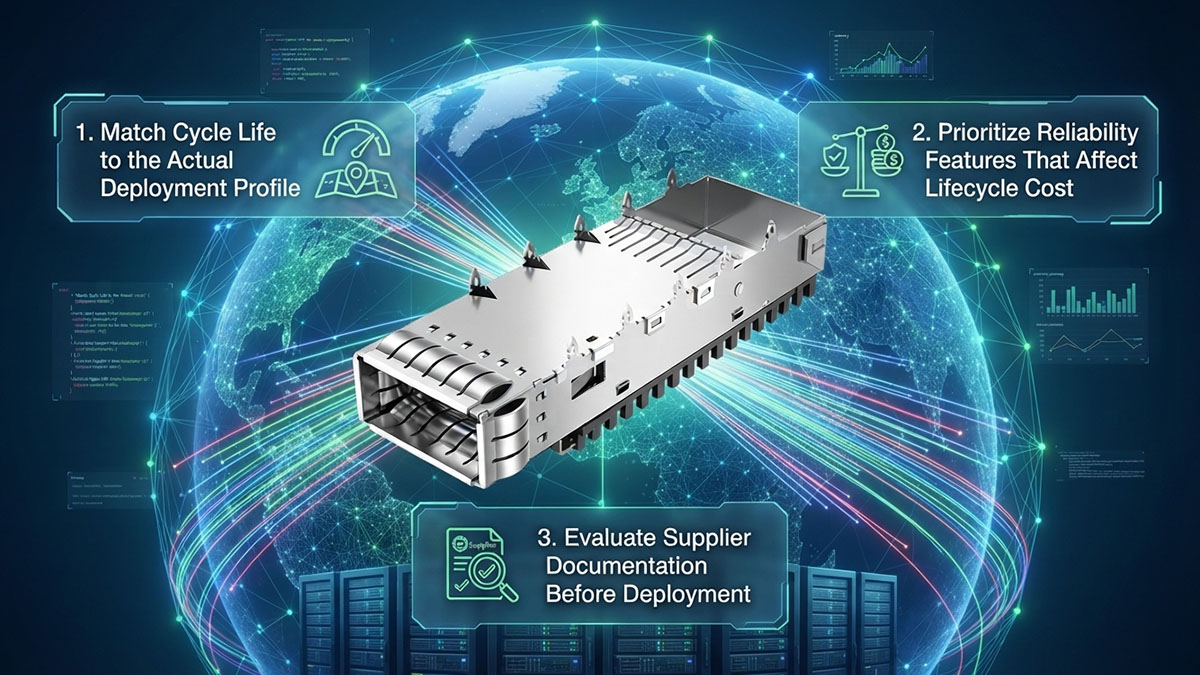
Αντιστοίχιση διάρκειας ζωής με το πραγματικό προφίλ ανάπτυξης
Η απαιτούμενη ανθεκτικότητα του κλωβού θα πρέπει να αντικατοπτρίζει τη συχνότητα εισαγωγής και αφαίρεσης οπτικών πομποδεκτών καθ' όλη τη διάρκεια του κύκλου ζωής της υποδομής. Διαφορετικά περιβάλλοντα μπορούν να παράγουν σημαντικά διαφορετικά μηχανικά φόρτα εργασίας.
Οι μηχανικοί θα πρέπει να διακρίνουν μεταξύ:
- Δίκτυα παραγωγής χαμηλής αλλαγής: Οι οπτικές μονάδες ενδέχεται να παραμείνουν εγκατεστημένες για μεγάλα χρονικά διαστήματα, επομένως η ζήτηση κύκλου εισαγωγής είναι σχετικά περιορισμένη.
- Εταιρικά δίκτυα υψηλής αλλαγής: Οι περιοδικές αναβαθμίσεις, η αντιμετώπιση προβλημάτων και οι αλλαγές εξοπλισμού μπορούν να οδηγήσουν σε πιο συχνό χειρισμό μονάδων.
- Υποδομή συστέγασης: Πολλαπλοί μισθωτές και οι μεταβαλλόμενες διαμορφώσεις δικτύου μπορούν να αυξήσουν τη δραστηριότητα εξυπηρέτησης.
- Υπερκλιμακικά περιβάλλοντα: Ο μεγάλος αριθμός λιμένων και η συνεχής επέκταση των υποδομών μπορούν να δημιουργήσουν σημαντική δραστηριότητα εισαγωγής αδρανών υλικών.
- Πλατφόρμες δοκιμών και ανάπτυξης: Οι επαναλαμβανόμενες ανταλλαγές μονάδων μπορούν να δημιουργήσουν εξαιρετικά υψηλό αριθμό κύκλων σε σύγκριση με σταθερά περιβάλλοντα παραγωγής.
Αυτό το προφίλ ανάπτυξης παρέχει τη βάση για τον προσδιορισμό του κατά πόσον 500+ κύκλοι εισαγωγής παρέχουν επαρκές μηχανικό ύψος. Οι μηχανικοί θα πρέπει πρώτα να εκτιμήσουν την αναμενόμενη χρήση και στη συνέχεια να τη συγκρίνουν με την ονομαστική ανθεκτικότητα του κλωβού.
Δώστε προτεραιότητα σε χαρακτηριστικά αξιοπιστίας που επηρεάζουν το κόστος κύκλου ζωής
Η διάρκεια ζωής του κύκλου εισαγωγής θα πρέπει να αξιολογείται παράλληλα με τα μηχανικά και ηλεκτρικά χαρακτηριστικά που καθορίζουν την αξιοπιστία της απόδοσης του κλωβού κατά τη διάρκεια επαναλαμβανόμενων εργασιών σέρβις. Η εστίαση μόνο στον αριθμό των κύκλων μπορεί να παραβλέψει άλλους παράγοντες που επηρεάζουν την έκθεση στη συντήρηση.
Τα πιο σχετικά χαρακτηριστικά περιλαμβάνουν:
- Μηχανική αντοχή και αξιολόγηση κύκλου εισαγωγής.
- Σταθερή συγκράτηση πομποδέκτη.
- Συνεπής ευθυγράμμιση μονάδων.
- Αξιόπιστη ακεραιότητα θωράκισης EMI.
- Ανθεκτική σύνδεση PCB.
- Συμβατότητα με τον προβλεπόμενο τύπο πομποδέκτη.
- Κατάλληλες μηχανικές ανοχές.
Αυτά τα χαρακτηριστικά συνεργάζονται για να καθορίσουν τη μακροπρόθεσμη λειτουργικότητα του κλωβού. Μια βαθμολογία κύκλων λειτουργίας 500+ έχει μεγαλύτερη πρακτική αξία όταν το πλήρες συγκρότημα κλωβού μπορεί να διατηρήσει σταθερά μηχανικά και ηλεκτρικά χαρακτηριστικά υπό τις αναμενόμενες συνθήκες λειτουργίας.
Αξιολόγηση της τεκμηρίωσης του προμηθευτή πριν από την ανάπτυξη
Η τεκμηρίωση του προμηθευτή θα πρέπει να ελέγχεται πριν από την ανάπτυξη, ώστε η δηλωμένη βαθμολογία ανθεκτικότητας να μπορεί να συνδεθεί με τις πραγματικές απαιτήσεις του συστήματος. Οι μηχανικοί χρειάζονται αρκετές τεχνικές πληροφορίες για να διακρίνουν μια ουσιαστική προδιαγραφή αξιοπιστίας από μια ονομαστική τιμή αριθμού κύκλων.
Πριν επιλέξετε ένα οπτικό κλουβί, επαληθεύστε:
- Ονομαστική διάρκεια ζωής κύκλου εισαγωγής.
- Μηχανικές προδιαγραφές και πληροφορίες διαστάσεων.
- Εφαρμοστέα πρότυπα και διαδικασίες δοκιμών.
- Μηχανική και ηλεκτρική συμβατότητα με τις προβλεπόμενες οπτικές μονάδες.
- Συνθήκες δοκιμής που σχετίζονται με την αξιολόγηση ανθεκτικότητας.
- Διαθεσιμότητα τεχνικής τεκμηρίωσης και υποστήριξης κύκλου ζωής.
Η τελική απόφαση θα πρέπει να συνδυάζει αυτά τα ευρήματα με την αναμενόμενη συχνότητα εισαγωγής του κέντρου δεδομένων, το κόστος εργασίας, τη στρατηγική συντήρησης και το πρόγραμμα ανανέωσης της υποδομής. Όταν αυτοί οι παράγοντες αξιολογούνται μαζί, οι μηχανικοί μπορούν να προσδιορίσουν εάν ένας οπτικός κλωβός 500+ κύκλων παρέχει επαρκή ανθεκτικότητα και σημαντική μακροπρόθεσμη αξία TCO για την προβλεπόμενη ανάπτυξη.
📝 Συμπέρασμα
Ένας κύκλος ζωής εισαγωγής κλωβού άνω των 500 μπορεί να συμβάλει στη μείωση των μακροπρόθεσμων λειτουργικών εξόδων (OPEX) του κέντρου δεδομένων, βελτιώνοντας τη μηχανική αντοχή κατά την επαναλαμβανόμενη εγκατάσταση, αφαίρεση και συντήρηση οπτικών πομποδεκτών. Η πραγματική επίπτωση στο συνολικό κόστος ιδιοκτησίας (TCO) εξαρτάται από τη συχνότητα εισαγωγής, την πυκνότητα θυρών, την εργασία του τεχνικού, τις απαιτήσεις συντήρησης και το πιθανό κόστος διακοπών της υπηρεσίας. Επομένως, η διάρκεια ζωής του κύκλου ζωής του κλωβού θα πρέπει να αξιολογείται ως μέρος ενός πλήρους μοντέλου αξιοπιστίας και κόστους κύκλου ζωής και όχι ως μεμονωμένη προδιαγραφή.
Οι βασικές σκέψεις είναι:
- 500+ κύκλοι υποδεικνύουν μηχανική αντοχή για επαναλαμβανόμενο χειρισμό του πομποδέκτη υπό καθορισμένες συνθήκες.
- Η μεγαλύτερη διάρκεια ζωής μπορεί να μειώσει την έκθεση σε συντήρηση και αντικατάσταση που σχετίζονται με το κλουβί.
- Τα κέντρα δεδομένων υψηλής πυκνότητας και τα κέντρα δεδομένων που αναβαθμίζονται συχνά δίνουν γενικά μεγαλύτερη αξία στη μηχανική ανθεκτικότητα.
- Οι σωστές πρακτικές εισαγωγής και εξαγωγής παραμένουν απαραίτητες για την επίτευξη της αναμενόμενης αξιοπιστίας του κλωβού.
- Η ανάλυση του συνολικού κόστους ιδιοκτησίας (TCO) θα πρέπει να περιλαμβάνει ζητήματα εργασίας, αντικατάστασης, εφεδρικού αποθέματος και αντίκτυπου στην υπηρεσία.
Για τους μηχανικούς που σχεδιάζουν αξιόπιστη οπτική υποδομή, ο κατάλληλος κλωβός είναι αυτός που εξισορροπεί τη μηχανική αντοχή με τις πραγματικές απαιτήσεις ανάπτυξης και το μακροπρόθεσμο λειτουργικό κόστος. LINK-PP Επίσημο κατάστημα μπορεί να χρησιμεύσει ως πρακτικός πόρος για την εξερεύνηση στοιχείων οπτικής δικτύωσης και την αξιολόγηση συμβατών λύσεων για την ανάπτυξη κέντρων δεδομένων, βοηθώντας τις ομάδες να δημιουργήσουν μια πιο ανθεκτική και οικονομικά προσιτή υποδομή δικτύου.