Network architects and IT administrators rely on accurate hardware documentation when planning, deploying, or maintaining high-speed Ethernet infrastructure. Among the many components used in modern data centers, 40GbE optical transceivers remain an important choice for short-range, high-bandwidth connectivity between switches, servers, and aggregation layers. Understanding a module's datasheet is essential because it provides the technical specifications needed to verify performance, interoperability, environmental limits, and deployment suitability before installation.
The QFX-QSFP-40G-SR4 datasheet serves as a concise technical reference for evaluating this 40GBASE-SR4 QSFP+ optical transceiver. Rather than focusing only on basic specifications, a complete datasheet explains optical transmission characteristics, electrical interfaces, mechanical dimensions, supported standards, and compatibility requirements. Knowing how to interpret these specifications helps reduce deployment risks, improve network reliability, and ensure the module matches existing fiber infrastructure and switch platforms.
This guide examines the most important information found in the datasheet, including:
- An overview of the QFX-QSFP-40G-SR4 module and its key features.
- Optical, electrical, mechanical, and environmental specifications.
- Industry standards, certifications, and interoperability considerations.
- Compatibility requirements and common deployment scenarios.
- Practical guidance for interpreting datasheet parameters accurately.
By the end of this article, you will have a clearer understanding of the specifications that matter most and be better prepared to evaluate whether this module is suitable for your network environment.
✅ QFX-QSFP-40G-SR4 Datasheet Overview
The QFX-QSFP-40G-SR4 datasheet provides a comprehensive overview of the module's core specifications, design characteristics, and intended applications. As a QSFP+ optical transceiver designed for 40GBASE-SR4 Ethernet, it delivers high-speed, short-reach connectivity over multimode fiber (MMF). The datasheet serves as the primary technical reference for verifying compatibility, optical performance, physical characteristics, and operational requirements before deployment.
What Is QFX-QSFP-40G-SR4?
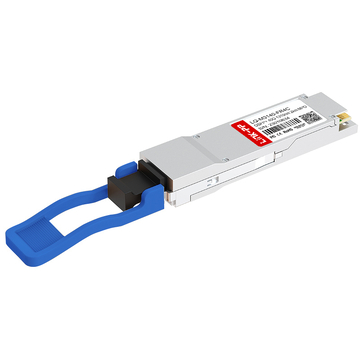
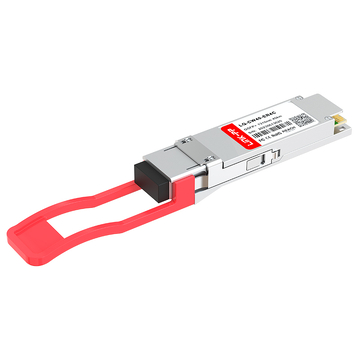
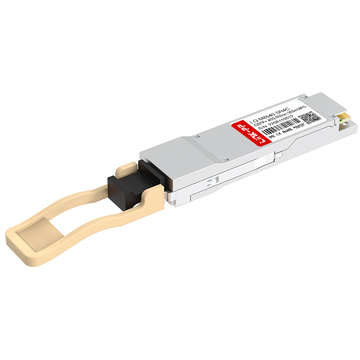
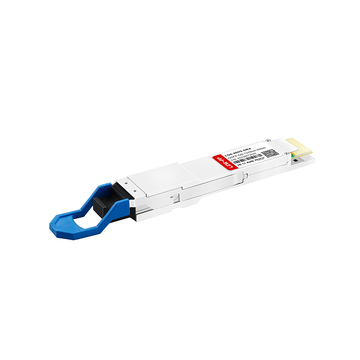
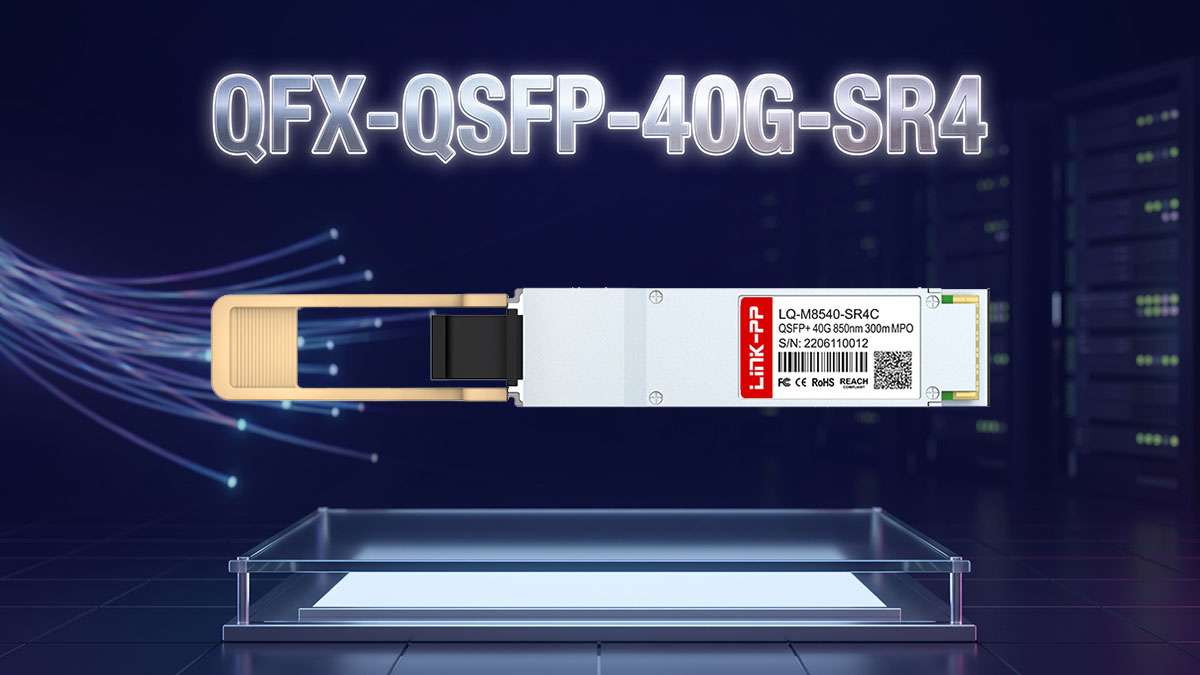
The QFX-QSFP-40G-SR4 is a hot-pluggable 40GbE QSFP+ optical transceiver that supports parallel optical transmission using four independent transmit and four independent receive lanes. It is primarily deployed in enterprise and cloud data centers where high-density, low-latency connections are required between switches and aggregation devices.
Its primary characteristics include:
- Designed for 40GBASE-SR4 Ethernet applications.
- Uses 850nm VCSEL laser technology for multimode fiber transmission.
- Supports MPO-12 optical connectors for parallel fiber communication.
- Delivers up to 40Gbps aggregate bandwidth through four 10Gbps lanes.
- Enables hot-swappable installation without interrupting system operation.
- Commonly deployed with Juniper QFX series switches in high-speed network environments.
These features make the module well suited for short-distance interconnections inside data centers, where bandwidth density and reliable optical performance are critical.
Key Features at a Glance
The datasheet highlights several hardware and operational features that simplify deployment while ensuring stable 40GbE connectivity. Together, these specifications define the module's capabilities and help engineers quickly determine whether it meets their network requirements.
Key features include:
- QSFP+ form factor for high port density.
- 40GBASE-SR4 optical interface.
- Four full-duplex 10Gbps transmission lanes.
- Digital Optical Monitoring (DOM) support for real-time diagnostics.
- MPO-12 optical connector for parallel multimode fiber links.
- Support for OM3 and OM4 multimode fiber cabling.
- Low power consumption suitable for dense switch deployments.
- Compliance with industry-standard QSFP+ specifications for interoperability.
These capabilities allow network operators to simplify installation, monitor optical health, and maintain consistent link performance throughout the module's service life.
Quick Specification Summary Table
The following table summarizes the most frequently referenced specifications from the QFX-QSFP-40G-SR4 datasheet, providing a convenient starting point for evaluating the module.
| Specification | Value |
|---|---|
| Form Factor | QSFP+ |
| Ethernet Standard | 40GBASE-SR4 |
| Aggregate Data Rate | 40Gbps |
| Optical Wavelength | 850nm |
| Optical Connector | MPO-12 |
| Supported Fiber | OM3 / OM4 Multimode Fiber |
| Maximum Transmission Distance | 100m (OM3), 150m (OM4) |
| Optical Monitoring | Digital Optical Monitoring (DOM) |
| Hot-Pluggable | Yes |
The specifications above provide a concise snapshot of the module's hardware capabilities. The following sections examine each category in greater detail, including optical transmission characteristics, electrical interfaces, mechanical specifications, standards compliance, and deployment considerations.
✅ Optical Transmission Specifications
The optical transmission specifications define how the QFX-QSFP-40G-SR4 performs over multimode fiber and determine whether it meets the requirements of a particular network deployment. The datasheet provides detailed information about operating wavelength, optical power levels, transmission distance, and signal quality, allowing engineers to evaluate link performance and design reliable 40GbE connections.
Optical Performance Parameters
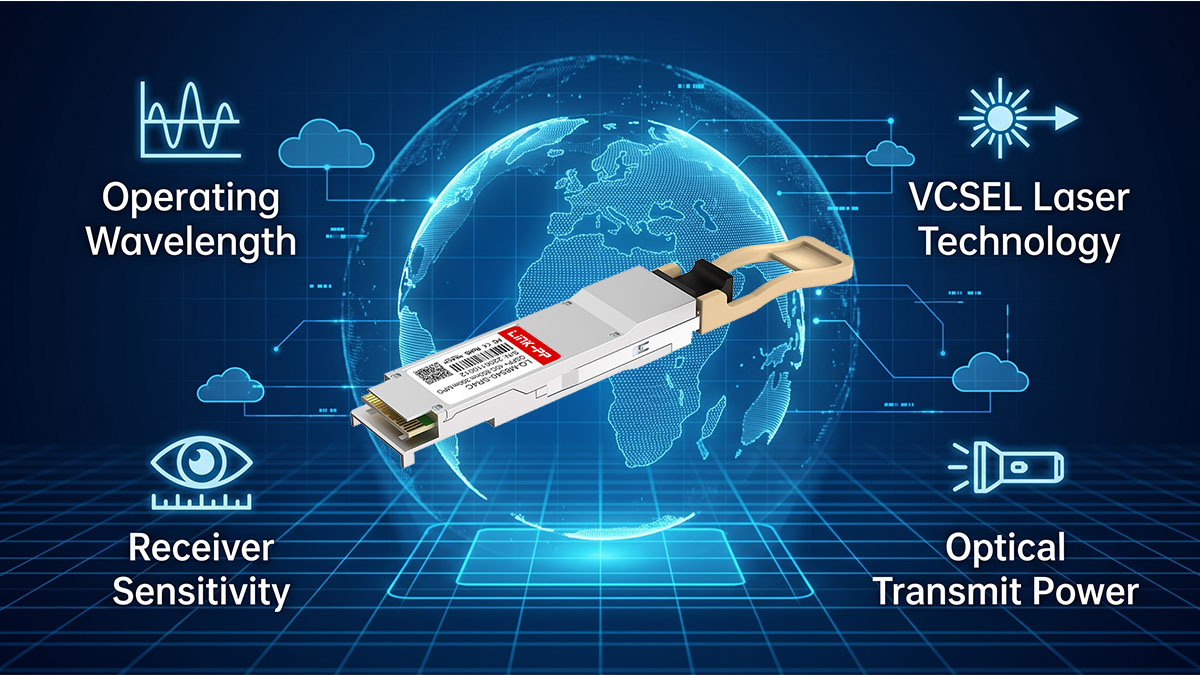
The QFX-QSFP-40G-SR4 uses parallel optical transmission to achieve an aggregate bandwidth of 40Gbps. It incorporates four independent transmit lanes and four receive lanes, with each lane operating at approximately 10.3125Gbps in accordance with the 40GBASE-SR4 standard. The combination of VCSEL laser technology and optimized receiver sensitivity enables stable communication across supported multimode fiber links.
Key optical parameters include:
- Operating wavelength: 850nm VCSEL laser
- Transmission architecture: 4 transmit lanes + 4 receive lanes
- Per-lane signaling rate: 10.3125Gbps
- Aggregate data rate: 40Gbps
- Optical transmit power: Defined within IEEE 802.3ba operating limits
- Receiver sensitivity: Designed to maintain reliable signal detection at maximum supported distance
- Receiver overload: Supports stable operation under high received optical power
- Optical power budget: Sufficient for standard OM3 and OM4 multimode fiber deployments
These parameters work together to provide consistent optical performance while maintaining compatibility with standardized 40GbE network infrastructure. In practical deployments, overall link quality also depends on connector cleanliness, insertion loss, and total channel attenuation.
Supported Fiber Types and Transmission Distance
The transmission distance of the QFX-QSFP-40G-SR4 depends primarily on the type of multimode fiber installed. Higher-grade fiber offers greater modal bandwidth, allowing longer transmission distances while maintaining signal integrity.
The following table summarizes the supported fiber types and their typical transmission distances.
| Fiber Type | Maximum Distance | Typical Application |
|---|---|---|
| OM3 Multimode Fiber | 100m | Data center switch-to-switch links |
| OM4 Multimode Fiber | 150m | High-density data center interconnects |
To achieve the specified distances, the optical link should follow recommended cabling practices:
- Use MPO-12 connectors that comply with the required polarity configuration.
- Minimize connector insertion loss throughout the optical channel.
- Avoid excessive patch panels or unnecessary fiber connections.
- Ensure fiber end faces are properly cleaned before installation.
- Verify the complete optical path during commissioning.
Selecting the appropriate fiber type not only extends transmission distance but also improves overall network stability and reduces the likelihood of signal degradation in high-speed environments.
Signal Integrity and BER Performance
Reliable 40GbE communication depends on maintaining excellent signal integrity throughout the optical channel. The QFX-QSFP-40G-SR4 is designed to satisfy IEEE performance requirements for high-speed Ethernet, ensuring that transmitted data can be accurately recovered under normal operating conditions.
The datasheet emphasizes several factors that contribute to dependable link performance:
- Compliance with IEEE 802.3ba Bit Error Rate (BER) requirements
- Stable optical output across the supported operating temperature range
- Low signal distortion through parallel optical transmission
- Consistent lane-to-lane synchronization
- Reliable communication over qualified multimode fiber infrastructure
Meeting the specified BER requirements helps ensure error-free data transmission during continuous network operation. However, achieving optimal performance also requires proper installation practices, including compliant fiber cabling, clean optical connectors, and adherence to the recommended transmission distance limits outlined in the datasheet.
✅ Electrical Interface Specifications
The electrical interface specifications describe how the QFX-QSFP-40G-SR4 communicates with the host switch and manages power, control signals, and diagnostic information. In addition to defining the high-speed electrical lanes, the datasheet outlines power requirements and monitoring functions that help ensure stable operation and simplify ongoing maintenance.
Host Electrical Interface
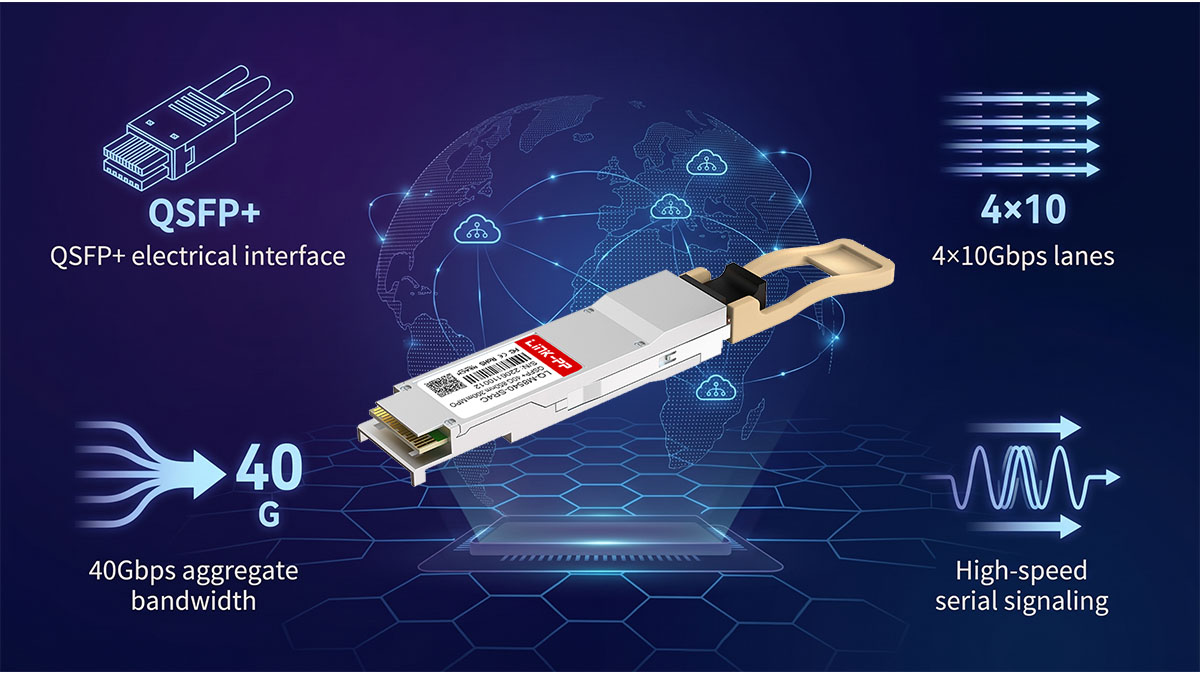
The QFX-QSFP-40G-SR4 uses the QSFP+ Multi-Source Agreement (MSA) electrical interface, enabling seamless communication between the optical module and compatible switch hardware. Instead of transmitting a single 40Gbps electrical signal, the module divides traffic into four independent high-speed serial lanes that are converted to optical signals for transmission.
The host electrical interface includes the following characteristics:
- QSFP+ electrical connector with a 38-pin interface
- Four independent transmit (TX) lanes
- Four independent receive (RX) lanes
- Approximately 10.3125Gbps signaling rate per lane
- Aggregate bandwidth of 40Gbps
- Full-duplex communication on all four lanes
- Support for high-speed serial data transmission with low latency
This lane-based architecture improves signal reliability and aligns with the IEEE 40GBASE-SR4 specification. It also allows the module to integrate efficiently into high-density data center switches that require multiple 40GbE ports within a compact form factor.
Power Requirements
Power consumption directly affects switch thermal performance and port density, making it an important consideration when deploying multiple optical modules in a single chassis. The QFX-QSFP-40G-SR4 is designed for energy-efficient operation while maintaining stable optical performance.
The table below summarizes the primary electrical power characteristics.
| Parameter | Typical Specification |
|---|---|
| Supply Voltage | 3.3V |
| Maximum Power Consumption | ≤1.5W |
| Hot-Plug Support | Yes |
| Low-Power Mode | Supported through QSFP+ control interface |
These electrical characteristics provide several operational advantages:
- Reduced heat generation in densely populated switch ports.
- Lower overall power demand compared with longer-reach optical modules.
- Support for hot insertion and removal without shutting down the switch.
- Efficient operation suitable for continuous 24/7 network environments.
Although the module has relatively low power consumption, adequate chassis airflow remains essential to maintain stable operating temperatures, especially in high-density deployments where many QSFP+ ports are populated simultaneously.
EEPROM and Digital Diagnostic Functions
The QFX-QSFP-40G-SR4 includes onboard EEPROM memory and Digital Optical Monitoring (DOM) capabilities, allowing the host system to identify the module and monitor its operating status in real time. These functions simplify inventory management, fault diagnosis, and preventive maintenance.
The EEPROM stores identification and configuration information such as:
- Vendor name
- Part number
- Serial number
- Manufacturing date
- Supported standards
- Hardware revision
- Module identification data
Digital diagnostic functions continuously monitor key operating parameters, including:
- Module temperature
- Supply voltage
- Transmit optical power
- Receive optical power
- Laser operating status
- Alarm and warning thresholds for abnormal conditions
Real-time diagnostic information enables network administrators to detect potential issues before they affect service availability. By monitoring optical power levels, temperature trends, and voltage fluctuations, operators can identify fiber degradation, connector contamination, or environmental problems early, helping maintain reliable long-term network performance.
✅ Mechanical and Environmental Specifications
The mechanical and environmental specifications define the physical characteristics and operating conditions of the QFX-QSFP-40G-SR4. These parameters ensure that the module fits standard QSFP+ ports, withstands typical data center environments, and delivers stable performance throughout its operational lifecycle.
Physical Dimensions and Connector Design
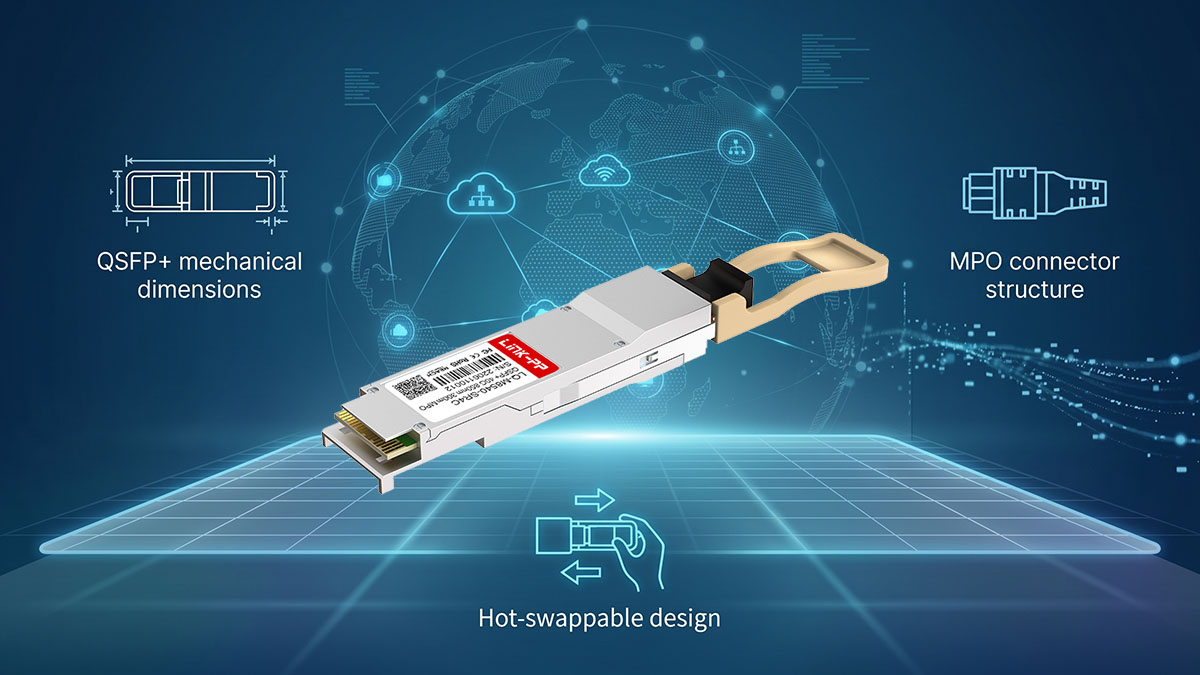
The QFX-QSFP-40G-SR4 follows the QSFP+ Multi-Source Agreement (MSA), ensuring mechanical compatibility with standard QSFP+ cages found in supported network switches. Its compact design allows high port density while maintaining convenient installation and replacement.
The module incorporates the following physical characteristics:
- Standard QSFP+ form factor
- Compact hot-pluggable metal enclosure
- MPO-12 optical connector for parallel fiber transmission
- Integrated electrical edge connector compatible with QSFP+ ports
- Push-pull release mechanism for easy insertion and removal
- EMI-shielded housing to reduce electromagnetic interference
These design features simplify deployment and maintenance while enabling efficient airflow within densely populated switch chassis. Proper insertion and removal procedures also help protect both the module and the switch connector from mechanical damage.
Operating Environment
The QFX-QSFP-40G-SR4 is designed to operate reliably under the environmental conditions commonly found in enterprise and data center equipment rooms. Maintaining the specified operating limits helps preserve optical performance and extend the service life of the transceiver.
The following table summarizes the primary environmental specifications.
| Parameter | Typical Specification |
|---|---|
| Operating Temperature | 0°C to 70°C |
| Storage Temperature | -40°C to 85°C |
| Relative Humidity | 5% to 95% (non-condensing) |
| Cooling Method | Forced-air cooling through switch chassis |
To maintain optimal operating conditions, the following practices are recommended:
- Ensure adequate airflow around populated QSFP+ ports.
- Avoid blocking switch ventilation openings.
- Operate the module within the specified temperature range.
- Prevent exposure to excessive moisture or condensation.
- Store unused modules in anti-static packaging in a clean, dry environment.
Following these environmental recommendations helps minimize thermal stress and supports consistent optical performance during continuous operation.
Reliability and Product Lifecycle
Long-term reliability is a critical consideration for optical transceivers deployed in production networks. The QFX-QSFP-40G-SR4 is designed for continuous operation in demanding environments, with construction and component selection intended to support stable performance over extended periods.
Several factors contribute to its operational reliability:
- High-quality VCSEL laser and photodetector components
- Robust metal housing for improved durability
- Stable optical output across the specified operating temperature range
- Hot-pluggable design that simplifies maintenance and replacement
- Compliance with industry standards for interoperability and consistent performance
Reliability is commonly evaluated using Mean Time Between Failures (MTBF), which estimates the expected operational lifespan of electronic equipment under normal conditions. While the actual service life depends on installation quality, environmental conditions, and operating workload, proper handling, clean optical interfaces, and adequate cooling can significantly improve long-term stability and reduce the likelihood of unexpected failures.
✅ Standards and Compliance Information
The standards and compliance information in the QFX-QSFP-40G-SR4 datasheet confirms that the module follows widely recognized industry specifications for performance, interoperability, safety, and environmental protection. Compliance with these standards helps ensure that the transceiver can operate reliably in standardized 40GbE network environments while simplifying integration with compatible networking equipment.
IEEE and MSA Compliance
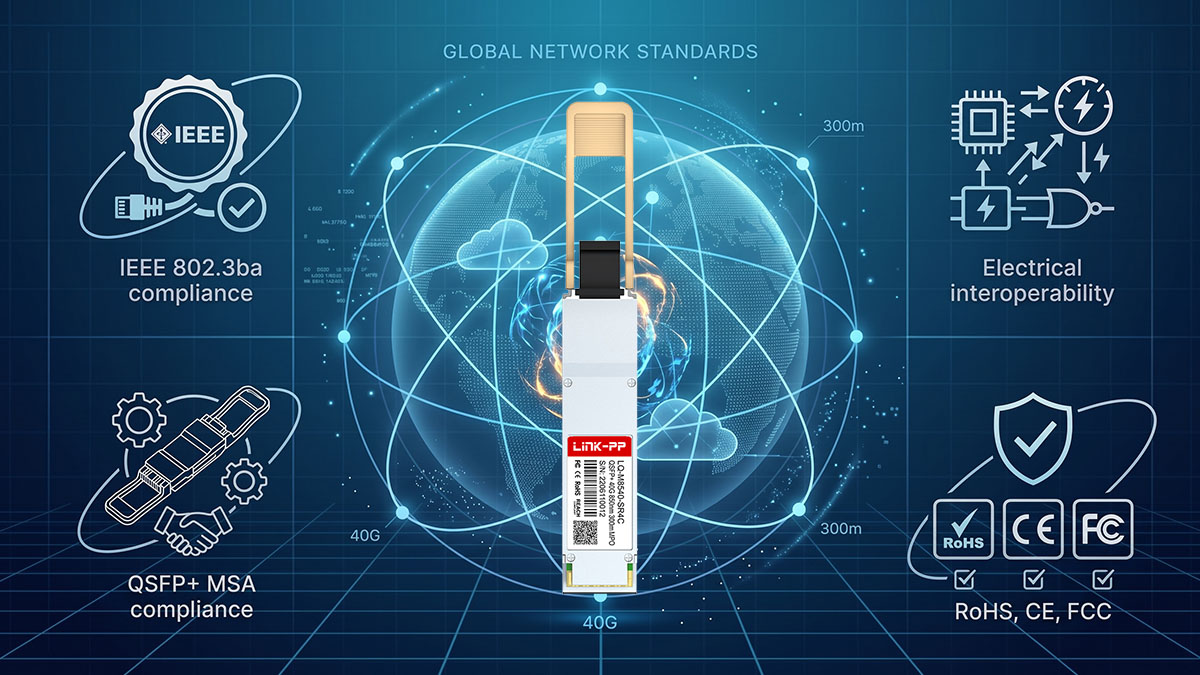
The QFX-QSFP-40G-SR4 is designed in accordance with the IEEE 802.3ba standard for 40 Gigabit Ethernet and the QSFP+ Multi-Source Agreement (MSA). These specifications define the electrical interface, optical characteristics, mechanical dimensions, and management functions required for consistent operation across compliant networking platforms.
The following table summarizes the primary industry standards.
| Standard | Purpose |
|---|---|
| IEEE 802.3ba | Defines 40GbE physical layer specifications, including 40GBASE-SR4 |
| QSFP+ MSA | Standardizes the mechanical dimensions, electrical interface, and management functions of QSFP+ modules |
| SFF-8636 | Defines the digital diagnostic monitoring interface and memory map for QSFP+ transceivers |
Compliance with these standards provides several practical benefits:
- Ensures consistent optical and electrical performance.
- Simplifies deployment in standards-based Ethernet networks.
- Supports interoperability between compliant switches and optical modules.
- Enables standardized monitoring through Digital Optical Monitoring (DOM).
By following established industry specifications, the module can integrate more easily into enterprise and data center environments while maintaining predictable network performance.
Safety and Environmental Certifications
In addition to communication standards, the QFX-QSFP-40G-SR4 is designed to comply with internationally recognized safety and environmental requirements. These certifications demonstrate that the module satisfies regulations related to laser safety, electromagnetic compatibility, and hazardous substance restrictions.
Common certifications and compliance requirements include:
- RoHS compliance to restrict the use of hazardous substances in electronic equipment.
- CE marking for conformity with applicable European safety and electromagnetic compatibility requirements.
- FCC compliance for electromagnetic emission limits in commercial environments.
- Class 1 laser product classification for safe operation under normal usage conditions.
These certifications help organizations deploy the module in regions with different regulatory requirements while supporting safe installation and long-term operation. Although the module uses laser technology, Class 1 certification indicates that it is designed to be safe during normal operation when used according to the manufacturer's guidelines.
Interoperability Standards
Standards compliance also plays a key role in interoperability across modern network infrastructures. A transceiver that adheres to established specifications is more likely to function correctly with compatible hardware, provided that both the switch platform and the optical interface support the same Ethernet standard.
When evaluating interoperability, administrators should verify the following:
- The switch supports QSFP+ interfaces.
- The port is configured for 40GBASE-SR4 operation.
- The module complies with IEEE 802.3ba and QSFP+ MSA specifications.
- The installed MPO cabling matches the required fiber type and polarity.
- The network operating system recognizes and supports the transceiver.
Even when devices originate from different manufacturers, standards-compliant implementations can improve deployment flexibility and reduce compatibility concerns. However, verifying platform support, software versions, and optical interface requirements remains an important step before installation to ensure stable and reliable network operation.
✅ Compatibility and Deployment Considerations
Compatibility and deployment planning are essential for achieving reliable 40GbE connectivity with the QFX-QSFP-40G-SR4. Although the module follows industry standards, successful operation depends on selecting compatible switch platforms, using the correct fiber infrastructure, and following recommended installation practices. Reviewing these factors before deployment helps minimize configuration issues and maximize network stability.
Compatible Juniper Platforms
The QFX-QSFP-40G-SR4 is intended for Juniper switches equipped with QSFP+ interfaces that support 40GBASE-SR4 operation. Compatibility may vary depending on the hardware model and the installed Junos OS version, so administrators should always verify platform support before deployment.
Common compatibility considerations include:
- Support for QSFP+ 40GbE ports on the target switch.
- Hardware compatibility with the specific QFX switch series.
- Junos OS version that recognizes and supports the module.
- Proper port configuration for 40GbE operation.
- Availability of Digital Optical Monitoring (DOM) functions on the platform.
Before installing the module, reviewing the platform compatibility documentation and confirming software support can help avoid unnecessary troubleshooting and ensure reliable operation.
Cabling Best Practices
The QFX-QSFP-40G-SR4 is designed for parallel optical transmission over multimode fiber using an MPO-12 connector. Proper cabling practices are just as important as selecting the correct transceiver, since poor fiber management can significantly affect link performance.
The following recommendations help achieve stable optical connections:
- Use OM3 or OM4 multimode fiber that meets 40GBASE-SR4 specifications.
- Verify the correct MPO polarity before connecting both ends of the link.
- Keep optical connectors clean to minimize insertion loss.
- Avoid excessive bending that exceeds the fiber's minimum bend radius.
- Limit unnecessary patch panels and intermediate connections.
- Test the optical link after installation to verify continuity and signal quality.
Following these practices reduces optical attenuation and helps maintain consistent performance throughout the lifetime of the network.
Common Deployment Scenarios
The QFX-QSFP-40G-SR4 is primarily used for short-distance, high-bandwidth connections inside data centers and enterprise network environments. Its combination of 40Gbps throughput and multimode fiber support makes it suitable for a variety of switching applications.
The table below summarizes several common deployment scenarios.
| Deployment Scenario | Typical Role | Recommended Fiber |
|---|---|---|
| Leaf-to-Spine Connectivity | High-speed switch interconnection | OM4 preferred |
| Data Center Aggregation | Aggregation switch uplinks | OM3 or OM4 |
| Server Access Network | Connection to high-performance servers | OM3 or OM4 |
| High-Density Switching | Short-reach inter-switch links within the same rack or row | OM3 or OM4 |
These deployment scenarios are commonly selected because they take advantage of the module's short-reach, low-latency optical design.
✅ FAQs About QFX-QSFP-40G-SR4
Is QFX-QSFP-40G-SR4 a multimode fiber transceiver?
Yes. The QFX-QSFP-40G-SR4 is designed for multimode fiber (MMF) transmission and uses 850nm VCSEL technology for short-range 40GbE connections.
What type of connector does QFX-QSFP-40G-SR4 use?
The module uses an MPO-12 connector, which supports parallel fiber transmission with four transmit lanes and four receive lanes.
Can QFX-QSFP-40G-SR4 be used for long-distance connections?
No. It is optimized for short-reach data center links and is not designed for long-distance single-mode fiber applications.
What is the difference between QFX-QSFP-40G-SR4 and QSFP-40G-LR4?
QFX-QSFP-40G-SR4 uses multimode fiber for short-distance transmission, while QSFP-40G-LR4 uses single-mode fiber for longer-distance links.
What should be checked before installing QFX-QSFP-40G-SR4?
Verify switch compatibility, QSFP+ port support, fiber type, MPO polarity, and transmission distance requirements before installation.
Can QFX-QSFP-40G-SR4 monitor optical performance?
Yes. The module supports Digital Optical Monitoring (DOM), allowing supported systems to track key operating conditions.
✅ Conclusion
The QFX-QSFP-40G-SR4 datasheet provides essential technical information for understanding the module’s optical performance, electrical interface, compliance requirements, and deployment suitability. As a 40GBASE-SR4 QSFP+ optical transceiver, it is designed for short-range high-speed networking over multimode fiber, making accurate evaluation of specifications such as wavelength, transmission distance, fiber compatibility, and power characteristics important for reliable 40GbE deployments.
The key technical points covered in this guide include:
- QFX-QSFP-40G-SR4 supports 40Gbps Ethernet transmission using four parallel optical lanes.
- The module operates at 850nm and is optimized for OM3 and OM4 multimode fiber connections.
- QSFP+ electrical specifications, EEPROM information, and DOM functions support efficient network management.
- IEEE 802.3ba and QSFP+ MSA compliance improve interoperability with standards-based networking equipment.
- Proper platform compatibility verification and fiber cabling practices are essential for stable deployment.
For organizations evaluating compatible 40GbE optical solutions, reviewing detailed datasheet information remains a critical step in ensuring performance consistency and network reliability. The LINK-PP Official Store provides a range of professionally tested compatible optical transceivers designed to meet various networking requirements, helping customers identify suitable solutions based on technical specifications, platform compatibility, and deployment environments.