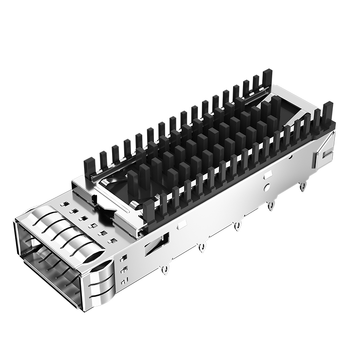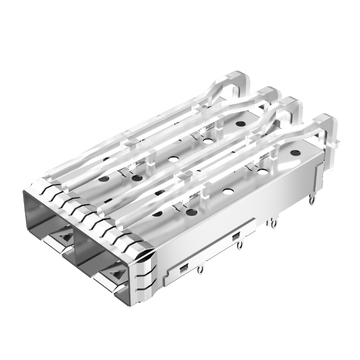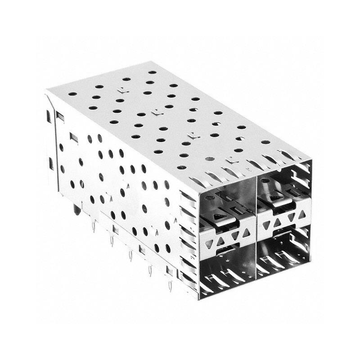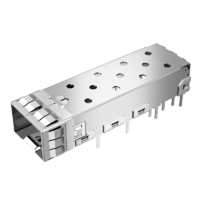
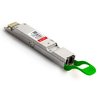
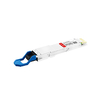
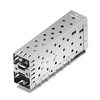
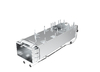
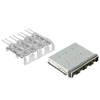

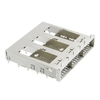

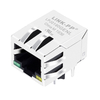
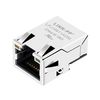
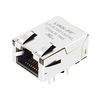
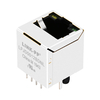




SFP cages are essential mechanical and electromagnetic components in optical networking equipment. They provide a secure housing for pluggable transceivers, maintain alignment with PCB-mounted connectors, and help control electromagnetic interference (EMI). As data center switches, routers, servers, and optical communication systems evolve, selecting the right SFP cage becomes increasingly important for reliable hardware integration.
However, identifying equivalent SFP cage components across TE Connectivity, Molex, and Amphenol can be challenging. Different manufacturers offer similar port configurations, but their mechanical dimensions, PCB footprints, EMI shielding structures, and mounting methods may vary. A similar appearance does not necessarily mean two SFP cage assemblies are interchangeable.
This guide explains how to identify and compare SFP cage products from these three manufacturers, with a focus on practical cross-reference evaluation. It covers:
-
TE, Molex, and Amphenol SFP cage product families and specifications.
-
Mechanical dimensions, PCB footprints, mounting methods, and EMI shielding differences.
-
Cross-reference evaluation and compatibility verification procedures.
-
LINK-PP SFP cage configurations, technical features, and alternative component options.
By understanding these differences, engineers can evaluate replacement components more accurately, reduce PCB redesign risks, and identify suitable SFP cage solutions for their networking hardware.
What Is an SFP Cage and Why Does Cross-Referencing Matter?
An SFP cage is a metal enclosure mounted around an SFP transceiver connector on a host PCB. It provides mechanical support, guides transceiver insertion and removal, and helps maintain electromagnetic compatibility between pluggable modules and the host system. Cross-referencing SFP cages is important when engineers need to evaluate alternative manufacturers, manage component lifecycle changes, or maintain an existing PCB design.

The Role of an SFP Cage in Optical Transceiver Systems
An SFP cage works together with an SFP connector to form the physical interface between a pluggable transceiver and the host equipment. While the connector provides the electrical contacts, the cage provides the mechanical enclosure and shielding structure.
Its main functions include:
-
Mechanical guidance: Maintains the transceiver's position during insertion and extraction.
-
Module retention: Helps secure the transceiver within the host interface.
-
EMI shielding: Uses conductive metal surfaces, spring fingers, or other grounding structures to limit electromagnetic leakage.
-
Chassis grounding: Establishes electrical contact between the cage and the equipment's front panel.
-
Thermal support: Accommodates heat sinks or other thermal-management accessories in applicable designs.
-
Front-panel integration: Maintains alignment between the transceiver opening, PCB-mounted connector, and equipment enclosure.
An SFP cage should not be confused with an SFP connector. A standalone cage is primarily a mechanical and shielding component, whereas an SFP cage assembly may combine the cage with an electrical receptacle, light pipes, and other accessories.
Understanding this distinction is essential when comparing TE, Molex, and Amphenol part numbers because some manufacturers list cage-only products while others provide integrated cage-and-connector assemblies.
Common Reasons for SFP Cage Cross-Reference Searches
Engineers typically search for an SFP cage cross reference when an existing component needs an alternative or when a hardware platform is undergoing design changes.
Common situations include:
-
Component lifecycle changes: An original SFP cage may become obsolete or enter a last-time-buy phase.
-
Supply chain diversification: Manufacturers may need alternative component sources to reduce dependence on one supplier.
-
Cost optimization: Different manufacturers may offer comparable configurations with different commercial conditions.
-
PCB design updates: A revised board may require a different mounting arrangement, port density, or light pipe configuration.
-
Production continuity: An alternative component may help maintain production when the original part has extended lead times.
-
Legacy equipment maintenance: Existing networking platforms may require replacement cage assemblies with matching mechanical characteristics.
However, choosing an alternative based only on its product description can introduce mechanical or assembly problems. The complete part number, engineering drawing, and PCB interface must be checked before making a replacement decision.
What a Reliable SFP Cage Cross Reference Should Include
A useful SFP cage cross-reference record should contain enough information to identify the original component and evaluate its alternative.
The following information is particularly important:
-
Manufacturer and complete part number.
-
Product type: cage only or cage assembly with connector.
-
Port configuration, such as 1x1, 1x4, or 2x4.
-
Overall dimensions and port spacing.
-
PCB mounting and termination method.
-
EMI shielding and grounding structure.
-
Light pipe and heat sink configuration.
-
Material, plating, and operating temperature.
-
Product drawing and revision information.
These parameters establish the foundation for a meaningful TE, Molex, and Amphenol SFP cage comparison. They also help engineers distinguish a preliminary cross-reference candidate from a replacement that has passed actual PCB validation.
TE Connectivity SFP Cage Cross Reference and Key Specifications
TE Connectivity offers SFP and SFP+ cage solutions in single-port, ganged, and stacked configurations. Its product portfolio includes cage assemblies with integrated connectors, press-fit PCB terminations, EMI shielding features, and optional light pipes. The complete TE part number is essential because seemingly similar models may differ in shielding and accessory configurations.
Overview of TE Connectivity SFP Cage Product Families
TE Connectivity's high-speed pluggable I/O portfolio includes SFP and SFP+ cage assemblies designed for networking and data communication equipment.
Common configurations include:
-
1x1 SFP cage: A single-port structure for equipment with lower port density.
-
1xN ganged cage: Multiple SFP ports arranged horizontally in one row.
-
2xN stacked cage: Two rows of SFP or SFP+ ports arranged vertically to increase front-panel density.
-
Cage assembly with integrated connector: Combines the metal cage and electrical receptacle into one assembly.
-
Cage assembly with light pipes: Includes optical guides to transfer LED status indicators from the PCB to the front panel.
A representative TE product family is the 2007394 series, which includes stacked 2x4 SFP+ assemblies.
For example, TE 2007394-5 is a 2x4 stacked SFP+ cage assembly with an integrated connector, press-fit termination, internal and external EMI springs, and included light pipes. TE specifies a maximum data rate of 16Gbps and an operating temperature range of -55°C to +105°C for this model.
This product family demonstrates why suffix-level identification matters. Different versions may have different light pipe and EMI configurations even when they share the same basic 2x4 architecture.
Key TE SFP Cage Specifications to Identify
When evaluating a TE SFP cage, engineers should check both the mechanical structure and the electrical assembly characteristics.
The following table uses TE 2007394-5 as a representative example rather than treating its specifications as universal across the entire TE portfolio.
|
Parameter |
TE 2007394-5 |
|---|---|
|
Product type |
SFP+ cage assembly with integrated connector |
|
Port configuration |
2x4 |
|
Number of ports |
8 |
|
Maximum data rate |
16Gbps |
|
PCB termination |
Through-hole press-fit |
|
Cage material |
Nickel silver |
|
EMI containment |
Internal/external EMI springs |
|
Light pipe |
Included |
|
Recommended PCB thickness |
1.5mm |
|
Operating temperature |
-55°C to +105°C |
|
Packaging |
Tray |
Source: TE Connectivity product documentation.
When comparing another TE model, pay particular attention to:
-
Port matrix and connector orientation.
-
Cage dimensions and PCB mounting coordinates.
-
Press-fit pin geometry and tail length.
-
EMI spring positions and contact arrangement.
-
Light pipe location and optical alignment.
-
Heat sink compatibility and front-panel clearance.
TE's product drawings and CAD files are especially useful during mechanical evaluation. The manufacturer also provides application specifications and qualification documentation for relevant product families.
How to Find TE Connectivity SFP Cage Cross-Reference Information
Finding the correct TE SFP cage reference requires more than searching a partial part number.
A practical identification process includes:
-
Locate the complete TE part number printed on the component label, BOM, or engineering documentation.
-
Search the exact part number on the TE product website.
-
Confirm whether the component is a cage-only product or an integrated cage assembly.
-
Download the mechanical drawing and product specification.
-
Record the port configuration, mounting style, and shielding options.
-
Compare the drawing with the existing PCB layout.
For example, the TE 2007394 series includes different light pipe configurations:
-
2007394-5: 2x4 SFP+ assembly with EMI springs and inner/outer light pipes.
-
2007394-6: 2x4 SFP+ assembly with an inner light pipe configuration.
-
2007394-7: 2x4 SFP+ assembly with an outer light pipe configuration.
-
2007394-8: 2x4 SFP+ assembly with EMI springs and no light pipe configuration.
These distinctions should be checked against the corresponding product drawings before selecting an alternative.
A complete TE cross-reference record should preserve the original suffix and revision information. This prevents engineers from confusing products that share the same port layout but have different mechanical or functional features.
Molex SFP Cage Cross Reference and Key Specifications
Molex offers SFP cage solutions in ganged and multi-port configurations, with different PCB termination methods and EMI shielding arrangements. Its 74754 series is one example of a product family that includes 1x4 SFP+ cages with EMI spring fingers.
Overview of Molex SFP Cage Product Families
Molex SFP cages are designed to support pluggable optical and electrical interfaces in networking and communication equipment.
Typical configurations include:
-
Single-port SFP cages for individual transceiver interfaces.
-
1xN ganged cages for horizontally arranged ports.
-
Multi-port cage assemblies with integrated light pipe options.
-
Cage assemblies using press-fit compliant legs.
-
Cage assemblies using solder-post termination.
One useful example is the Molex 74754 series.
Molex product specification 74754 series covers SFP+ 1x4 ganged cages with EMI spring fingers. It documents different part-number configurations based on termination. For example: 747547420, 747548420 and 747548427
These examples illustrate how Molex part numbers can represent differences in mounting and EMI-related construction, even when the basic port configuration remains the same.
Important Molex SFP Cage Specifications
The mechanical and electrical characteristics of a Molex SFP cage should be checked individually.
Important specifications include:
-
Port configuration: Confirm whether the cage is 1x1, 1x2, 1x4, or another arrangement.
-
Mounting method: Identify press-fit compliant legs or solder-post construction.
-
EMI shielding: Check the use of spring fingers, elastomeric gaskets, and grounding contacts.
-
Light pipe configuration: Determine whether the cage supports light pipes and whether they are included.
-
Cage material and plating: Refer to the individual sales drawing.
-
PCB interface: Verify hole locations, pin dimensions, and recommended board thickness.
-
Mechanical envelope: Confirm the overall cage dimensions and front-panel clearance.
Molex's product specification provides general product-family information, while individual sales drawings contain the dimensional and material details required for PCB design.
This distinction matters because a product-family specification does not necessarily provide every dimension needed to evaluate a replacement.
How to Identify a Molex SFP Cage Equivalent
To identify an alternative for a Molex SFP cage, engineers should begin with the original part number and then compare the complete mechanical assembly.
A recommended process is:
-
Search the full Molex part number.
-
Identify the corresponding series and product configuration.
-
Download the relevant product specification and sales drawing.
-
Confirm whether the original component includes an electrical connector.
-
Compare port arrangement, PCB termination, and mounting geometry.
-
Check the EMI gasket or spring finger arrangement.
-
Verify light pipe and accessory requirements.
For the Molex 74728 series, it is particularly important to distinguish solder-post versions from press-fit versions. Both may share a 1x4 arrangement, but their PCB interfaces are different.
Similarly, a cage with an elastomeric gasket should not automatically be considered equivalent to one using only metal spring fingers. Their grounding and EMI containment arrangements need to be evaluated against the host chassis design.
Amphenol SFP Cage Cross Reference and Key Specifications
Amphenol offers SFP cage and connector solutions in single-port, ganged, and stacked configurations. Its SFP product portfolio includes different mounting, grounding, and light pipe options, making the complete product code important when identifying an equivalent component.
Overview of Amphenol SFP Cage Product Families
Amphenol's SFP interconnect system combines a 20-position hot-swappable connector with a metal cage mounted on the host PCB.
Its product portfolio includes:
-
1x1 SFP cages: Single-port structures for individual transceiver interfaces.
-
1xN ganged cages: Horizontally arranged multi-port configurations.
-
2xN stacked cages: Two-row configurations for higher front-panel port density.
-
Cage and connector combinations: Integrated assemblies combining the electrical receptacle and mechanical cage.
-
Light pipe configurations: Options for transferring LED status information to the front panel.
-
Heat sink combinations: Selected designs that incorporate additional thermal-management components.
Amphenol's product documentation describes its SFP cage options and identifies configurations such as 1x1, 1x2, 1x4, 1x6, 2x1, 2x2, 2x4, 2x6, and 2x8. It also documents different grounding and light pipe arrangements.
The UltraPort and ExpressPort product families provide useful examples of Amphenol's SFP and SFP+ interconnect solutions.
For instance, the UE86 series includes 2xN SFP connector and cage combinations with press-fit pin construction. Amphenol's S6009C product specification identifies 2x1, 2x2, 2x4, 2x6, and 2x8 configurations.
When searching for an Amphenol replacement, engineers should distinguish between the cage assembly and the complete connector-and-cage combination.
Key Amphenol SFP Cage Specifications
Amphenol SFP cage configurations can differ in mounting, EMI grounding, and accessory arrangements.
The following specifications should be checked:
-
Port matrix and number of transceiver openings.
-
Cage dimensions and front-panel alignment.
-
Press-fit or solder termination.
-
Chassis grounding and EMI spring configuration.
-
Light pipe and heat sink options.
-
PCB thickness requirements.
-
Cage material and plating.
-
Connector contact configuration, where an integrated assembly is used.
A representative example is Amphenol UE78-B4127-00321, a SFP 2x4 combination with spring-finger grounding and press-fit connector pins. The product documentation identifies a 4Gbps data rate and a configuration without light pipes.
For integrated assemblies, the connector specification is just as important as the cage specification. Contact positions, mating interface, and mounting details should all be reviewed before cross-referencing.
How to Locate Amphenol SFP Cage Cross-Reference Data
Amphenol part numbers contain configuration information that can help narrow down the correct product family.
A practical identification process includes:
-
Find the complete Amphenol part number.
-
Determine the product series, such as the relevant SFP or SFP+ family.
-
Confirm the number of ports and row arrangement.
-
Identify whether the product is cage-only or a connector-and-cage assembly.
-
Check mounting and grounding options.
-
Retrieve the mechanical drawing and product specification.
-
Compare the original PCB interface with the proposed alternative.
For example, Amphenol's SFP documentation distinguishes between metal grounding tabs, flexible spring fingers, light pipe options, and different PCB mounting configurations.
These details should be included in the cross-reference record rather than relying solely on the product's 1xN or 2xN designation.
TE vs. Molex vs. Amphenol SFP Cage: Key Differences and Cross-Reference Comparison
TE Connectivity, Molex, and Amphenol all offer SFP cage products with comparable basic port arrangements, but their detailed mechanical and EMI configurations are not necessarily identical. The most useful comparison focuses on product architecture, mounting, shielding, and accessory options.
SFP Cage Manufacturer Comparison at a Glance
The following table summarizes representative characteristics documented across the three manufacturers. It is intended as a product-family comparison, not a universal specification for every part number.
|
Comparison item |
TE Connectivity |
Molex |
Amphenol |
|---|---|---|---|
|
Representative product family |
2007394 series |
74728 series |
UE77/UE78/UE86 families |
|
Typical configurations |
1xN and 2xN |
1xN ganged and other configurations |
1xN and 2xN |
|
Representative example |
2007394-5 |
747280415 |
U77-A1118-200T |
|
Mounting options |
Press-fit in the cited example |
Press-fit or solder post |
Press-fit and other documented options |
|
EMI features |
Internal/external EMI springs in the cited example |
Spring fingers and elastomeric gaskets |
Grounding tabs and spring fingers |
|
Light pipe options |
Available |
Available |
Available |
|
Integrated connector options |
Available |
Available |
Available |
|
Technical documentation |
Product drawings, specifications, CAD |
Product specifications and sales drawings |
Product specifications, drawings, and CAD |
Sources: manufacturer product documentation.
The table shows that all three manufacturers support multiple SFP cage configurations. However, the specific implementation of mounting and shielding features differs by product family.
For engineers, the most important next step is to compare the individual part numbers rather than assume that products with the same port arrangement have identical PCB interfaces.
Mechanical and PCB Footprint Differences
Mechanical compatibility is one of the most important considerations when evaluating a cross-reference SFP cage.
Two 2x4 SFP+ cages may look similar from the front, but their PCB mounting geometry can differ.
The following mechanical characteristics should be compared:
-
Overall dimensions: Check cage length, width, and height.
-
Port pitch: Confirm the distance between adjacent transceiver openings.
-
Vertical spacing: For stacked cages, verify the distance between the upper and lower rows.
-
PCB hole pattern: Compare the coordinates and diameters of mounting holes.
-
Press-fit pin geometry: Check pin dimensions, compliant sections, and positions.
-
Front-panel alignment: Verify that the cage openings match the equipment's bezel cutouts.
-
Connector position: Confirm the alignment between the cage and electrical receptacle.
PCB footprint compatibility is especially important for press-fit designs. Even a small difference in mounting-hole position or compliant pin geometry can cause insertion difficulties, PCB damage, or poor mechanical retention.
Therefore, a cross-reference should be based on mechanical drawings and recommended PCB layouts, not product photographs or nominal port counts.
EMI Shielding, Thermal Design, and Functional Differences
EMI shielding and thermal management also affect whether an alternative SFP cage can perform correctly in an existing system.
Different manufacturers may use different grounding and shielding arrangements.
Important comparison points include:
-
Internal EMI springs: Help establish electrical contact around the transceiver interface.
-
External EMI springs: Provide grounding contact with the equipment chassis or front panel.
-
Elastomeric gaskets: Offer an alternative EMI containment interface in applicable cage designs.
-
Grounding tabs: Help establish the required conductive path between the cage and chassis.
-
Heat sink compatibility: Determines whether the cage can accommodate the intended thermal accessories.
-
Light pipe geometry: Affects LED visibility and alignment with the front panel.
For example, TE 2007394-5 specifies internal and external EMI springs, while Molex 74728 documentation describes EMI spring fingers and elastomeric gaskets. Amphenol documentation identifies several grounding and shielding options across its SFP cage families.
These features should be evaluated in the context of the complete equipment enclosure. A cage with a different grounding interface may require chassis or front-panel changes even when its PCB mounting pattern is similar.
How to Interpret Cross-Reference Equivalency
An SFP cage cross reference should indicate the level of compatibility established by the available engineering information.
Three levels are useful:
1. Form-factor similarity
The alternative has a similar basic structure, such as a 1x4 or 2x4 SFP cage.
-
Port count and row arrangement are similar.
-
The overall application is comparable.
-
PCB and chassis compatibility have not yet been confirmed.
2. Specification correspondence
The alternative matches the major documented mechanical and functional characteristics.
-
Port configuration is consistent.
-
Mounting method is equivalent.
-
EMI and light pipe options meet the design requirements.
-
Dimensional differences have been reviewed.
3. Verified footprint compatibility
The alternative has passed the required drawing comparison and engineering validation.
-
PCB hole positions and dimensions match.
-
Press-fit or solder interfaces are suitable.
-
Front-panel alignment is confirmed.
-
EMI and mechanical performance have been evaluated.
-
Prototype assembly has been completed successfully.
This classification helps prevent a common mistake: treating a similar-looking SFP cage as a guaranteed drop-in replacement.
Even when two products are described as 2x4 SFP+ assemblies, their complete engineering specifications must be compared before a direct replacement claim can be made.
How to Verify SFP Cage Compatibility Before Replacing an Original Part
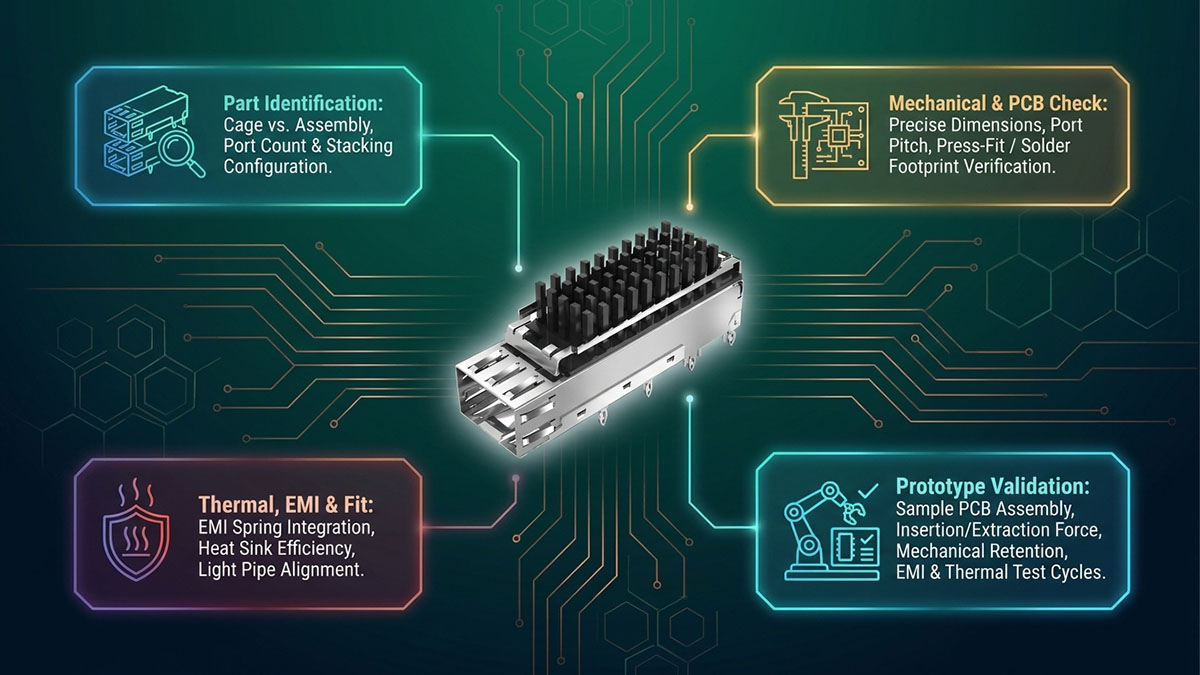
SFP cage compatibility should be verified through mechanical drawing comparison, PCB footprint inspection, EMI evaluation, and prototype testing. Matching the original manufacturer's port configuration is only the first step; the mounting interface and complete assembly must also meet the host system's requirements.
Step 1 – Confirm the Original Part Number and Product Configuration
Start by identifying the exact original component before searching for a replacement.
Check the following information:
-
Full TE, Molex, or Amphenol part number, including suffixes.
-
Product series and revision.
-
SFP or SFP+ form factor.
-
Number of ports and row arrangement.
-
Cage-only or integrated cage-and-connector construction.
-
Included light pipes, EMI springs, gaskets, or heat sinks.
This information prevents engineers from comparing different product configurations under the same general product description.
For example, a standalone 2x4 SFP+ cage and a 2x4 SFP+ cage assembly with an integrated connector may have similar external structures but different PCB interfaces.
Step 2 – Compare Mechanical Dimensions and PCB Footprints
The PCB footprint is one of the most important factors in determining whether an alternative SFP cage can fit an existing board.
Compare the original and alternative engineering drawings for:
-
Overall length, width, and height.
-
Transceiver opening dimensions.
-
Horizontal and vertical port spacing.
-
PCB mounting-hole coordinates.
-
Press-fit pin positions and dimensions.
-
Connector alignment and board thickness requirements.
-
Front-panel opening and mounting clearance.
For press-fit cage assemblies, particular attention should be paid to compliant pin geometry and recommended PCB hole dimensions.
A cage may have the same number of ports as the original component but still require a modified PCB footprint. Therefore, dimensional comparison should be completed before prototype assembly.
Step 3 – Verify EMI, Thermal, and Assembly Requirements
Mechanical fit alone does not guarantee that an SFP cage will perform correctly in the target equipment.
Engineers should also evaluate the shielding and thermal characteristics.
A practical checklist includes:
-
Confirm that internal and external EMI contacts are positioned correctly.
-
Verify the grounding connection between the cage and chassis.
-
Compare EMI spring fingers or elastomeric gasket arrangements.
-
Check heat sink clearance and airflow requirements.
-
Verify light pipe alignment with PCB LEDs and front-panel indicators.
-
Inspect transceiver insertion and extraction clearance.
-
Confirm that the assembly process is compatible with the PCB design.
If the original product uses a specific EMI gasket or external spring configuration, the alternative should provide an equivalent shielding interface or be validated through system-level testing.
Step 4 – Conduct Prototype and Functional Validation
Prototype testing is necessary before approving an SFP cage replacement for production.
A recommended validation process includes:
-
Assemble the alternative cage on a representative PCB.
-
Inspect the press-fit or solder termination quality.
-
Check the mechanical alignment with the front panel.
-
Insert and remove representative SFP transceiver modules.
-
Evaluate cage retention and mechanical stability.
-
Check LED visibility and light pipe performance.
-
Perform EMI testing under the intended operating conditions.
-
Evaluate thermal behavior and manufacturing repeatability.
The final validation criteria should follow the equipment manufacturer's design requirements and applicable industry specifications.
Once the alternative passes these checks, engineers can document its compatibility status and add it to the approved component list.
LINK-PP SFP Cage Alternatives for TE, Molex, and Amphenol Applications
LINK-PP provides a range of SFP cage and connector solutions for networking and optical communication equipment. Our product portfolio includes multiple port configurations, mounting options, and EMI shielding designs, giving engineers additional component choices when evaluating TE, Molex, and Amphenol alternatives.
LINK-PP SFP Cage Product Portfolio
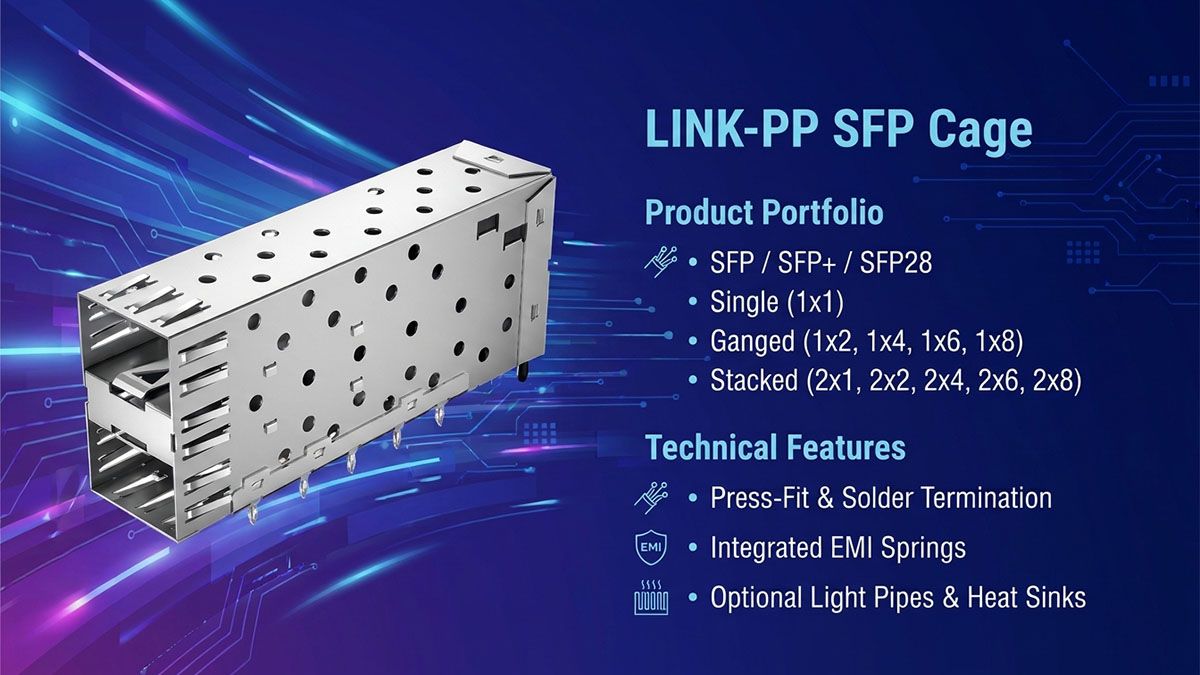
LINK-PP offers SFP cage products in multiple configurations to support different PCB layouts and front-panel port densities.
The product range includes:
-
Single-port configurations: 1x1 SFP cages for individual optical interfaces.
-
Horizontal multi-port configurations: 1x2, 1x4, 1x6, and 1x8 cages.
-
Stacked configurations: 2x1, 2x2, 2x4, 2x6, and 2x8 cage arrangements.
-
SFP+ cage assemblies: Solutions for higher-speed pluggable networking interfaces.
-
SFP28 cage options: Products for 25Gbps-class networking applications.
These configurations support different equipment architectures, including Ethernet switches, routers, servers, storage systems, and optical communication platforms.
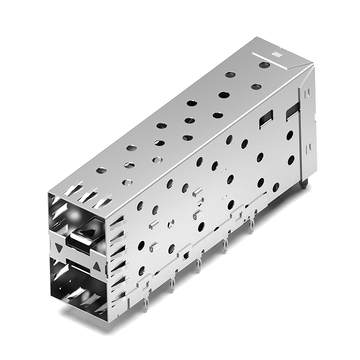
Representative LINK-PP SFP cage configurations
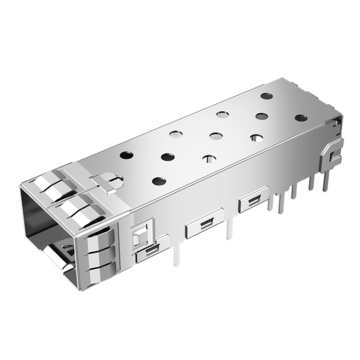
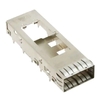
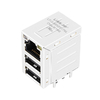
1x1 SFP Cage: Single-port interface
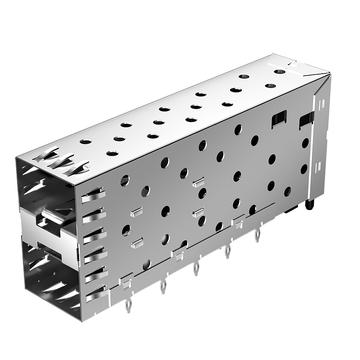
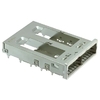
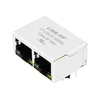
1x4 SFP Cage: Horizontal multi-port layout
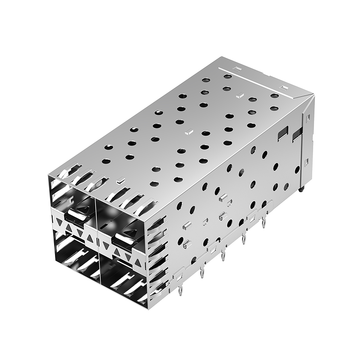
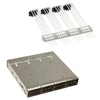
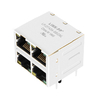
2x2 SFP Cage: Four-port stacked layout
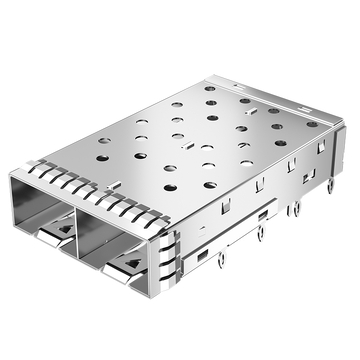
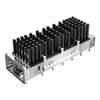
2x4 SFP+ Cage: Eight-port high-density layout
For specific applications, engineers can select cage-only products or integrated cage-and-connector assemblies according to the existing PCB architecture. The correct selection depends on the original interface and the required mounting and accessory configurations.
LINK-PP SFP Cage Features and Technical Advantages
LINK-PP SFP cage products offer several configuration and engineering features that support different networking hardware designs.
Key product characteristics include:
-
Multiple port configurations: Different 1xN and 2xN arrangements support a range of front-panel density requirements.
-
Flexible PCB mounting: Selected models use through-hole press-fit termination, supporting solderless mechanical integration.
-
EMI shielding: Selected cage designs incorporate internal and external EMI spring structures to support grounding and electromagnetic containment.
-
Light pipe options: Certain assemblies include inner, outer, or combined light pipes for front-panel LED indication.
-
Metal cage construction: Selected products use nickel-plated copper alloy construction.
-
Extended temperature options: Certain models specify an operating temperature range of -40°C to +85°C.
-
Technical documentation: Product specifications, mechanical drawings, and 3D models are available for engineering evaluation on applicable product pages.
One representative example is the LINK-PP LP24BC01101.
LINK-PP LP24BC01101
2x4 stacked SFP+ cage assembly
-
8-port configuration
-
Through-hole press-fit
-
Inner and outer light pipes
-
Internal/external EMI springs
-
Nickel-plated copper alloy
-
-40°C to +85°C
The LP24BC01101 has the following documented mechanical dimensions:
|
Parameter |
Specification |
|---|---|
|
Port configuration |
2x4 |
|
Number of ports |
8 |
|
Length |
63.25mm |
|
Width |
57.50mm |
|
Height |
25.36mm |
|
Mounting style |
Through-hole, right angle |
|
Termination |
Press-fit |
|
Cage material |
Nickel-plated copper alloy |
|
EMI containment |
EMI springs |
|
Light pipe |
Inner/outer |
|
Operating temperature |
-40°C to +85°C |
These specifications make LP24BC01101 a useful reference when evaluating 2x4 stacked SFP+ cage requirements. However, engineers should still compare its mechanical drawing and PCB interface with the original component before approving it as a direct replacement.
LINK-PP Cross-Reference Options for TE, Molex, and Amphenol
LINK-PP provides cross-reference information for selected SFP cage configurations from other manufacturers. These references help engineers identify potential alternatives and narrow down the products that require detailed mechanical verification.
For example, the LINK-PP product catalog lists the following TE and LINK-PP 2x4 SFP+ cage-related models.
|
Original manufacturer |
Original part number |
LINK-PP reference |
Configuration |
|---|---|---|---|
|
TE |
LP24BC01101 |
2x4 SFP+ |
|
|
TE |
2007394-5 |
LP24BC01101 |
2x4 SFP+ |
|
TE |
2x4 SFP+ |
||
|
TE |
2x4 SFP+ |
The listed LINK-PP models provide different light pipe configurations. The LP24BC01101 includes inner and outer light pipes, LP24BC01201 includes an inner light pipe, and LP24BC01301 provides an outer light pipe configuration.
This is a useful starting point for evaluating TE alternatives, but it does not establish universal footprint compatibility across every product revision.
For Molex and Amphenol components, the same evaluation process should be followed. A potential LINK-PP alternative should only be assigned to a specific original part number after checking its complete mechanical and functional specifications.
When preparing a cross-reference list, include the following information:
-
Original manufacturer and complete part number.
-
LINK-PP alternative model.
-
SFP or SFP+ form factor.
-
Port matrix configuration.
-
PCB mounting and termination method.
-
EMI shielding structure.
-
Light pipe and heat sink configuration.
-
Mechanical drawing comparison status.
-
Prototype validation status.
This approach makes the cross-reference information more useful for engineering teams and avoids presenting a preliminary match as a confirmed drop-in replacement.
Why Consider LINK-PP for SFP Cage Component Sourcing?
When evaluating alternatives to TE, Molex, and Amphenol SFP cages, engineers need more than a similar product description. They also need access to technical documentation, different structural options, and reliable product support.
LINK-PP offers several advantages:
-
Broad product selection: Multiple SFP, SFP+, and SFP28 cage configurations support different hardware requirements.
-
Configuration flexibility: Different port arrangements and light pipe options help accommodate varying front-panel and PCB designs.
-
Technical documentation: Product drawings and specifications support dimensional and footprint evaluation.
-
Alternative component resources: Multiple product configurations provide additional options for component sourcing and supply chain planning.
-
Application support: Engineers can provide an original part number or technical drawing to help identify a suitable LINK-PP reference.
For projects involving an existing TE, Molex, or Amphenol cage, providing the original part number together with its mechanical drawing is the most effective way to begin an alternative evaluation.
You can explore the LINK-PP SFP Cage product catalog to review available configurations and technical information.
Conclusion
Selecting the right TE, Molex, and Amphenol SFP Cage Cross Reference requires more than matching port counts or external dimensions. Engineers must verify mechanical compatibility, PCB footprints, mounting methods, EMI shielding, and accessory configurations before approving an alternative SFP cage.
The most important considerations can be summarized as follows:
-
Manufacturer identification: Confirm the complete original part number and product configuration.
-
Mechanical compatibility: Compare dimensions, port spacing, and PCB mounting geometry.
-
EMI and thermal performance: Verify grounding contacts, shielding structures, and heat sink requirements.
-
Accessory configuration: Check light pipes, gaskets, and other integrated features.
-
Engineering validation: Complete drawing comparisons and prototype testing before production approval.
-
Alternative solutions: Evaluate LINK-PP SFP cage products according to the original component's actual specifications.
At LINK-PP, we provide a range of SFP, SFP+, and SFP28 cage solutions to support different networking and optical communication applications. Whether you are evaluating a TE, Molex, or Amphenol alternative, our product catalog and technical support can help you identify an appropriate configuration for further engineering verification.
Explore the LINK-PP Official Store for SFP cage products and related optical connectivity components. We also provide a 15-day no-reason return and exchange policy for standard-stock items. If a product has a confirmed quality issue, LINK-PP covers the return shipping cost.