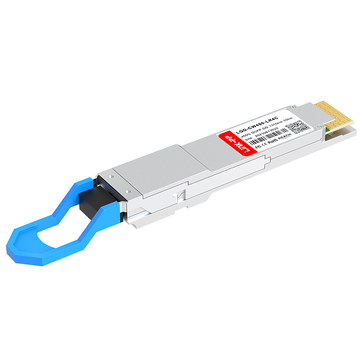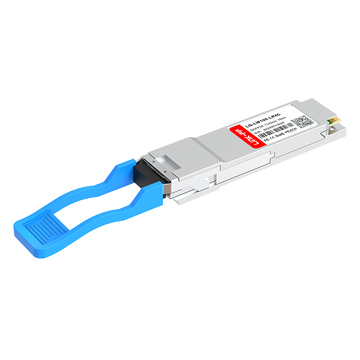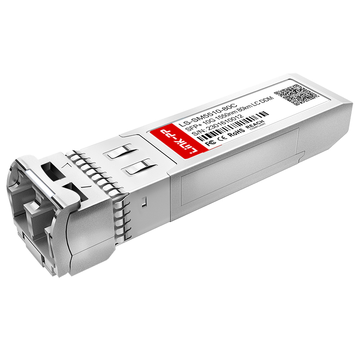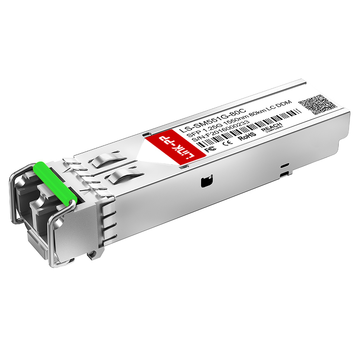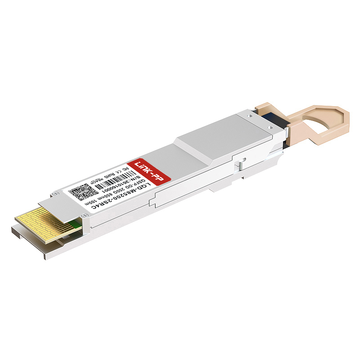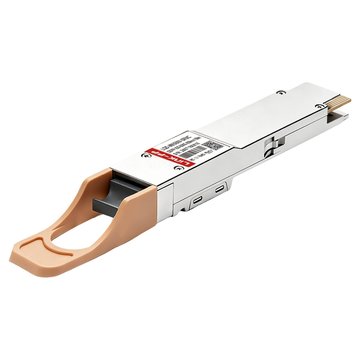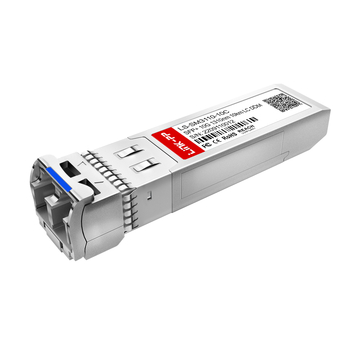
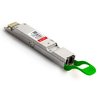
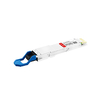
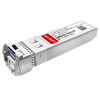
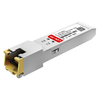
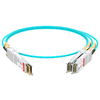
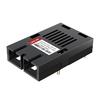
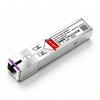
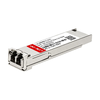






Optical transceivers are essential components in enterprise networks, data centers, and telecommunications infrastructure. As network bandwidth requirements continue to increase, organizations need more optical modules to support 10G, 25G, 100G, and even 400G connections. However, the cost of network expansion can become a significant concern, particularly when every connection requires an OEM-branded transceiver.
This has led many network operators to consider compatible optical transceivers as an alternative to original equipment manufacturer (OEM) modules. Although both options can deliver the required optical transmission performance, they differ in pricing, product sourcing, equipment compatibility, warranty coverage, and technical support. Understanding these differences is essential before selecting modules for a network deployment.
This article provides a practical comparison of OEM and compatible optical transceivers, covering seven important areas:
-
Definitions and fundamental differences between OEM and compatible modules.
-
Optical performance, component quality, and testing procedures.
-
Initial pricing and long-term total cost of ownership.
-
Warranty coverage and after-sales technical support.
-
Potential risks and methods for reducing deployment problems.
-
Selection criteria and the role of LINK-PP compatible optical modules.
By examining these factors, network engineers and infrastructure managers can identify the most appropriate optical transceiver solution for their technical requirements, operational policies, and budgets.
What Are OEM and Compatible Optical Transceivers?
OEM and compatible optical transceivers are two different sourcing options for optical networking hardware. Both are designed to provide optical-to-electrical and electrical-to-optical signal conversion, but they differ in branding, manufacturing arrangements, firmware coding, pricing, and after-sales support. Understanding these distinctions is the first step in evaluating which option is appropriate for a network.
What Are OEM Optical Transceivers?
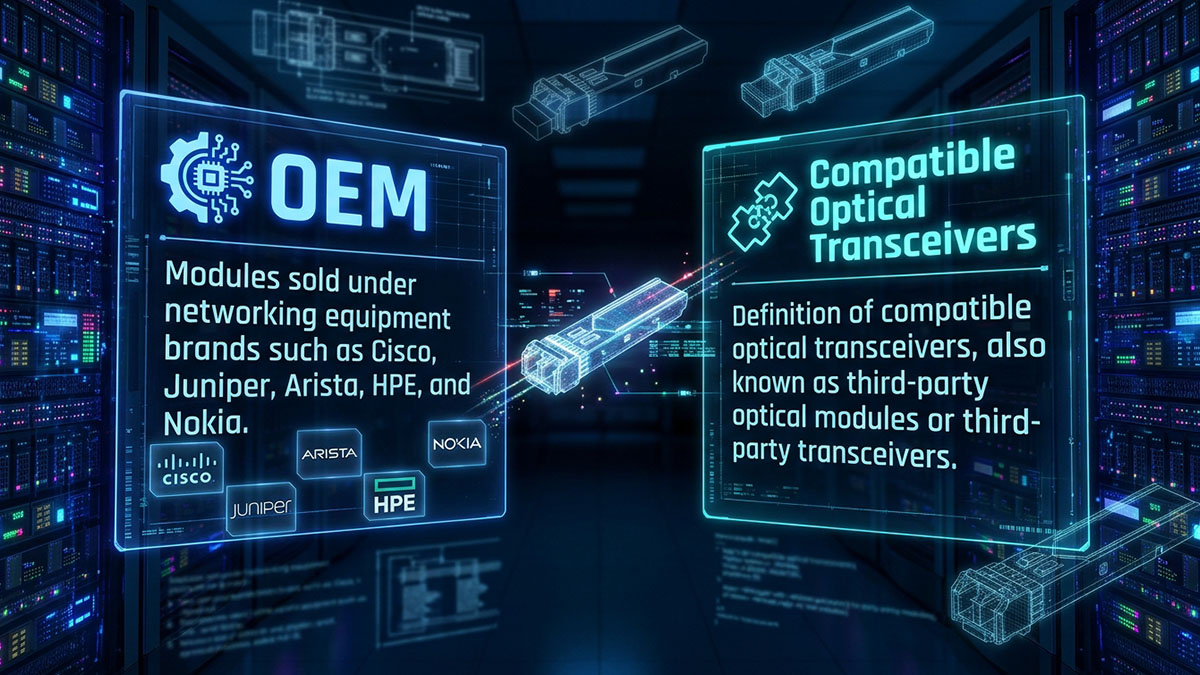
OEM (Original Equipment Manufacturer) optical transceivers are modules supplied under the brand of an original networking equipment manufacturer or its authorized product channel. They are commonly associated with equipment vendors such as Cisco, Juniper, Arista, HPE, and Nokia.
OEM optical modules are typically identified by the equipment manufacturer's part number and product branding. They are designed for use within the vendor's networking ecosystem, with product specifications and compatibility information documented through official channels.
Key characteristics of OEM optical transceivers include:
-
Brand-specific product identification: Each module carries an OEM part number, vendor identification, and corresponding product documentation.
-
Vendor-defined compatibility: The manufacturer specifies supported switches, routers, network interface cards (NICs), and software environments.
-
Official support channels: Technical assistance and warranty services are generally provided through the original equipment manufacturer or its authorized distribution network.
-
Established product qualification: OEM modules are typically validated against the manufacturer's requirements for supported networking platforms.
-
Integrated support arrangements: Organizations may benefit from managing hardware and optical module support through the same vendor.
For example, Cisco SFP-10G-SR, Juniper JNP-SFP-10G-SR, and Arista SFP-10G-SR are examples of brand-specific 10G SFP+ optical transceiver products. Although their fundamental optical applications may be similar, their part numbers and platform support requirements are different.
It is important to distinguish the OEM brand from the actual component manufacturer. An OEM-branded optical transceiver may be manufactured by an independent optical component company under a supply agreement. Therefore, OEM branding does not necessarily mean that every internal component is manufactured by the networking equipment brand itself.
What Are Compatible Optical Transceivers?
Compatible optical transceivers are third-party optical modules manufactured independently and programmed to operate with networking equipment from specific brands. They provide an alternative to OEM-branded modules while maintaining the optical and electrical characteristics required by the target application.
Unlike OEM products, compatible modules are generally sold under the independent manufacturer's own brand. Their compatibility is established through product specifications, EEPROM programming, equipment testing, and interoperability verification.
Their main characteristics include:
-
Independent manufacturing: Compatible modules are produced and supplied by third-party optical transceiver manufacturers.
-
Vendor-specific coding: EEPROM information can be programmed to identify the module to supported equipment platforms.
-
Standards-based interfaces: Products are designed around applicable Multi-Source Agreement (MSA), IEEE, and Small Form Factor (SFF) specifications.
-
Multiple equipment platforms: A compatible module supplier may offer different coding options for Cisco, Juniper, Arista, HPE, Dell, and other networking systems.
-
Independent warranty and support: Product warranty, technical assistance, and replacement services are provided by the compatible module supplier.
Compatible optical transceivers are available in many common form factors and transmission categories, including:
-
SFP and SFP+ for 1G and 10G connections.
-
SFP28 for 25G Ethernet.
-
QSFP+ for 40G Ethernet.
-
QSFP28 for 100G Ethernet.
-
QSFP-DD for 200G and 400G applications, depending on the module type.
-
OSFP for high-density 400G and 800G networking applications.
-
Specialized optical modules, including BiDi, CWDM, DWDM, SR, LR, ER, and ZR transceivers.
The important point is that compatible does not automatically mean universal. A 10G SFP+ module coded for one equipment platform may not be recognized by another platform without the appropriate coding and validation.
OEM vs. Compatible Optical Transceivers: Key Differences at a Glance
The main differences between OEM and compatible optical transceivers involve branding, sourcing, compatibility management, pricing, and support arrangements. Their optical performance should be compared using actual specifications rather than brand names alone.
The following table summarizes the most important differences.
|
Comparison Dimension |
OEM Optical Transceivers |
Compatible Optical Transceivers |
|---|---|---|
|
Product Branding |
Networking equipment manufacturer's brand |
Independent manufacturer's brand |
|
Manufacturing |
OEM or contracted manufacturing partners |
Independent optical module manufacturers |
|
EEPROM Coding |
OEM-defined identification |
Platform-specific third-party coding |
|
Optical Standards |
Applicable IEEE and MSA standards |
Applicable IEEE and MSA standards |
|
Compatibility |
Officially specified platform support |
Independently validated platform support |
|
Initial Cost |
Generally higher |
Generally lower |
|
Warranty Provider |
OEM or authorized channel |
Independent module supplier |
|
Technical Support |
OEM support channels |
Supplier's technical support team |
|
Product Availability |
Depends on OEM supply channels |
Depends on independent supplier inventory |
|
Sourcing Flexibility |
Often tied to the OEM ecosystem |
More flexible multi-vendor sourcing |
These differences do not mean that every compatible module is equivalent to every OEM product. Optical specifications, component selection, manufacturing quality, and equipment validation still need to be examined individually.
Optical Performance and Quality: Are Compatible Modules as Reliable as OEM?
Compatible optical transceivers can deliver optical performance comparable to OEM modules when both meet the same applicable technical specifications and are properly validated for the target platform. However, reliability depends on component quality, manufacturing consistency, testing procedures, and environmental suitability rather than compatibility coding alone.
Optical Specifications and Transmission Performance
The fundamental optical specifications determine whether a transceiver can support a particular network connection. When comparing OEM and compatible optical modules, the data rate, wavelength, transmission distance, fiber type, and optical power budget should match the intended application.
The most important parameters include:
-
Data rate: The supported transmission speed, such as 1G, 10G, 25G, 40G, 100G, or 400G.
-
Wavelength: The optical wavelength used for transmission, such as 850nm, 1310nm, or 1550nm, depending on the transceiver type.
-
Transmission distance: The maximum specified link reach under defined fiber and link-budget conditions.
-
Fiber type: Multimode fiber (MMF) or single-mode fiber (SMF), depending on the optical interface.
-
Transmitter output power: The optical power launched into the fiber.
-
Receiver sensitivity: The minimum optical input power required for the receiver to meet its specified performance.
-
Power consumption: The electrical power required by the module during operation.
The following examples illustrate how optical specifications vary across common transceiver categories.
|
Transceiver Type |
Data Rate |
Typical Wavelength |
Fiber Type |
Typical Reach |
|---|---|---|---|---|
|
10GBASE-SR |
10Gbps |
850nm |
MMF |
Up to 300m on OM3 |
|
10GBASE-LR |
10Gbps |
1310nm |
SMF |
10km |
|
25GBASE-SR |
25Gbps |
850nm |
MMF |
Up to 100m on OM4 |
|
25GBASE-LR |
25Gbps |
1310nm |
SMF |
10km |
|
40GBASE-SR4 |
40Gbps |
850nm |
MMF |
Up to 150m on OM4 |
|
100GBASE-SR4 |
100Gbps |
850nm |
MMF |
Up to 100m on OM4 |
|
100GBASE-LR4 |
100Gbps |
LAN-WDM |
SMF |
10km |
|
100GBASE-CWDM4 |
100Gbps |
CWDM4 |
SMF |
2km |
|
400GBASE-FR4 |
400Gbps |
CWDM4 |
SMF |
2km |
Note: These are representative Ethernet optical interface specifications. Actual reach depends on the applicable standard, fiber grade, link budget, and module implementation.
For an OEM and compatible module comparison, matching the form factor alone is insufficient. Two 100G QSFP28 modules, for example, may have completely different optical applications. A 100GBASE-SR4 module designed for multimode fiber cannot simply replace a 100GBASE-LR4 module designed for single-mode fiber.
A technically appropriate comparison should therefore verify:
-
The same Ethernet or Fibre Channel application.
-
The same data rate and optical lane configuration.
-
Matching wavelengths and optical channel arrangements.
-
The same fiber type, connector, and transmission distance.
-
Equivalent transmitter and receiver performance requirements.
-
Compatible power consumption and host electrical interface requirements.
When these parameters are properly matched, a compatible optical transceiver can serve the same intended transmission application as its OEM counterpart.
Component Quality and Manufacturing Standards
The reliability of an optical transceiver is closely related to the quality of its internal components and manufacturing processes. A compatible module with appropriate optical components and consistent production controls can perform reliably, while a poorly manufactured module may experience unstable transmission or premature failure.
Important internal components include:
-
Laser diodes: Generate the optical signals transmitted through the fiber. Their performance affects wavelength stability, output power, and operating life.
-
Photodiodes: Convert received optical signals into electrical signals. Receiver performance influences sensitivity and signal quality.
-
Driver ICs: Control laser operation and support the electrical interface between the host system and optical components.
-
TIA (Transimpedance Amplifier): Converts the small electrical current generated by the photodiode into a usable voltage signal.
-
DSP and signal-processing components: Used in applicable high-speed transceivers to support signal processing, equalization, and transmission performance.
-
Thermal management components: Help maintain stable operating conditions and prevent excessive heat accumulation.
Manufacturing standards and quality management systems are also important considerations. Relevant references include:
-
IEEE 802.3 Ethernet specifications for supported physical-layer interfaces.
-
SFP, SFP+, QSFP, and QSFP-DD Multi-Source Agreements for module form factors and interfaces.
-
SFF-8472 for digital diagnostic monitoring in applicable SFP-family modules.
-
ISO 9001 for quality management system requirements.
-
RoHS and applicable environmental compliance requirements.
IEEE 802.3 defines Ethernet operation across multiple data rates and physical media, while SFF-8472 specifies a management interface for monitoring and controlling applicable optical transceivers. Compliance with these standards helps establish a technical baseline, but it does not independently guarantee product quality or interoperability with every switch.
Optical Module Testing and Quality Assurance
Optical module testing is essential for identifying manufacturing defects and verifying that a transceiver meets its specified operating requirements. Both OEM and compatible modules should undergo appropriate testing before deployment.
A comprehensive optical transceiver quality control process may include the following procedures:
-
Optical power testing: Confirms that transmitter output power and receiver optical levels remain within specified limits.
-
Wavelength testing: Verifies that the transmitted optical signal uses the required wavelength.
-
Extinction ratio testing: Measures the contrast between the optical signal's logical high and low states.
-
Receiver sensitivity testing: Evaluates the minimum optical power at which the receiver can operate within its specified error performance.
-
BER testing: Measures bit errors during a defined transmission test.
-
DDM/DOM verification: Checks whether diagnostic information such as temperature, voltage, bias current, and optical power is reported correctly.
-
Temperature testing: Evaluates module operation across its specified commercial, extended, or industrial temperature range.
-
Interoperability testing: Checks whether the module establishes a link and operates correctly with the intended host equipment.
The distinction between laboratory testing and real-world interoperability testing is particularly important. A module may pass optical performance testing but still fail to establish a link because of host coding, firmware restrictions, or platform-specific requirements.
OEM vs. Compatible Optical Transceivers: Cost and Total Cost of Ownership
Compatible optical transceivers generally offer a lower initial hardware cost than OEM-branded alternatives. However, the actual financial advantage should be evaluated through total cost of ownership (TCO), which includes installation, validation, maintenance, replacement, and potential downtime throughout the module's service life.

Why Are OEM Optical Transceivers More Expensive?
OEM optical transceivers often carry higher prices because their commercial value includes more than the optical hardware itself. Brand positioning, distribution arrangements, product qualification, warranty services, and vendor support all contribute to the overall pricing structure.
Common factors influencing OEM pricing include:
-
Brand premium: Established networking brands can command higher prices because customers associate their products with official platform support.
-
Distribution costs: Authorized distributors and regional supply chains may add costs to the final product price.
-
Vendor qualification: Product validation and support arrangements contribute to the overall commercial offering.
-
Warranty and support services: OEM pricing may incorporate access to official technical assistance, replacement services, and maintenance programs.
-
Supply chain management: Inventory management, regional availability, and commercial agreements can affect product pricing.
Another important consideration is the relationship between optical module manufacturers and networking equipment brands. Some OEM-branded modules are manufactured by specialized optical component companies under contract.
Consequently, the price difference between an OEM module and a compatible alternative does not necessarily represent an equivalent difference in optical component quality or transmission performance.
How Compatible Optical Transceivers Reduce Network Deployment Costs
Compatible optical transceivers can reduce network deployment costs by providing an alternative supply channel without requiring organizations to rely exclusively on OEM-branded modules.
Compatible modules offer several potential cost advantages:
-
Lower module prices: Independent suppliers generally have more flexible pricing structures.
-
Reduced infrastructure expenditure: Large-scale deployments can achieve meaningful savings when compatible modules meet the required specifications.
-
More sourcing options: Network operators can evaluate multiple suppliers instead of depending entirely on one OEM supply channel.
-
Flexible inventory management: Compatible suppliers may offer a wider range of module types and coding options.
-
More economical replacement: Spare modules can be maintained at a lower hardware cost, depending on the product and supplier.
The cost advantage becomes particularly noticeable in networks with hundreds or thousands of optical connections.
For example, a data center expanding its 10G, 25G, and 100G infrastructure may need different optical module types for server connections, switch uplinks, and inter-switch links. If every connection uses an OEM-branded transceiver, the cumulative hardware expenditure can become substantial.
Total Cost of Ownership (TCO): Beyond the Initial Price
Total cost of ownership provides a more complete way to compare OEM and compatible optical transceivers. The lowest initial module price does not automatically represent the lowest long-term network cost.
A practical TCO assessment should include:
-
Initial module cost: The price of the optical transceiver itself.
-
Installation and validation: Labor and resources required to verify compatibility and establish network connectivity.
-
Maintenance expenses: Costs associated with monitoring, troubleshooting, and maintaining optical connections.
-
Replacement expenses: The cost of spare modules and replacement procedures.
-
Downtime impact: Potential financial and operational losses caused by link interruptions.
-
Warranty coverage: The extent to which repair, replacement, and return shipping costs are covered.
-
Technical support: The availability and responsiveness of the supplier's support team.
The following comparison illustrates how these factors may differ.
|
TCO Dimension |
OEM Optical Transceivers |
Compatible Optical Transceivers |
|---|---|---|
|
Initial Hardware Cost |
Generally higher |
Generally lower |
|
Installation |
Depends on deployment |
Depends on deployment |
|
Compatibility Verification |
OEM documentation and support |
Supplier validation and customer testing |
|
Replacement Cost |
Generally higher |
Generally lower |
|
Technical Support |
OEM support agreement |
Independent supplier support |
|
Warranty Management |
OEM or authorized channel |
Compatible module supplier |
|
Downtime Risk |
Depends on product and deployment |
Depends on product and deployment |
|
Long-Term TCO |
Depends on pricing and support requirements |
Depends on quality, warranty, and operational performance |
For a small network with strict vendor support requirements, OEM modules may provide better overall value. For a large multi-vendor data center with well-defined validation procedures, compatible modules may offer a more economical long-term solution.
Warranty and Technical Support: What Happens When You Choose Compatible Modules?
The primary warranty difference between OEM and compatible optical transceivers is the organization responsible for after-sales service. OEM modules are generally supported by the original equipment manufacturer or its authorized channels, while compatible modules are covered by the independent supplier's warranty. Before selecting either option, network operators should examine warranty duration, replacement conditions, technical assistance, and return shipping responsibilities.
OEM Optical Transceiver Warranty and Support
OEM optical transceivers typically provide warranty coverage through the networking equipment manufacturer or its authorized distribution channel. This can be particularly convenient for organizations that prefer centralized hardware support.
Common characteristics of OEM warranty and support include:
-
Manufacturer-backed coverage: Warranty claims are handled through the OEM or an authorized service provider.
-
Product replacement: Eligible defective modules may be replaced according to the manufacturer's warranty conditions.
-
Technical assistance: Customers can access official documentation, troubleshooting resources, and technical support services.
-
Integrated maintenance: Some organizations manage optical modules under broader equipment maintenance agreements.
-
Vendor-specific service policies: Warranty conditions may vary according to the product family, region, and service contract.
OEM support can be advantageous in environments where network equipment and optical modules are managed under a single maintenance arrangement.
However, OEM warranty coverage should not be assumed to cover every deployment-related problem. Damage caused by improper installation, unsuitable optical specifications, or external conditions may fall outside the warranty.
It is also important to distinguish between the warranty of an optical transceiver and the warranty of the switch in which it is installed. These are separate products with potentially different coverage conditions.
Compatible Optical Module Warranty and After-Sales Support
Compatible optical modules are supported by their independent manufacturers or suppliers. Their warranty arrangements are not necessarily identical to OEM policies, so customers should review the specific terms before deployment.
A reliable compatible optical module supplier should provide clear information about:
-
Warranty duration: The period during which eligible manufacturing defects are covered.
-
Replacement conditions: Whether defective or DOA modules qualify for replacement.
-
Return procedures: How customers submit warranty or compatibility claims.
-
Technical troubleshooting: Assistance with unsupported transceivers, link failures, and diagnostic issues.
-
Compatibility assistance: Support for confirming the correct module coding and equipment requirements.
-
Return shipping: Clear responsibility for shipping costs when a product has a verified quality or compatibility problem.
For example, LINK-PP provides a 15-day no-reason return and refund policy for eligible standard-stock products, subject to its return conditions. Its published warranty policy also provides a five-year warranty for eligible products, with free repair and maintenance for covered manufacturing defects. Eligible DOA or defective standard-stock products may qualify for free replacement. Customized and consumable products have different return conditions.
Another important consideration is the supplier's ability to provide technical support before and after installation. A supplier that can help identify an incompatible module, review switch information, and troubleshoot optical link problems can reduce the operational burden on network administrators.
Risks of Compatible Optical Transceivers and How to Minimize Them
Compatible optical transceivers can provide a reliable alternative to OEM modules, but their quality and compatibility vary between suppliers. The main risks are associated with poor component quality, incorrect coding, insufficient testing, and unclear warranty conditions. These risks can be reduced through supplier evaluation and a structured validation process.
Potential Risks of Low-Quality Compatible Optical Modules
Not all third-party optical modules are manufactured to the same quality standards. Products with inadequate component selection or insufficient testing may create network reliability problems.
The most common risks include:
-
Inconsistent optical performance: Transmitter output power or receiver sensitivity may fall outside the required specifications.
-
High bit error rates: Poor signal quality can result in packet errors, retransmissions, and unstable connections.
-
Premature module failure: Low-quality laser diodes, photodiodes, or electronic components may reduce operational lifespan.
-
Incorrect EEPROM coding: A module may fail to be recognized by the target switch or router.
-
Temperature instability: A module that does not meet the required operating temperature range may experience performance degradation.
-
Incomplete DDM/DOM functionality: Diagnostic information may be unavailable, inaccurate, or incorrectly interpreted by the host device.
-
Insufficient product traceability: Missing serial numbers, test records, or manufacturing information can complicate failure analysis.
-
Limited after-sales support: Some suppliers may not provide adequate technical assistance or clear replacement procedures.
These problems are not exclusive to compatible optical modules. OEM modules can also experience manufacturing defects, installation problems, and optical link failures.
The important difference is that third-party products require careful supplier evaluation because quality assurance and support arrangements are independent of the networking equipment manufacturer.
How to Evaluate a Compatible Optical Module Supplier
Selecting a reliable compatible optical module supplier is one of the most effective ways to minimize deployment risks. A supplier should demonstrate not only product availability but also technical competence, quality management, and after-sales support.
The following factors should be evaluated before selecting a supplier.
1. Manufacturing and quality control capabilities
-
Does the supplier have documented manufacturing procedures?
-
Are optical and electrical parameters tested before shipment?
-
Can the supplier provide relevant quality management certifications?
-
Are production batches traceable?
2. Compatibility coverage
-
Does the supplier support the required networking equipment brand?
-
Can it provide the correct EEPROM coding?
-
Are specific switch and router models documented?
-
Can it provide compatibility test reports?
3. Technical documentation
-
Are product datasheets available?
-
Are wavelength, data rate, reach, and fiber requirements clearly specified?
-
Are operating temperature and power consumption documented?
-
Are DDM/DOM functions identified?
4. Warranty and after-sales service
-
Is the warranty period clearly stated?
-
Are replacement and repair conditions transparent?
-
Who covers return shipping for verified product defects?
-
Is technical support available for compatibility problems?
5. Long-term supply capability
-
Can the supplier maintain consistent product specifications?
-
Are replacement modules available for future maintenance?
-
Can the supplier support different data rates and optical interfaces?
-
Is there a clear process for managing product revisions?
A supplier that meets these requirements provides greater confidence than one selected solely on the basis of a low quoted price.
Best Practices for Reducing Deployment Risks
Even when compatible optical transceivers come from a qualified supplier, proper deployment procedures remain essential. Network operators should validate modules before installation and establish monitoring procedures to detect potential problems early.
Recommended practices include:
-
Verify product specifications: Match the module's data rate, wavelength, reach, connector, and fiber type with the network design.
-
Confirm equipment compatibility: Check the exact switch model, firmware version, and EEPROM coding requirements.
-
Request testing documentation: Obtain optical test reports and available interoperability records.
-
Conduct laboratory testing: Test modules in a staging environment before deploying them across production infrastructure.
-
Monitor optical parameters: Use DOM/DDM to track temperature, voltage, bias current, transmit power, and receive power where supported.
-
Inspect fiber connections: Check connector cleanliness, fiber polarity, cable quality, and optical loss.
-
Maintain spare modules: Keep appropriate replacement units available for critical network connections.
-
Document installations: Record module part numbers, serial numbers, equipment locations, and test results.
-
Establish replacement procedures: Define how failed modules are identified, isolated, and replaced.
-
Review supplier support: Confirm the process for reporting defects and requesting technical assistance.
These procedures help reduce the operational risks associated with both OEM and compatible optical modules.
Ultimately, the most reliable deployment strategy combines suitable hardware, verified compatibility, consistent quality control, and effective maintenance practices.
How to Choose Between OEM and Compatible Optical Transceivers: Why Consider LINK-PP?
Choosing between OEM and compatible optical transceivers depends on network requirements, budget constraints, warranty expectations, and operational support policies. OEM modules are often appropriate when centralized vendor support is a priority, while compatible modules can provide a more economical alternative when their technical specifications and platform compatibility have been verified. LINK-PP is one independent supplier offering compatible optical modules for a wide range of networking equipment platforms.

When Should You Choose OEM Optical Transceivers?
OEM optical transceivers are often the more appropriate option for organizations that prioritize official vendor support, standardized maintenance arrangements, or contractual compliance.
Consider OEM modules in the following situations:
-
Strict OEM support requirements: Network infrastructure is covered by a vendor-specific support agreement that requires or recommends approved components.
-
Mission-critical environments: The organization prioritizes centralized troubleshooting and established OEM service arrangements.
-
Regulated or contractual projects: Project specifications explicitly require OEM-branded optical modules.
-
Limited internal testing resources: The organization prefers to rely on the networking equipment vendor's documented compatibility information.
-
Unified infrastructure management: Hardware, software, and optical components are managed under one vendor relationship.
OEM optical transceivers may also be suitable when the cost difference is relatively small compared with the value of integrated support services.
However, OEM modules are not automatically the best choice for every network. Their higher pricing may create unnecessary infrastructure expenditure when qualified compatible alternatives meet the same technical requirements.
When Are Compatible Optical Transceivers a Better Option?
Compatible optical transceivers can be a practical choice when organizations need to control network expenditure without compromising required optical performance.
They are particularly suitable for:
-
Large data center deployments: Hundreds or thousands of optical connections can create substantial opportunities for hardware cost reduction.
-
Enterprise network upgrades: Organizations can reduce the cost of expanding 10G, 25G, 40G, and 100G infrastructure.
-
Multi-vendor environments: Network operators can source compatible modules for different equipment brands through independent suppliers.
-
High-volume replacement requirements: Lower module costs can make spare inventory management more economical.
-
Flexible sourcing strategies: Organizations can evaluate multiple suppliers and reduce dependence on a single OEM supply channel.
-
Non-OEM-restricted environments: Projects that permit third-party components can consider compatible modules based on verified technical requirements.
Before selecting compatible modules, organizations should establish clear acceptance criteria covering optical specifications, equipment compatibility, quality testing, warranty conditions, and technical support.
For critical links, a small-scale validation process should be completed before large-scale deployment. This ensures that the selected module works with the actual network equipment and operating environment.
LINK-PP Optical Modules: A Compatible Alternative to OEM Transceivers
LINK-PP is an independent optical transceiver supplier specializing in compatible modules designed for networking equipment from major manufacturers. Its products provide an alternative to OEM-branded optical transceivers for enterprise networks, data centers, telecommunications infrastructure, and other fiber-optic applications.
Unlike OEM-branded modules, LINK-PP optical transceivers are supplied as third-party compatible products. They are designed around applicable industry standards and can be programmed with platform-specific EEPROM information for supported networking equipment.
1. A broad range of compatible optical transceivers
LINK-PP provides optical modules across multiple data rates, form factors, and transmission applications.
Its product portfolio includes:
-
SFP modules: 100M and 1G optical transceivers for enterprise and access networks.
-
SFP+ modules: 10G optical modules for switch uplinks, server connectivity, and data center networks.
-
SFP28 modules: 25G transceivers for modern server and switching infrastructure.
-
QSFP+ modules: 40G optical transceivers for high-density network connections.
-
QSFP28 modules: 100G optical transceivers for data center and enterprise backbone applications.
-
QSFP-DD modules: High-speed 200G and 400G optical solutions.
-
OSFP modules: High-density optical connectivity for supported 400G and 800G applications.
-
Specialized optical modules: BiDi, CWDM, DWDM, and other application-specific transceivers.
This range allows network operators to evaluate compatible optical solutions across different network generations without relying exclusively on OEM-branded modules. LINK-PP's published product catalog also covers multiple optical transmission categories and related connectivity products.
2. Compatibility with major networking equipment brands
LINK-PP provides platform-specific compatible optical modules for supported equipment from manufacturers such as:
-
Cisco
-
Juniper
-
Arista
-
HPE / Aruba
-
Dell
-
Huawei
-
MikroTik
-
Fortinet
-
NVIDIA / Mellanox
-
Avaya
The compatibility process involves more than matching a product's physical form factor. EEPROM coding and equipment-level validation are important for ensuring that a module is recognized and operates correctly.
According to LINK-PP's published quality and compliance information, its compatibility verification includes vendor-specific EEPROM programming and platform testing for link establishment, traffic transmission, and diagnostic reporting.
3. Quality control and technical verification
For network operators evaluating compatible optical modules, quality control is an important consideration.
LINK-PP describes its product inspection and verification procedures through its quality and compliance documentation. Relevant testing and validation dimensions include:
-
Optical and electrical performance checks.
-
Mechanical and dimensional inspection.
-
Temperature and environmental testing, depending on the product.
-
EEPROM coding verification.
-
Platform interoperability testing.
-
Digital diagnostic reporting verification.
These procedures help establish whether a module meets its intended application requirements. For project-specific deployments, customers should request the applicable product datasheet and testing documentation rather than assuming that every module has identical specifications.
4. Warranty and after-sales support
Warranty coverage is another factor when evaluating LINK-PP compatible optical modules.
According to its published return and warranty policies, eligible standard-stock products have a 15-day no-reason return and refund option, subject to the applicable conditions. Eligible products also receive a five-year warranty covering specified manufacturing defects.
For verified quality or compatibility problems, LINK-PP covers the return shipping costs under its published return policy. Customers should follow the RMA process and obtain authorization before returning products. Customized products and certain other product categories are subject to different return conditions.
A Practical Checklist for Selecting the Right Optical Transceiver
Regardless of whether an organization selects an OEM or compatible optical module, the final decision should be based on technical requirements and operational considerations.
Use the following checklist before selecting an optical transceiver:
For LINK-PP compatible optical modules, the selection process can begin with the official compatibility tool. Users can search by OEM part number, equipment brand, or compatible product model to identify matching optical transceivers and request a quote.
Conclusion
OEM and compatible optical transceivers both play important roles in modern fiber-optic networks. The right choice depends on the balance between optical performance, equipment compatibility, cost, warranty coverage, and technical support. While OEM modules offer an established manufacturer support channel, qualified compatible optical transceivers can provide comparable specified transmission performance with greater sourcing flexibility and lower initial hardware costs.
The key differences can be summarized in four points:
-
Cost: Compatible optical transceivers generally offer a lower initial price and can reduce network deployment expenditure.
-
Performance: Optical specifications, component quality, and testing determine reliability, not branding alone.
-
Compatibility: EEPROM coding, equipment validation, and matching technical specifications are essential for successful deployment.
-
Warranty: OEM and compatible modules have different support providers and warranty conditions, which should be evaluated before installation.
For organizations considering compatible optical modules, LINK-PP provides an alternative to OEM-branded transceivers across multiple data rates, form factors, and equipment platforms. Its published after-sales policy includes a 15-day no-reason return and refund for eligible standard-stock products, while LINK-PP covers return shipping for verified product quality or compatibility problems, subject to its applicable policy.
To identify a suitable module, start with the LINK-PP Compatibility Tool to check equipment compatibility and request a test report. You can then visit the LINK-PP Official Store to review product specifications and request a quotation based on your network requirements.