



































As global data traffic continues to skyrocket, modern core networks are facing an urgent need for higher density and smarter bandwidth aggregation. The QDD 2x100G LR4 optical transceiver has emerged as a groundbreaking solution to this challenge, packing dual-channel 100G capabilities into a single QSFP-DD slot. By delivering a total of 200G throughput over a 10km reach, this next-generation module allows network architects to scale capacity without expanding their physical footprint.
Traditionally, upgrading network capacity meant dealing with crowded front panels and complex cable management. The shift to a dual-channel architecture directly addresses these bottlenecks by maximizing throughput per rack unit and streamlining fiber infrastructure. Whether deployed in hyperscale data center interconnects (DCIs) or enterprise core layers, this innovative form factor lays the groundwork for a highly efficient, future-proof network.
❇️ Understanding the Role of QDD 2x100G LR4 in Modern Core Networks
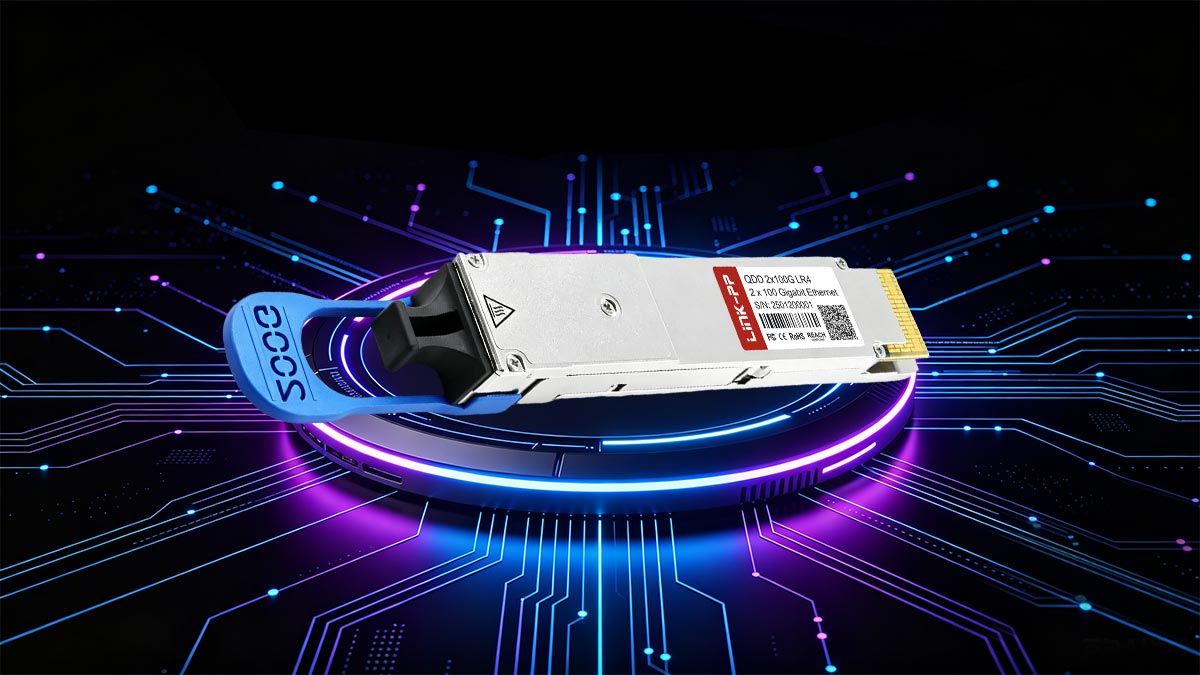
Modern core networks serve as the backbone of global data distribution, bearing the weight of massive traffic loads from cloud computing, AI, and streaming media. As traditional architectures struggle to keep pace with these exploding demands, hardware infrastructure must evolve to deliver higher throughput without multiplying operational complexity. Integrating higher-density form factors into the network core ensures that data pipelines remain fast, stable, and scalable.
The Evolution of Core Network Architecture and Bandwidth Demands
In recent years, core network architectures have shifted from rigid, multi-layered hierarchies to highly distributed, flat leaf-spine topologies. This transition is primarily driven by the exponential growth of east-west traffic inside data centers and a surge in high-bandwidth user applications. To prevent severe data bottlenecks, operators must continuously upgrade their link capacities at the aggregation and core layers.
However, simply adding more physical cables is no longer sustainable due to space and cost limitations. Network architects now demand optical solutions that squeeze more bandwidth into existing footprints rather than building out new infrastructure. This pressure has paved the way for multi-channel, compact transceivers that efficiently handle heavy aggregation workloads.
What is QDD 2x100G LR4? Technical Specifications at a Glance
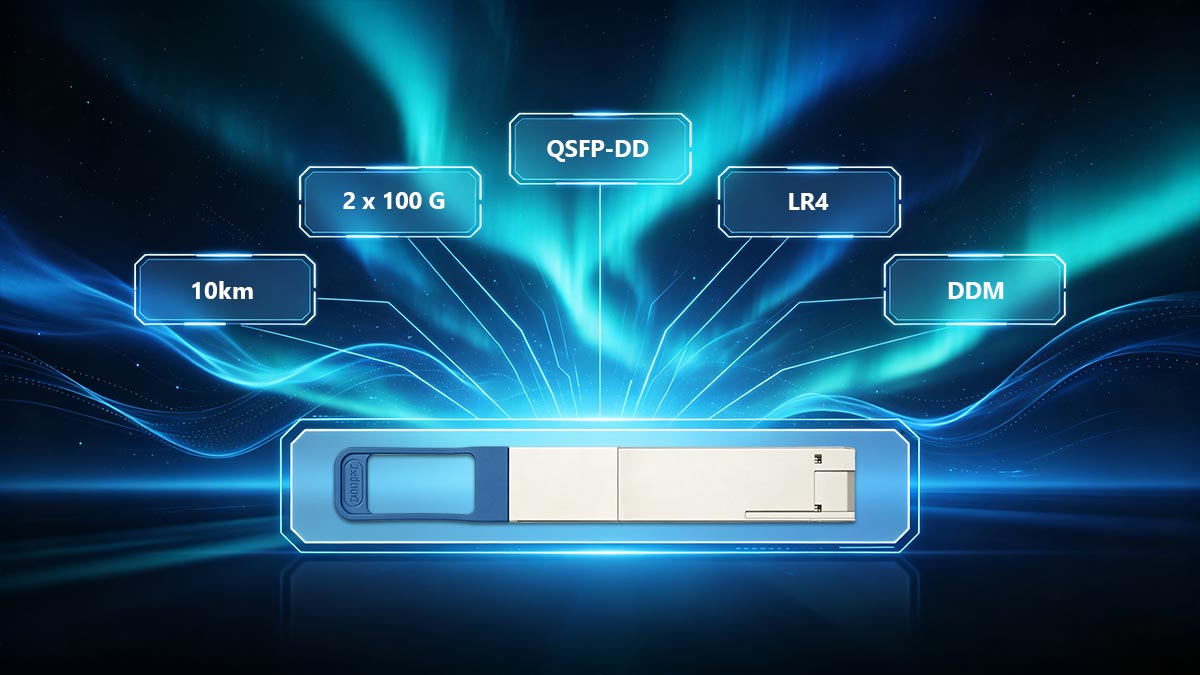
The QDD 2x100G LR4 represents a major leap forward in optical design, functioning essentially as two independent 100G LR4 optical transceivers packed into a single physical module. It operates over standard single-mode fiber (SMF) using a dual-channel architecture to deliver a combined throughput of 200Gbps. By relying on highly precise LAN-WDM wavelengths, it cleanly separates data signals to achieve reliable, long-distance transmission.
To help you understand its core operational capabilities, the table below outlines the primary technical parameters that define this module's performance.
| Parameter | Specification |
| Form Factor | QSFP-DD (Quad Small Form-factor Pluggable Double Density) |
| Data Rate | 200Gbps (Dual 100Gbps Channels) |
| Wavelength | LAN-WDM Grid (1295nm, 1300nm, 1304nm, 1309nm) |
| Max. Reach | Up to 10km over Single-Mode Fiber (SMF) |
| Connector Type | Dual CS Connector |
How Dual-Channel 200G Form Factors Optimize Optical Efficiency
Dual-channel 200G modules optimize optical efficiency by doubling the port density on standard network switches and routers. By grouping two separate 100G links into a single QSFP-DD slot, network operators can significantly lower the total number of physical ports required to aggregate core traffic. This consolidation drastically slashes hardware footprints and reduces total power consumption compared to running multiple independent modules.
Furthermore, this dual-channel approach enhances spectral efficiency across existing single-mode fiber plants. It allows data centers to maximize their existing fiber investments by carrying more data over the same 10km spans without needing expensive amplification. The result is a highly efficient optical layer that delivers a lower total cost per gigabit.
Shifting from Legacy QSFP28 to Next-Generation QDD Modules
The transition from legacy QSFP28 modules to next-generation QSFP-DD (QDD) form factors marks a crucial upgrade path for expanding networks. Standard QSFP28 modules are limited to a single 100G port per slot, which quickly consumes valuable front-panel space on high-capacity switches. The QDD architecture introduces a second row of electrical pins, doubling the system's interface capacity while remaining backward compatible.
Migrating to QDD modules allows network operators to seamlessly transition from 100G to 200G or 400G infrastructures without a disruptive, full-scale hardware overhaul. This evolutionary step eliminates the physical space bottlenecks that plague legacy setups, giving core networks the breathing room to scale efficiently.
❇️ Why QDD 2x100G LR4 is Essential for High-Density Aggregation
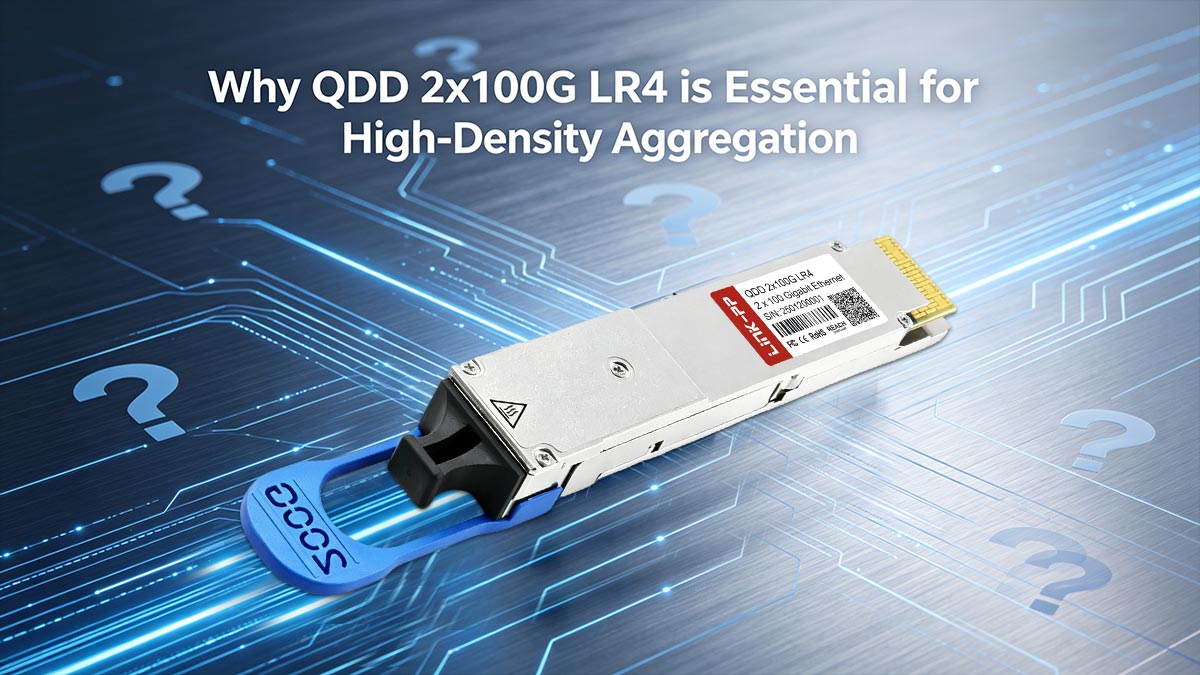
As data volume surges, network engineers must pack more bandwidth into increasingly tight spaces without driving up operational costs. High-density aggregation requires hardware solutions that dramatically increase port efficiency while simplifying physical connectivity. Transitioning to advanced dual-channel modules addresses these challenges directly, offering a strategic blueprint for scalable and highly efficient core architectures.
Solving the Front-Panel Space Constraint in Data Center Leaf-Spine Architectures
Modern leaf-spine architectures demand an immense number of connections to maintain high-speed fabric mesh across data centers. However, traditional switches face a physical limit on how many standard optical transceivers can fit across a standard 1RU front panel. This space bottleneck often forces operators to deploy additional switches, which drives up capital expenses and complicates the network layer.
By deploying the QDD 2x100G LR4, data centers can effectively double their port density on the same physical switch panel. This innovative design allows a single port to handle two independent 100G connections, instantly relieving front-panel congestion. As a result, network engineers can continue scaling their leaf-spine fabric without needing to invest in extra chassis space.
Maximizing Throughput Per Rack Unit (RU) with 2x100G Breakouts
Maximizing data throughput within every single rack unit is a top priority for keeping data center footprints lean and efficient. Traditional 100G setups require an individual slot for every link, which quickly exhausts the total available capacity of a network rack. Utilizing a dual-channel design allows operators to compress multiple high-speed paths into a heavily consolidated space.
The 2x100G breakout capability enables a single QSFP-DD port to split seamlessly into two distinct 100G LR4 channels. This means a standard 36-port switch can suddenly support 72 independent 100G links, vastly increasing the overall bandwidth capacity per RU. Network teams can leverage this density to handle massive data aggregation workloads while keeping their physical rack footprint exceptionally small.
Streamlining Fiber Cable Management in Aggregation Layers
Massive network aggregation layers often suffer from complex cable clutter, which blocks necessary airflow and complicates routine maintenance. Managing hundreds of individual fiber patches can lead to human error during installation, troubleshooting, or port upgrades. Reducing the overall physical cable count is crucial for maintaining an orderly and highly functional data center floor.
The integration of QDD 2x100G LR4 modules helps streamline infrastructure by consolidating multiple links into high-density connector interfaces. Because the module splits two separate 100G channels through a single port, it drastically cuts down on the physical bulk of fiber patch cords running through the racks. This organized approach creates a much cleaner patching environment, improves internal chassis cooling, and simplifies long-term fiber management.
Reducing Component Count to Improve Network Reliability
In large-scale networking, every additional active component introduces another potential point of failure that could disrupt critical data streams. Relying on an excessive number of individual transceivers increases the statistical likelihood of hardware malfunctions and operational downtime. Consolidating hardware functions into integrated components inherently makes the entire system more robust.
The QDD 2x100G LR4 improves overall network reliability by combining the internal circuitry of two independent modules into a single, cohesive housing. This consolidation significantly lowers the overall component count across the aggregation layer while maintaining identical performance standards. With fewer individual modules to monitor, cool, and replace, network operators benefit from a much more resilient architecture and lower maintenance overhead.
❇️ Key Technical Features and Optical Performance of QDD 2x100G LR4
Achieving long-distance transmission and high density requires a combination of sophisticated optical components and robust thermal engineering. The QDD 2x100G LR4 relies on precise laser grids, compact connectors, and advanced error correction to maintain superior signal integrity over long reaches. Understanding these core technical features highlights how the module balances extreme data performance with structural efficiency.
LAN-WDM Grid Lasers and Their Advantages for 10km Reaches
LAN-WDM grid lasers are critical for long-distance, 10km transmissions because they operate on narrow, tightly regulated wavelength channels. Unlike coarse grids, these channels exhibit minimal chromatic dispersion over single-mode fiber, ensuring that data signals stay sharp and distinct over long distances. This precision allows for highly reliable data transport without needing expensive inline optical amplification.
The following list highlights the specific advantages that these specialized lasers bring to the network architecture:
- Ultra-low dispersion: Keeps optical signals sharp across 10km spans.
- Narrow channel spacing: Allows precise multiplexing of four wavelengths per channel.
- No amplification needed: Saves cost by running directly over passive fiber links.
CS Connector vs. Regular LC Connectors for High-Density Patching
To double the port capacity without increasing the transceiver size, standard physical connections had to be re-engineered. Regular LC duplex connectors are simply too large to fit two separate channels into a single QSFP-DD module faceplate. The adoption of the smaller CS connector format solves this physical spacing issue entirely.
Key comparison points show why the CS connector format is superior for high-density layouts:
- 40% size reduction: Occupies significantly less space than a standard LC duplex.
- Dual-channel fit: Enables two independent fiber pairings on a single module front.
- Matching pitch: Aligns perfectly with the dual-channel layout of the internal optics.
- Easy push-pull tabs: Simplifies installation and removal in highly congested patch panels.
Power Consumption and Thermal Dissipation Efficiencies of QSFP-DD
Running two independent 100G optical lines inside a single transceiver creates concentrated thermal energy that must be managed effectively. The QSFP-DD form factor uses an optimized structural design to handle this increased heat, utilizing advanced housing materials and integrated cooling fins. Efficient thermal dissipation prevents the optics from overheating, which directly protects the lifespan of the hardware.
The module incorporates several key engineering features to keep power and temperature within safe operational limits:
- Low per-gigabit power: Consumes less total energy than two standalone 100G QSFP28 modules.
- Integrated heat sinks: Pulls thermal energy away from internal optical components.
- Optimized internal housing: Maximizes airflow across the integrated circuit components.
Forward Error Correction (FEC) Requirements and Link Budget Support
Operating at high data rates over 10km requires built-in mechanisms to combat signal degradation and potential packet loss. Forward Error Correction (FEC) acts as a digital safety net, identifying and correcting transmission errors on the host platform automatically. This error-checking process guarantees that data remains flawless even when the optical link budget is pushed near its physical limits.
The system relies on strict FEC parameters to maintain a reliable, high-performance optical budget:
- Host-side FEC reliance: Depends on the switch or router ASIC to fix bit errors.
- Robust link budget: Provides ample margin to absorb signal loss from patch panels.
- Flawless data integrity: Keeps bit error rates (BER) safely within enterprise-grade limits.
- Stable long-range links: Maintains clear communication pathways across the entire 10km reach.
❇️ Core Network Architecture: Integrating QDD 2x100G LR4 into Your Infrastructure
Successfully integrating QDD 2x100G LR4 modules into a core network requires careful alignment with existing switching fabrics and cabling plants. The addition of these dual-channel transceivers allows operators to scale up link capacity smoothly while preserving their legacy hardware investments. By mapping this high-density solution to strategic aggregation points, enterprises can establish a highly resilient and balanced network topology.
Utilizing QSFP-DD Slots for 2x100G Dense Core Aggregation
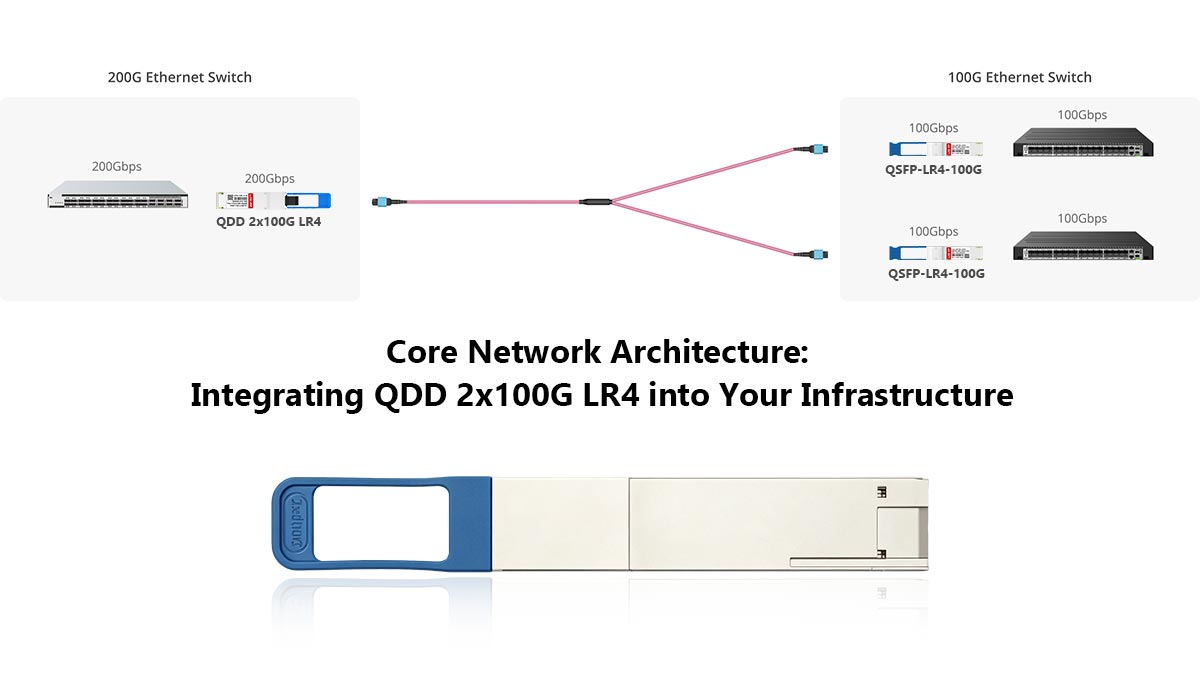
Deploying the QDD 2x100G LR4 into standard QSFP-DD slots allows network engineers to instantly achieve dense aggregation at the core layer without chassis expansions. The host switch effectively treats the single physical slot as two independent 100G interfaces, maximizing the value of the active switching silicon. This configuration effectively doubles the density of 100G ingest pathways, preventing early port exhaustion during rapid traffic expansions.
Interconnecting Aggregation Routers and High-Capacity Core Switches
Connecting high-capacity core switches to distributed aggregation routers requires ultra-reliable, high-throughput links that can absorb sudden traffic spikes. The QDD 2x100G LR4 architecture provides the perfect operational middle ground by consolidating separate uplink pathways into a streamlined physical footprint. This consolidation minimizes port consumption on expensive core routers while ensuring massive data pipelines remain wide open between critical network layers.
Ensuring Backward Compatibility with Existing 100G LR4 Infrastructure
A major operational benefit of the QDD 2x100G LR4 module is its native backward compatibility with older, standard 100G LR4 hardware already running in the data center. By utilizing a simple CS-to-LC breakout patch cable, this dual-channel module can easily split and talk directly to two separate legacy 100G QSFP28 slots. This seamless interoperability protects existing capital investments and allows for a gradual, risk-free migration to higher-density switch chassis.
Managing Optical Budget and Loss Across 10km Campus Links
Maintaining a healthy optical link budget across a 10km campus footprint requires strict management of attenuation when deploying the QDD 2x100G LR4 over legacy single-mode fiber. Because the module utilizes a precise LAN-WDM laser grid, it provides a robust power margin capable of overcoming common physical layer obstructions like splices and patch panels. Network teams must calculate cumulative connector loss during deployment to ensure the received signal stays well within compliant limits for flawless data transmission.
❇️ Use Case 1: Data Center Interconnect (DCI) Driven by QDD 2x100G LR4
Data Center Interconnect (DCI) architectures require robust, high-density optical links to seamlessly bridge the gap between geographically separated facilities. Deploying the QDD 2x100G LR4 allows operators to aggregate massive amounts of metro traffic while bypassing the spatial and financial constraints of traditional optics. This makes it an ideal driver for hyperscale data centers that need to expand their interconnect capacity rapidly and efficiently.
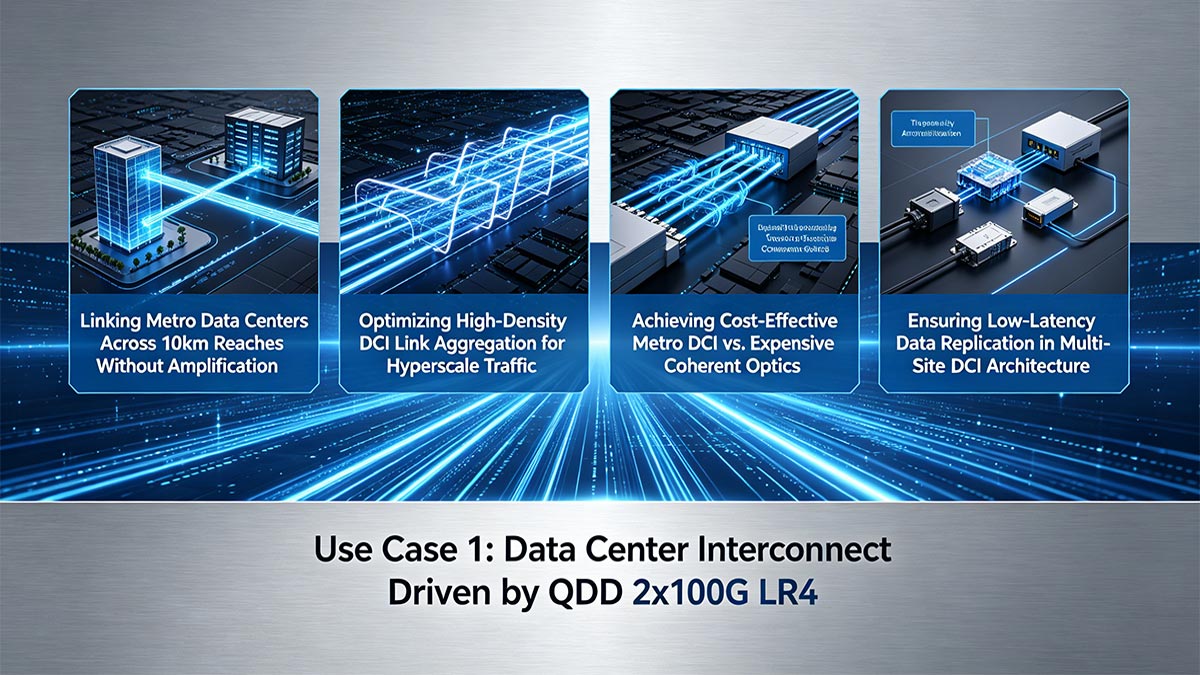
Linking Metro Data Centers Across 10km Reaches Without Amplification
The QDD 2x100G LR4 provides a highly reliable solution for linking metro data centers situated up to 10 kilometers apart over standard single-mode fiber. Thanks to its powerful LAN-WDM laser grid, the module easily overcomes normal signal attenuation without requiring expensive inline optical amplifiers or active transponders.
Optimizing High-Density DCI Link Aggregation for Hyperscale Traffic
Hyperscale data centers generate immense east-west traffic that can quickly overwhelm standard interconnect pathways and exhaust valuable switch ports. By deploying the QDD 2x100G LR4, network engineers can combine dual 100G channels into unified Link Aggregation Groups (LAGs), maximizing throughput across a heavily consolidated physical footprint.
Achieving Cost-Effective Metro DCI vs. Expensive Coherent Optics
For mid-range distances up to 10km, the QDD 2x100G LR4 offers a significantly more economical alternative to complex and power-hungry coherent optical transceivers. It delivers the exact high-density throughput needed for metro DCI links while dramatically slashing both initial capital expenditures and ongoing operational power costs.
Ensuring Low-Latency Data Replication in Multi-Site DCI Architecture
Multi-site data replication demands ultra-low latency to keep critical database clusters synchronized and prevent active-active storage bottlenecks. Because the QDD 2x100G LR4 uses a simple, direct NRZ mapping without heavy internal digital signal processing (DSP), it keeps transmission latency at an absolute minimum across the entire DCI fabric.
❇️ Use Case 2: Enterprise Core Aggregation via QDD 2x100G LR4
Large-scale corporate networks require high-capacity distribution layers to manage heavy traffic moving across vast corporate campuses. Deploying the QDD 2x100G LR4 allows IT departments to smoothly consolidate disparate data paths into a centralized network spine without upgrading their entire physical chassis infrastructure. This provides enterprise networks with a reliable, high-density solution to handle demanding internal workloads with minimal overhead.
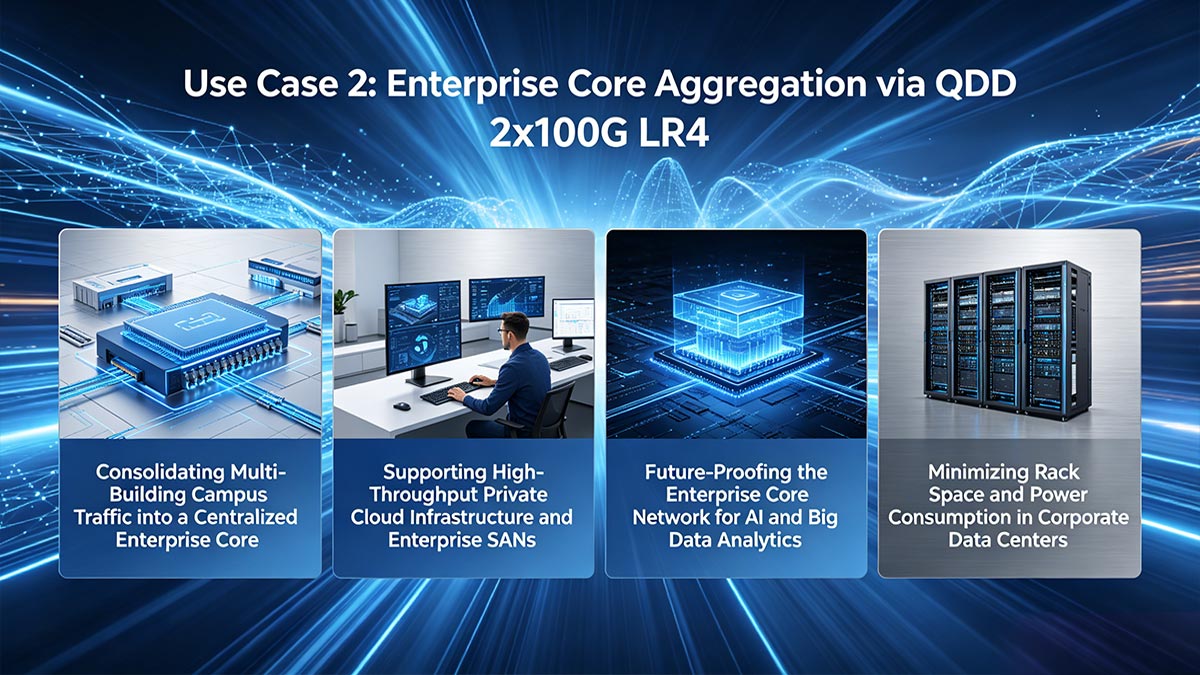
Consolidating Multi-Building Campus Traffic into a Centralized Enterprise Core
The QDD 2x100G LR4 is highly effective for funneling massive amounts of data from multiple outlying campus buildings straight into a single, centralized core switch. Its 10km transmission reach allows enterprises to bridge long-distance campus runs effortlessly over single-mode fiber while maintaining full wire-speed 100G throughput on each independent channel.
Supporting High-Throughput Private Cloud Infrastructure and Enterprise SANs
Modern private clouds and localized Storage Area Networks (SANs) generate dense, bursty traffic that can easily bottleneck legacy distribution hardware. By leveraging the dual-channel capacity of the QDD 2x100G LR4, enterprise administrators can dedicate stable, isolated high-speed links directly to critical flash storage arrays and compute clusters.
Future-Proofing the Enterprise Core Network for AI and Big Data Analytics
As corporate networks increasingly adopt localized AI models and advanced big data analytics engines, the demand for sustained, high-bandwidth pipelines grows exponentially. Implementing the QDD 2x100G LR4 guarantees that the enterprise core layer has the immediate headroom necessary to ingest massive data sets without introducing packet drops or network lag.
Minimizing Rack Space and Power Consumption in Corporate Data Centers
On-premise corporate data centers frequently operate under strict spatial limitations and tight power budgets. The compressed form factor of the QDD 2x100G LR4 provides a massive efficiency boost by delivering 200G of aggregated connectivity per slot, which significantly lowers the total number of active switches required and drops cooling demands.
❇️ Deployment Best Practices and Troubleshooting for QDD 2x100G LR4
Proper installation protocols and systematic diagnostic monitoring are essential for ensuring the long-term stability of high-density optical hardware. Deploying the QDD 2x100G LR4 requires careful consideration of host compatibility, fiber cleanliness, and precise port configuration to maximize link uptime. Adhering to proven operational guidelines allows engineering teams to quickly resolve physical layer issues and maintain optimal data throughput.
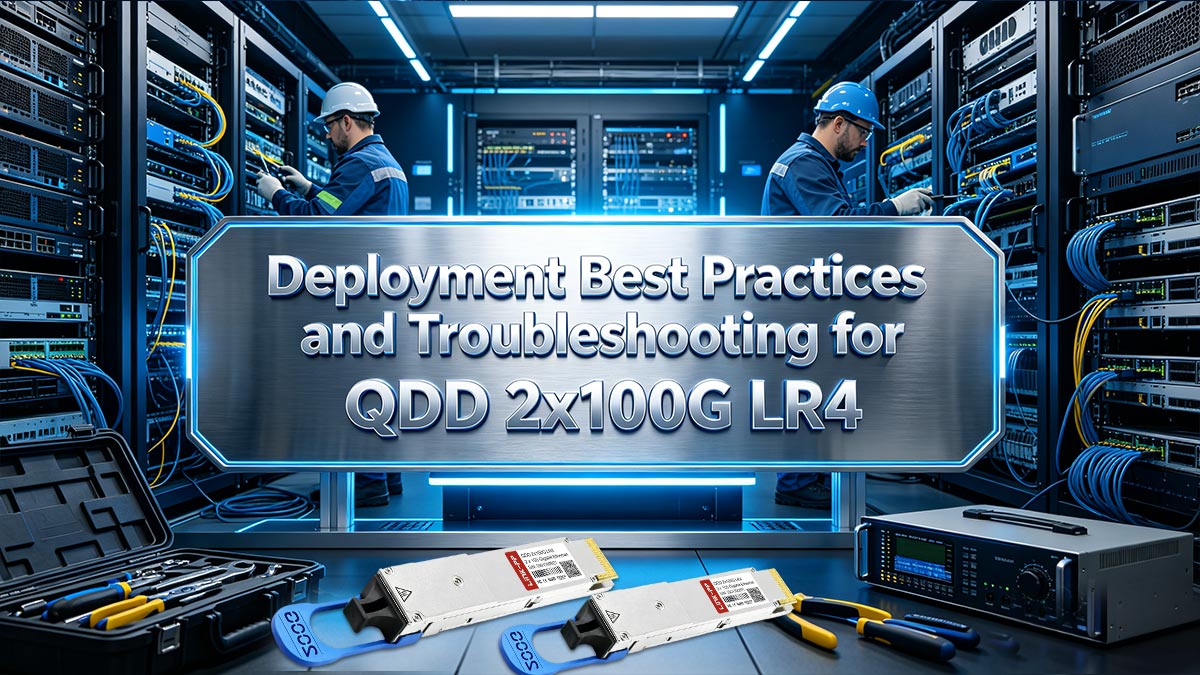
Verifying Host Platform Compatibility and Firmware Support
Before hardware installation, engineers must verify that the target switch or router fully supports the dual-channel configuration of the QDD 2x100G LR4. Because the module maps two independent 100G links into a single physical port, the host operating system must be updated to correctly recognize and partition the interface silicon.
Reviewing the following operational verification steps will help prevent initial boot failures and system port errors:
- Check the hardware compatibility matrix: Confirm specific switch model approval.
- Update the host OS firmware: Install latest software releases for proper port mapping.
- Verify port breakout configuration: Ensure the slot is configured to run in 2x100G mode.
- Review power level constraints: Confirm the switch port can supply the module's rated power.
Maintaining Optical Fiber Cleanliness for CS Connectors
The compact design of the CS connector makes it highly sensitive to dust, oil, and airborne contaminants that can block light pathways. Contaminated end-faces on a QDD 2x100G LR4 can lead to severe signal attenuation, high bit error rates, or total link failure.
Following standard fiber cleaning and inspection protocols ensures a completely clean and highly stable connection:
- Inspect before you connect: Use a specialized CS fiber scope to view the ferrule.
- Utilize dedicated CS cleaning tools: Apply a dry-cloth click cleaner designed for 1.25mm pitches.
- Avoid touching the connector tips: Prevent natural skin oil transfer during handling.
- Cap unpopulated ports immediately: Shield exposed optics from open-air data center dust.
Monitoring Real-Time Transceiver Health Using Digital Diagnostics Monitoring (DDM)
Digital Diagnostics Monitoring (DDM) allows network administrators to track the vital real-time operating metrics of the QDD 2x100G LR4. This telemetry data provides immediate insight into internal module performance, helping teams identify early signs of fiber degradation before a complete link outage occurs.
Consistently monitoring these specific DDM parameters allows for highly effective, proactive network troubleshooting:
- Track optical TX/RX power: Identify line attenuation or failing transmitter lasers.
- Monitor transceiver temperature: Catch internal overheating issues caused by blocked airflow.
- Observe module supply voltage: Ensure the host platform provides steady, compliant electrical power.
- Log historical error alerts: Review warning thresholds to schedule preventative maintenance.
Common Link Aggregation Group (LAG) Configurations for Dual-Channel Ports
Configuring Link Aggregation Groups (LAGs) across the dual channels of a QDD 2x100G LR4 ensures optimal load balancing and link redundancy. Since a single module contains two independent 100G data streams, engineers must configure the logical bundling correctly to ensure seamless traffic failover.
Applying the following configuration rules prevents routing loops and maximizes logical port group efficiency:
- Deploy LACP protocols: Use Link Aggregation Control Protocol for dynamic link monitoring.
- Distribute member links: Cross-connect channels over different physical line cards if possible.
- Match port speed settings: Force both aggregated channels to run at identical 100G parameters.
- Align hashing algorithms: Balance traffic loads evenly across the dual-channel optical path.
❇️ Conclusion: Future-Proofing Your Core Network Architecture with QDD 2x100G LR4
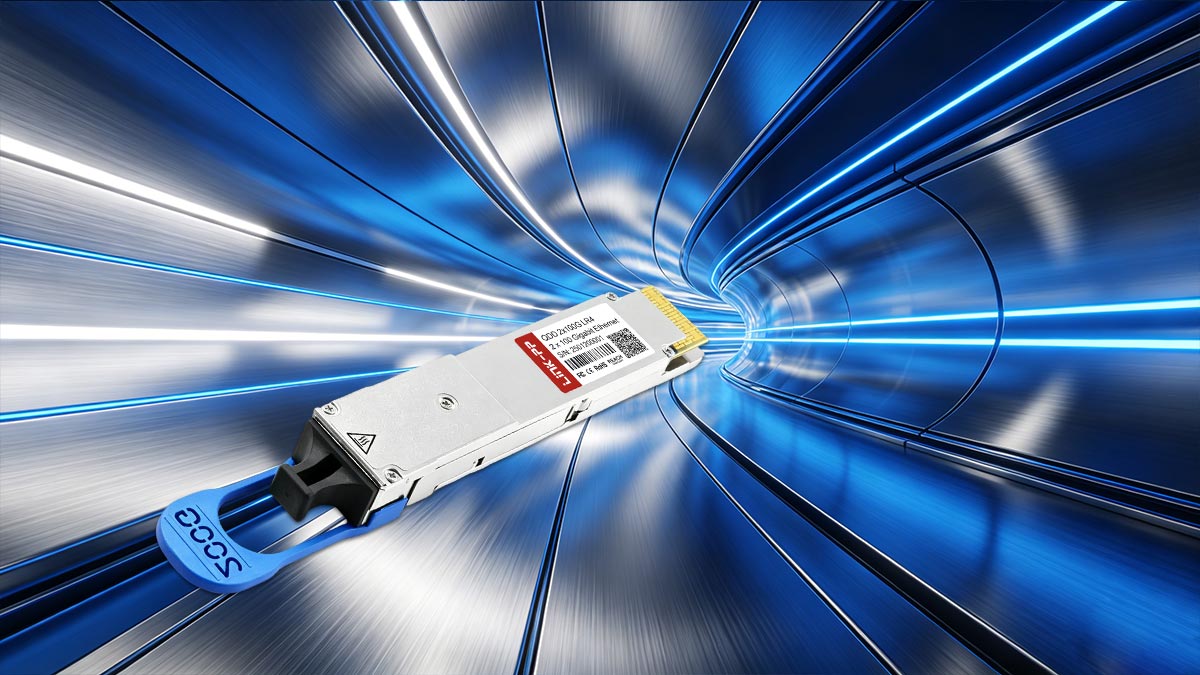
Embracing the QDD 2x100G LR4 optical transceiver module is a highly strategic step toward building a scalable, high-density core network that easily handles skyrocketing bandwidth demands. By effectively doubling port capacity and maximizing rack-unit throughput without expensive infrastructure overhauls, this dual-channel technology offers an ideal balance of performance and operational economy.
If you are ready to eliminate front-panel constraints and streamline your campus or data center aggregation layers, choosing premium optical hardware is key to long-term link reliability. Explore high-performance transceivers by visiting the LINK-PP Official Store to find the perfect, enterprise-grade QSFP-DD modules tailored to your network architecture.







