Avago AFBR-709SMZ is a 10Gbps SFP+ optical transceiver designed for high-speed data transmission in Ethernet and telecom environments. It is widely used in short-reach multimode fiber links where stable bandwidth, low latency, and predictable optical performance are required.
This module is typically selected in scenarios where 10GBASE-SR connectivity is needed, especially in data center interconnects, enterprise switch uplinks, and high-density networking architectures. Its design is based on VCSEL technology operating at 850nm wavelength, which enables efficient transmission over multimode fiber with controlled power consumption and reliable signal integrity.
Understanding its datasheet parameters is essential for proper network planning. Key specifications such as optical power range, receiver sensitivity, transmission distance, and electrical characteristics directly impact link performance and compatibility. Without accurate interpretation of these values, deployment issues such as signal loss, insufficient reach, or interoperability mismatches may occur.
From a practical perspective, AFBR-709SMZ is not only defined by its physical form factor but also by how its technical limits align with real-world network demands. This makes datasheet analysis a critical step in evaluating its suitability for specific optical network designs.
💥 Overview of Avago AFBR-709SMZ Transceiver
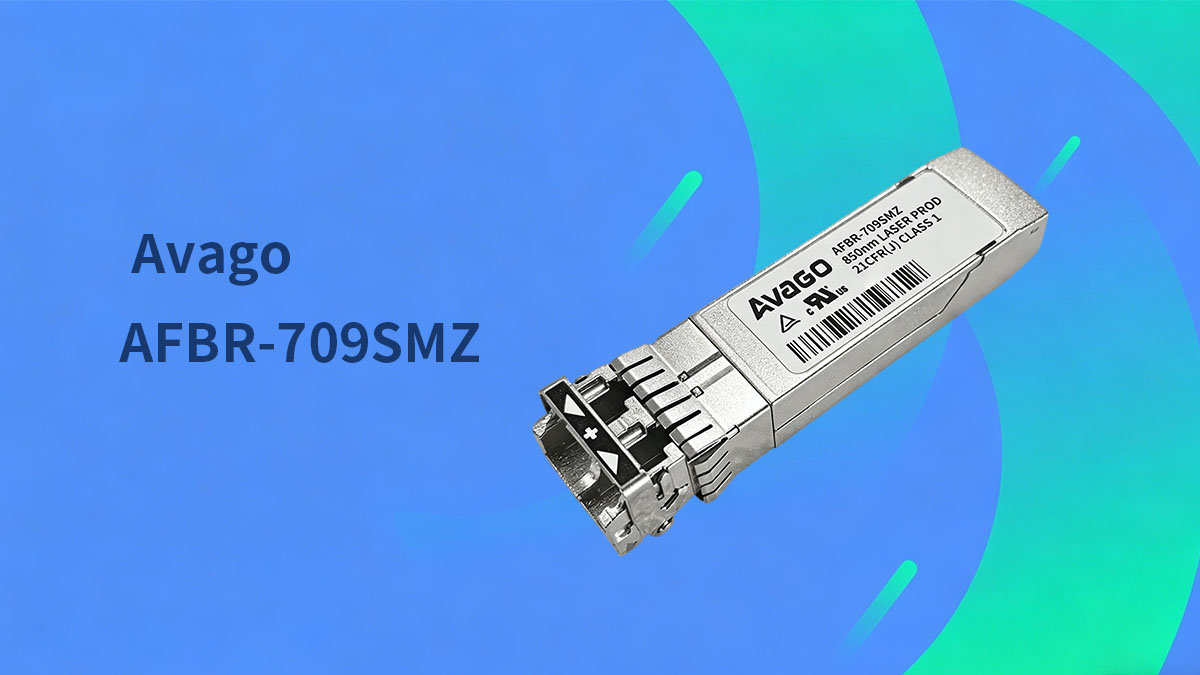
Avago AFBR-709SMZ is a 10Gbps SFP+ optical transceiver primarily designed for short-range, high-speed data communication over multimode fiber. It is commonly deployed in Ethernet switching environments where stable 10G connectivity and compact form factor integration are required.
This module is optimized for 10GBASE-SR applications, meaning it is intended for short-reach links within data centers and enterprise networks rather than long-haul transmission. Its core value lies in balancing high throughput, low latency, and efficient power usage in dense networking environments.
Product Positioning and Use Cases
The AFBR-709SMZ is positioned as a short-range 10Gbps optical solution for high-density network infrastructures. Its design focuses on reliable performance in controlled indoor environments where multimode fiber is available.
Typical use cases include:
- Data center switch-to-switch interconnects
- Server-to-switch uplink connections
- Enterprise aggregation and core network layers
- High-performance computing (HPC) cluster networking
- Storage area network (SAN) connectivity over Ethernet
These applications require consistent low-latency transmission and predictable optical behavior, making 10GBASE-SR modules like AFBR-709SMZ a standard choice in legacy and transitional 10G environments.
From a deployment perspective, it is especially suited for environments where:
- Fiber runs are relatively short
- High port density is required
- Energy efficiency per port is a design priority
- Standard multimode infrastructure (OM3/OM4) is already in place
Form Factor and Interface Characteristics
AFBR-709SMZ follows the SFP+ (Small Form-factor Pluggable Plus) standard, which is widely adopted for 10Gbps optical modules. This ensures compatibility across a broad range of networking equipment from multiple vendors.
Key interface and physical characteristics include:
- Form factor: SFP+ hot-pluggable module
- Connector type: LC duplex optical interface
- Electrical interface: High-speed serial data interface compliant with SFP+ MSA standards
- Fiber type support: Multimode fiber (MMF), typically OM3 and OM4
Before summarizing its interface behavior, it is important to understand how these physical attributes influence deployment flexibility. The SFP+ standard allows network operators to replace or upgrade modules without shutting down the system, which is critical in production environments.
Additional operational implications include:
- LC duplex connectors support compact, high-density cabling layouts
- Hot-pluggable design reduces maintenance downtime
- Standardized electrical interface ensures interoperability with compliant switches and routers
- Multimode compatibility enables cost-effective short-range fiber deployment
Overall, the form factor and interface design of AFBR-709SMZ ensure it integrates seamlessly into modern 10G networking architectures while maintaining flexibility for upgrades and maintenance.
💥 Key Datasheet Specifications Explained
The key datasheet specifications of Avago AFBR-709SMZ define how the transceiver performs in real optical network environments. These parameters directly determine link distance, compatibility, power efficiency, and signal stability, making them essential for correct system design and deployment decisions.
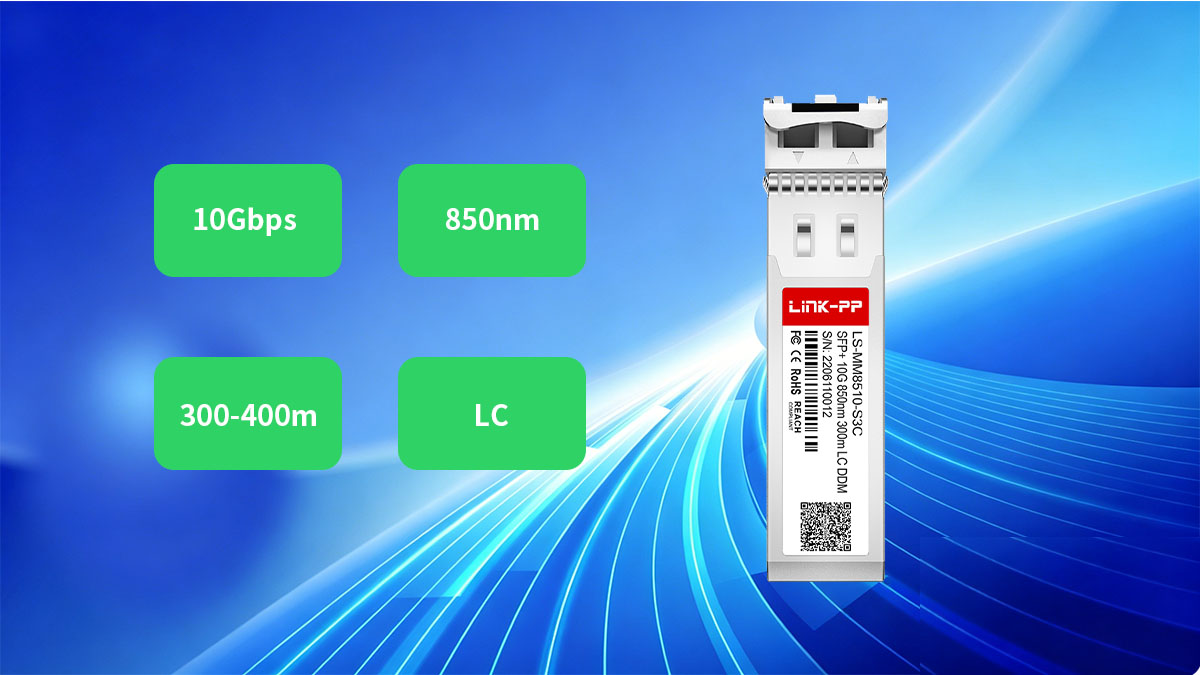
Understanding these specifications allows network engineers to match the module with appropriate fiber infrastructure and avoid performance bottlenecks or link failures caused by mismatched optical conditions.
Data Rate and Transmission Performance
The AFBR-709SMZ is designed to operate at a nominal data rate of 10Gbps, fully aligned with the 10GBASE-SR Ethernet standard (IEEE 802.3ae). This ensures it can support high-speed data transmission with low latency and stable throughput.
Before listing key performance characteristics, it is important to understand that the actual usable performance depends not only on the rated data rate but also on fiber quality and link design.
Key transmission performance characteristics include:
- Supports 10Gbps full-duplex data transmission
- Complies with 10GBASE-SR short-range Ethernet standard
- Optimized for low-latency intra-data center communication
- Stable signal performance under properly matched multimode fiber conditions
After reviewing these points, it becomes clear that the module is intended for high-speed but short-distance environments where bandwidth consistency is more critical than reach.
Wavelength and Optical Characteristics
The AFBR-709SMZ operates at an 850nm wavelength, which is standard for short-reach multimode optical communication using VCSEL technology.
Before detailing the characteristics, it is important to note that wavelength selection directly impacts fiber compatibility and transmission efficiency.
Key optical characteristics include:
- Operating wavelength: 850nm
- Laser type: VCSEL (Vertical Cavity Surface Emitting Laser)
- Optimized for multimode fiber transmission
- Low dispersion behavior suitable for short-distance links
After these points, it is important to highlight that 850nm is widely used because it offers a balance between cost efficiency and performance in multimode environments, especially in enterprise and data center deployments.
Transmission Distance and Fiber Compatibility
The transmission distance of AFBR-709SMZ depends heavily on the type of multimode fiber used. It is designed specifically for short-range applications and does not support long-distance transmission.
Before presenting the values, it is important to understand that fiber grade significantly affects achievable reach and signal quality.
| Fiber Type |
Maximum Reach |
| OM3 Multimode Fiber |
Up to 300m |
| OM4 Multimode Fiber |
Up to 400m |
These values represent typical maximum distances under optimal installation conditions.
After reviewing the table, several practical considerations must be noted:
- OM4 fiber extends reach due to lower attenuation and higher bandwidth capacity
- Real-world distance may vary depending on connectors, splices, and cable quality
- Proper link budget planning is required to ensure stable 10Gbps performance
- Exceeding recommended distances can result in increased bit error rates and link instability
Overall, the AFBR-709SMZ is best suited for structured cabling environments where multimode fiber distances remain within controlled short-range limits typical of data center architectures.
💥 Electrical and Optical Performance Parameters
The electrical and optical performance parameters of Avago AFBR-709SMZ define how efficiently the module converts electrical signals into optical transmission and back again. These values directly affect link stability, signal quality, power efficiency, and overall system reliability in 10Gbps networking environments.
Understanding these parameters is essential for evaluating whether the module can meet the power budget and signal integrity requirements of a given optical link design.
Power Consumption and Voltage Requirements
The AFBR-709SMZ is engineered for low-power operation, which is critical in high-density switch environments where many transceivers operate simultaneously.
Before listing key values, it is important to recognize that power efficiency directly impacts thermal design and overall system energy consumption.
Key electrical characteristics include:
- Typical power consumption: low single-digit watts range (optimized for SFP+ 10G modules)
- Operating voltage: approximately 3.3V DC standard SFP+ supply
- Low heat dissipation design for dense port configurations
- Stable power behavior under continuous 10Gbps transmission load
After reviewing these points, it becomes clear that the module is designed to minimize thermal stress while maintaining consistent high-speed operation, which is especially important in blade switches and aggregation systems.
Optical Output and Receiver Sensitivity
Optical output power and receiver sensitivity are core indicators of how well the AFBR-709SMZ can maintain signal integrity across a fiber link. These parameters define the usable link budget and directly influence maximum transmission distance.
Before presenting the key optical ranges, it is important to note that both transmitter and receiver must operate within matched thresholds for stable communication.
| Parameter |
Typical Range |
| Transmit Optical Power |
Negative dBm range (short-reach optimized output) |
| Receiver Sensitivity |
Low negative dBm threshold for 10Gbps detection |
| Saturation Point |
Upper limit before signal distortion occurs |
After examining the table, several important implications emerge:
- The transmit power is intentionally limited to avoid overdriving short multimode links
- Receiver sensitivity ensures reliable detection of low-power signals at maximum rated distance
- Proper link budget calculation is required to balance TX power and RX sensitivity
- Excessive loss or connector contamination can quickly degrade signal margin
These characteristics ensure that AFBR-709SMZ maintains stable optical communication within its designed short-range envelope.
Bit Error Rate (BER) and Signal Quality
Bit Error Rate (BER) is a critical performance metric that reflects the reliability of data transmission over the optical link. For AFBR-709SMZ, maintaining a very low BER is essential for stable 10Gbps Ethernet operation.
Before outlining key considerations, it is important to understand that BER is influenced by both optical signal quality and physical layer conditions.
Key signal quality characteristics include:
- Target BER typically around 10⁻¹² under compliant operating conditions
- Strong dependency on fiber cleanliness and connector quality
- Sensitivity to optical attenuation and dispersion in the link path
- Improved stability when operating within recommended distance limits
After reviewing these points, it is clear that maintaining low BER is not only dependent on the transceiver itself but also on the entire optical channel design.
Additional practical considerations include:
- Dirty or damaged connectors can significantly increase error rates
- Excessive bending or stress on fiber affects signal integrity
- Proper installation and inspection are required for consistent performance
- Network monitoring tools are often used to track BER trends over time
Overall, the AFBR-709SMZ is designed to deliver stable signal quality, but achieving optimal BER performance requires careful attention to both module specifications and physical deployment conditions.
💥 Environmental and Reliability Specifications
The environmental and reliability specifications of Avago AFBR-709SMZ define how the transceiver performs under different operating conditions and how consistently it maintains optical stability over time. These parameters are critical for ensuring long-term deployment reliability in data center and enterprise network environments where continuous uptime is required.
Understanding these limits helps ensure the module operates within safe thermal and mechanical boundaries, reducing the risk of performance degradation or premature failure.
Operating Temperature Range
The AFBR-709SMZ is designed to operate within a controlled commercial temperature environment, making it suitable for indoor networking applications such as data centers and telecom rooms.
Before listing the key values, it is important to note that temperature stability directly affects both optical output and receiver sensitivity.
Key temperature specifications include:
- Operating temperature range: typically 0°C to 70°C
- Designed for controlled indoor environments
- Stable optical performance within rated thermal limits
- Performance degradation possible outside specified range
After reviewing these values, it becomes clear that this module is not intended for industrial or extreme outdoor conditions. Instead, it is optimized for environments with regulated cooling and airflow systems.
Additional considerations include:
- High rack density can increase localized temperature stress
- Proper airflow management is required to maintain stable operation
- Thermal buildup may impact long-term signal consistency
- Monitoring system temperature is recommended in large deployments
Storage Conditions and Durability
Storage and handling conditions play an important role in maintaining the long-term integrity of the AFBR-709SMZ before installation. Proper storage ensures that optical and electrical components remain stable and unaffected by environmental stress.
Before outlining the key parameters, it is important to recognize that improper storage can lead to reduced optical performance or mechanical damage.
Key storage and durability characteristics include:
- Storage temperature range: wider than operating range, typically extended below 0°C and above 70°C
- Humidity tolerance: designed for standard controlled storage environments
- Mechanical robustness: built for repeated hot-plug insertion cycles
- ESD (Electrostatic Discharge) protection required during handling
After reviewing these points, several practical guidelines become clear:
- Modules should be stored in anti-static packaging until installation
- Exposure to moisture or condensation should be avoided
- Physical shock or vibration during storage should be minimized
- Proper handling reduces risk of connector or laser damage
These measures help preserve module reliability before deployment and ensure consistent performance once installed in a live network environment.
Compliance and Safety Standards
The AFBR-709SMZ is designed to meet industry safety and environmental standards, ensuring it can be deployed in global networking infrastructures without regulatory concerns.
Before listing the key compliance areas, it is important to understand that these certifications ensure both user safety and environmental responsibility.
Key compliance specifications include:
- Laser safety classification: Class 1 laser product
- RoHS compliance for restricted hazardous substances
- Compliance with standard SFP+ MSA specifications
- Designed to meet international telecom and networking safety requirements
After reviewing these compliance points, several important implications emerge:
- Class 1 laser designation ensures safe operation under normal usage conditions
- RoHS compliance supports environmentally responsible deployment
- Standardized SFP+ design ensures multi-vendor interoperability
- Regulatory compliance simplifies global deployment across regions
Overall, these environmental and reliability characteristics confirm that AFBR-709SMZ is engineered not only for performance but also for safe, stable, and regulation-compliant operation in modern optical networking systems.
💥 Digital Diagnostics Monitoring (DDM) Features
Digital Diagnostics Monitoring (DDM) in Avago AFBR-709SMZ provides real-time visibility into the operational status of the optical transceiver. It allows network operators to monitor key physical-layer parameters without interrupting traffic, improving both maintenance efficiency and system reliability.
In practical deployments, DDM is essential for identifying performance degradation early, supporting proactive troubleshooting, and ensuring stable 10Gbps link operation across large-scale networks.
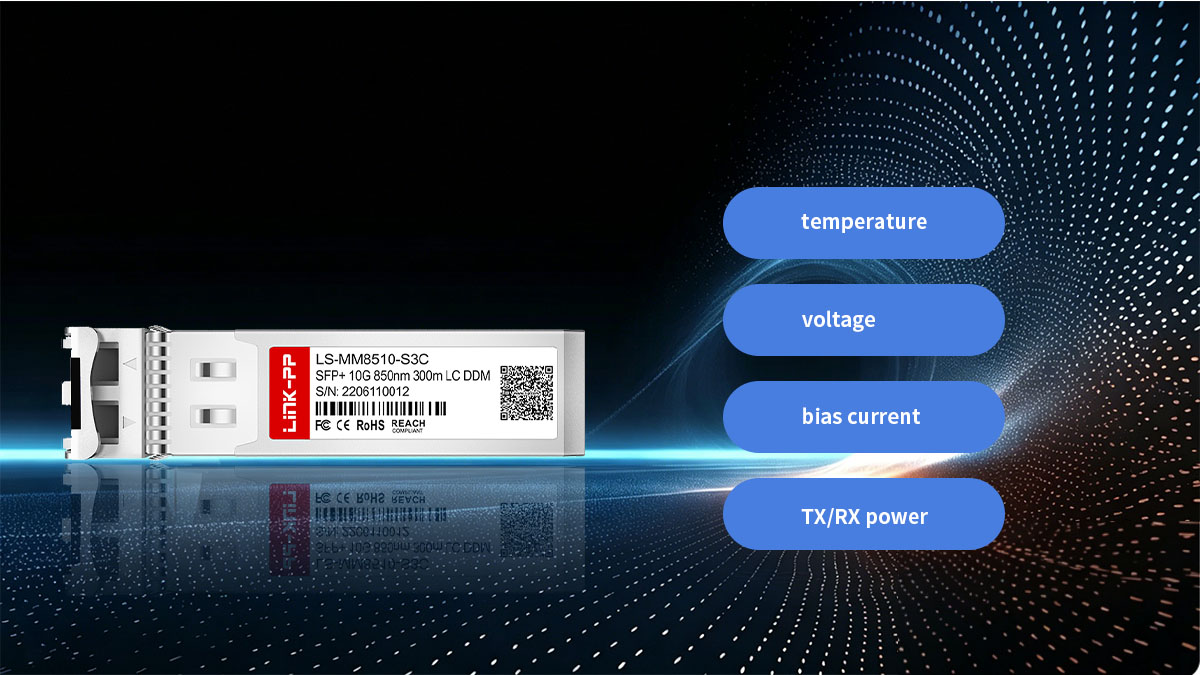
Real-Time Monitoring Capabilities
The AFBR-709SMZ supports DDM functions that continuously track critical optical and electrical parameters during normal operation. These readings help determine whether the module is operating within its optimal range.
Before listing the key monitored values, it is important to understand that these metrics reflect both internal module health and external link conditions.
Key monitored parameters include:
- Transceiver internal temperature
- Supply voltage (3.3V rail monitoring)
- Laser bias current
- Transmit optical power (TX power)
- Receive optical power (RX power)
After reviewing these parameters, several operational insights become clear:
- Temperature readings help detect thermal stress in high-density racks
- Voltage monitoring ensures stable power delivery to the module
- Bias current indicates laser operating condition and aging trends
- TX/RX power levels provide direct visibility into link quality
These measurements allow operators to detect subtle performance shifts before they escalate into link failures or packet loss.
Integration with Network Management Systems
DDM data from AFBR-709SMZ can be integrated into standard network management systems, enabling centralized monitoring and automated alerting across large optical infrastructures.
Before outlining integration benefits, it is important to recognize that standardized interfaces make this data accessible across multi-vendor environments.
Key integration characteristics include:
- Compatibility with standard SFP+ MSA DDM interfaces
- Support for SNMP-based network monitoring systems
- Ability to trigger threshold-based alerts for abnormal readings
- Integration into centralized NMS (Network Management Systems) dashboards
After reviewing these points, the operational advantages become clear:
- Enables proactive fault detection before service disruption
- Reduces manual inspection of physical fiber links
- Supports predictive maintenance strategies based on trend analysis
- Improves visibility across large-scale distributed networks
Additional practical benefits include:
- Faster troubleshooting through historical diagnostics data
- Reduced downtime due to early warning of degradation
- Easier capacity planning based on performance trends
- Better control of optical link health in dense switching environments
Overall, the DDM functionality of AFBR-709SMZ significantly enhances operational control by transforming the transceiver from a passive component into a fully observable network element.
💥 Interpreting the Datasheet for Practical Deployment
Interpreting the AFBR-709SMZ datasheet correctly is essential for ensuring stable and predictable performance in real-world 10Gbps optical networks. The datasheet is not only a specification sheet but also a deployment guide that defines how the transceiver behaves under specific electrical, optical, and environmental conditions.
In practical terms, correct interpretation helps prevent link instability, reduces troubleshooting time, and ensures the module operates within its intended design envelope.
Matching Transceiver Specs with Network Requirements
The first step in practical deployment is aligning AFBR-709SMZ specifications with the actual network design. This ensures compatibility between the transceiver, fiber infrastructure, and switching equipment.
Before listing the key matching criteria, it is important to understand that mismatched parameters often lead to degraded performance or link failure.
Key matching considerations include:
- Data rate compatibility: ensuring 10Gbps support across all connected devices
- Fiber type alignment: confirming OM3 or OM4 multimode fiber usage
- Distance planning: verifying link length stays within 300m–400m range
- Power budget validation: matching TX power and RX sensitivity thresholds
After reviewing these points, it becomes clear that successful deployment depends on system-level alignment rather than isolated module performance.
Additional practical guidance includes:
- Avoid mixing incompatible fiber grades in a single link path
- Ensure switch ports support 10GBASE-SR standard compliance
- Validate end-to-end optical loss before deployment
- Consider future scalability when designing link topology
Common Pitfalls in Datasheet Interpretation
Misinterpretation of datasheet values is a common cause of optical network issues. Many deployment problems arise not from hardware failure, but from incorrect assumptions about specification limits.
Before outlining typical mistakes, it is important to recognize that datasheet values often represent controlled test conditions rather than worst-case real-world scenarios.
Common pitfalls include:
- Confusing typical values with maximum guaranteed limits
- Ignoring link budget margins in distance planning
- Overlooking connector and splice losses in total attenuation
- Assuming identical performance across different fiber types
After reviewing these pitfalls, several important insights emerge:
- Maximum distance values assume ideal fiber conditions
- Real deployments often include additional loss factors
- Environmental conditions can shift performance thresholds
- Small miscalculations in optical budget can lead to instability
Additional risks include:
- Inadequate cleaning of LC connectors causing signal degradation
- Underestimating thermal impact in dense switch environments
- Using mixed-quality fiber components in the same link
- Relying solely on datasheet nominal values without system validation
Performance Optimization Tips
Optimizing AFBR-709SMZ performance requires attention to both physical installation practices and system-level design choices. Proper optimization ensures long-term stability and consistent 10Gbps throughput.
Before listing optimization strategies, it is important to note that even fully compliant deployments can underperform if installation practices are not properly followed.
Key optimization strategies include:
- Selecting appropriate multimode fiber grade (prefer OM4 for longer reach)
- Maintaining strict connector cleanliness standards
- Ensuring proper cable management to avoid bend-induced loss
- Keeping link distances within conservative design margins
After reviewing these strategies, it becomes clear that physical layer quality is just as important as transceiver specification compliance.
Additional best practices include:
- Regular inspection and cleaning of optical interfaces
- Monitoring DDM data for early detection of performance drift
- Avoiding tight cable bends that increase attenuation
- Ensuring stable cooling airflow in high-density racks
Overall, proper interpretation and application of datasheet specifications allow AFBR-709SMZ to deliver stable, efficient, and predictable performance in real 10Gbps network deployments.
💥 Comparison with Similar 10G SFP+ Modules
The AFBR-709SMZ belongs to the widely used 10GBASE-SR SFP+ multimode optical transceiver category, which means it shares a common technical foundation with many industry-standard modules. However, differences in optical budget, compatibility coding, power characteristics, and vendor implementation can significantly affect deployment behavior in real networks.
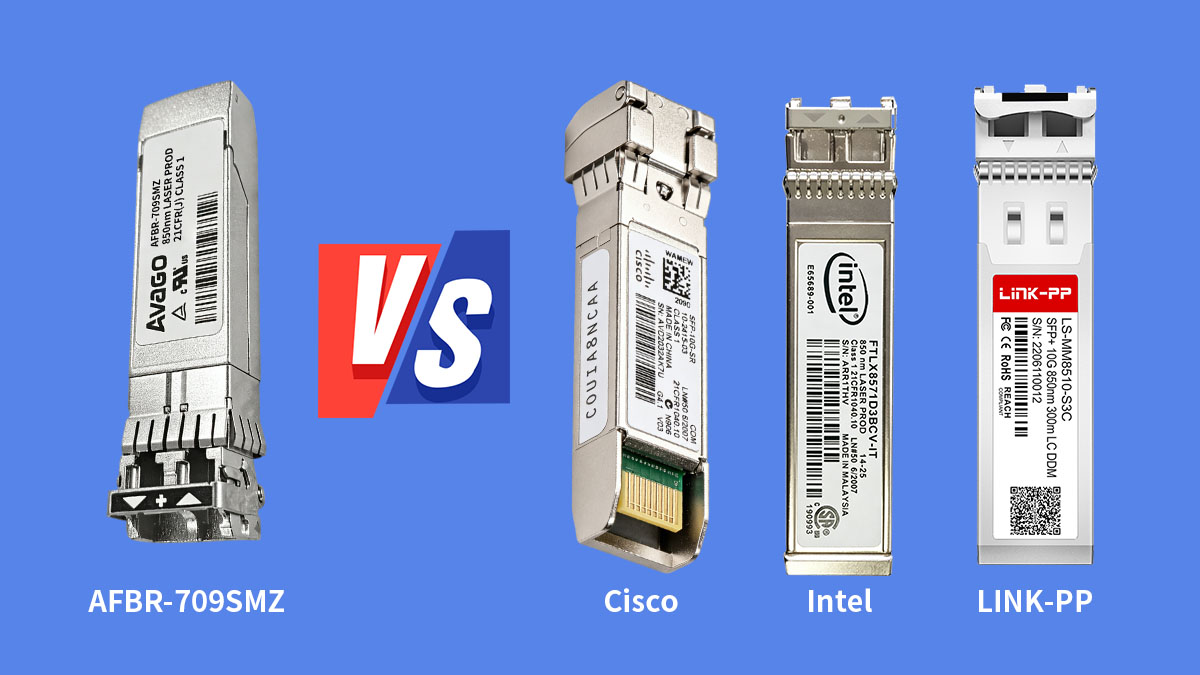
Before comparing individual alternatives, it is important to understand that most 10G SR modules operate on the same core standard (850nm VCSEL over multimode fiber), but performance tuning and interoperability rules vary between vendors.
Key Differentiators in the 10G SFP+ Ecosystem
The AFBR-709SMZ is often compared with other 10G SR modules from vendors such as Cisco, Intel, Finisar, and third-party compatible manufacturers. These comparisons are typically based on interoperability behavior and optical characteristics rather than fundamental protocol differences.
Before listing the main differentiators, it is important to highlight that all these modules generally follow IEEE 802.3ae 10GBASE-SR and SFP+ MSA standards, ensuring baseline compatibility in most systems.
Key differentiating factors include:
- Vendor EEPROM coding and platform lock-in behavior
- Optical power range calibration (TX/RX tuning differences)
- Power consumption efficiency across different designs
- DDM/DOM reporting accuracy and granularity
- Firmware compatibility with switch vendors (Cisco, Juniper, etc.)
After reviewing these factors, it becomes clear that “compatibility experience” can vary even when optical specifications appear nearly identical on paper.
AFBR-709SMZ vs Cisco / Intel / Generic 10G SR Modules
In practical deployments, AFBR-709SMZ is frequently evaluated against OEM-branded and compatible SR modules that share the same 850nm multimode architecture.
Before presenting a structured comparison, it is important to note that these modules are often functionally similar at the optical layer but differ in system integration behavior.
| Attribute |
AFBR-709SMZ |
Cisco 10GBASE-SR |
Intel SR SFP+ |
Generic Compatible SR |
| Wavelength |
850nm |
850nm |
850nm |
850nm |
| Standard |
10GBASE-SR |
10GBASE-SR |
10GBASE-SR |
10GBASE-SR |
| Fiber Type |
OM3/OM4 MMF |
OM3/OM4 MMF |
OM3/OM4 MMF |
OM3/OM4 MMF |
| Typical Reach |
300m–400m |
300m |
300m |
300m–400m |
| Compatibility Flexibility |
High (multi-vendor use cases) |
Often vendor-restricted |
Intel-optimized platforms |
Broad but varies by coding |
| DDM Support |
Yes |
Yes |
Yes |
Yes |
After reviewing the comparison table, several practical conclusions emerge:
- Optical performance is largely equivalent across all 10GBASE-SR modules
- Differences mainly arise from vendor compatibility policies rather than physics
- OEM modules may provide tighter integration in branded environments
- Compatible modules often prioritize cross-platform flexibility
When AFBR-709SMZ Becomes the Preferred Choice
AFBR-709SMZ is typically selected when deployment requirements emphasize balanced performance and multi-platform compatibility rather than strict vendor ecosystem locking.
Before listing scenarios, it is important to emphasize that its value lies in predictable SR performance combined with broad interoperability behavior.
Common scenarios where it is preferred include:
- Multi-vendor network environments requiring flexible transceiver usage
- Data center upgrades from legacy 1G/10G mixed infrastructure
- Standardized 10GBASE-SR short-reach fiber deployments
- Cost-sensitive scaling of high-density switch ports
- Environments requiring consistent DDM visibility across equipment
After reviewing these use cases, it becomes clear that AFBR-709SMZ serves as a stable “baseline reference” module within the 10G SR ecosystem.
Practical Trade-Off Considerations
Although AFBR-709SMZ performs similarly to other 10G SR modules at the optical level, deployment decisions often depend on system-level trade-offs rather than raw specifications.
Before summarizing, it is important to highlight that real-world performance is shaped by both hardware compatibility and network architecture design.
Key trade-offs include:
- Vendor lock-in vs open compatibility flexibility
- Standard performance vs platform-specific optimization
- Cost efficiency vs official OEM validation guarantees
- Interoperability convenience vs strict support policies
After considering these factors, network designers typically select AFBR-709SMZ when interoperability and standard compliance are prioritized over ecosystem-specific optimization.
💥 Future Relevance and Technology Trends
The AFBR-709SMZ remains relevant in modern optical networking despite the industry’s gradual transition toward higher-speed standards. Its position in the 10Gbps ecosystem is defined by stability, wide deployment base, and compatibility with existing multimode fiber infrastructure, which continues to be heavily used in enterprise and data center environments.

Understanding its future relevance requires evaluating both the lifecycle of 10G networks and the broader shift toward higher bandwidth optical technologies.
Role in Evolving Network Architectures
The AFBR-709SMZ continues to play an important role in current network architectures where 10Gbps links are still widely deployed as access or aggregation layers.
Before listing its functional roles, it is important to note that many infrastructures are not immediately migrating away from 10G due to cost, compatibility, and cabling considerations.
Key roles in evolving architectures include:
- Serving as a stable interconnect in existing 10G data center fabrics
- Supporting switch-to-server links in legacy and hybrid environments
- Acting as an aggregation layer in mixed-speed network topologies
- Providing reliable connectivity in enterprise backbone segments
After reviewing these roles, it becomes clear that AFBR-709SMZ is not a transitional technology in decline, but rather a sustaining component in long-lifecycle infrastructure.
Additional practical considerations include:
- Many organizations retain multimode fiber installations due to high replacement costs
- 10G switches continue to support large-scale enterprise workloads
- Network upgrades often occur incrementally rather than through full replacement
- Compatibility with existing SFP+ ecosystems ensures continued usability
Transition Toward Higher-Speed Optics
The networking industry is steadily moving toward higher-speed optical standards such as 25G, 40G, 100G, and beyond. However, this transition is gradual and depends heavily on application requirements and infrastructure readiness.
Before outlining the transition trends, it is important to recognize that 10G remains a foundational layer in many networks.
Key transition trends include:
- Increasing adoption of 25G SFP28 modules in new deployments
- Migration of backbone links to 100G and higher-speed interfaces
- Consolidation of traffic requiring fewer but faster optical links
- Gradual reduction of 10G use in greenfield data center designs
After reviewing these trends, several important insights emerge:
- 10G modules like AFBR-709SMZ remain relevant in access and edge layers
- Higher-speed optics do not fully replace existing 10G infrastructure immediately
- Fiber plant limitations often determine upgrade timelines more than transceiver capability
- Hybrid environments combining 10G and 25G/100G will persist for years
Additional considerations include:
- Multimode fiber is still widely used, but long-term trends favor single-mode for higher speeds
- Cost per gigabit continues to drive adoption of faster optical standards
- Equipment refresh cycles influence the pace of migration more than technology availability
- Backward compatibility ensures 10G modules remain operational in mixed environments
Long-Term Outlook for AFBR-709SMZ Class Modules
Modules in the AFBR-709SMZ category are expected to maintain long-term operational relevance even as newer technologies emerge. Their role is shifting from primary high-speed connectivity to stable legacy and hybrid network support.
Before summarizing key outlook points, it is important to emphasize that infrastructure longevity plays a major role in sustaining demand for 10G optics.
Key long-term outlook factors:
- Continued support in installed multimode fiber infrastructures
- Ongoing use in enterprise and industrial networking systems
- Stable demand in maintenance and network expansion projects
- Gradual repositioning into secondary or edge network roles
After reviewing these factors, it is evident that AFBR-709SMZ-class transceivers will remain part of the optical networking ecosystem for an extended period, primarily due to infrastructure inertia and the cost-effectiveness of maintaining existing 10G deployments.
💥 Conclusion
The Avago AFBR-709SMZ is a 10Gbps SFP+ optical transceiver designed for reliable short-reach multimode fiber communication, and its datasheet clearly defines the performance boundaries that ensure stable deployment in real-world networks. Across data rate, wavelength, transmission distance, optical budget, and environmental limits, the module demonstrates a balanced design optimized for predictable operation in 10GBASE-SR applications.
Before summarizing the key takeaways, it is important to emphasize that the true value of AFBR-709SMZ lies in how well its specifications align with system-level network design rather than isolated component performance.
Core takeaways from AFBR-709SMZ datasheet analysis:
- 10Gbps performance based on IEEE 802.3ae 10GBASE-SR standard ensures broad compatibility
- 850nm VCSEL-based architecture enables efficient multimode short-reach transmission
- Practical reach of 300m–400m depends on OM3/OM4 fiber selection and link quality
- Low power consumption supports high-density switch deployments with controlled thermal output
- DDM functionality provides real-time monitoring for proactive network maintenance
- Environmental and compliance specifications ensure safe, stable, and regulated operation
From a deployment perspective, success with this module depends on proper datasheet interpretation, accurate optical budget planning, and adherence to multimode fiber best practices. When these conditions are met, it delivers stable and predictable 10Gbps connectivity across a wide range of networking scenarios.
For organizations evaluating compatible optical modules or planning large-scale 10G infrastructure deployments, sourcing consistency and specification alignment remain critical factors. Platforms such as the LINK-PP Official Store provide a structured way to explore compatible transceiver options that align with standard SFP+ requirements while supporting diverse network environments.