As enterprise networks continue to evolve, reliable 10GbE fiber connectivity remains a critical requirement for data centers, campus backbones, security infrastructures, and branch interconnections. Organizations increasingly depend on high-performance optical transceivers to support growing bandwidth demands while maintaining stable long-distance communication over single-mode fiber networks.
Among the commonly deployed 10Gbps optical modules in Fortinet environments, the FN TRAN SFP LR (also known as FN-TRAN-SFP+LR) is widely used for 10GBASE-LR connectivity over distances of up to 10km. However, network administrators and IT teams often evaluate compatible alternatives when planning network expansions, standardizing optical infrastructure, managing inventory, or ensuring long-term operational flexibility. Understanding the module’s specifications, compatibility requirements, and deployment considerations is essential for making informed decisions.
This guide explores several key aspects of the Fortinet FN-TRAN-SFP+LR, including:
-
Technical specifications and operating characteristics
-
Compatibility with Fortinet networking platforms
-
Critical factors when evaluating replacement modules
-
Single-mode fiber requirements and deployment considerations
-
Common troubleshooting scenarios and best practices
By the end of this article, you will have a clear understanding of how the FN-TRAN-SFP+LR works, what to look for in a compatible alternative, and how to maintain reliable 10GbE optical connectivity in enterprise network environments.
💭 What Is the Fortinet FN TRAN SFP LR?
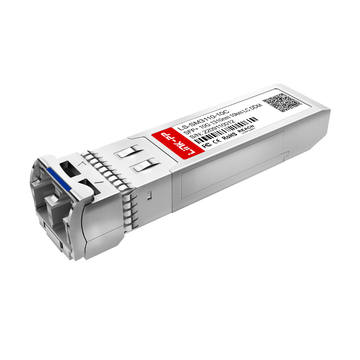
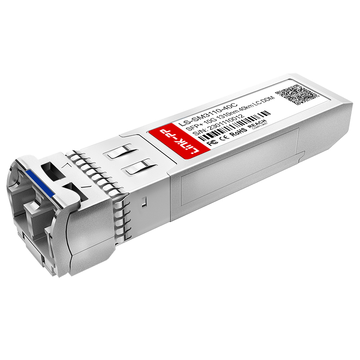
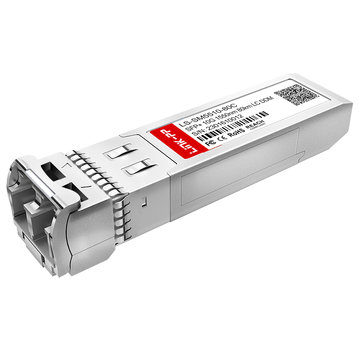
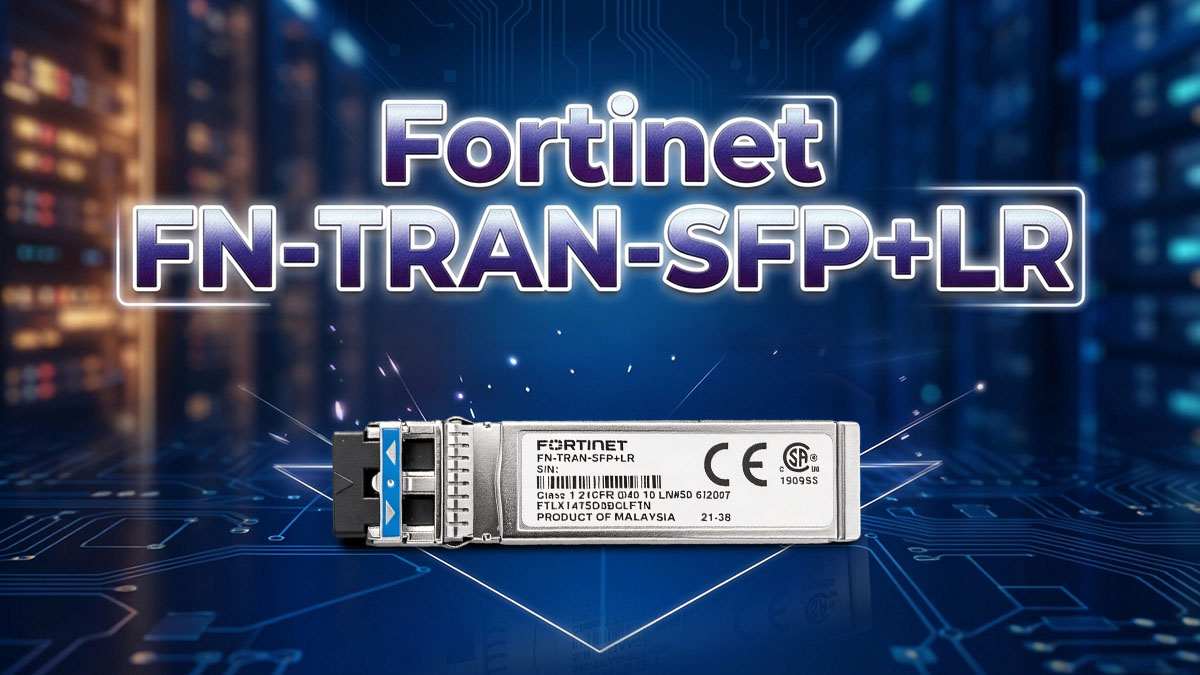
The Fortinet FN TRAN SFP LR (or FN-TRAN-SFP+LR) is a 10GBASE-LR SFP+ optical transceiver designed to deliver 10Gbps Ethernet connectivity over single-mode fiber (SMF) at distances of up to 10km. It is commonly deployed in FortiGate firewalls, FortiSwitch platforms, and other enterprise networking environments where reliable long-distance 10GbE connections are required. As organizations continue to expand their network infrastructure, this module remains a widely used solution for backbone links, aggregation layers, and inter-building connectivity.
Module Overview
The FN-TRAN-SFP+LR is built around the industry-standard 10GBASE-LR specification, enabling high-speed optical communication across single-mode fiber infrastructure. Compared with short-range multimode transceivers, LR optics provide significantly longer transmission distances, making them suitable for campus networks, metropolitan connections, and distributed enterprise environments.
Key characteristics of the FN-TRAN-SFP+LR include:
- SFP+ form factor for high-density network deployments
- Support for 10Gbps Ethernet transmission
- 1310nm operating wavelength
- Single-mode fiber connectivity
- LC duplex optical interface
- Maximum transmission distance of up to 10km
- Digital Optical Monitoring (DOM/DDM) functionality
- Compatibility with selected Fortinet networking platforms
These characteristics make the module a practical choice for organizations seeking stable and scalable 10GbE connectivity across long-distance fiber links.
Correct Technical Specifications
Understanding the technical specifications of the FN-TRAN-SFP+LR is essential when evaluating compatibility, planning deployments, or comparing alternative optical modules. The module follows standard 10GBASE-LR operating parameters, allowing it to support predictable performance in enterprise networking environments.
The table below summarizes the primary technical specifications.
| Parameter | FN-TRAN-SFP+LR |
|---|---|
| Form Factor | SFP+ |
| Ethernet Standard | 10GBASE-LR |
| Data Rate | 10Gbps |
| Wavelength | 1310nm |
| Fiber Type | Single-Mode Fiber (SMF) |
| Connector Type | LC Duplex |
| Maximum Reach | Up to 10km |
| DOM/DDM Support | Yes |
| Operating Medium | OS1/OS2 Fiber |
These specifications define the optical, physical, and operational characteristics that should be matched when considering compatible replacement modules for Fortinet deployments.
Common Deployment Environments
The FN-TRAN-SFP+LR is typically used in scenarios where high-speed data transmission must be maintained across distances that exceed the capabilities of short-range multimode optics. Its combination of 10Gbps throughput and 10km reach makes it suitable for a wide range of enterprise applications.
Common deployment environments include:
- Enterprise campus backbone networks
- Inter-building fiber connections
- Data center aggregation layers
- Core-to-distribution network links
- FortiGate firewall uplink connections
- FortiSwitch 10GbE aggregation ports
- Government and public-sector network infrastructures
- Financial institutions requiring low-latency connectivity
Because the module operates over standard single-mode fiber infrastructure, it provides organizations with a reliable method of extending 10GbE connectivity while maintaining flexibility for future network growth and architecture upgrades.
💭 Why Users Look for FN-TRAN-SFP+LR Alternatives
Many organizations evaluating the Fortinet FN-TRAN-SFP+LR are not necessarily seeking different technical specifications. In most cases, they need a module that delivers the same 10GBASE-LR performance, 1310nm wavelength, and 10km transmission reach while fitting broader operational, compatibility, and infrastructure requirements. As enterprise networks grow in scale and complexity, the demand for compatible alternatives often becomes part of a larger strategy focused on efficiency, standardization, and long-term network management.
The following factors are among the most common reasons why network administrators and IT teams explore FN-TRAN-SFP+LR alternatives.
Cost Optimization Considerations
For organizations deploying dozens or even hundreds of optical transceivers, controlling infrastructure costs becomes an important part of network planning. Since 10GbE connectivity is now widely adopted across enterprise environments, many teams evaluate alternatives that offer equivalent technical capabilities while supporting large-scale deployment requirements.
Common cost-related considerations include:
-
Data center expansion projects requiring multiple 10Gbps uplinks
-
Campus network upgrades involving numerous fiber connections
-
Spare module inventory planning
-
Standardization across multiple locations
-
Budget allocation for future infrastructure growth
-
Balancing performance requirements with operational expenses
While cost is often a consideration, maintaining equivalent optical specifications and stable network performance remains the primary requirement during the evaluation process.
Multi-Vendor Network Environments
Modern enterprise networks rarely consist of equipment from a single manufacturer. Organizations frequently operate mixed environments that include firewalls, switches, routers, and servers from multiple vendors. As a result, IT teams often seek optical modules that can be integrated into diverse networking ecosystems while maintaining consistent performance.
Several factors drive this requirement:
-
Integration across multiple networking platforms
-
Simplified inventory management
-
Reduced operational complexity
-
Consistent deployment standards across locations
-
Easier maintenance and replacement planning
-
Greater flexibility when expanding network infrastructure
A standardized approach to optical transceivers can help organizations streamline network operations and improve overall deployment efficiency.
Product Availability and Lifecycle Planning
Long-term network reliability depends not only on technical performance but also on the ability to maintain and support infrastructure over time. Availability considerations often become increasingly important as networks expand or as organizations prepare for future growth.
Key lifecycle planning factors include:
-
Maintaining adequate spare inventory
-
Reducing risks associated with supply shortages
-
Supporting long-term maintenance strategies
-
Preparing for hardware refresh cycles
-
Ensuring continuity across geographically distributed sites
-
Simplifying future expansion projects
By considering availability and lifecycle requirements alongside technical compatibility, organizations can create a more resilient optical networking strategy that supports both current operational needs and future infrastructure development.
💭 Critical Factors When Evaluating FN-TRAN-SFP+LR Replacements
Selecting a replacement for the Fortinet FN-TRAN-SFP+LR involves more than simply matching the form factor. A suitable alternative must deliver the same 10Gbps transmission performance, support 1310nm single-mode operation, and maintain stable connectivity over distances of up to 10km. Evaluating compatibility, optical performance, standards compliance, and reliability helps ensure that replacement modules perform consistently within enterprise network environments.
The following factors should be carefully reviewed before deploying an alternative 10GBASE-LR SFP+ transceiver.
Hardware Compatibility
Hardware compatibility is often the first and most important consideration when evaluating an FN-TRAN-SFP+LR replacement. Even when two modules share identical optical specifications, differences in coding or platform recognition can affect deployment success.
Key compatibility factors include:
-
SFP+ form factor compliance
-
Support for 10GBASE-LR networking standards
-
EEPROM coding appropriate for the target platform
-
Recognition by Fortinet devices
-
Compatibility with FortiGate and FortiSwitch interfaces
-
Proper DOM/DDM functionality reporting
-
Stable operation after firmware updates
Verifying compatibility before deployment helps reduce installation issues and minimizes the risk of unexpected network interruptions.
Optical Performance Matching
A replacement module should closely match the optical characteristics of the original FN-TRAN-SFP+LR to ensure predictable link performance. Differences in optical parameters can lead to signal degradation, reduced transmission distance, or intermittent connectivity.
Critical optical specifications include:
-
10Gbps data transmission capability
-
1310nm operating wavelength
-
Single-mode fiber support
-
Up to 10km transmission reach
-
Appropriate transmit optical power levels
-
Adequate receiver sensitivity
-
Reliable DOM/DDM monitoring capabilities
Matching these specifications helps maintain consistent link stability across enterprise and data center environments.
Compliance and Industry Standards
Industry-standard compliance provides an additional layer of assurance that a transceiver will operate reliably within a network infrastructure. Standards-based modules are generally easier to integrate, manage, and support across different platforms.
Important standards and certifications include:
-
IEEE 802.3ae 10GBASE-LR compliance
-
SFP+ Multi-Source Agreement (MSA) compatibility
-
RoHS environmental compliance
-
Electromagnetic compatibility certifications
-
Laser safety certifications
-
Manufacturing quality management standards
Modules built according to recognized industry standards are typically better suited for long-term deployment and interoperability.
Reliability and Quality Assurance
Reliability is especially important for backbone links, aggregation layers, and mission-critical network connections. A transceiver may meet technical specifications on paper, but long-term performance depends heavily on manufacturing quality and testing procedures.
Quality evaluation should include the following areas:
-
Optical performance verification
-
Compatibility validation testing
-
Temperature and environmental testing
-
Signal integrity measurements
-
Burn-in and stability testing
-
Long-term operational consistency
-
Quality control throughout manufacturing
A well-tested and reliable replacement module can help reduce maintenance requirements, minimize downtime, and support stable network operations over the entire service life of the infrastructure.
💭 Technical Comparison Between FN-TRAN-SFP+LR and Compatible Alternatives
A direct technical comparison between the Fortinet FN-TRAN-SFP+LR and compatible 10GBASE-LR SFP+ alternatives helps clarify whether third-party or non-original modules can deliver equivalent performance in enterprise deployments. In most cases, both options are designed to meet the same IEEE 802.3ae standard for 10Gbps single-mode fiber transmission over distances up to 10km. However, differences may exist in coding, validation behavior, and implementation details across vendors.
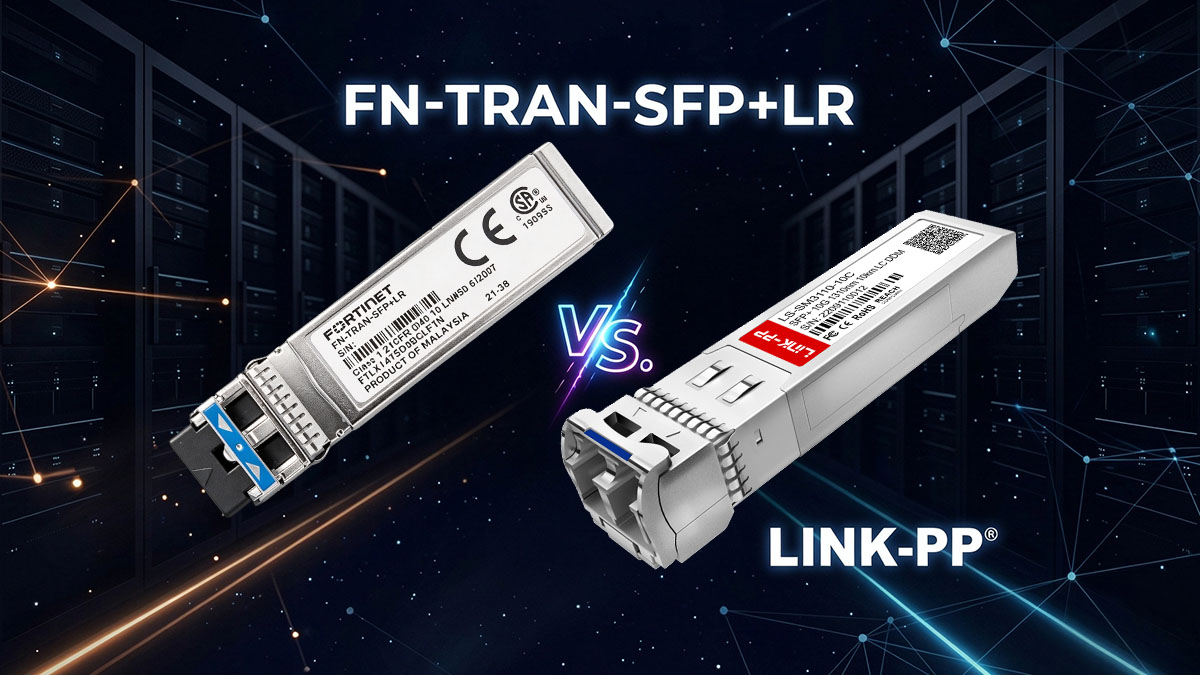
To better understand their equivalence, it is important to compare key optical and electrical parameters side by side.
Feature Comparison Overview
The FN-TRAN-SFP+LR and compatible SFP+ LR modules are fundamentally aligned in core transmission capabilities. Both are designed for 10GBASE-LR operation and are widely used in FortiGate and FortiSwitch environments for long-distance uplinks.
The following table highlights the core technical equivalence between the original Fortinet module and typical compatible alternatives.
| Feature | FN-TRAN-SFP+LR | Compatible 10GBASE-LR SFP+ |
|---|---|---|
| Form Factor | SFP+ | SFP+ |
| Ethernet Standard | 10GBASE-LR | 10GBASE-LR |
| Data Rate | 10Gbps | 10Gbps |
| Wavelength | 1310nm | 1310nm |
| Fiber Type | Single-Mode Fiber (SMF) | Single-Mode Fiber (SMF) |
| Maximum Reach | 10km | 10km |
| Connector Type | LC Duplex | LC Duplex |
| DOM/DDM Support | Yes | Yes (varies by model) |
| IEEE Compliance | Yes | Yes |
This comparison shows that, from a physical and optical perspective, compatible modules are designed to replicate the same transmission behavior as the FN-TRAN-SFP+LR. As long as specifications are properly matched, both options can support similar 10GbE link performance in enterprise fiber infrastructures.
Performance Considerations in Real Deployments
Although technical specifications are closely aligned, real-world performance depends on several additional factors beyond datasheet values. These factors determine how stable and reliable the link will be under operational conditions.
Key performance aspects include:
- Signal integrity under varying environmental conditions
- Optical power margin across full 10km links
- Error rate stability during sustained traffic loads
- Interoperability across Fortinet hardware platforms
- Behavior under firmware upgrades or configuration changes
When these conditions are properly met, compatible modules can operate with performance characteristics that are effectively indistinguishable from the original FN-TRAN-SFP+LR in most enterprise use cases.
Operational Differences and Practical Impact
While optical behavior remains equivalent, operational differences may still exist between original and compatible modules due to vendor-specific implementations.
These differences typically include:
- Device recognition behavior on Fortinet platforms
- EEPROM coding structure and vendor ID reporting
- Firmware validation sensitivity in certain environments
- Monitoring data presentation in DOM/DDM interfaces
Despite these variations, they generally do not affect the physical transmission capabilities of the module. Instead, they influence how the device is identified and managed within the network management system.
💭 Compatibility with Fortinet Network Equipment
The FN-TRAN-SFP+LR is designed specifically for use within Fortinet’s networking ecosystem, where it provides reliable 10Gbps connectivity over single-mode fiber. When evaluating this module or its compatible alternatives, ensuring proper interoperability with Fortinet hardware is essential to maintain stable performance and avoid unexpected link or recognition issues in production environments.
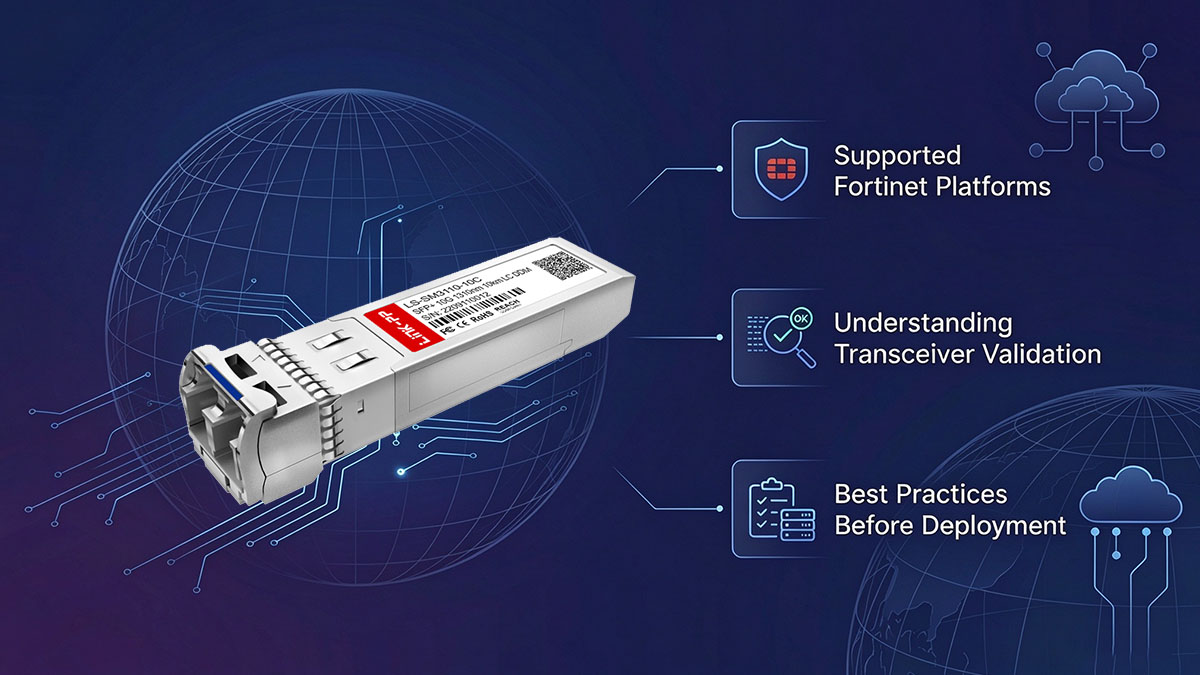
Supported Fortinet Platforms
The FN-TRAN-SFP+LR is commonly deployed across a wide range of Fortinet networking equipment that supports SFP+ 10GbE interfaces. These platforms typically use the module for uplink, aggregation, or inter-device connectivity in enterprise environments.
Typical compatible Fortinet platforms include:
- FortiGate next-generation firewalls with SFP+ ports
- FortiSwitch models supporting 10GbE uplinks
- Fortinet security appliance clusters in high-availability mode
- Data center edge and core network deployments using Fortinet infrastructure
- Branch office aggregation switches connected via fiber backbones
These platforms rely on consistent optical behavior to maintain stable traffic flow across security and networking layers. As a result, using properly matched 10GBASE-LR optics is critical for maintaining expected performance levels.
Understanding Transceiver Validation
Fortinet devices may perform module validation checks to identify installed transceivers and ensure compatibility with supported optics. This process can influence whether a module is accepted, partially supported, or restricted depending on firmware and platform configuration.
Key aspects of validation behavior include:
- EEPROM-based vendor identification
- Module type recognition (SFP+ vs unsupported optics)
- Firmware-level compatibility checks
- DOM/DDM telemetry availability and accuracy
- Port-level acceptance behavior during initialization
In some environments, even fully compliant 10GBASE-LR modules may be treated differently based on vendor coding. While this does not affect optical transmission performance, it can influence monitoring visibility and administrative control within Fortinet management interfaces.
Best Practices Before Deployment
Before deploying FN-TRAN-SFP+LR modules or compatible alternatives in Fortinet environments, it is important to validate both physical and logical compatibility. Proper pre-deployment testing helps reduce operational risk and ensures consistent network behavior across all connected devices.
Recommended best practices include:
- Testing modules in a controlled lab environment before production rollout
- Verifying firmware versions on FortiGate and FortiSwitch devices
- Confirming 10GBASE-LR optical parameters match network design requirements
- Checking DOM/DDM readings for transmit and receive power stability
- Validating link establishment under real traffic conditions
- Ensuring consistent behavior across multiple ports and devices
These steps help ensure that both original Fortinet modules and compatible alternatives operate reliably within the same network architecture.
💭 Fiber Requirements for FN TRAN SFP LR Alternative Deployments
The FN-TRAN-SFP+LR operates under the 10GBASE-LR standard, which is specifically designed for long-reach 10Gbps transmission over single-mode fiber. To achieve stable performance up to 10km, the underlying fiber infrastructure must meet strict optical quality and attenuation requirements. Proper fiber selection and link design are essential to ensure reliable signal transmission and to fully utilize the capabilities of LR-class SFP+ optics.
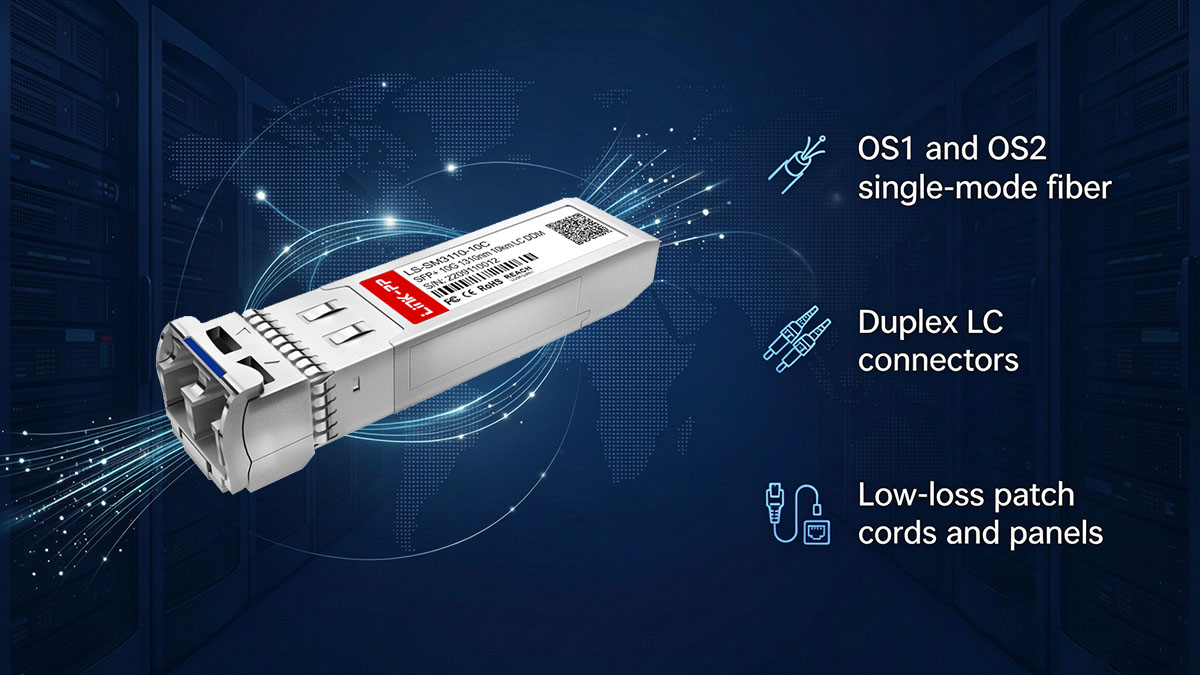
Recommended Fiber Infrastructure
A properly designed single-mode fiber infrastructure is the foundation of any successful 10GBASE-LR deployment. The fiber type, connector quality, and installation practices all directly influence link stability and signal integrity.
The following fiber infrastructure components are typically recommended:
- OS1 single-mode fiber for indoor or controlled environments
- OS2 single-mode fiber for outdoor or long-distance backbone links
- LC duplex connectors for SFP+ interface compatibility
- Low-loss patch cords for minimizing insertion loss
- Properly terminated fiber distribution panels
- Clean and dust-free connector interfaces
These components ensure that optical signals transmitted at 1310nm can travel efficiently across the network without excessive attenuation or reflection. High-quality installation practices are equally important, as poor termination or contamination can significantly degrade link performance even when using compliant optics.
Link Budget Fundamentals
A 10GBASE-LR link relies on a carefully balanced optical power budget to maintain reliable communication over distances up to 10km. Understanding the relationship between transmit power, receive sensitivity, and total link loss is essential when designing or troubleshooting fiber connections using FN-TRAN-SFP+LR modules.
Key elements of the link budget include:
- Transmit optical power from the SFP+ module
- Receiver sensitivity range at the destination port
- Fiber attenuation per kilometer (typically very low in SMF)
- Connector and splice loss accumulation along the path
- Engineering margin for environmental and aging factors
When these factors are properly balanced, the optical signal remains within the acceptable operating range of both transmitting and receiving devices. This ensures stable 10Gbps transmission without signal degradation or intermittent connectivity issues.
Distance and Performance Expectations
The FN-TRAN-SFP+LR is designed to support up to 10km transmission over single-mode fiber under standard 10GBASE-LR specifications. However, actual achievable distance may vary depending on fiber quality, installation practices, and total link budget conditions.
The typical relationship between fiber type and supported distance is summarized below.
| Fiber Type | Typical Reach |
|---|---|
| OS1 Single-Mode Fiber | Up to 10km |
| OS2 Single-Mode Fiber | Up to 10km with improved margin |
This table reflects standard 10GBASE-LR behavior across compliant single-mode fiber infrastructures. While both OS1 and OS2 fiber types support the same nominal distance, OS2 generally provides lower attenuation, resulting in better optical margin and improved long-term stability.
These distance expectations assume proper connector cleanliness, correct optical power levels, and adherence to standard installation practices. Deviations in any of these factors may reduce effective transmission range or introduce link instability.
💭 Common Issues and Troubleshooting When Select Alternatives
In real-world deployments of FN-TRAN-SFP+LR and compatible 10GBASE-LR SFP+ modules, network issues are rarely caused by optical standards themselves. Instead, most problems originate from compatibility mismatches, fiber infrastructure quality, or configuration inconsistencies on Fortinet devices. Understanding typical failure scenarios helps reduce downtime and improves the reliability of 10GbE fiber links in enterprise environments.
When troubleshooting, it is important to distinguish between physical layer issues (optics and fiber) and logical layer issues (device recognition and configuration).
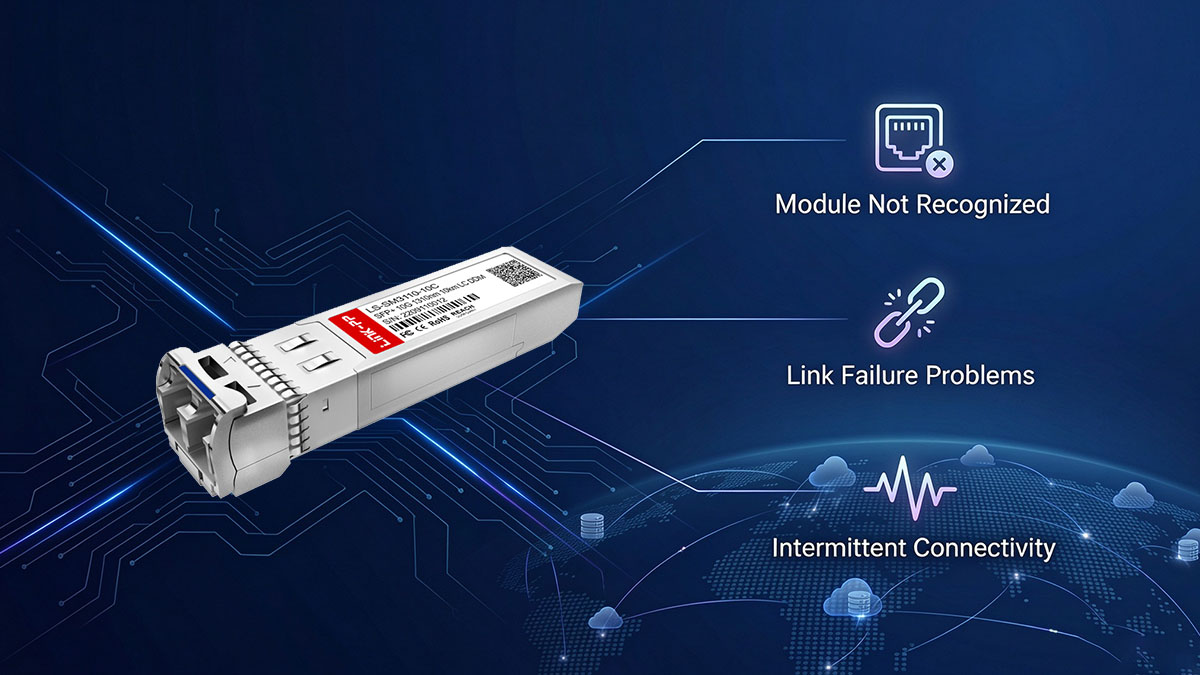
Module Not Recognized by Fortinet Devices
One of the most common issues is when a Fortinet device does not recognize the installed SFP+ module or displays it as unsupported. This issue is often related to validation or coding differences rather than optical incompatibility.
Typical causes include:
- EEPROM vendor coding mismatch
- Firmware restrictions on third-party optics
- Unsupported module identification by FortiGate or FortiSwitch
- Outdated device firmware
- Inconsistent port configuration settings
In many cases, the optical link may still function, but monitoring visibility or administrative control can be limited. Ensuring firmware compatibility and verifying module coding are key steps in resolving recognition issues.
Link Failure or No Connectivity
Another frequent issue is the complete absence of link establishment between two devices connected via FN-TRAN-SFP+LR modules. This type of failure is usually related to physical layer problems in the fiber path.
Common root causes include:
- Incorrect fiber polarity (Tx/Rx reversed)
- Dirty or contaminated LC connectors
- Damaged or bent fiber patch cables
- Mismatch of optical wavelengths (non-1310nm modules)
- Exceeding the 10km link budget limit
- Loose or improperly seated SFP+ modules
Cleaning connectors and verifying fiber polarity are often the most effective first steps in restoring connectivity. In addition, confirming that both ends use 10GBASE-LR compliant modules is essential for stable operation.
Intermittent Connectivity and Packet Loss
Intermittent link behavior is more difficult to diagnose because the connection may appear stable under light load but degrade under sustained traffic conditions. This typically indicates marginal optical performance or environmental instability.
Possible contributing factors include:
- Insufficient optical power margin
- High attenuation due to poor-quality fiber infrastructure
- Temperature fluctuations affecting optical components
- Aging or degraded fiber connectors
- Inconsistent DOM/DDM readings between endpoints
Monitoring optical power levels through DOM/DDM can help identify whether the signal is operating near the acceptable threshold. If values fluctuate significantly, it often indicates borderline link conditions that require infrastructure or module replacement.
💭 Best Practices for Selecting the Right FN-TRAN-SFP+LR Alternative
Selecting a suitable replacement for the FN-TRAN-SFP+LR requires more than matching basic optical specifications. Although most 10GBASE-LR SFP+ modules share similar core parameters, differences in platform compatibility, manufacturing quality, and long-term stability can significantly impact real-world performance. A structured selection approach helps ensure that alternative modules integrate smoothly into Fortinet environments while maintaining reliable 10Gbps connectivity.
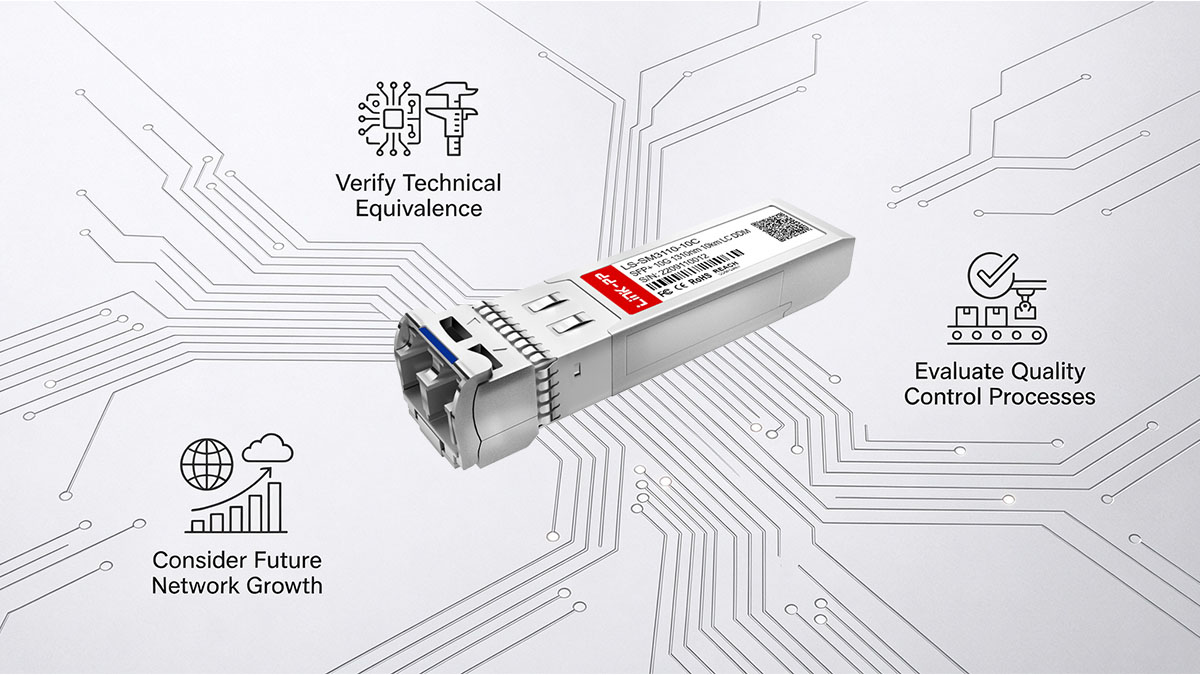
Verify Technical Equivalence
The first step in selecting a compatible alternative is confirming that the module matches the essential 10GBASE-LR optical requirements. Even small deviations in wavelength or power budget can affect link stability over long distances.
Key technical factors to verify include:
- 10Gbps data rate support
- 1310nm operating wavelength compliance
- Single-mode fiber (SMF) compatibility
- Maximum transmission distance of 10km
- LC duplex connector standard
- Support for 10GBASE-LR IEEE 802.3ae specification
Ensuring these parameters are aligned helps maintain predictable optical performance across different vendors and deployment scenarios. It also reduces the risk of signal degradation in longer fiber runs or high-density environments.
After confirming technical equivalence, it is equally important to validate how the module behaves within the target Fortinet platform.
Evaluate Quality Control Processes
Even when specifications appear identical, manufacturing quality and testing processes play a critical role in determining long-term reliability. High-quality optical modules undergo rigorous validation to ensure stable performance under real operating conditions.
Important quality-related considerations include:
- Optical power calibration and verification
- Compatibility testing across multiple network platforms
- Environmental stress testing (temperature and humidity)
- Burn-in testing for early failure detection
- Consistency of performance across production batches
- Signal integrity validation under sustained traffic load
Modules that follow strict quality control procedures are more likely to deliver stable performance in mission-critical environments such as data centers, campus backbones, and security infrastructure networks.
Consider Future Network Growth
Network planning should not only focus on current requirements but also anticipate future expansion and technology evolution. Selecting a replacement module that aligns with long-term infrastructure strategy helps reduce operational complexity and replacement frequency.
Key planning considerations include:
- Standardizing 10GBASE-LR optics across multiple locations
- Supporting scalable deployment in growing network environments
- Ensuring compatibility with existing FortiGate and FortiSwitch platforms
- Maintaining inventory flexibility for spare modules
- Preparing for future migration to higher-speed technologies (25GbE or 100GbE)
A consistent optical strategy simplifies maintenance and reduces configuration variability across distributed network sites.
💭 Conclusion
The Fortinet FN-TRAN-SFP+LR is a 10GBASE-LR SFP+ optical transceiver designed for 10Gbps single-mode fiber connectivity up to 10km, widely used in FortiGate and FortiSwitch network environments. When evaluating FN-TRAN-SFP+LR alternatives or compatible 10G SFP+ LR modules, the most important requirement is maintaining full optical equivalence, including 1310nm wavelength, 10km reach, and adherence to IEEE 802.3ae standards. With proper validation, compatible modules can deliver the same level of performance while offering greater deployment flexibility across enterprise networks.
The essential points from this guide can be summarized as follows:
-
FN-TRAN-SFP+LR operates as a 10Gbps 10GBASE-LR SFP+ module for single-mode fiber networks
-
It supports 1310nm wavelength transmission with up to 10km reach over LC duplex interfaces
-
Compatible alternatives must match optical specifications and Fortinet platform requirements
-
Key evaluation factors include compatibility, optical performance, and quality assurance
-
Proper fiber infrastructure and link budget design are critical for stable long-distance performance
These core insights provide a clear framework for selecting, deploying, and maintaining reliable 10GbE optical connectivity in Fortinet-based environments.
In real-world enterprise deployments, maintaining consistent network performance depends on selecting well-tested and standards-compliant optical modules that align with existing infrastructure requirements. Whether using original FN-TRAN-SFP+LR transceivers or carefully validated compatible alternatives, organizations should prioritize stability, interoperability, and long-term scalability.
For network teams planning upgrades, expansions, or multi-site standardization, sourcing from a trusted optical solutions provider such as LINK-PP Official Store can help ensure consistent quality, verified compatibility, and reliable 10GBASE-LR performance across diverse Fortinet network environments. This approach supports both operational efficiency and sustainable network growth in modern enterprise infrastructures.