























Ζωντανή Συζήτηση
Είμαστε εδώ για να βοηθήσουμε 24/7.
Στείλτε μας μήνυμα τώρα για μια γρήγορη απάντηση.

Όλες οι κατηγορίες
Ενότητες SFP
Υπηρεσίες
Υποστήριξη
Σχετικά με εμάς
Υποστηρικτικό υλικό

Προσέξτε την επιχείρησή σας με μια ποικιλία από αξιόπιστες επιλογές πληρωμής.
Χρησιμοποιήστε τον αριθμό παραγγελίας ή τον αριθμό παρακολούθησης για να ελέγξετε την κατάσταση αποστολής.
Λάβετε γρήγορα την προσφορά σας και προσφέρετε πιο επαγγελματική εξυπηρέτηση.
Βοηθήστε να διαχειριστείτε καλύτερα τον προϋπολογισμό και τις δαπάνες σας.
Δωρεάν υποστήριξη δειγμάτων, επιτύχετε τα αποτελέσματα των δοκιμών σας αποτελεσματικά.
Επαγγελματική υποστήριξη και εξυπηρέτηση ομάδας, για την έγκαιρη επίλυση των προβλημάτων σας.
Ρωτήστε μας για οτιδήποτε σας απασχολεί, θα σας βοηθήσουμε 24/7.
Λάβετε την προσφορά σας γρήγορα και σας προσφέρουμε πιο επαγγελματική εξυπηρέτηση.
Γνωρίστε μας και γνωρίστε την αποστολή, τις πεποιθήσεις μας, την υπηρεσία και πολλά άλλα.
Βρείτε τις τοποθεσίες μας και συνδεθείτε στενά μαζί μας.
Εξερευνήστε πώς νοιαζόμαστε για την ποιότητα.
Μάθετε τα πιο πρόσφατα νέα και τα γεγονότα γύρω l-p.com
Εμβάθυνση σε τεχνικούς οδηγούς, πρότυπα του κλάδου και πληροφορίες για τη συμβατότητα με SFP.
Λεπτομερή benchmarks προϊόντων και συγκρίσεις μεταξύ τους που θα σας βοηθήσουν να επιλέξετε τη σωστή ενότητα.
Εξερευνήστε λύσεις συνδεσιμότητας σε πραγματικό κόσμο για κέντρα δεδομένων, επιχειρήσεις και τηλεπικοινωνιακά δίκτυα.
Βασικές συμβουλές για την επιλογή ρυθμών δεδομένων, αποστάσεων μετάδοσης και τύπων συνδέσμων.



In the world of networking, the Gigabit SFP Port is often the quiet powerhouse that gives a switch its true versatility. While standard Ethernet ports are reliable for everyday connections, the SFP port acts as a modular gateway, allowing you to tailor your network’s reach and medium — whether that’s over a few meters of copper or tens of kilometers of fiber. It is the key to moving beyond "one-size-fits-all" hardware, providing the adaptability needed to handle modern data demands.
Integrating a Gigabit SFP Port into your infrastructure is about more than just adding a connection; it’s about building a foundation for growth and high-speed stability. By choosing the right modules and understanding how these ports bridge the gap between different network environments, you can significantly boost your system's scalability and performance. This post will break down everything you need to know to fully leverage SFP technology, from choosing the right components to securing your network connections.
At its core, a Gigabit SFP Port is a modular interface on a network switch designed to support SFP transceiver modules. Unlike fixed ports, it offers a "plug-and-play" slot that allows the switch to connect to different types of optical fiber or copper cables. This modularity makes it the primary tool for extending network reach and ensuring hardware remains adaptable to changing infrastructure needs.
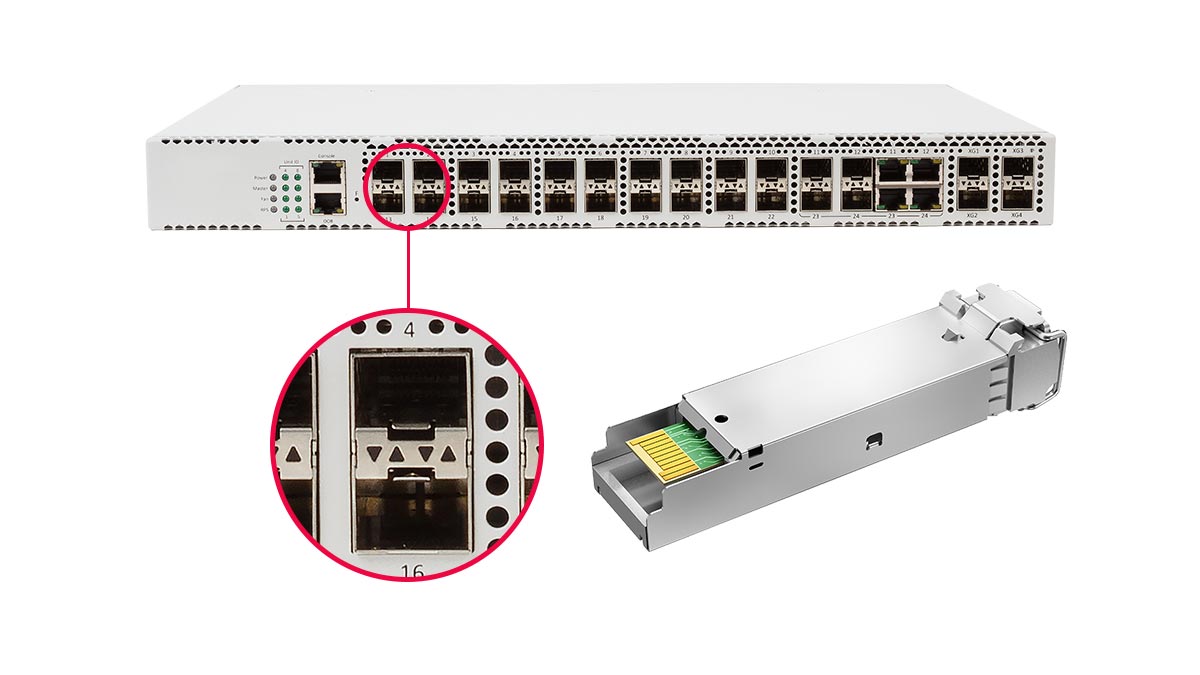
Μια θύρα Gigabit SFP είναι μια υποδοχή εισόδου/εξόδου (I/O) με δυνατότητα άμεσης εναλλαγής που χρησιμοποιείται σε διακόπτες και δρομολογητές δικτύου για τη διευκόλυνση της επικοινωνίας δεδομένων με ταχύτητες έως και 1 Gbps. Ο κύριος σκοπός της είναι η μετατροπή ηλεκτρικών σημάτων από τον διακόπτη σε οπτικά ή ηλεκτρικά σήματα κατάλληλα για μετάδοση μέσω συγκεκριμένων μέσων. Επειδή η ίδια η θύρα είναι "κενή", παρέχει έναν κενό καμβά στους διαχειριστές για να επιλέξουν τον ακριβή τύπο σύνδεσης που απαιτείται για μια συγκεκριμένη σύνδεση.
Λειτουργικά, αυτές οι θύρες χρησιμεύουν ως η ραχοκοκαλιά για συνδέσεις uplink υψηλής ταχύτητας και μεταδόσεις μεγάλης εμβέλειας. Με την εισαγωγή μιας συμβατής μονάδας SFP, η θύρα μπορεί να επικοινωνεί σε μια ποικιλία πρωτοκόλλων και φυσικών επιπέδων. Αυτή η ευελιξία διασφαλίζει ότι ένας μόνο διακόπτης μπορεί να υποστηρίξει ταυτόχρονα ένα μείγμα από patches χαλκού μικρής εμβέλειας και διαδρομές οπτικών ινών μεγάλων αποστάσεων, μεγιστοποιώντας τη χρησιμότητα του υπάρχοντος υλικού.
Το οικοσύστημα SFP βασίζεται σε δύο κύρια στοιχεία: το φυσικό κλουβί (τη θύρα) που είναι ενσωματωμένο στο διακόπτη και την αφαιρούμενη μονάδα πομποδέκτη SFP. Η μονάδα περιέχει έναν πομπό λέιζερ και έναν φωτοανιχνευτή (για οπτικές ίνες) ή εξειδικευμένα κυκλώματα (για χαλκό) που χειρίζονται τη μετατροπή σήματος. Αυτές οι μονάδες έχουν σχεδιαστεί για να είναι "hot-pluggable", που σημαίνει ότι μπορούν να εισαχθούν ή να αφαιρεθούν χωρίς να απενεργοποιηθεί η συσκευή, εξασφαλίζοντας μηδενικό χρόνο διακοπής λειτουργίας κατά τις αναβαθμίσεις.
Another critical element is the EEPROM chip located within the SFP module, which contains identification data such as the manufacturer’s name, serial number, and supported wavelength. This allows the switch to automatically recognize the module’s capabilities and configure the port settings accordingly. High-quality SFP technology also often includes Digital Optical Monitoring (DOM), which provides real-time data on the module’s temperature, laser power, and voltage.
The most significant difference lies in flexibility. Traditional Ethernet ports (RJ45) are fixed "copper-only" interfaces, limited by the physics of twisted-pair cabling to a maximum distance of 100 meters. In contrast, a Gigabit SFP Port is media-independent; by simply swapping the transceiver, the same port can support multi-mode fiber for building-to-building links or single-mode fiber for distances reaching tens of kilometers.
Επιπλέον, ενώ οι θύρες RJ45 είναι πανταχού παρούσες για τη σύνδεση συσκευών τελικών χρηστών, όπως υπολογιστές και εκτυπωτές, οι θύρες SFP συνήθως προορίζονται για κρίσιμες εργασίες "ανοδικής ζεύξης" ή "βασικού δικτύου". Προσφέρουν καλύτερη προστασία από ηλεκτρομαγνητικές παρεμβολές (EMI) όταν χρησιμοποιούνται με οπτική ίνα και παρέχουν πολύ υψηλότερο βαθμό μελλοντικής προστασίας. Εάν το δίκτυό σας χρειάζεται να μεταβεί από χαλκό σε οπτική ίνα, ένας διακόπτης εξοπλισμένος με SFP απαιτεί μόνο μια νέα μονάδα, ενώ ένας διακόπτης μόνο με RJ45 θα απαιτούσε πλήρη αντικατάσταση υλικού.
A Gigabit SFP Port offers several practical advantages that make it a preferred choice in modern switch deployments. Its modular design allows networks to adapt quickly to changing requirements without replacing entire devices. As a result, organizations can achieve better performance, flexibility, and long-term cost efficiency.
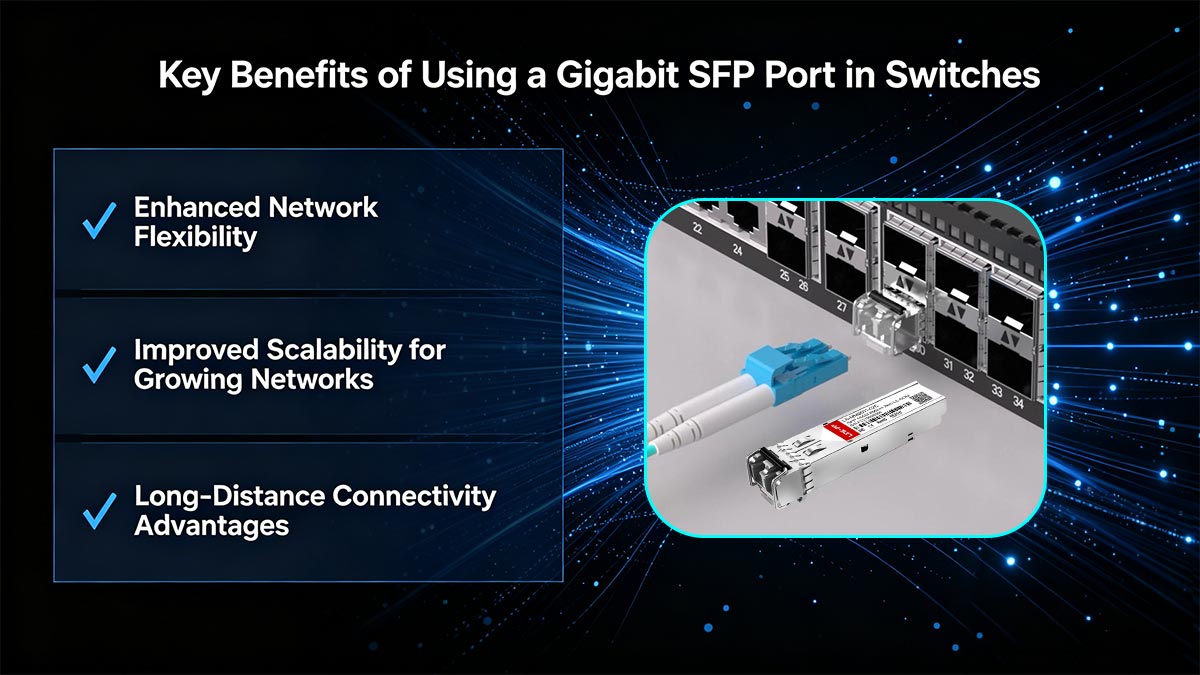
One of the biggest advantages of a Gigabit SFP Port is its ability to support multiple connection types through interchangeable modules. Network administrators can easily switch between fiber and copper connections depending on the specific application, without modifying the switch hardware itself. This makes it easier to tailor the network to different environments and use cases.
In addition, the hot-swappable nature of SFP modules allows changes or upgrades to be made without downtime. This flexibility is especially valuable in environments where continuous operation is critical, such as data centers and enterprise networks.
As networks expand, the need for scalable infrastructure becomes more important. A Gigabit SFP Port enables gradual upgrades by allowing new modules to be added or replaced as bandwidth and connectivity needs grow. This eliminates the need for costly hardware overhauls and supports a more incremental approach to network expansion.
Furthermore, SFP ports are commonly used for uplinks between switches, making it easier to scale network capacity while maintaining efficient traffic flow. This ensures that the network can grow smoothly without creating bottlenecks or performance issues.
Unlike standard Ethernet ports, a Gigabit SFP Port can support long-distance communication when paired with the appropriate fiber modules. Depending on the type of fiber and transceiver used, connections can span from a few hundred meters to tens of kilometers, making it ideal for large campuses or geographically distributed networks.
This capability is particularly useful for backbone connections and inter-building links, where reliability and signal integrity over distance are essential. By leveraging fiber-based SFP modules, organizations can achieve stable, high-speed connectivity across extended ranges.
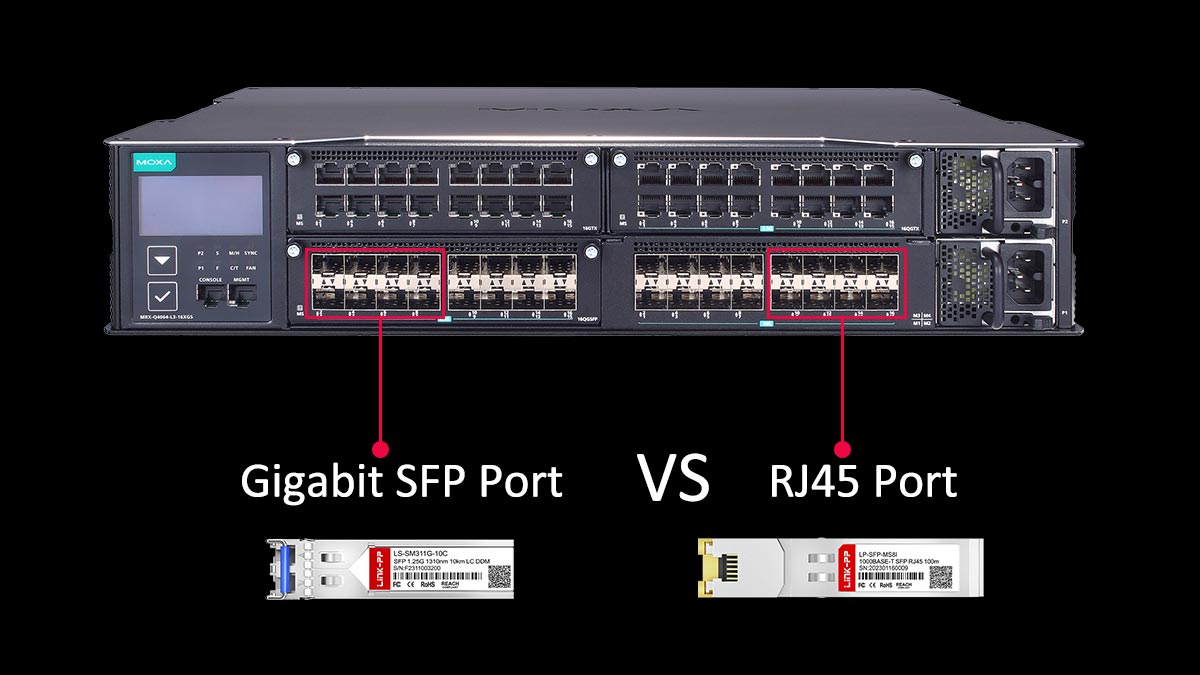
Both Gigabit SFP Ports and RJ45 ports are widely used in network switches, but they serve different purposes and offer distinct advantages. While RJ45 ports are known for their simplicity and widespread compatibility, SFP ports provide greater flexibility and support for diverse connection types. Choosing between them depends on factors such as distance, scalability, and network design requirements.
To better understand their differences, the following table highlights key comparisons:
| Χαρακτηριστικό | Θύρα Gigabit SFP | Θύρα RJ45 |
| Τύπος σύνδεσης | Modular (fiber or copper via SFP modules) | Σταθερός χαλκός (καλώδιο Ethernet) |
| Μέγιστη Απόσταση | Up to tens of kilometers (fiber) | Συνήθως έως 100 μέτρα |
| Ευελιξία | High (interchangeable modules) | Low (fixed interface) |
| Εγκατάσταση | Requires SFP module | ΣΥΝΔΕΣΤΕ και ΠΑΙΞΤΕ |
| Τυπική χρήση | Uplinks, backbone, long-distance links | End-device connections (PCs, printers) |
| Απεριόριστες δυνατότητες | Easily adaptable | Limited by port type |
In terms of speed, both Gigabit SFP Ports and RJ45 ports can support up to 1Gbps in standard configurations. However, SFP ports offer more flexibility in performance optimization, as different modules can be selected to match specific transmission needs, including better signal integrity over longer distances.
Additionally, SFP-based fiber connections are less susceptible to electromagnetic interference, which can result in more stable performance in environments with high electrical noise. This makes SFP ports more reliable in demanding enterprise or industrial settings.
RJ45 ports rely on copper Ethernet cables, such as Cat5e or Cat6, which typically support distances up to 100m. This makes them suitable for local connections within offices or server rooms but limits their use in larger-scale deployments.
In contrast, a Gigabit SFP Port can use either copper or fiber modules, with fiber options supporting much longer distances — ranging from several hundred meters to tens of kilometers. This makes SFP ports ideal for backbone links, inter-building connections, and wide-area network extensions.
RJ45 ports generally consume less power for short-distance connections, especially when using standard copper cabling. Their simple design and direct connectivity make them energy-efficient for everyday access-layer usage.
SFP ports, on the other hand, may consume slightly more power depending on the type of module used, particularly with long-range fiber transceivers. However, this increase is often justified by the extended reach and improved performance they provide in larger networks.
RJ45 ports are best suited for connecting end devices such as computers, IP phones, and printers within a local network. Their ease of use and compatibility make them the default choice for access-layer connectivity.
A Gigabit SFP Port is more commonly used for uplinks, switch-to-switch connections, and long-distance communication. It is particularly valuable in data centers, campus networks, and enterprise environments where flexibility, scalability, and extended reach are essential.
Μια θύρα Gigabit SFP χρησιμοποιείται ευρέως σε εταιρικά περιβάλλοντα λόγω της ευελιξίας και της ικανότητάς της να υποστηρίζει συνδέσεις μικρών και μεγάλων αποστάσεων. Παίζει κρίσιμο ρόλο στην κατασκευή αποδοτικών, επεκτάσιμων και υψηλής απόδοσης δικτυακών υποδομών. Από τις συνδέσεις κεντρικού δικτύου έως τη συνδεσιμότητα διακομιστή, οι θύρες SFP είναι απαραίτητες σε πολλά σενάρια ανάπτυξης σε πραγματικό κόσμο.
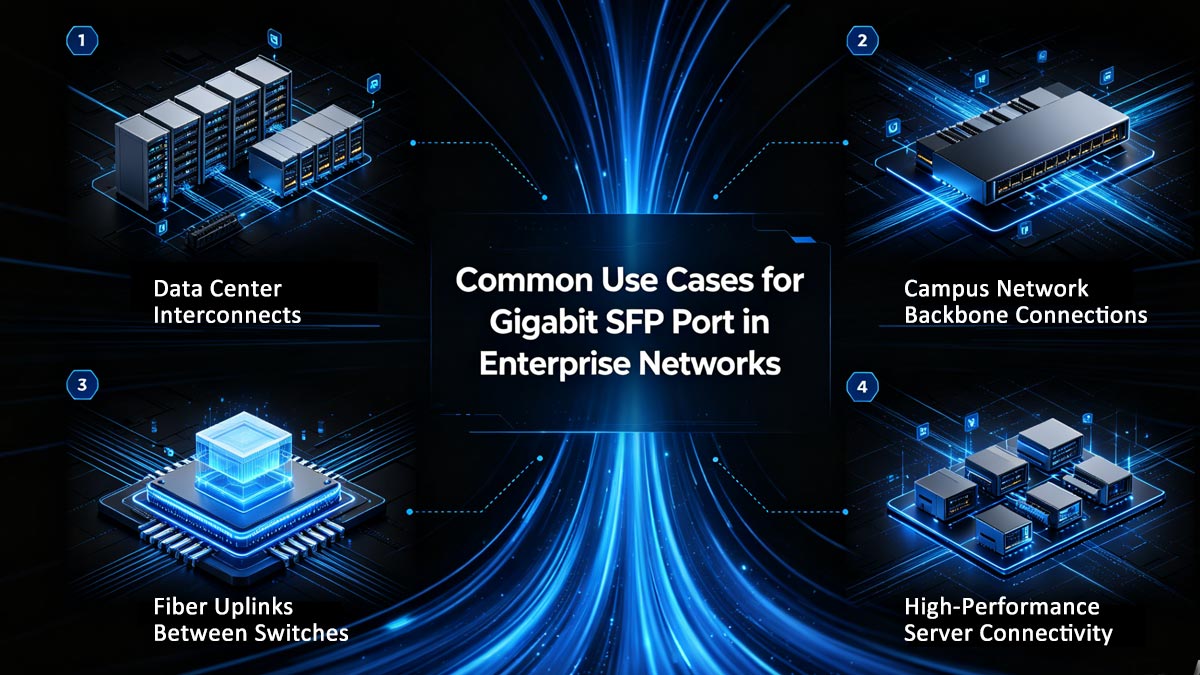
In data centers, Gigabit SFP Ports are commonly used to connect switches, storage systems, and networking equipment across racks or even between separate facilities. Fiber-based SFP modules enable high-speed, low-latency communication, which is crucial for handling large volumes of data traffic.
Υποστηρίζουν επίσης αξιόπιστες συνδέσεις σε μεγαλύτερες αποστάσεις σε σύγκριση με τις παραδοσιακές συνδέσεις χαλκού. Αυτό τις καθιστά ιδανικές για τη διασύνδεση πολλαπλών halls δεδομένων ή την επέκταση της συνδεσιμότητας μεταξύ κύριων και εφεδρικών κέντρων δεδομένων.
For campus networks that span multiple buildings, a Gigabit SFP Port is often used to establish backbone connections. Fiber modules allow network traffic to travel efficiently over long distances while maintaining signal integrity and performance.
Αυτή η ρύθμιση διασφαλίζει σταθερή επικοινωνία μεταξύ διαφορετικών τμημάτων της πανεπιστημιούπολης, όπως διοικητικά γραφεία, αίθουσες διδασκαλίας και κέντρα δεδομένων. Παρέχει επίσης μια επεκτάσιμη βάση για μελλοντική επέκταση δικτύου.
Οι θύρες SFP χρησιμοποιούνται συχνά για ανοδικές ζεύξεις μεταξύ διακοπτών πρόσβασης, συγκέντρωσης και πυρήνα. Χρησιμοποιώντας ανοδικές ζεύξεις οπτικών ινών μέσω μιας θύρας Gigabit SFP, τα δίκτυα μπορούν να χειριστούν υψηλότερους φόρτους κίνησης και να μειώσουν τη συμφόρηση σε σύγκριση με τις τυπικές συνδέσεις χαλκού.
Αυτές οι συνδέσεις ανόδου βελτιώνουν τη συνολική απόδοση του δικτύου και βοηθούν στη διατήρηση σταθερής απόδοσης, ειδικά σε περιβάλλοντα με μεγάλη χρήση δεδομένων. Απλοποιούν επίσης τον σχεδιασμό του δικτύου επιτρέποντας καθαρές συνδέσεις υψηλής χωρητικότητας μεταξύ των επιπέδων μεταγωγής.
Σε περιπτώσεις όπου οι διακομιστές απαιτούν σταθερές και υψηλής ταχύτητας συνδέσεις, οι θύρες Gigabit SFP παρέχουν μια αξιόπιστη λύση. Χρησιμοποιούνται συχνά για τη σύνδεση κρίσιμων διακομιστών με διακόπτες χρησιμοποιώντας οπτικές ίνες, εξασφαλίζοντας ελάχιστες παρεμβολές και σταθερή απόδοση.
Αυτό είναι ιδιαίτερα σημαντικό για εφαρμογές όπως η εικονικοποίηση, τα συστήματα βάσεων δεδομένων και οι υπηρεσίες cloud, όπου η απόδοση και η αξιοπιστία επηρεάζουν άμεσα τις επιχειρηματικές δραστηριότητες. Η χρήση συνδέσεων που βασίζονται σε SFP βοηθά στη διατήρηση της βέλτιστης επικοινωνίας διακομιστή και μειώνει τον κίνδυνο συμφόρησης δικτύου.
Selecting the ideal SFP module is critical to ensuring your network operates at peak efficiency while maintaining hardware longevity. The choice depends on a careful evaluation of your existing infrastructure, the physical distance between connection points, and your specific budgetary constraints.
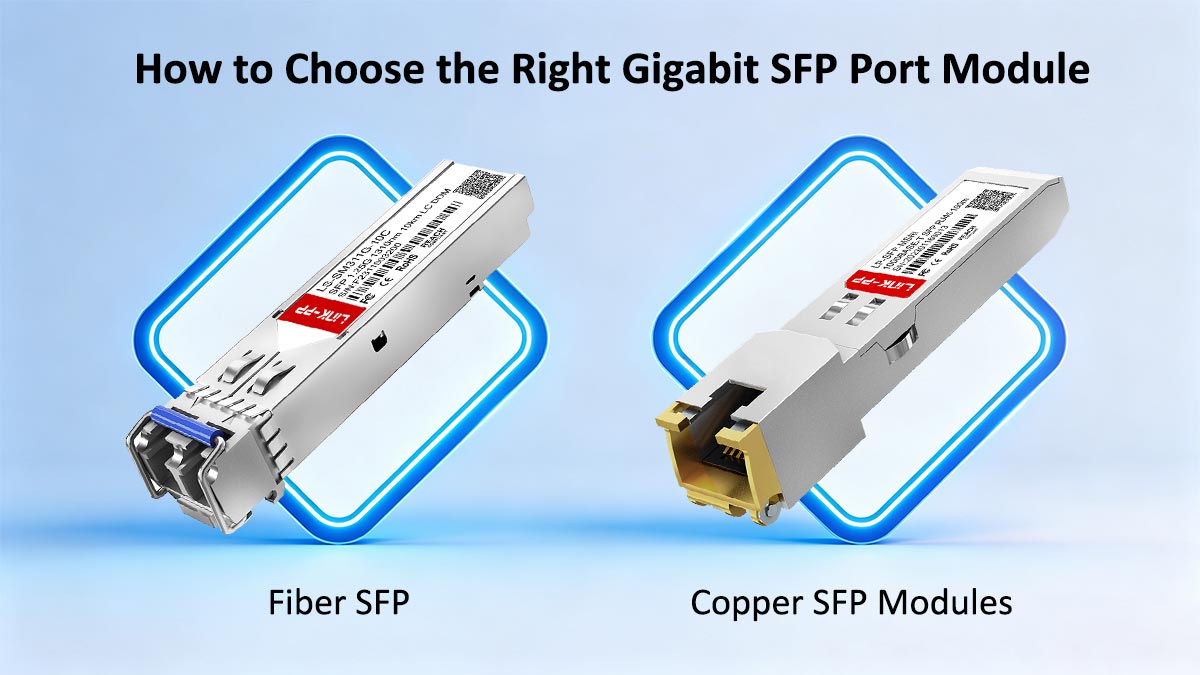
The first step in choosing a module is determining the transmission medium required for your specific application. While both types provide gigabit speeds, they serve very different environmental needs.
Copper (RJ45) SFPs: These are typically used for short-range connections, generally up to 100 meters. They are the go-to choice for connecting switches within the same rack or adjacent cabinets using standard Cat5e or Cat6 cabling, offering a cost-effective solution for localized networking.
Fiber Optic SFPs: These are designed for scenarios where distance or electromagnetic interference is a factor. Fiber modules are essential for linking different floors or buildings, providing much higher bandwidth potential over long spans without the signal degradation seen in copper.
Compatibility is perhaps the most frequent pain point when deploying SFP modules. A module must be electrically and logically compatible with the host switch to function correctly.
Before purchasing, you must verify the Multi-Source Agreement (MSA) standards. Most modern switches follow these industry standards, allowing them to accept a wide range of modules. However, some high-end switches are programmed with "vendor lock-in" software that recognizes only specific EEPROM code. Always check your switch’s data sheet or compatibility matrix to ensure the module’s serial encoding will be accepted by the port’s firmware.
Matching the module to the physical characteristics of your fiber plant is vital for signal integrity. Choosing the wrong wavelength can result in a complete lack of connectivity or permanent hardware damage.
The debate between original equipment manufacturer (OEM) modules and third-party compatible alternatives often comes down to a balance of risk versus cost-efficiency.
Properly configuring a Gigabit SFP port is essential for maintaining a stable and high-performing network backbone. By following standardized installation procedures and proactive monitoring routines, you can minimize downtime and ensure that your hardware operates within its optimal parameters.
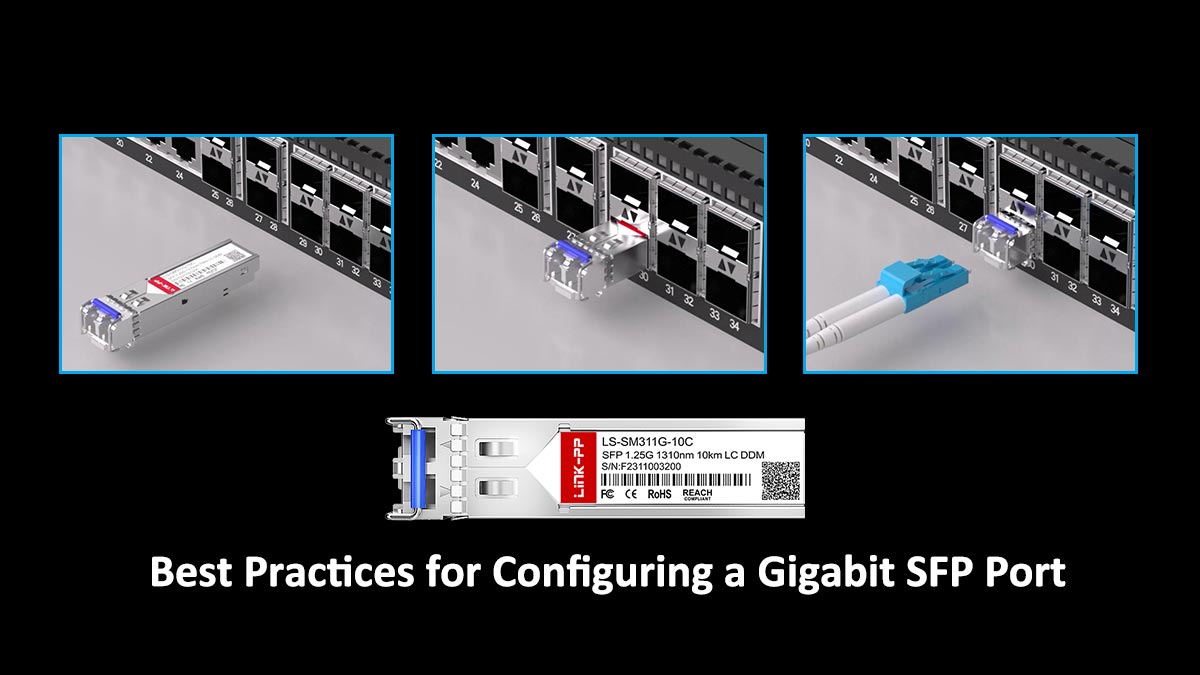
The physical installation and initial software activation of an SFP module require a delicate touch and a systematic approach. Because optical components are sensitive to dust and static, the "cleanliness-first" rule is paramount during this stage.
For Gigabit SFP ports, the negotiation of speed and duplex is generally more straightforward than with traditional copper ports, but it still requires careful attention to avoid "link flapping" or total connectivity loss.
Configuration doesn't end once the link light turns green; ongoing performance monitoring is vital to catch degradation before it leads to a network outage.
When a Gigabit SFP port fails to initialize or experiences intermittent drops, a structured troubleshooting process can quickly isolate the root cause between hardware and configuration.
To extract the full potential of a Gigabit SFP port, one must look beyond basic connectivity and focus on long-term stability and efficiency. Maximizing performance requires a holistic approach that combines high-tier hardware selection with rigorous environmental maintenance and strategic network design.
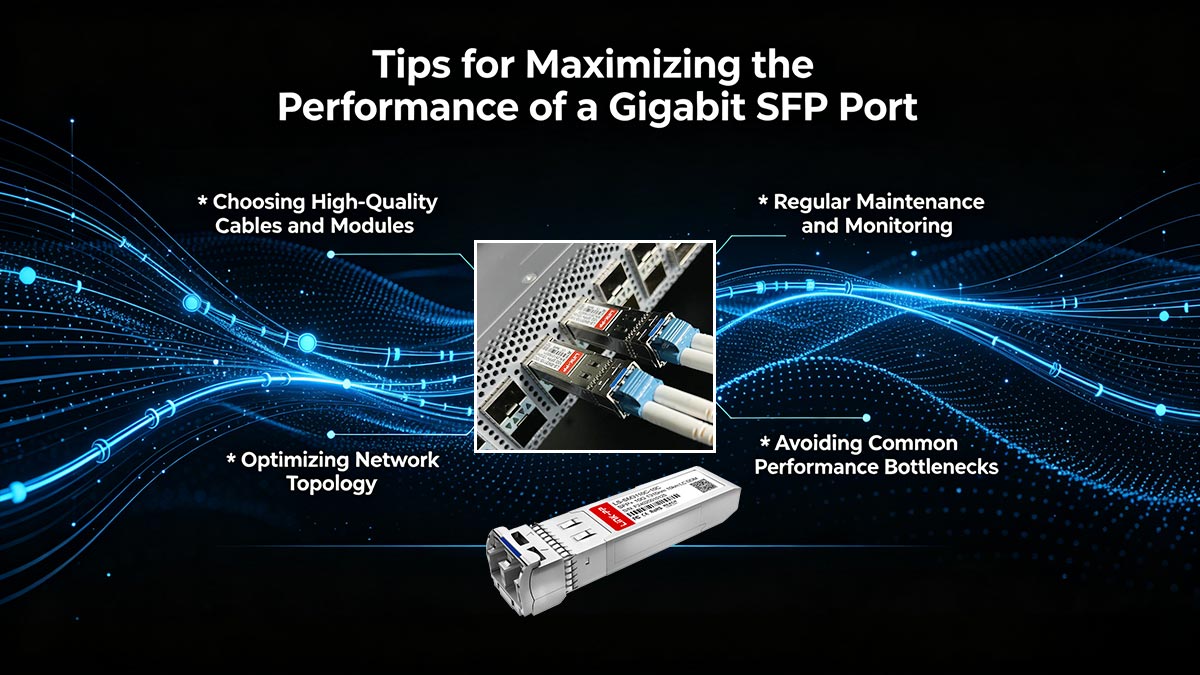
The physical layer is the foundation of SFP performance, and using sub-par components is the most common cause of signal degradation. High-quality modules and cables ensure that the "optical budget" remains within the intended range, preventing packet loss.
Fiber optic connections are notoriously sensitive to environmental contaminants. A proactive maintenance schedule can prevent the gradual "performance creep" where a network slowly loses speed over time due to hardware fatigue or dirt.
How you physically and logically arrange your SFP-connected switches can significantly impact latency and throughput. Optimizing the topology ensures that the Gigabit SFP ports are utilized where they provide the most value — high-speed backbones and uplinks.
Even the fastest SFP port can be throttled by external factors or poor configuration choices. Identifying and removing these bottlenecks is essential for maintaining consistent gigabit throughput.
Μια θύρα Gigabit SFP παίζει ζωτικό ρόλο στη σύγχρονη υποδομή δικτύου, προσφέροντας την ευελιξία, την επεκτασιμότητα και την απόδοση που απαιτούνται για τις σημερινές αυξανόμενες απαιτήσεις. Από την κατανόηση της βασικής λειτουργικότητάς της έως τη σύγκρισή της με θύρες RJ45 και την εξερεύνηση περιπτώσεων χρήσης σε πραγματικό κόσμο, είναι σαφές ότι η τεχνολογία SFP επιτρέπει πιο αποτελεσματικό και προσαρμόσιμο σχεδιασμό δικτύου. Όταν συνδυάζεται με την κατάλληλη επιλογή μονάδων, διαμόρφωση και πρακτικές βελτιστοποίησης, μπορεί να βελτιώσει σημαντικά τη συνολική αξιοπιστία του δικτύου και τη μακροπρόθεσμη αποδοτικότητα.
Για να αξιοποιήσετε πλήρως αυτά τα οφέλη, η επιλογή μονάδων SFP υψηλής ποιότητας και συμβατών είναι απαραίτητη. Εάν αναζητάτε αξιόπιστες και οικονομικά αποδοτικές λύσεις, εξετάστε το ενδεχόμενο να εξερευνήσετε τις διαθέσιμες επιλογές στο LINK-PP Επίσημο κατάστημα, όπου μια σειρά από μονάδες SFP έχουν σχεδιαστεί για να καλύπτουν ποικίλες ανάγκες δικτύωσης. Η επένδυση στα σωστά εξαρτήματα θα βοηθήσει στη διασφάλιση σταθερής και υψηλής απόδοσης συνδεσιμότητας για το δίκτυό σας.

Συνδεθείτε ή δημιουργήστε έναν λογαριασμό για να παρακολουθείτε το αίτημά σας στο διαδίκτυο.